

EDCKC touts leaders building Kansas City’s workforce of tomorrow
August 7, 2025 | Brian Escobar
Editor’s note: The following commentary was written and first published by the Economic Development Corporation of Kansas City, Missouri (EDCKC). Click here to read the original piece.
Across the country, cities are competing not only for jobs, but for people. In Kansas City, the future of economic growth depends on how well we prepare our residents to thrive in a rapidly evolving labor market. Workforce development isn’t just a buzzword; it’s the engine behind community resilience, economic mobility, and shared prosperity.

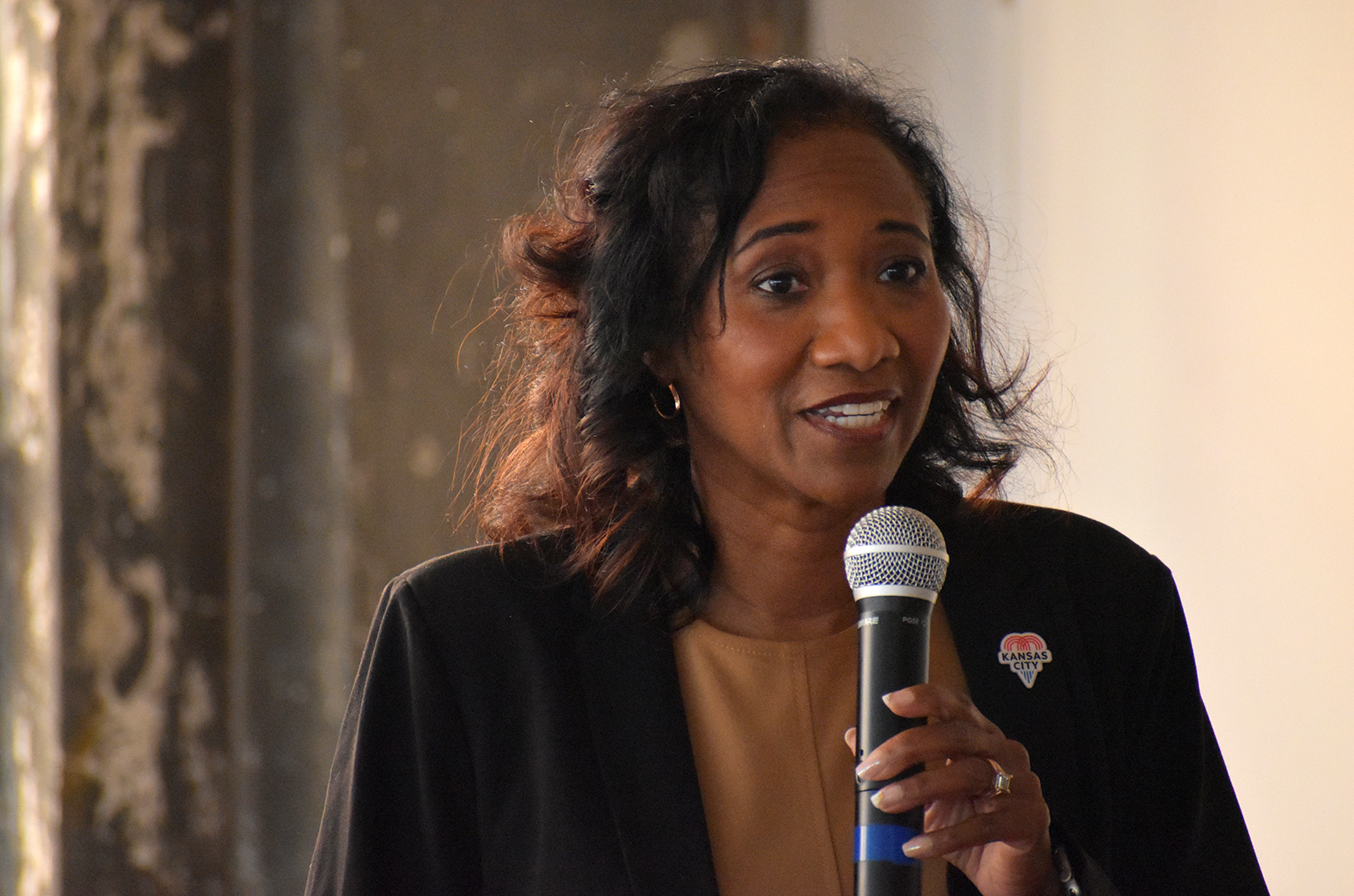
Kyana Bowers, EDCKC
At the center of this work are leaders such as Kyana Bowers, business development officer at EDCKC, and Mayor Pro Tem Ryana Parks-Shaw, a champion for equitable growth. Together, they shape a vision for workforce development that prioritizes accessibility and human needs, removing systemic barriers and creating opportunities throughout the city.
Kansas City faces the same challenges many growing cities confront — but with its regional complexities layered on top. As Bowers explains, three barriers continue to hold back the city’s workforce:
- A growing skills gap, particularly in fields like tech, manufacturing, and healthcare
- Insufficient public transportation, with only 1 in 5 major employers accessible by bus
- Lack of affordable childcare prevents thousands from entering or staying in the workforce
Parks-Shaw adds another crucial dimension: academic readiness. In parts of her district, students are falling behind in basic literacy and math skills, creating hurdles to accessing apprenticeship programs and career pathways. When compounded with mobility and affordability issues, these gaps can make the road to economic stability feel out of reach for many families.
But there’s reason for optimism. These challenges are not insurmountable, and Kansas City is not standing still. EDCKC, in partnership with public officials, educators, and employers, is stepping up with a renewed focus on equity, innovation, and collaboration. Together, they’re working to transform barriers into building blocks for a more inclusive and resilient workforce system.
Equity through workforce innovation
As a Business Development Officer at EDCKC, Kyana Bowers brings a dual-lens perspective to Kansas City’s workforce challenges — combining business attraction with a deep understanding of workforce development. She sees firsthand how economic opportunity can’t thrive without access, and how access depends on systems designed with equity in mind.
“Small business is key to equity in Kansas City,” Bowers said. “We’ve seen a 25-percent increase in minority-owned businesses since 2018, but Black and Brown entrepreneurs are still three times less likely to qualify for loans.”
To change that, EDCKC backs a range of equity-focused initiatives — from LaunchKC, which offers grants and mentorship to entrepreneurs, to Kiva KC, a zero-interest microloan program supported in partnership with KC BizCare. These resources, Bowers says, are about more than capital; they’re about creating viable, long-term pathways into the workforce through entrepreneurship.
But beyond startups, Bowers emphasizes the power of strategic partnerships in addressing systemic barriers. From KC Scholars and local community colleges building industry aligned pipelines, to alliances with childcare and transit providers that address wraparound needs, EDCKC is helping to connect the dots.
“No one entity can do this alone,” she noted. “We have to support the full ecosystem — not just training, but how people get to work, and how they take care of their families while they’re working.”
Looking ahead, Bowers sees Kansas City at the forefront of sectors like logistics, automation, and clean energy. But seizing those opportunities means closing gaps today.
“We’re already a Top 10 logistics hub. Now we need to make sure we’re building systems that are inclusive and future ready.”
Though her role at EDCKC is rooted in business attraction and retention, Bowers recognizes that workforce development is core to economic development — and Kansas City’s long term competitiveness depends on getting it right.
Power of partnerships
To effectively address workforce development, we must collaborate; it cannot be solved in isolation. EDCKC is fostering collaboration by partnering with community colleges, nonprofit lenders, school districts, and private-sector employers to create a collective impact.
From the zero-interest microloans provided through Kiva KC to mentorship and grant programs like LaunchKC, EDCKC is curating a toolbox of pathways into the workforce and entrepreneurship. Meanwhile, regional efforts, such as Amazon’s $1.2 million investment in logistics training at Penn Valley, reflect the kind of private-sector leadership that complements these efforts citywide.
“No one entity can do this alone,” said Bowers. “These pipelines are tied to real-world industries, and if we want people to sustain those jobs, we have to support the full ecosystem — training, transit, childcare, everything.”
Parks-Shaw echoes this sentiment.
“When we establish collaborative partnerships, we can see the collective impact of what happens when we all work together,” she said. “Rising tides lift all boats.”
Building systems for generational impact
Parks-Shaw believes workforce development is more than a policy priority — it’s a tool for transformation. Representing Kansas City’s Fifth District and serving as Mayor Pro Tem, she has spent her time in office championing efforts that connect residents to opportunity while addressing long-standing inequities head-on.
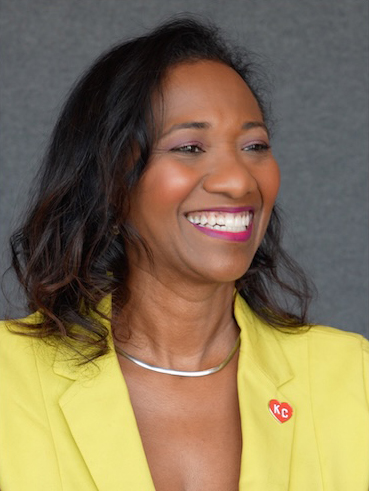
Ryana Parks-Shaw, mayor pro tem for KCMO
“In a city of this size, workforce development means building systems so that no matter who you are or where you live, you have access to opportunity,” she said.
For Parks-Shaw, actual workforce readiness requires more than job listings — it demands wraparound support. This means improving transportation options, supporting access to childcare, and ensuring that students and adult learners alike are equipped with the foundational skills they need to enter apprenticeship programs, tech training, or post secondary education.
She’s seen the gaps up close. In her district, some students struggle with literacy. At the same time, many adults face barriers to passing basic assessments required for job programs. Still, she sees this not as a crisis, but as a call to action.
“We’ve got incredible training programs in this city,” she said. “We just need to make sure more people can reach them—and that we’re helping fill in the gaps where needed.”
In response, Parks-Shaw authored Kansas City’s first Comprehensive Workforce Development Strategic Plan, which received unanimous council support. The goal is to align partners — from developers and unions to school districts and training providers — and create a citywide roadmap that prioritizes long-term, inclusive access to quality jobs.
“It’s a strategy for economic mobility, but also for safety,” she explained. “Because when people have jobs and income, our communities become stronger and more stable.”
Her vision doesn’t stop at the city limits. Parks-Shaw has helped lead Kansas City’s participation in the North American Workforce Initiative (NAWI), a multinational effort focused on building competitive workforce systems for the future of supply chain, tech, healthcare, and beyond.
“We’re a logistics hub. We’re centrally located. And we have a growing innovation economy,” she said. “Kansas City has every reason to lead.”
Parks-Shaw’s optimism is rooted in action — and in the people she serves.
“We’re not just preparing today’s workforce. We’re laying a foundation for generations to come,” she said. “And workforce development is how we get there.”
Regional impact with global relevance
Kansas City’s workforce strategy isn’t just locally significant, it’s regionally and globally relevant. Through its participation in the North American Workforce Initiative (NAWI), Kansas City joins 11 other cities across the U.S., Canada, and Mexico to build scalable, equitable workforce models focused on supply chain management, tech, healthcare, and innovation.
“Kansas City is uniquely positioned,” said Parks-Shaw. “We’re centrally located. We’re a logistics hub. We connect the continent. If we can build the right talent pipeline here, we can lead — not just follow — where the economy is headed.”
Early meetings have drawn enthusiastic participation from educators, employers, and policymakers alike. The initiative isn’t just about technical training — it’s about creating a model that will guide the workforce policy for years to come.
Shaping the future of work
Kansas City is at a critical inflection point. Growth is happening, opportunities are emerging — but without intentional investment in workforce development, many could be left behind.
As EDCKC, elected leaders, and community partners come together to chart a path forward, one thing is clear: this is a shared responsibility. From small business owners to transit planners, from school administrators to city council members, everyone has a role to play in shaping the future of work.
And if the the voices of leaders like Bowers and Parks-Shaw are any indication, that future looks collaborative, inclusive, and fiercely ambitious.
Parks-Shaw puts it simply but powerfully: “Workforce development is how we create safety, mobility, and opportunity. It’s how we build the Kansas City we know is possible.”

Featured Business

2025 Startups to Watch
stats here
Related Posts on Startland News

How two hungry vegan sisters went from making queso to their own storefront on Holmes
Arvelisha Woods and India Monique just wanted to style hair and eat nachos, the duo said, breaking into laughter. “It all started with being hungry,” Monique recalled, with Woods emphasizing the “hungry.” The sisters behind Mattie’s Foods went on a fast in 2015 as part of their mission work. They took what they loved the…

Holiday cheers: Christmas pop-up bar back with pandemic twist; festive spirits return Nov. 6
There’s no stealing Christmas for local bar owners as they prepare to unwrap various holiday-themed pop-up experiences — despite a Grinch of a pandemic that’s upended sales for much of the year. Sippin’ Santa is expected to return to Westport-crafted Julep Cocktail Club as a reimagined, curbside pop-up next month, Keely Edgington told Startland News. “If…

As seen on Troost (and Ellen): Plus-size thrift store owner uses momentum to inspire others
Alesha Bowman had plans March 15 to celebrate the two-year anniversary of her plus-size thrift store, UnLESHed+, by opening a new storefront on the historic Troost Avenue. But on March 14, a nationwide pandemic forced Bowman’s plans to be entirely reworked. “You just have to pivot,” Bowman said, noting that she used Facebook and Instagram…

Rightfully Sewn acquisition stitches new path toward re-establishing KC as garment capital, Lapka says
Rightfully Sewn’s acquisition by a 109-year-old nonprofit with national reach means more contracts, more employees and more impact for the mission-focused fashion company, said Jennifer Lapka. “No shakeups, no drama. The brand, programs, and team will stay intact,” said Lapka, founder of Rightfully Sewn, which this week announced a merger with Kansas City-based Alphapointe. “We…