

Sacred sips: Alcohol-free bar on 39th Street creates healing space where ‘every drink is medicine’
July 31, 2025 | Tiffany Watts
Editor’s note: The following story was published by The Kansas City Defender, a nonprofit Black newsroom producing news, mutual aid and digital tools to keep Kansas City’s Black community informed and organized. Click here to read the original story or here to sign up for The Kansas City Defender’s email newsletter.
One of Kansas City’s historically whitest corridors is getting its first Black and queer-owned alcohol-free bar.
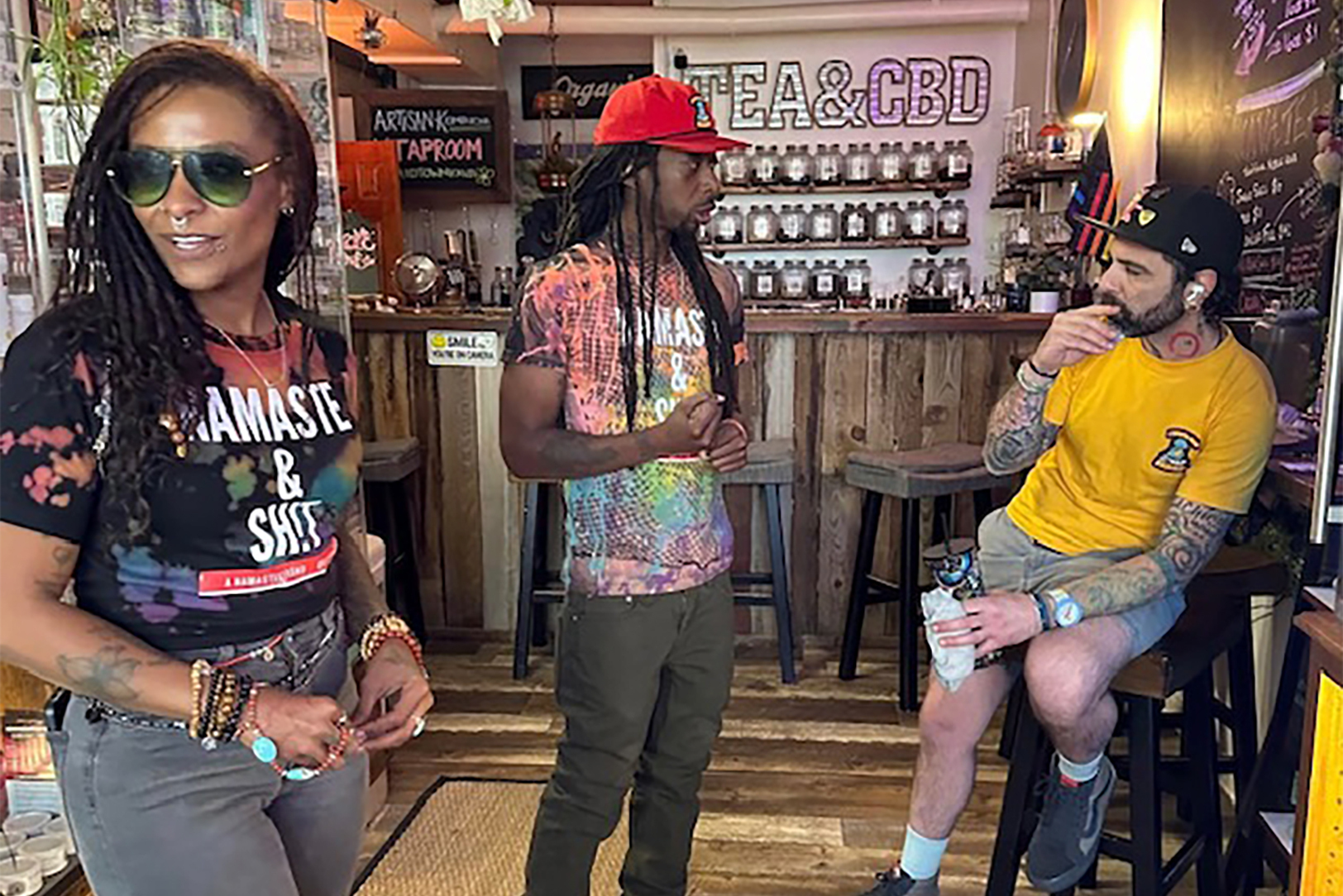
On Friday, Midtown Kava will reopen as Namaste & Midtown, not just with a new name, but with a new soul. The space, now led by a rapper, a healer, and a builder, is being reborn as a sanctuary intentionally designed for the most marginalized: Black, queer, trans, and sober communities who are often excluded from spaces like this.
The heart of Namaste & Midtown beats through its three owners, Moon Brown, Alan Wayne, and Andrew Beck, each of whom brings not only deep professional expertise but also a shared commitment to sobriety and intentional living. Their respective decisions to walk away from alcohol come from personal journeys rooted in healing, reflection, and purpose.
Brown is a seasoned community leader and abolitionist, with nearly two decades of anti-violence work shaping her approach to care and transformation. Her experience running a metaphysical boutique in Belize laid the foundation for building wellness-centered spaces. Wayne, a respected Kansas City rapper and creative visionary, brings the bold energy of his Namaste & Shit clothing line into the brand’s spirit and visual identity. Beck, with his background in construction and project management, is the quiet force behind the physical transformation, channeling vision into structure, and soul into space.
“We’re not just transactional, we’re transformational,” Brown said. “If you need a space to rest, to take care of yourself, to create, this is it.”
Renovations were just beginning earlier this summer, but the energy shift was already underway.
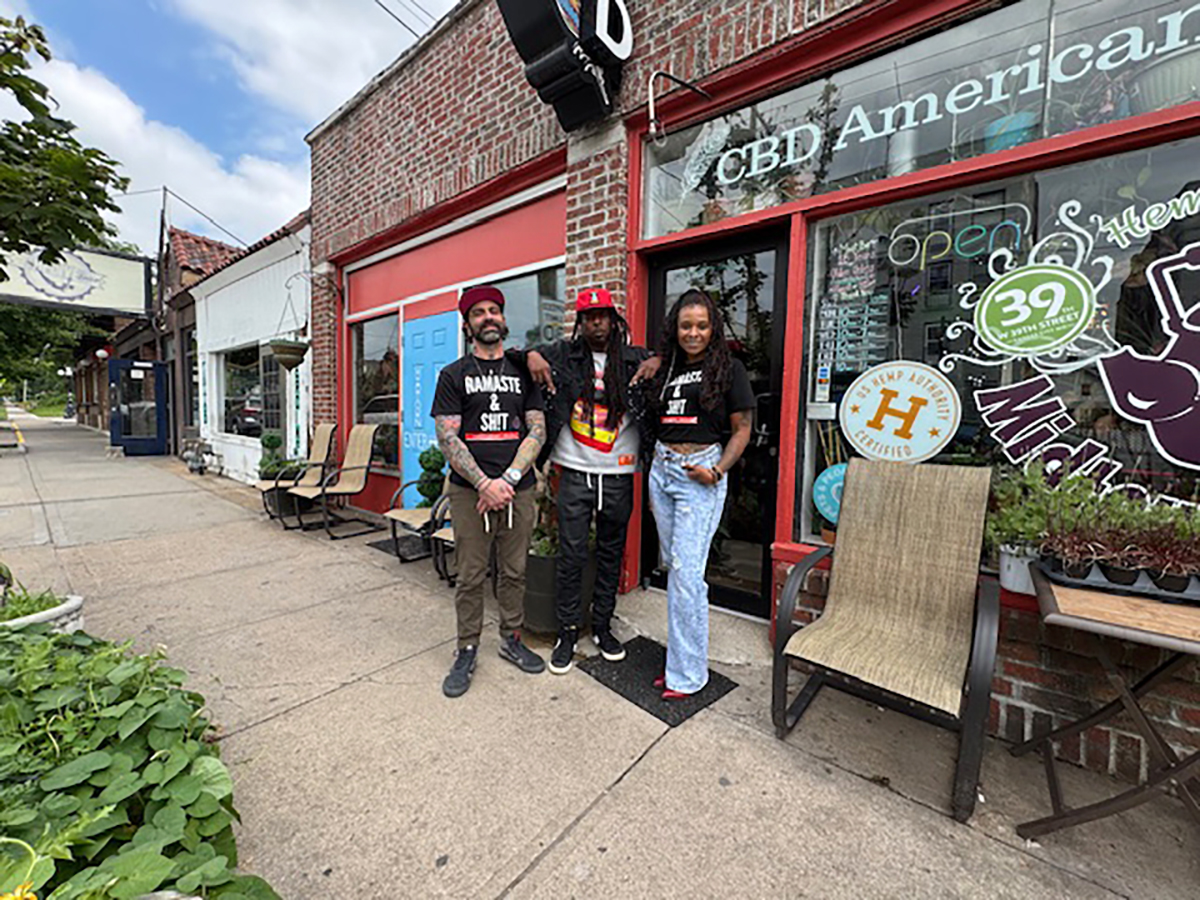
Namaste & Midtown co-owners Andrew Beck, Alan Wayne, and Moon Brown; photo by Tiffany Watts, The Kansas City Defender
Presence is the protest
This takeover isn’t just timely, it’s historic, and it carries the weight of 90 years of exclusion.
What’s unfolding inside Namaste & Midtown stands in direct contrast to the long legacy of redlining that shaped the very block it now occupies. The Volker Neighborhood, established in the late 1800s and named after philanthropist William Volker, was protected by racially restrictive covenants well into the mid-20th century.
J.C. Nichols and others sealed Volker and surrounding suburbs with deed clauses that barred Black families and other racial minorities from living there, a practice only outlawed by the 1948 Shelley v. Kraemer Supreme Court decision. Even after the Fair Housing Act of 1968 made those covenants illegal, their impact remains: today, Volker is still over 80% white, a stark reflection of Kansas City’s ongoing racial segregation.
Against that backdrop, the launch of this new Black-owned alcohol-free bar is seismic and stands as a powerful reversal — an intentional reclamation of space that was never meant for Black and queer communities.
And that reclamation shows up in every detail, including the menu.
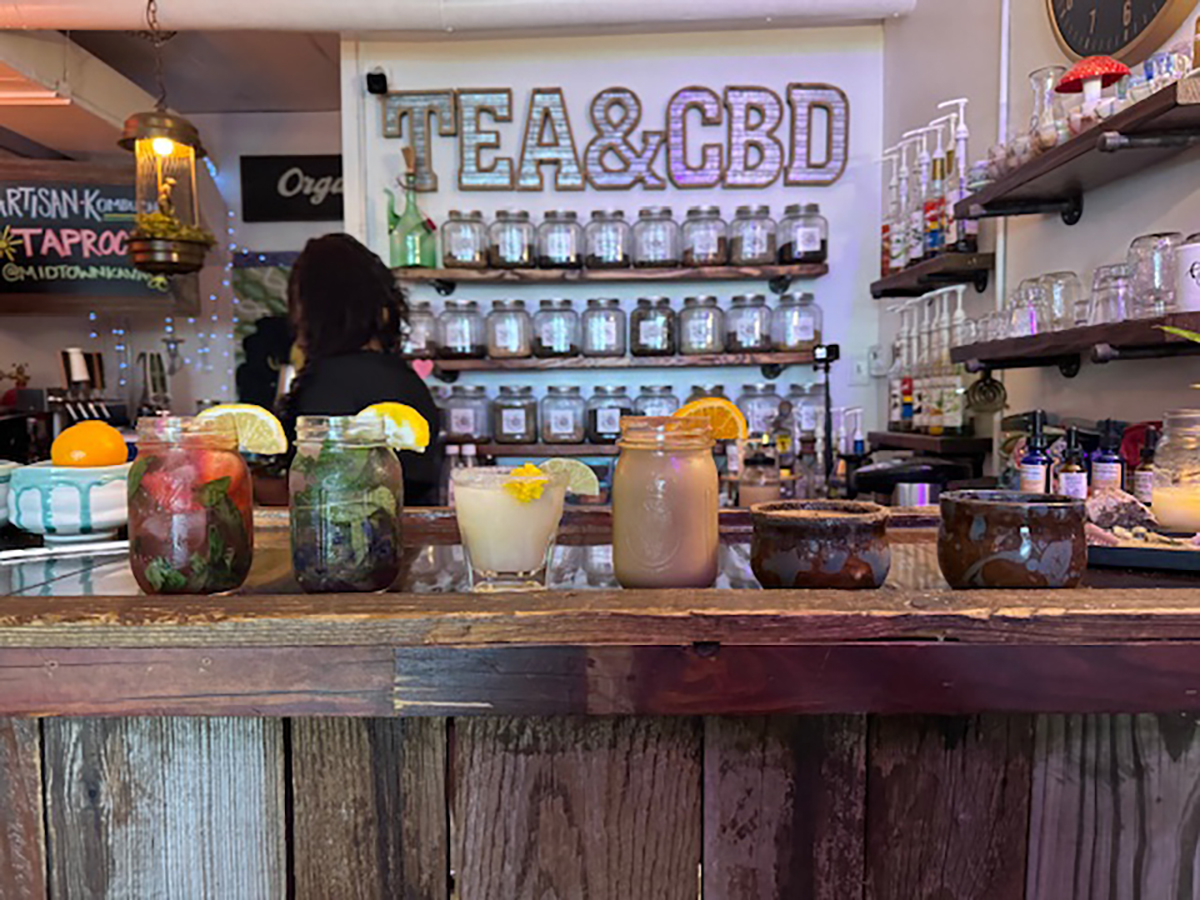
Sacred Sips on the menu at Namaste & Midtown; photo by Tiffany Watts, The Kansas City Defender
What’s on the menu
Rather than simply replacing what was, the team behind Namaste & Midtown is expanding the original vision with intention and care. While honoring the roots of Midtown Kava’s menu by keeping beloved staples like kombucha, traditional kava drinks, and THC-infused herbal teas, they’re also elevating the experience with new offerings that center healing, flavor, and ritual.
The new menu features a lineup of handcrafted, zero-proof Sacred Sips, each one crafted to help guests slow down, reconnect, and take up space unapologetically.
A few new standouts are the “Blue Moon,” which blends traditional house kava with creamy coconut, 10mg of CBD, and a microdose of THC for a dreamy, grounding ritual. For something bold and otherworldly, “Glitch in the Matrix” pairs kava with ube coconut cream, vanilla matcha, and a swirl of creamy surrealism. And if you’re looking for a sacred jolt, “Astral Grounds” fuses cold brew coffee, functional mushrooms, cacao, and eucalyptus honey with traditional kava for an earthy, energizing brew.
Brown describes the drinks as social tools, explaining, “Kava lets people with anxiety be in a bar without alcohol.” Intention is everything, they add, which is why the team rejects the term ‘mocktail.’ “We’re a community altar,” Brown said. “Every drink is medicine.”
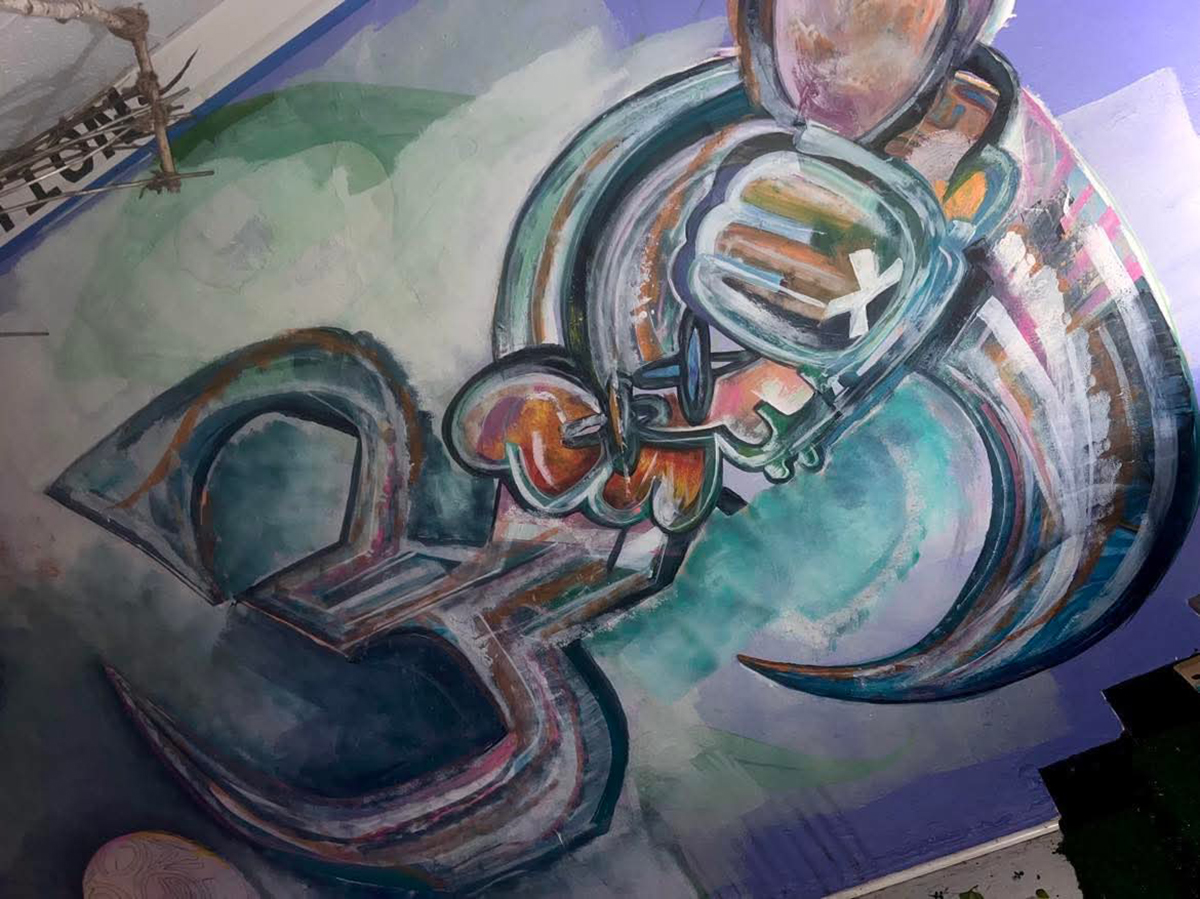
Mural in progress at Namaste & Midtown; photo by Tiffany Watts, The Kansas City Defender
A shift you can feel
Beyond the renovations and new menu items, the space will continue to come alive through Tiny Shell Sessions, the cosmic trio’s signature performance series that invites Black and queer artists to share their gifts in a space designed for their full brilliance. These intimate gatherings offer entertainment and celebrate culture, healing, and visibility. Each session is a bold invitation to joy, rest, and radical belonging in a neighborhood that once denied Black folks exactly that.
They’ll also be continuing their Legacy of Light program. A radical act of care is woven into every Namastéan T-shirt. For each one sold, a second is gifted to a houseless neighbor, no questions asked. And for those without funds, simply asking for a free shirt is enough. It’s not just about clothing bodies, it’s about restoring dignity, building connection, and offering a powerful reminder: you are seen, you are valued, and you have a place here.
Despite the community’s growing excitement, some longtime patrons of the Volker neighborhood may be unsure of what to make of the shift. But for the team behind Namaste & Midtown, hesitation from the status quo isn’t a deterrent; it’s fuel.
“We’re reclaiming this space,” Brown said. “Whether they’re ready or not, we’re here, and we’re not going anywhere.”
Alan Wayne has already seen the ripple effect in real-time.
“More people have walked in here for the first time in the last couple of weeks than in the previous seven years,” Wayne says. “I’ve been around, I’ve seen the flow. I know what it was, and this is different.”
His connection to the space long predates ownership, giving him a grounded sense of just how much the energy and the intention have transformed.
But it’s not just foot traffic, it’s who is walking in, and why.
“Some people come in just to breathe,” Wayne shared. “Sometimes they don’t even need to order anything, they just need to not feel alone.”
From the Sacred Sips infused with calming herbs and ancestral ingredients, to the music, incense, and intentional energy that fills the space, everything is designed to ground, uplift, and remind guests they belong. One guest told Brown he comes when suicidal thoughts hit, knowing that someone will talk to him, offer a warm drink, or simply sit beside him.
“Some of us are out here trying to stay alive,” Wayne says. “This place isn’t just about kava, it’s about connection.”
Through ritual, community, and care, Namaste & Midtown is becoming a sanctuary for those navigating life’s heaviest moments, offering not just an alternative to alcohol but a real path to healing.
Beck frames the bigger picture. “We are building bridges, breaking barriers,” he said.
And when neighbors cross the threshold, they are greeted by staff with the words that have become the project’s mantra. Words that overturn decades of exclusion on this block: “Welcome home.”

Featured Business

2025 Startups to Watch
stats here
Related Posts on Startland News

Voodoo Volleyball bounces back in OP: Father-daughter duo doubles as new venture’s setters
Quinn Austin put several sports to the test as a preteen — racing from basketball practice to softball to volleyball. But she latched on to just one. “Volleyball. It was my sport. Everyone was having a good time,” she said. “We just loved the cheers — a cheer when we got a hit, a cheer…

Black farmers are losing ground in the fight to feed their communities, advocates say
More than a century of systemic land dispossession and discriminatory practices has left Black farmers with less than 0.6 percent of U.S. farmland — less than a third of the 16 million acres they operated in 1910, according to local urban farming advocates. They gathered Tuesday at Independence Boulevard Christian Church to confront this history…
Cracking egg-flation: How farmers, substitute ingredients help restaurants mitigate price spike
Editor’s note: This story was originally published by Kansas City PBS/Flatland, a member of the Kansas City Media Collective, which also includes Startland News, KCUR 89.3, American Public Square, The Kansas City Beacon, and Missouri Business Alert. Click here to read the original story. Whether ordering an omelet, French toast, chicken n’ biscuits, chilaquiles, corned beef hash…

Soccer tennis comes to KC ahead of World Cup; here’s how a weekend street festival is kicking it across the map
Ryogoku Soccer Academy — with the help of local businesses like MADE MOBB, Café Ollama, and Café Cà Phê — is taking soccer from the pitch to the streets of Kansas City’s historic Northeast, Brad Leonard shared. As the metro gears up for hosting World Cup games in 2026, the neighborhood-based international school and soccer…