

KC govtech startup: You shouldn’t have to know how local government works to get answers (or make impact)
July 22, 2025 | Nikki Overfelt Chifalu

Even a ripple can make waves, said Mitch Mabrey, an exited cleantech founder whose new cause finds him on a mission to ensure that the voices of residents from all walks of life are more broadly heard — and answered — by their government officials.

Resonus, his Kansas City-based political information platform is designed to effortlessly connect users to local government by curating targeted conversations with officials and neighbors about the topics they care about most.
“The name comes from the Latin word for ‘resonate,’ so multiple people saying something amplifies it or makes it louder,” explained Mabrey, founder of Resonus. “We’re trying to really break down barriers of knowledge, so that people across the socio-economic spectrum can engage with the government when they’re interested in it.”
While doing market research around Kansas City, Mabrey — an innovator who previously co-founded the now-exited Spear Power Systems in Grandview — found that people consistently had an interest in being able to directly message leaders, he said.
“So I took that and did some customer discovery interviews with cities and counties and talked to them about their pain points around communicating with people,” Mabrey explained, noting those talks resulted in a product dubbed Resonus Conversations.
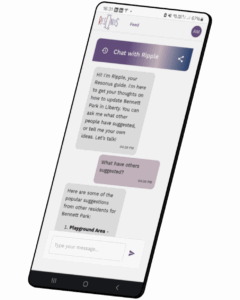
The Conversations platform will allow users within partner cities to chat with a bot named Ripple, Mabrey said, another naming nod to waves that resonate. He picked text messaging as the communication vehicle since it’s popular with both older and younger people.
“The long-term goal is that you could ask Ripple anything about local government and they would answer it for you,” he explained. “So you could ask a question like, ‘What day are the fireworks?’ ‘What day does my trash get picked up?’ ‘When do I pay my property tax?’ You could do a service request where you would say, ‘Someone hit the stop sign. Could someone repair it?’ ‘Or there’s a pothole here.’”
ICYMI: Meet 5 new startups bolstering KC innovation (now with a funding boost from Digital Sandbox)
What makes the platform unique, he said, is that users can make suggestions to local government and then engage in a dynamic conversation with officials and neighbors. No other tool he’s seen allows users to do that.
For example, Mabry explained, a user can suggest adding a bike lane to a certain street and give the reasons why they think it’s a good idea. Then other users who have opted into notifications for a certain area can weigh in on the idea of the bike lane. The platform then aggregates that information and sends it to the proper city officials. The open issue will stay on the city’s dashboard until the users that weighed in on the issue are informed of what the city decided.
“The idea is this super easy point of entry that all they have to do is know this number they text or they have this app on the phone that they just open up and start writing,” he explained. “They don’t have to do any research or know anything about how government works.”
“With our system we’re really trying to just supplement traditional ways of the city communicating with residents,” he added.
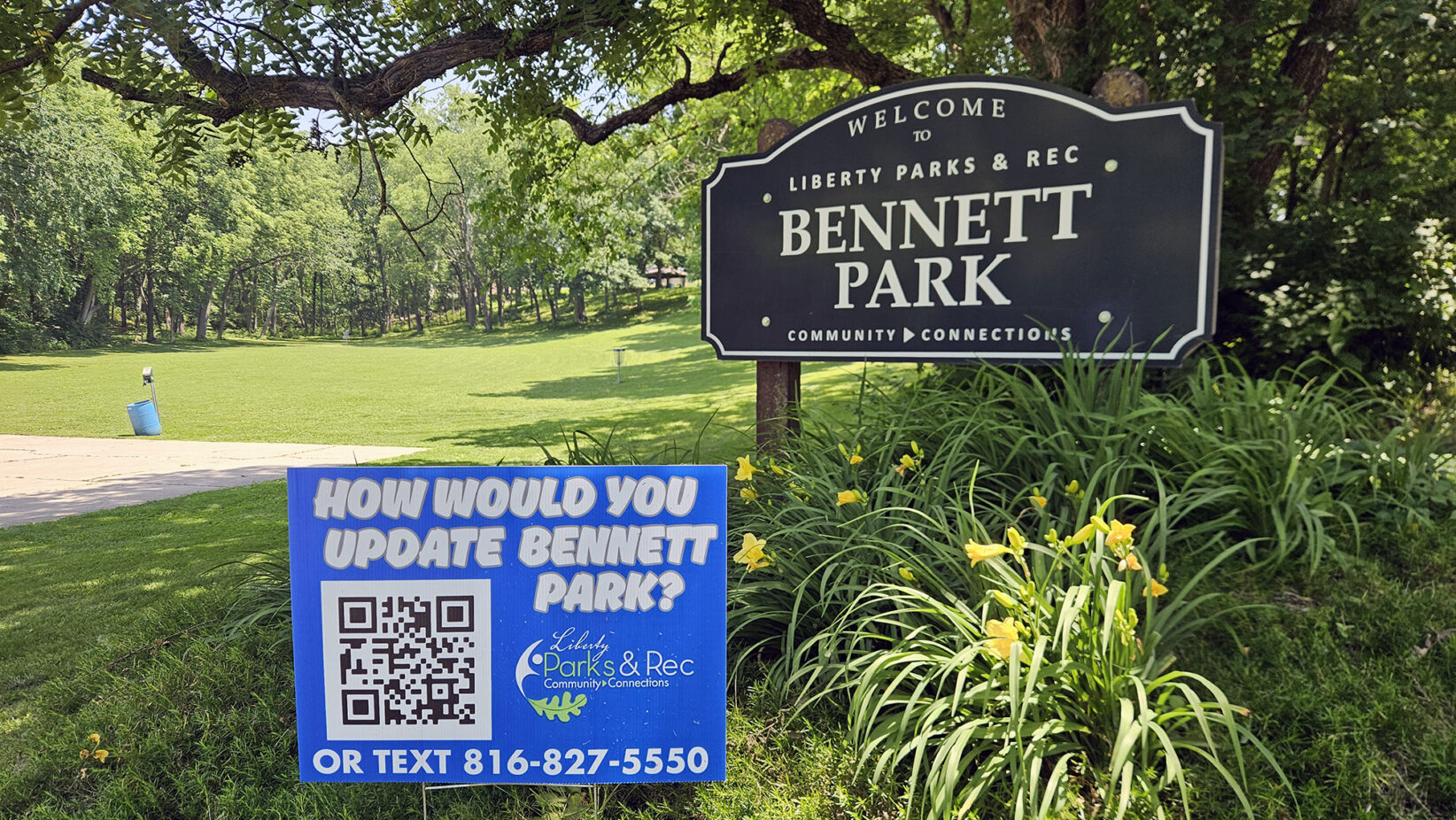
A Resonus at Bennett Park in Liberty, Missouri, helps residents better connect with local officials; courtesy photo
Testing the tech
Resonus is currently in the midst of a three-month partnership with the City of Liberty, Missouri, to test out the Conversations prototype, Mabrey shared, gathering input around parks improvements.
“We’ve already had 10 times the number of people use it than those that normally show up to their public meetings,” he said. “We’ve done a great job of validating anecdotal things that the parks (and recreation) director has heard. We have real data now showing that hundreds of people think that these top four to six ideas are their priorities for what to do with the parks improvements.”
“So far, I’m super excited,” he added. “It’s been working great. The parks director is really happy.”
One highlight from the pilot is that they have been overperforming with people in their 30s and 40s, he noted.
“If we look at the distribution of other folks who are participating versus the population curve for Liberty and Clay County, we’re outperforming in that working age — which is unusual for traditional public engagement around projects — because it tends to be retirees as they have time.”

Mitch Mabrey discusses Resonus at the Smart Cities Connect conference; courtesy photo
The govtech startup also has an upcoming pilot project with the planning and zoning department for a coastal city in the Southeast, Mabrey said. He connected with the city after KC Digital Drive recommended he pitch Resonus at the Smart Cities conference.
“They have a really innovative chief innovation officer,” he continued. “And they have this great program they call the Living Lab, a combination of economic development and allowing the city to try out new things. So essentially, they screen technologies like this, and then they find a sponsor within the city’s different departments — in my case the planning and zoning group — and everybody gets a fixed grant for the demonstration period.”
“Then, if it works, they can choose to re-up and to continue using an ongoing basis,” he added.
The city will be using the Conversations platform to help communicate with citizens as the city works on its land use comprehensive plan, he noted.
“It’s a city that has changed a lot,” he said. “It’s actually become quite a bit older and has a lot of Baby Boomers who are retiring there. So a big topic there is rentals versus people who own versus vacation rentals. I’m sure that will be something we’ll see a lot of comments on.”
Mabrey also attended the Civ Start State of Gov Tech for the second year in June and has ongoing conversations with cities from across the country, he noted. He’s targeting cities with populations of 5,000 to 50,000 and is always looking for cities who are interested in partnering.
“The idea is to try to get a foothold in a regional market with one city, get them set up in a pilot, convert them to a recurring subscription, and then add cities around them,” he explained. “For Ripple to offer a seamless user experience we need adjacent cities as customers.”
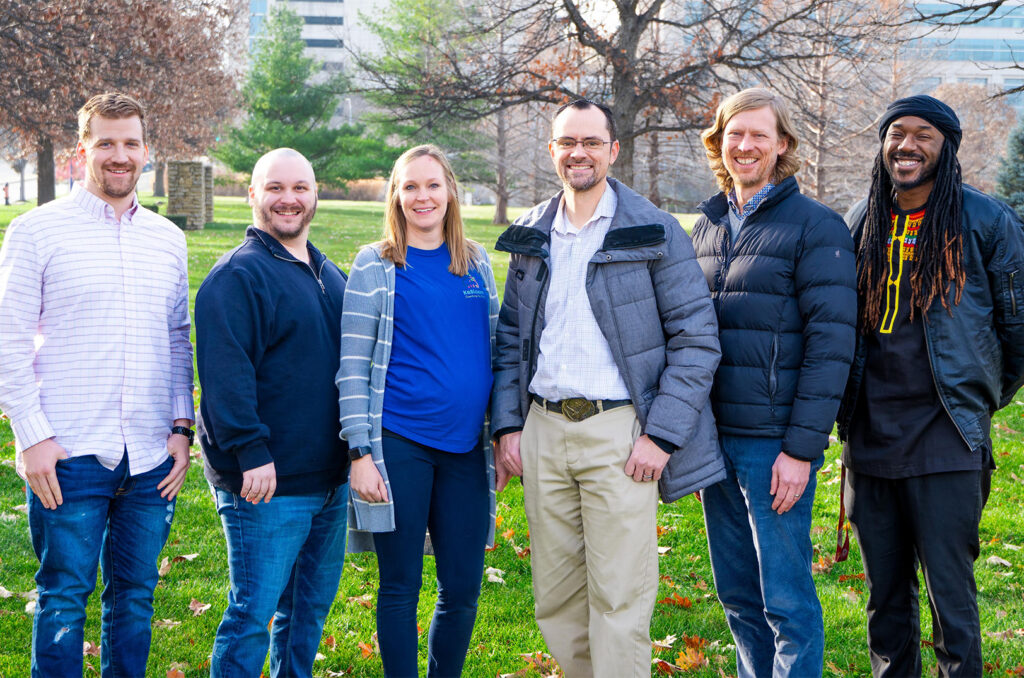
Digital Sandbox KC Q4 2024 winners: Alex Snook, CEO, and Errick Quartucci, COO, On | Sight; Erin Minoski, founder and owner, KaBloom; Zack Edwards, president, Xogos Gaming; Mitch Mabrey, founder and CEO, Resonus; and Rich Chungong, founder and CEO, Produce Matrix
Fertile ground for innovation
While Mabrey spent more than a decade working in the electric battery industry, he also has a little bit of experience in government, he shared; Mabrey was in the U.S. Foreign Service from 2003 to 2007, living in places like Guyana and Paris. He then spent time in South Africa in 2023 — where he researched a lot about the political and economic situation — before returning to Kansas City.
“As we were headed back to the States I realized the antagonistic view of Americans toward government at many levels was not so different from what we had seen abroad,” he said.
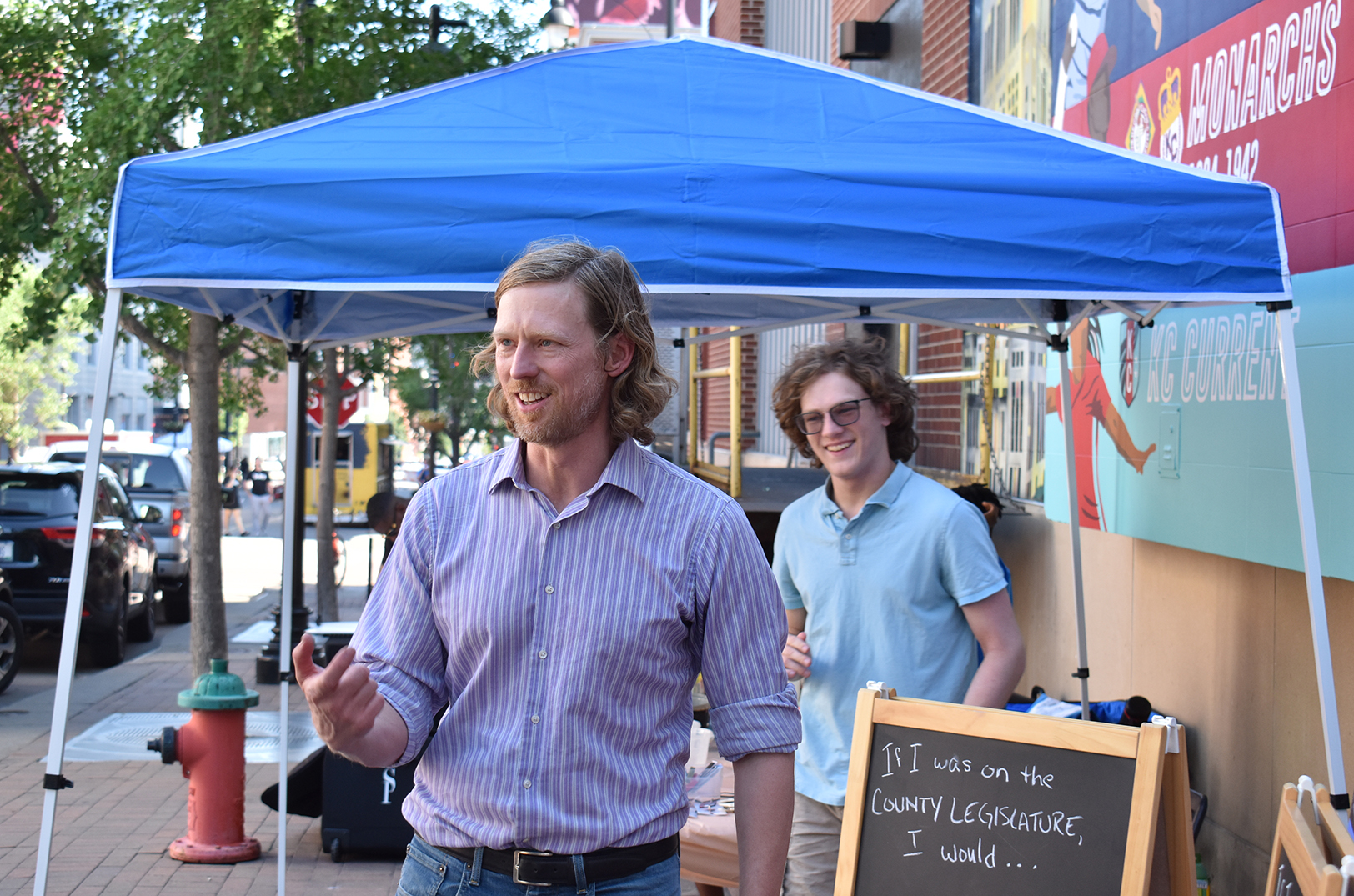
Mitch Mabrey, Resonus, shares about an early version of his startup during the June 2024 Startup Crawl in the Power & Light District in downtown Kansas City; photo by Tommy Felts, Startland News
So for the August 2024 primaries, he began working on a tool to help people know more about down-ballot candidates — crafting the early stages of Resonus’ story.
“We built an AI tool that created profiles for all candidates and then showed you which candidates had the strongest correlation to your personal interests,” he explained. “Unfortunately, that type of service is challenging to monetize. We’d still like to offer it in the future as a complement to what we’re working on now..”
Shortly after the primary, Mabrey pivoted to doing his research that led to Conversations. He said that if the platform is going strong by March and can subsidize the voter info tool, then he would consider having it ready for the August 2026 mid-term primaries.
“But if it’s not then, then we won’t,” he added.
With other govtech businesses like PayIt, mySidewalk, and Daupler in the Kansas City area and CivicPlus in Manhattan, plus the Federal Reserve, IRS, and GSA in Kansas City, the region is an interesting test bed for startups like his, he noted.
“We actually have a decent little cluster of govtech businesses,” he explained. “It’s a place where the Kansas City startup ecosystem could develop more businesses in this area.”

Featured Business

2025 Startups to Watch
stats here
Related Posts on Startland News

Tech startup Bungii is your new friend with a truck
“Hey, can I borrow you and your truck this weekend?” It’s a question dreaded by truck owners everywhere, and in April of 2015, it made Ben Jackson regret ever buying his 1999 Ford Ranger. Jackson — and his truck — had just finished an exhausting day helping friends make four hauls across Manhattan, Kan. The…

Google Fiber hops to new, pricier plans for businesses
All good things — or in this case inexpensive things — must come to an end. Google Fiber will soon nix early-access pricing for its gigabit business service and will more than double its costs for new customers in August. Google Fiber — which first arrived in Kansas City in 2012 with residential service —…

Amazon to bring 1,000 jobs, huge facility to KCK
Online retail giant Amazon will open a massive new facility in Kansas City, Kan. The Seattle-based company announced Monday that it will create more than 1,000 full-time jobs and construct an 855,000-square-foot fulfillment facility near the Turner Diagonal on I-70 in Kansas City, Kan. “These aren’t just any jobs. They are the best entry-level jobs our…

Survey: KC is sticky for startups with equity funding
A majority of Kansas City startups choose to maintain their hometown roots after they raise capital — even when the funds come from outside investors, a recent survey found. Of the companies that raised money in 2013 and 2014, 74 percent of them are still active and headquartered in the City of Fountains, according to…