

‘Another tool in my tool bag’: Digital artist uses AI to collage KC Streetcar stop
July 18, 2025 | Julie Denesha
Editor’s note: The following story was published by KCUR, Kansas City’s NPR member station, and a fellow member of the KC Media Collective. Click here to read the original story or here to sign up for KCUR’s email newsletter.
Artificial intelligence had a hand in a new art installation at a Kansas City Streetcar stop; David Morris’ abstract digital collage is called ‘Music is Community,’ part of this year’s Art in the Loop program
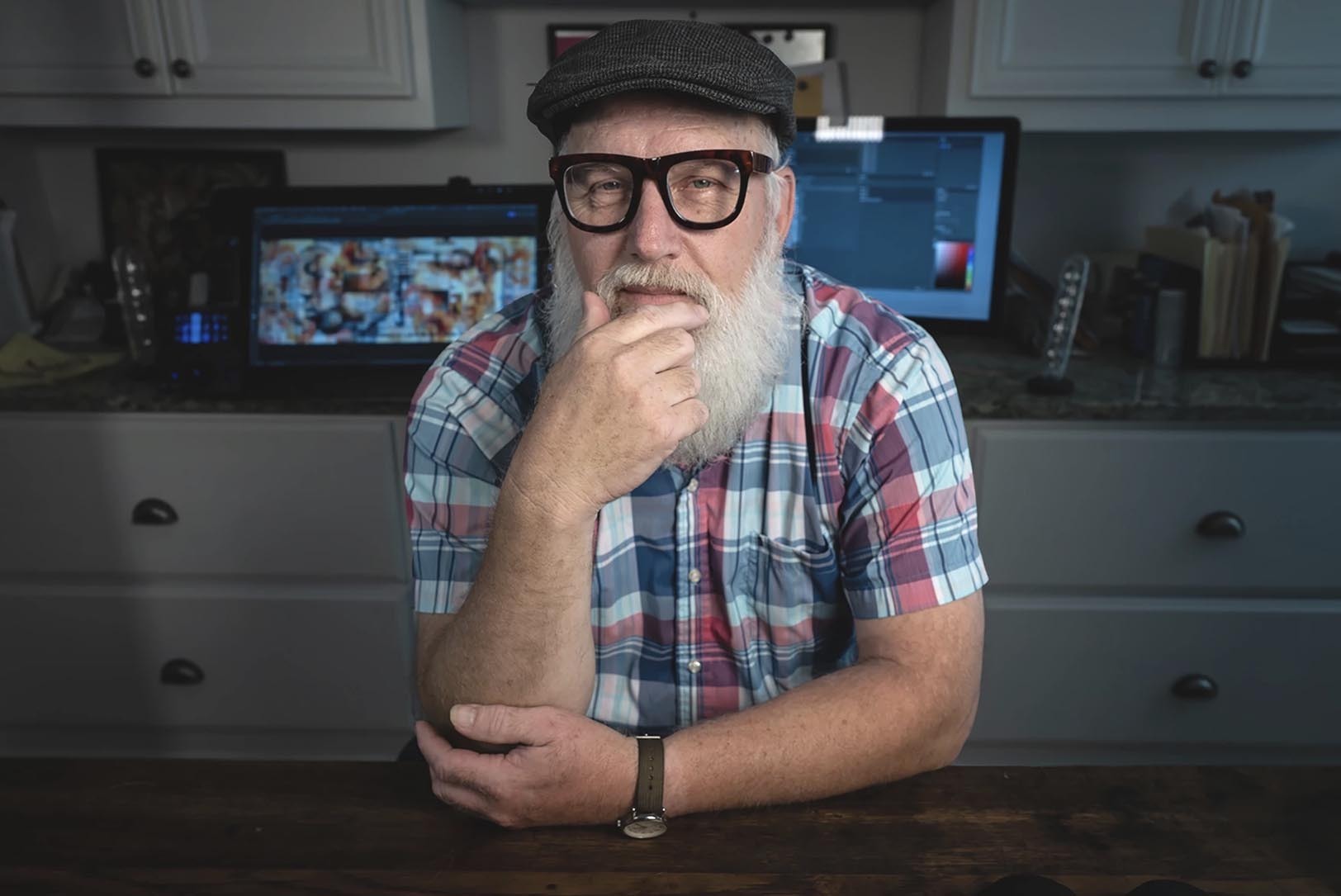
When Kansas City photographer and digital artist David Morris set out to find a way to connect Kansas City’s Crossroads Arts District with the Historic 18th and Vine district for an installation at a streetcar stop, he turned to artificial intelligence to kickstart the process.
“I love jazz, and music is sort of like the universal language,” Morris said he asked himself. “So how can I incorporate all that into one visual?”
His abstract digital collage “Music is Community” is the result. It combines two opposing faces layered in rich, warm tones with musical notes and instruments.
The artwork is a part of this year’s Art in the Loop project, installed at the Kauffman Center southbound streetcar stop, at 16th and Main streets.
“I’ve always felt like there was a disconnect between the 18th and Vine and Crossroads Arts District, and when I was chairman of the Crossroads for a number of years, there was always this drive to try to connect the two communities,” Morris said.
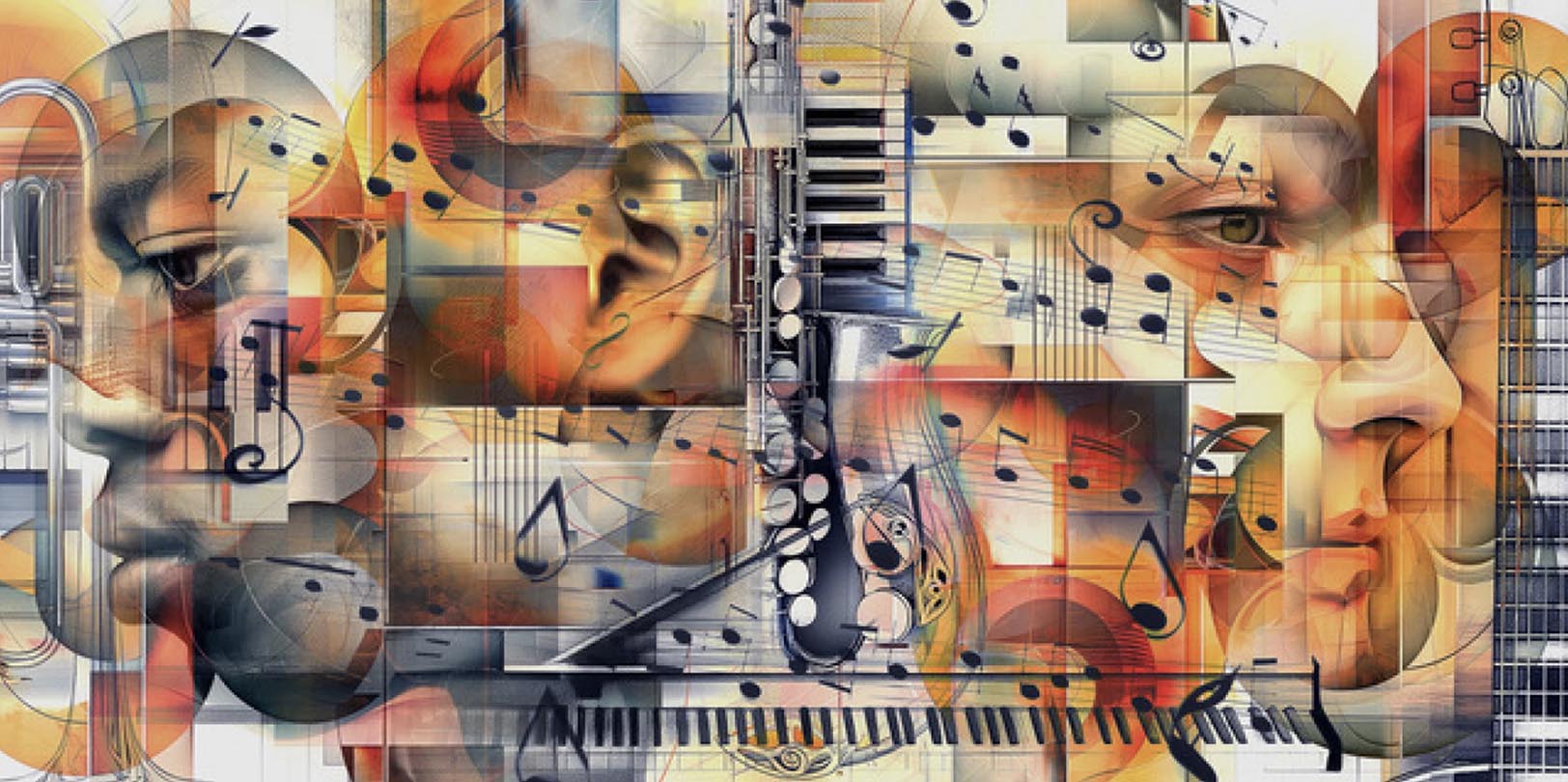
“Music is Community” is installed at the Kauffman Center southbound streetcar stop, at 16th and Main streets; image courtesy of David Morris
Like most applications of artificial intelligence, its use in art is controversial. It’s sparked debates about artistic ownership and creativity, and there are concerns around copyright infringement, since AI models are often trained on protected works without the permission of artists.
The controversy has led some artists to shy away from using AI. But Morris embraces it.
“Personally, AI is another tool in my tool bag,” he said. “Now, if you use that solely to mimic someone else’s style, then I don’t think you’re necessarily a good artist.”
Using AI is just the first in Morris’ multistep creative process to make sure that he creates authentic works. He uses a display tablet to layer in brush strokes much like an artist would use a paintbrush on a canvas.
“It’s just one tool, and I’ll take that (image) into Photoshop. I might use one piece out of it,” he said. “The brushes that you can make yourself or that you can buy just are mind blowing of what they can do and accomplish.”
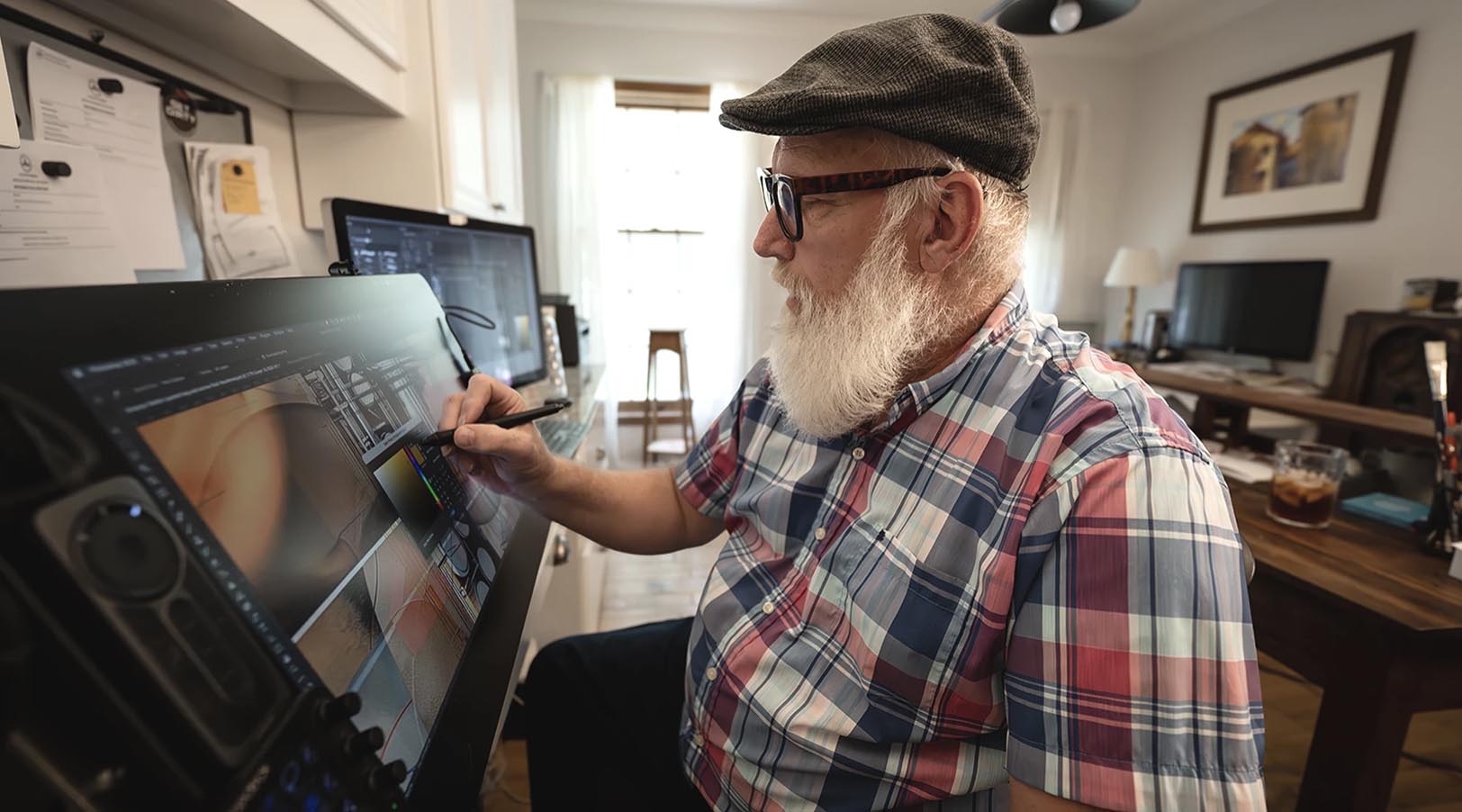
Morris uses a display tablet to layer in brush strokes much like an artist would use a paintbrush on a canvas. It’s part of a multistep creative process to make sure that he creates authentic works of art; photo by Julie Denesha, KCUR
Morris is a retired commercial and fine art photographer who’s lately transitioned to abstract digital art. For decades, his advertising photography was included in global campaigns for major clients like AMC Theaters and The Hershey Co. His work also appeared on Times Square billboards and in publications like the Kansas City Star and Martha Stewart magazine.
“But during the pandemic, photography sort of shut down,” Morris said. “I retired and I was sort of looking for something else besides photography.”
A YouTube video led him to start exploring AI in 2020. He said it’s opened the door to a new form of expression.
“You can train these things to essentially express your personal vision. Again, it’s just one tool to make what you see in your mind, able to put it on a piece of paper or on a screen,” he said.
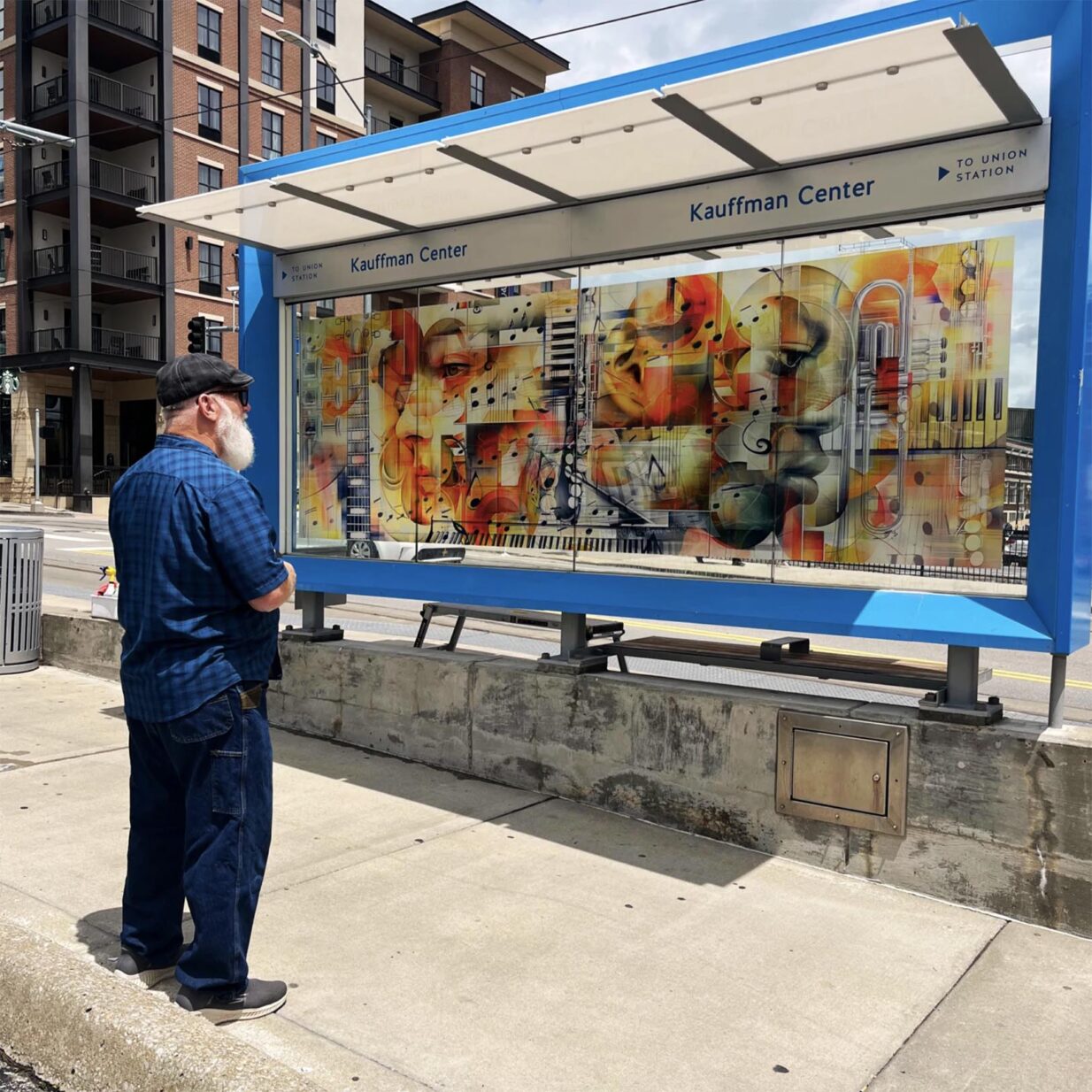
David Morris checks out the digital collage after it was installed in late May at the Kauffman Center streetcar stop; photo by Andrezza Scala, Art In The Loop Foundation
Photography itself created anxiety for artists when it was invented in the early 19th century. Some saw it as a revolutionary tool and others saw it as a threat that lacked the artistic expression and skill of painting.
“From today, painting is dead!” French painter Paul Delaroche declared after seeing one of the first daguerreotypes at an 1840 exhibition.
But photography is now a widely accepted form of art, and Morris thinks artists will come around on AI, too.
“I understand, especially early on, people would put in their prompt: ‘Make me an oil painting that looks like Jackson Pollock.’ And it will do it, amazingly,” Morris said. “But that’s not you. That’s not your art. That’s mimicking of somebody else’s art.”
Instead, Morris said, art comes from within.
“(A) famous photographer once said, you’re fooling yourself if you think that the tools that you use create the art,” Morris said. “It’s your heart and mind and vision and soul that creates the art.”


2025 Startups to Watch
stats here
Related Posts on Startland News
WiGo trips isolated travel in its tracks, connecting like-minded journeys through years-in-the-works app
WiGo Trips takes the isolation out of globetrotting, said Jaqui McCarthy, connecting people on a “LinkedIn for travellers” social networking app set to launch Saturday. Soon to be available on iOS and Android, WiGo is expected to feature a marketplace through which users can display and discuss travel plans, CEO and co-founder McCarthy said. Selected…

Daytime TV exposure weaves new challenge for once-bullied teen wig designer: a startup reality check
Fifteen-year-old Trenton Lee found his purpose on the brink of suicide, he recalled, glossing through the pages of a portfolio chronicling the first months of his newly launched Kansas City wig business — a path that ultimately led him to a couch alongside TV and radio personality Steve Harvey. “I was just at the lowest…
Target deals new verse to KC-born Mixtape card game; players could pick founder’s next tune
Mixtape allows players of the KC-made card game to “hide behind the song,” connecting without fear of vulnerability, said creator Joel Johnson. That appeal recently helped push the cross-generational, multi-genre product onto Target shelves across the country. Players draw cards with such scenario questions as, “What song or band changed the way you think about…

Fund Me, KC: GenU looks in the mirror to remove student mental health stigmas
Startland News is continuing its segment to highlight area entrepreneurs’ efforts to accelerate their businesses. This is an opportunity for entrepreneurs — like those working on behalf of the mental health support site GenU — to share their crowdfunding stories to gain additional support. Who are you and what is your organization? Risa Stein, PhD…