

How KC transformed entrepreneurship from counterculture into a model for the mainstream
July 25, 2025 | Taylor Wilmore
Veteran ecosystem builders returned to the Heartland this week, urging a new generation of entrepreneur advocates to embrace Kansas City’s style of experimentation and its uniquely collaborative startup culture.
Jonathan Ortmans, founder of Global Entrepreneurship Network (GEN), speaks during the Kauffman FastTrac and 1 Million Cups Summit; photo by Taylor Wilmore, Startland News
“Entrepreneurship is not spreadsheets and business plans,” said Jonathan Ortmans, who founded the Global Entrepreneurship Network (GEN) — the nonprofit parent of Global Entrepreneurship Week — in 2008 alongside the Ewing Marion Kauffman Foundation. “It’s a social, creative experiment. That’s why it has to be done by the community, and Kansas City gets that.”
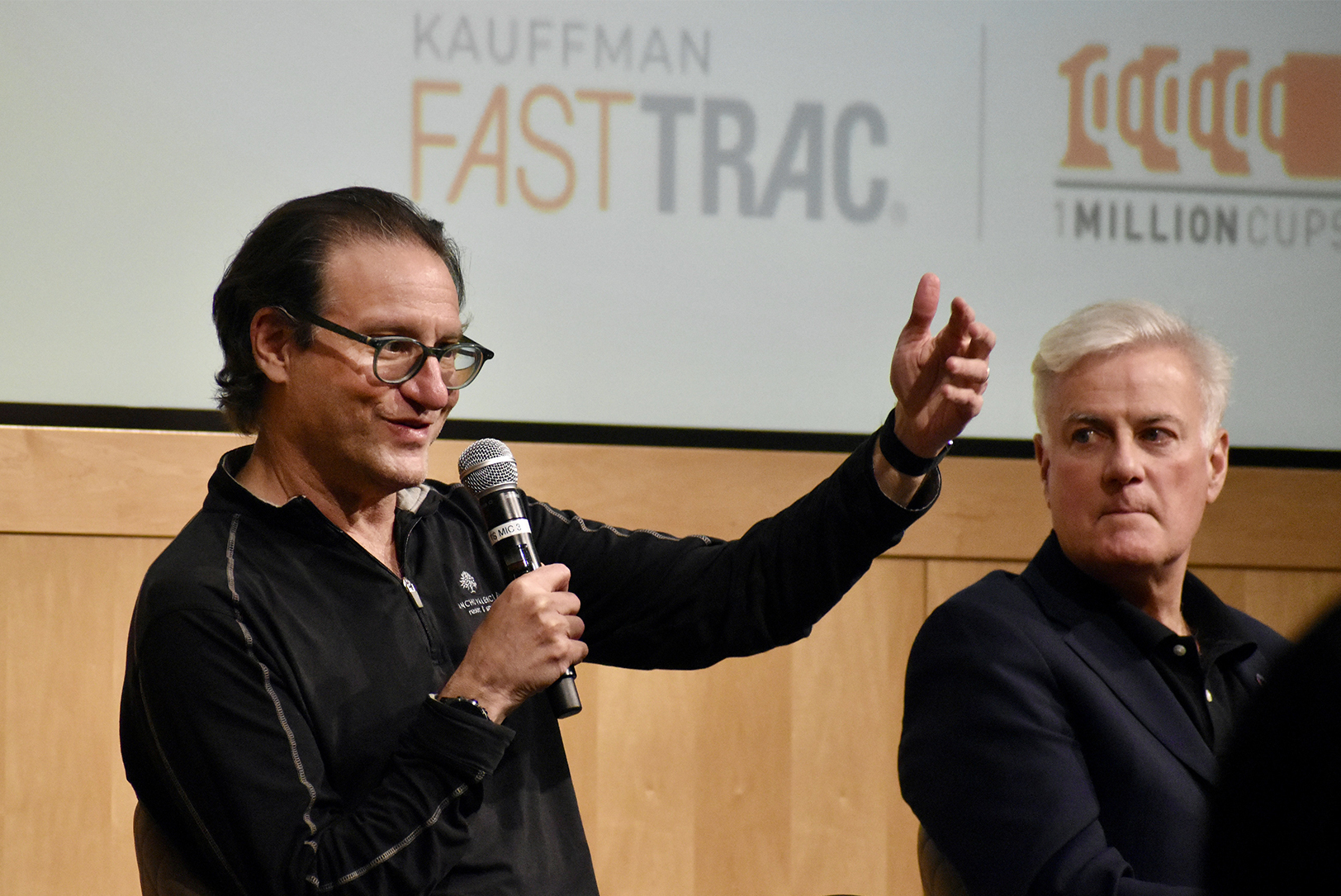
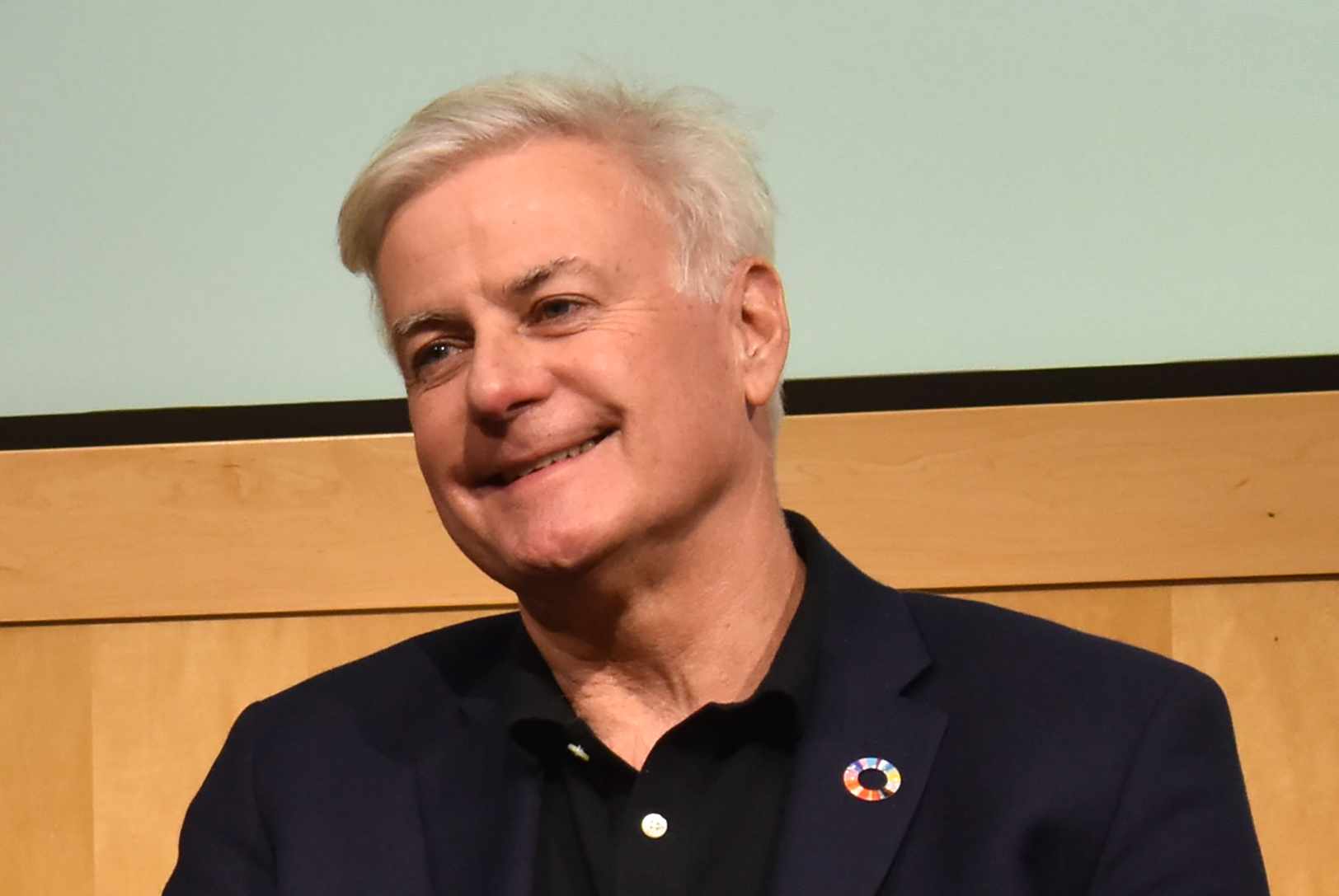
Ortmans joined startup community icon Brad Feld, author and co-founder of Techstars and the Foundry venture capital firm, Wednesday for a candid fireside chat during the first-ever Kauffman FastTrac and 1 Million Cups Summit.
The collaborative, three-day event was designed to connect local startup advocates and volunteers with global innovation leaders. It brought together 1MC organizers and FastTrac affiliates from across the country to explore how their volunteer-led programs — both initiatives of the Kauffman Foundation — can grow stronger together when rooted in community.
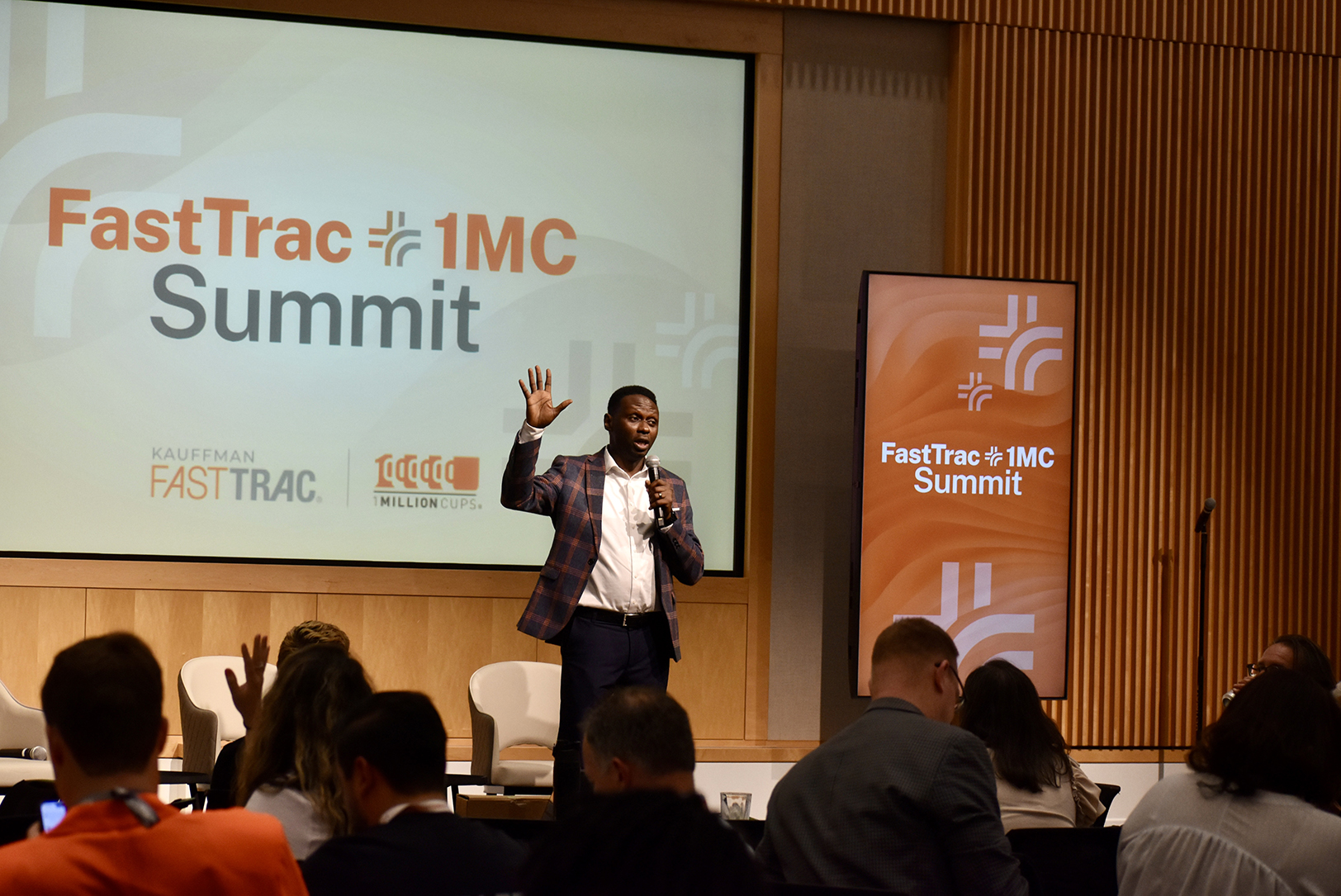
Olatunji Ajani, executive director for 1 Million Cups and FastTrac at the Ewing Marion Kauffman Foundation, speaks during the first-ever Kauffman FastTrac and 1 Million Cups Summit; photo by Nikki Overfelt Chifalu, Startland News
A model led by people
An economist by training, Ortmans emphasized that real economic impact comes from people willing to take risks — pointing specifically to efforts embraced by him and Feld in 2012 as Kansas City’s startup community was forming its identity.
“We both bought startup houses in Kansas City when Google Fiber came. Thousands signed up to apply for those houses,” said Ortmans, recalling the early days of Kansas City’s Startup Village, where he and Feld invested in homes on a largely residential strip of State Line Road to serve as hubs for founders.
A mix of that kind of grassroots community building, leadership, and civic support in Kansas City helped make it a national model for ecosystems, he said, urging ecosystem builders from across the country to take note.
“We all work in a fairly under-resourced field,” Ortmans said. “And yet, we depend on a huge amount of volunteer time. That’s what makes programs like 1 Million Cups and FastTrac so powerful, they’re led by people who give first.”
That theme resonated with Feld, who shared his own experience as a lonely founder in Boston.
“A founder creates something where nothing previously existed,” he said. “And that’s incredibly hard. Being a founder or CEO is lonely; it was for me in Boston. I didn’t know where my people were.”
That isolation pushed Feld to spend the next 30-plus years building communities around entrepreneurs, eventually shaping what became “The Boulder Thesis,” a four-part framework for building sustainable, founder-led ecosystems.
“Leaders have to be founders or instigators,” he said. “You need a 20-year view. Be inclusive to anyone who wants to engage. And create regular activities that engage people in entrepreneurship.”
Feld pointed to Kansas City, especially 1 Million Cups, as a clear example of the thesis in action.
“In 2012, this was a kind of counterculture,” he said. “Now, it’s woven into the fabric.”
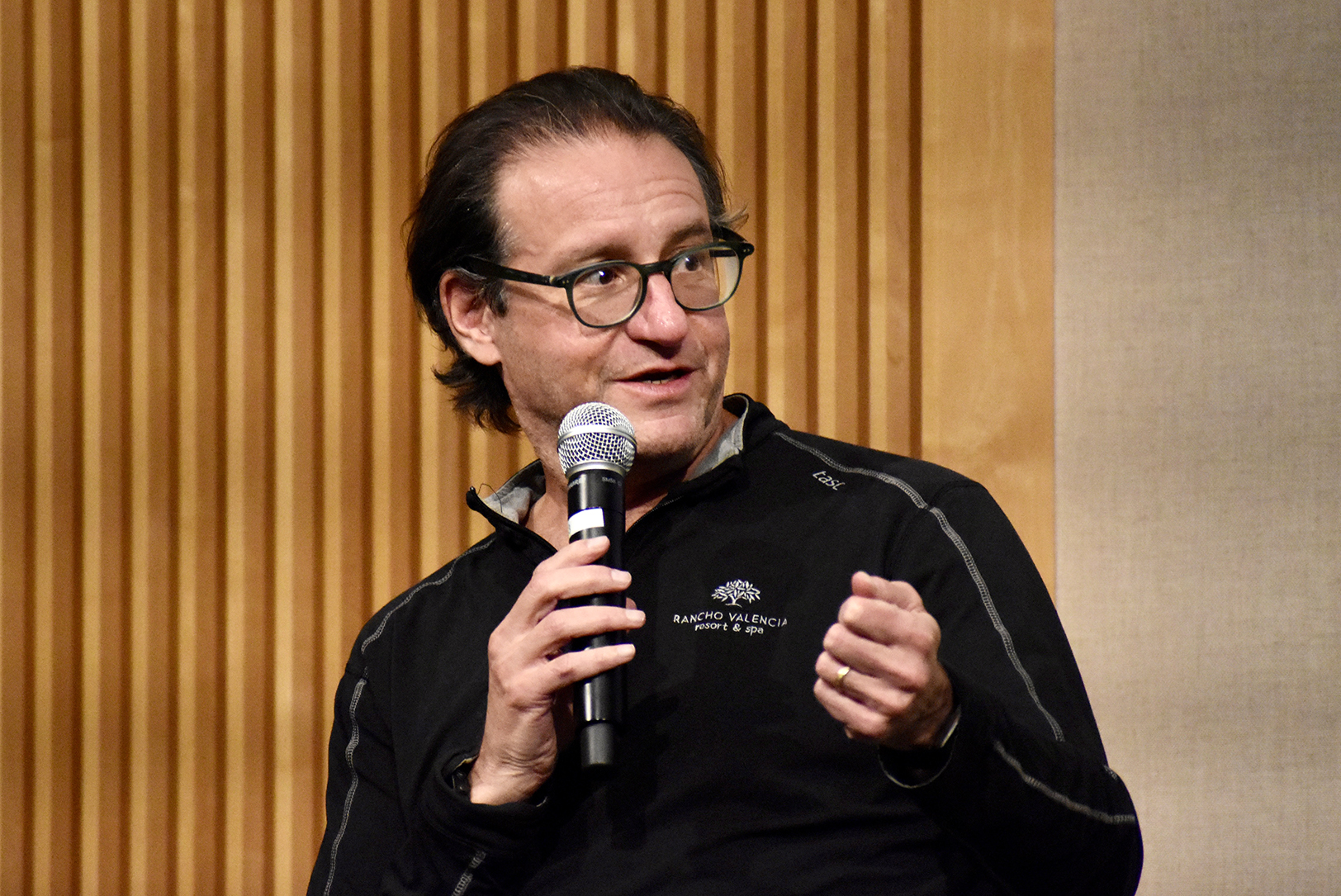
Author, investor and ecosystem builder Brad Feld speaks during the Kauffman FastTrac and 1 Million Cups Summit; photo by Nikki Overfelt Chifalu, Startland News
Leading with generosity
Feld’s ninth and latest book, “Give First: The Power of Mentorship,” was given to attendees at this week’s summit, reinforcing the importance of non-transactional support in building strong entrepreneurial communities.
“‘Give First’ means putting energy into a system without knowing what you’ll get back,” Feld explained. “It’s not altruism; you expect a return: you just don’t know when or from whom. It’s non-transactional, positive-sum, and long-term.”
He also offered advice on mental health, burnout, and the importance of boundaries.
“You have to take care of yourself to be effective,” Feld said. “It’s not about balance, it’s about harmony. And sometimes that means stepping away. I call it going into hibernation; to recharge.”
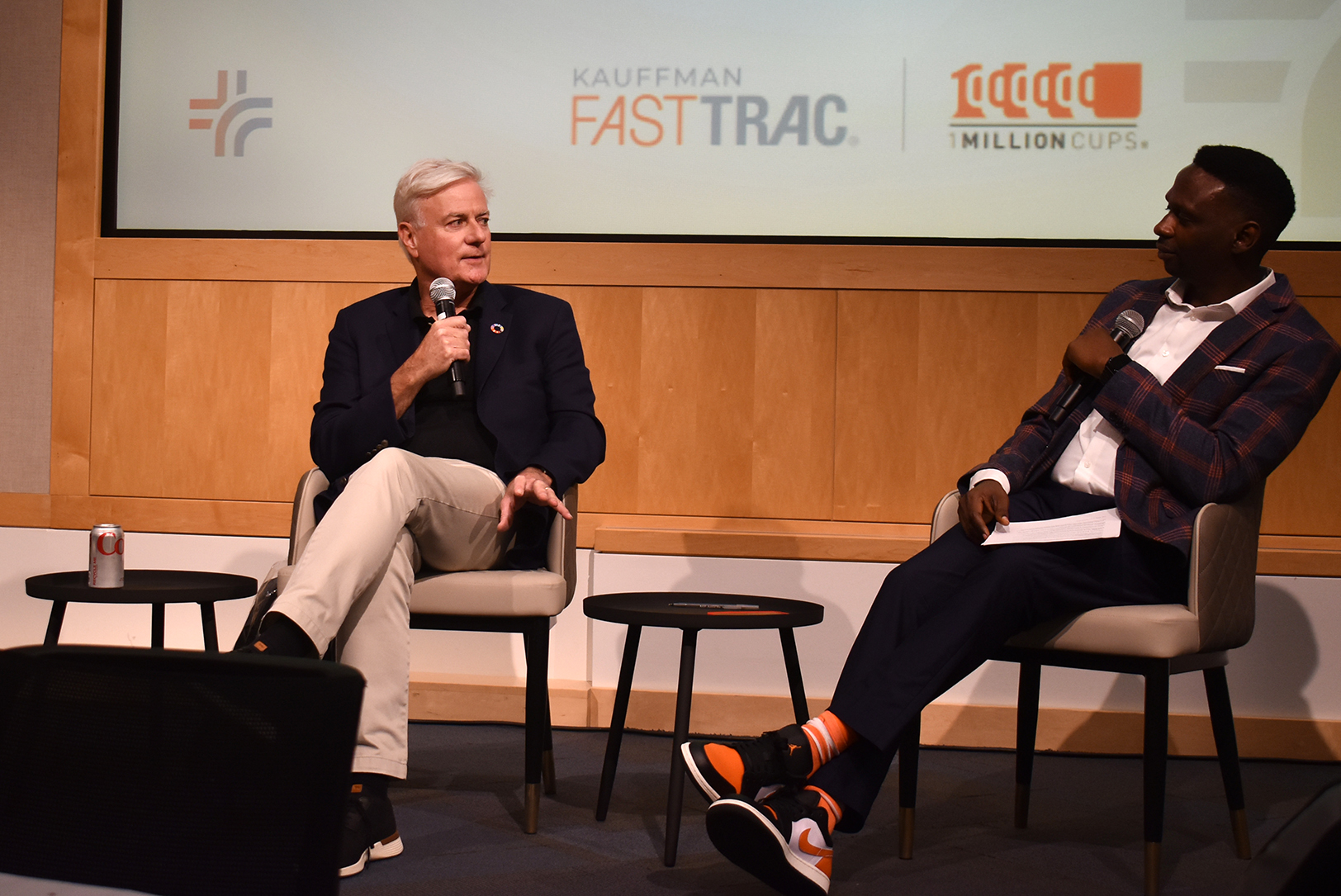
Jonathan Ortmans, founder of Global Entrepreneurship Network (GEN), speaks during the Kauffman FastTrac and 1 Million Cups Summit; photo by Taylor Wilmore, Startland News
Expanding the impact globally
Ortmans encouraged attendees to take their local efforts global through GEN’s programs, including Global Entrepreneurship Week (GEW), organized annually in 200 countries the week before Thanksgiving. The initiative was first launched in 2008 in Kansas City before scaling out.
Kansas City’s GEW events for 2025 are set for Nov. 17-21 at Union Station.
“We don’t judge countries by who’s in power. We look at the people creating and building in their communities,” Ortmans said. “GEW is about connecting those builders to a global ecosystem.”
With 1MC and FastTrac leaders on track to be more aligned, Kansas City is helping lay the groundwork for deeper, more impactful collaboration, across the country and beyond, he said.
Ortmans ended with a reminder to the audience that entrepreneurship is about doing, not waiting.
“The message is: go build something. It doesn’t matter if you’re in a basement, it doesn’t matter if it’s just a cool idea,” he said. “Don’t wait for permission. Just go do it.”

Featured Business

Taylor Wilmore
Taylor Wilmore, hailing from Lee’s Summit, is a dedicated reporter and a recent graduate of the University of Missouri, where she earned her Bachelor’s degree in Journalism. Taylor channels her deep-seated passion for writing and storytelling to create compelling narratives that shed light on the diverse residents of Kansas City.
Prior to her role at Startland News, Taylor made valuable contributions as a reporter for the Columbia Missourian newspaper, where she covered a wide range of community news and higher education stories.
2025 Startups to Watch
stats here
Related Posts on Startland News

Global Prairie sues ag tech firm FarmLink for loan default
Kansas City-based marketing firm Global Prairie has filed suit against a local ag tech firm for defaulting on a loan, according to a document that was filed Nov. 14 in Jackson County Court. In the document, Global Prairie alleged that Kansas City-based FarmLink failed to fulfill payments on a promissory note in the amount of…

Judge: KC, St. Louis Tesla shops can remain open (for now)
As we said goodbye to 2016, Tesla — along with many other Americans — faced an uncertain future in the Show Me State. When the clock struck midnight, the auto maker’s license to sell cars in Missouri expired. This prompted the firm to close its three locations in Kansas City and St. Louis on Saturday — but not…

Eyeing a funding round? InvestMidwest deadline looms
The top investment forum in the Midwest is hoping to garner more applications from fast-growing firms in the Kansas City area. Now in its 18th year, the InvestMidwest Venture Capital Forum hosts investors from around the world that hope to hear from the region’s most-promising firms that need a boost of capital. Companies that presented…
How Meshuggah Bagels and Ruby Jean’s Juicery dealt with rapid growth
Imagine this. It’s opening day at your quaint cafe and you hope Kansas Citians like your bagels. It turns out they do — a whole lot. So much in fact that the line spills out the door for the next few weeks, spurring demand that’s more than 300 percent higher than anticipated. Pair that challenge…