

This keychain could stop an opioid overdose; carry the antidote — not the burden of guilt
June 5, 2025 | Haines Eason
ST. LOUIS — Easy access to life-saving naloxone (better known by the brand name Narcan) could’ve prevented the fatal overdose of Danielle Wilder’s close friend in college, the tragedy-prompted entrepreneur said.
Her friend was in possession of naloxone — a fast-acting medicine that can reverse the deadly impacts of an opioid overdose when delivered near-immediately by spray or injection — but he “didn’t have it on hand when it mattered most,” Wilder said.
“It’s hard to accept that something as simple as a nasal spray might have meant he’d be alive today,” she said.
Sadly, it wasn’t an isolated incident, Wilder said, recalling another incident when a group of her fellow medical students found an unresponsive stranger overdosing on a St. Louis sidewalk. They knew what to do, but didn’t have naloxone to save the person’s life, she said.
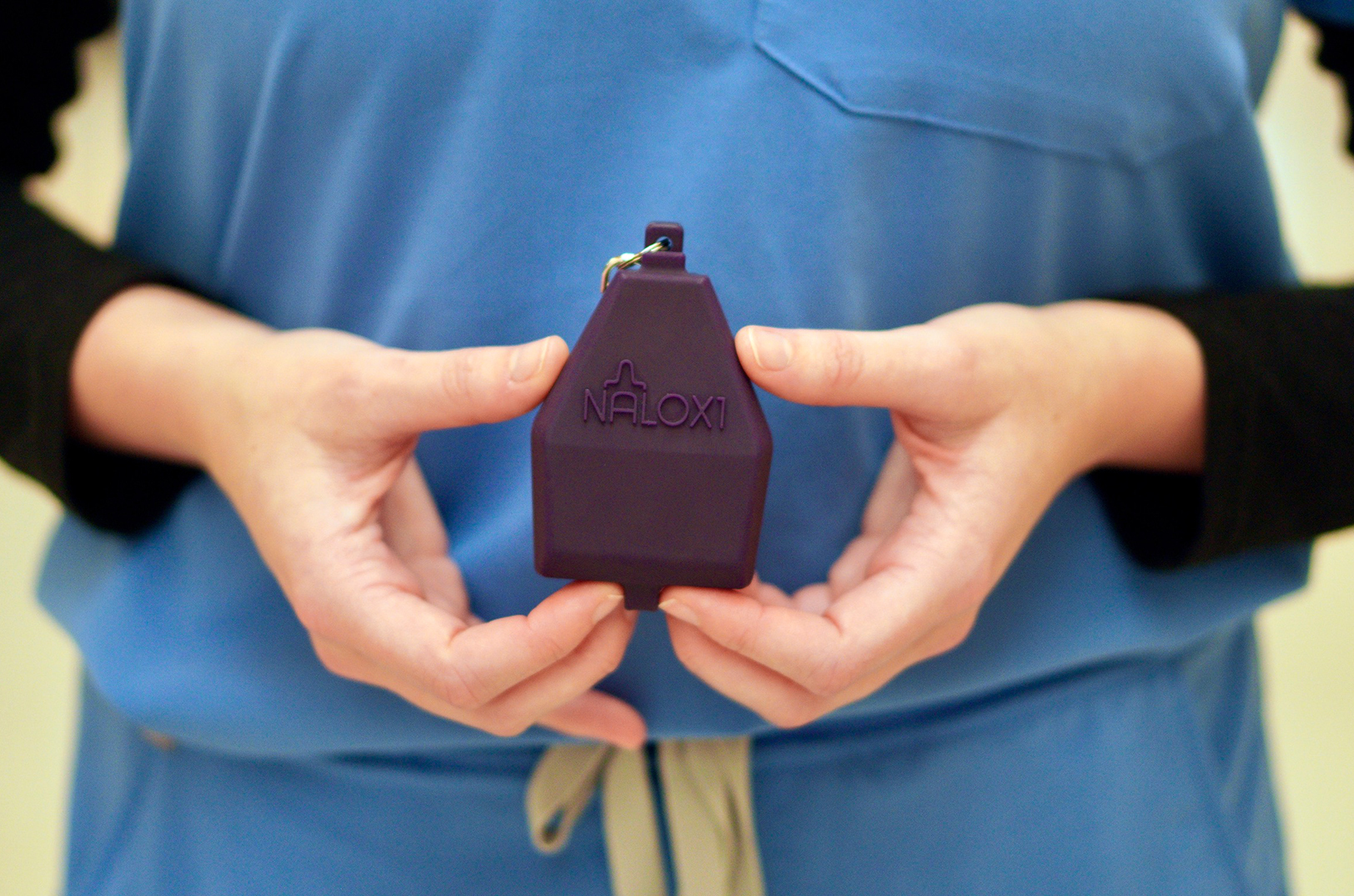
Such helpless moments inspired Wilder and her fiance, Matt Bitner-Glindzicz, to launch nCase Technologies around a flagship product, NALOX-1 — a carrying case that puts naloxone within reach at the worst moments, but with the most opportune timing.
Initially available through direct sales, NALOX-1 is expected to be available on Amazon soon, putting the company and product on the verge of what could be a breakout moment. More importantly, Wilder said, it’s a long-overdue win in the fight against opioid-related deaths.
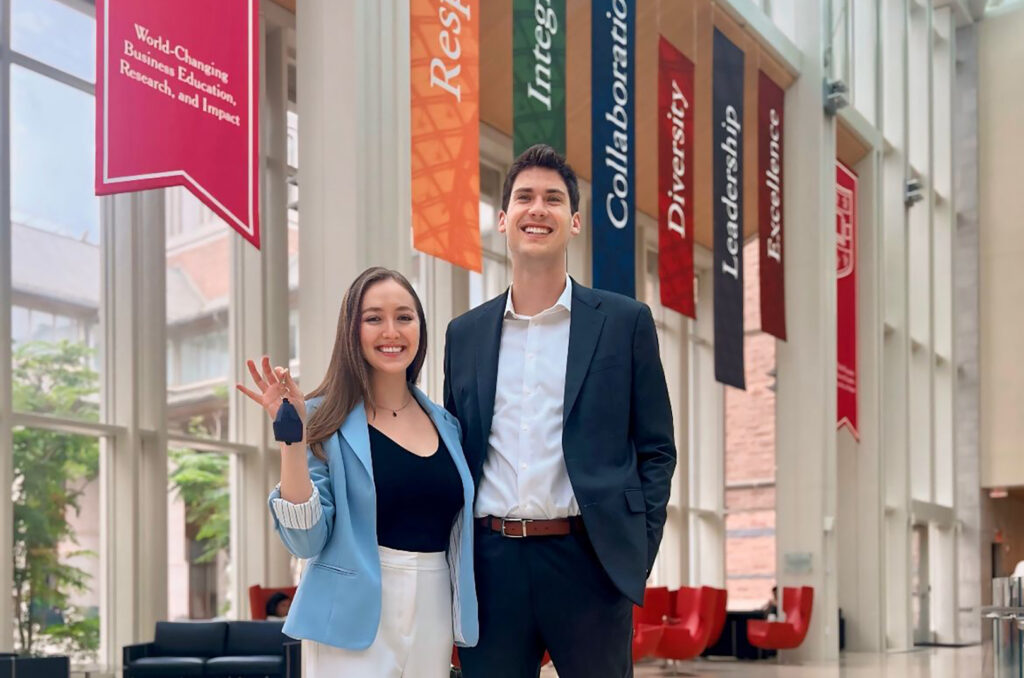
Danielle Wilder and Matt Bitner-Glindzicz, nCase Tech; courtesy photo
Overcoming the stigma
Now in medical school at Washington University in St. Louis, Wilder worked previously as an EMT and “saw firsthand the overwhelming feelings of guilt and helplessness that follow” an overdose, she said.

Danielle Wilder, nCase Tech
Both Bitner-Glindzicz and Wilder heard many stories from people wishing they had naloxone on their person during a crisis, though Wilder admits she herself wasn’t good about carrying Narcan, even after her friend’s passing.
“The packaging was bulky and inconvenient, and there wasn’t an easy, subtle way to carry it,” she said.
And there’s still a stigma tied to the medicine — namely the assumption that it’s only carried by addicts or that possessing it means a person is living a life where overdosing is common, Wilder added.
But overdoses “happen to people prescribed pain medications, people with chronic illness, elderly people and even children in households where opioid meds are present,” she said. “A dog recently overdosed at a local park and Narcan saved its life.”
Kitchen table to production line
Bitner-Glindzicz brought his technical prowess to Wilder’s mission to reduce preventable deaths.

Matt Bitner-Glindzicz, nCase Tech
A mechanical engineer by training, he saw a straightforward solution: Craft a case specifically designed to accommodate the Narcan delivery bottle that people would actually carry.
NALOX-1 comes to market as a discreet, durable and easy-to-use keychain device.
Unlike other solutions, it holds Narcan directly in a soft rubber designed around the shape of the medicine’s delivery system itself — no bulky packaging — making it practical for everyday carry. Soft silicone construction makes it tactilely appealing and easy to deploy in emergencies.
The nCase team conducted a beta test through which they consulted toxicologists, harm reduction experts and EMTs. They asked a simple question: Why hadn’t this been done before?
The answer was that no one had taken this design leap, and those who had tried hadn’t executed it effectively.
The device’s beta test included 120 users — a broad-of-career cohort that included everyone from bartenders to medical professionals. The results were compelling: While only 18 percent of Narcan owners regularly carried it before testing, with NALOX-1, that number soared to 79 percent. Even among testers new to the medicine, 65 percent began carrying it regularly. Most importantly, 10 percent reported using it to successfully save a life.
“When we got that first survey back confirming our product had saved lives, it completely redefined for me what impact means,” Bitner-Glindzicz said.
Power of preparedness
Seventeen years into recovery herself, Kri Korte works daily with pregnant women battling addiction. The opioid crisis is not a headline or statistic to her; its fallout is on the faces of the women she sees every day, she said.
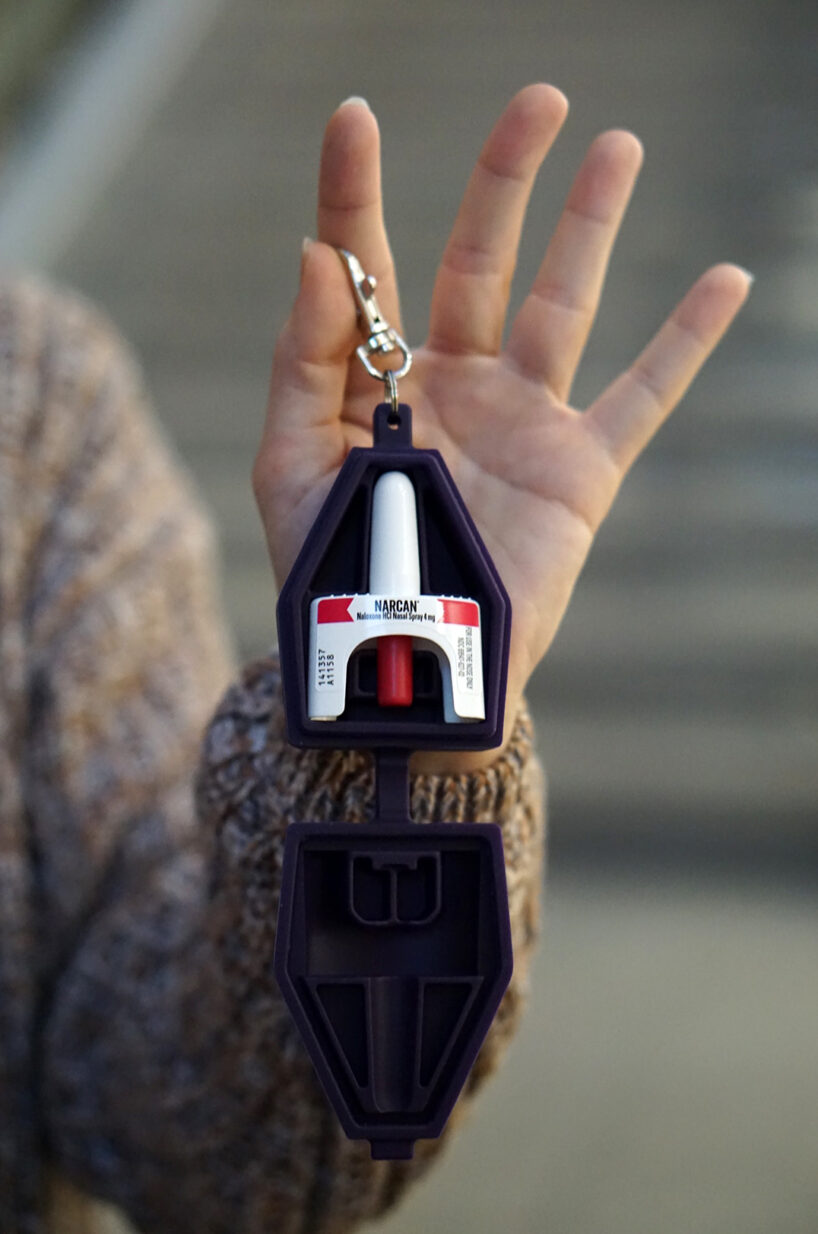
The NALOX-1 carrying case for easy transport of naloxone (better known by the brand name Narcan); courtesy photo
A certified alcohol and drug counselor working with the HEALthy Brain and Child Development (HBCD) Study at Washington University in St. Louis and in the CARE Clinic at Barnes Jewish Hospital, she knows firsthand what it means to be prepared — or not — when seconds count.
And, even as Korte battles the crisis at work, she also experiences it on her drives to and from work; it’s all around her.
“I live in North County, and between here and there, I get on and off the highway a few times and there’s always somebody at the stops at the interchanges with signs,” adding that some are clearly in distress and battling addiction.
“My Narcan was always in my truck, but it was always in the back,” she said. “I’d get so mad at myself, thinking, ‘Why isn’t this right here, next to me?’”
For Korte, the problem of having naloxone in reach was both practical and social.
“You can’t just throw Narcan in your jeans pocket or your purse and forget about it,” she said.
When Korte got her hands on the NALOX-1 case from nCase Tech, everything changed.
“Now I just clip it on my purse and it’s always with me,” she said. “And, I get asked about it all the time, especially when I speak at conferences,” which she does often.
Korte was a member of the beta cohort and, during that time, when asked about the NALOX-1 case, she said, “people would get so disappointed when I’d say it’s just a prototype kind of thing.”
Still, at conferences and in line at stores, Korte is happy to “get to show them what (the case) is and why it matters.”
And, with NALOX-1 on the verge of an Amazon debut, she’s excited.
Front lines to data dives
Caroline Cary, an MD/MPH student at Washington University in St. Louis, is now the director of health education and research at nCase. And, she was among the group of medical students — Bitner-Glindzicz’s and Wilder’s friends — who witnessed the pivotal overdose firsthand.
“I’m so, so happy that my incredible friends took that moment and turned it into something so positive,” she said.
Cary completed two years as an AmeriCorps volunteer before enrolling in medical school, one year being at a federally qualified health center.
“I worked with their medication assisted treatment program for substance use disorder and then also with their prenatal program,” she said, noting she’s hoping to do OB GYN for residency.
The AmeriCorps work ignited in her a passion for investigating opioid use disorder, and she said “that’s why it was particularly upsetting for me to see someone overdose and not be able to help.”
In her role with nCase, Cary is conducting a systematic review of both barriers to and factors helping people to carry naloxone.
“Obviously, for what we are doing as a company, it’s important to know why people are carrying or why they are not; troubleshooting those issues; and seeing if the case itself could be potentially a solution to that,” she said.
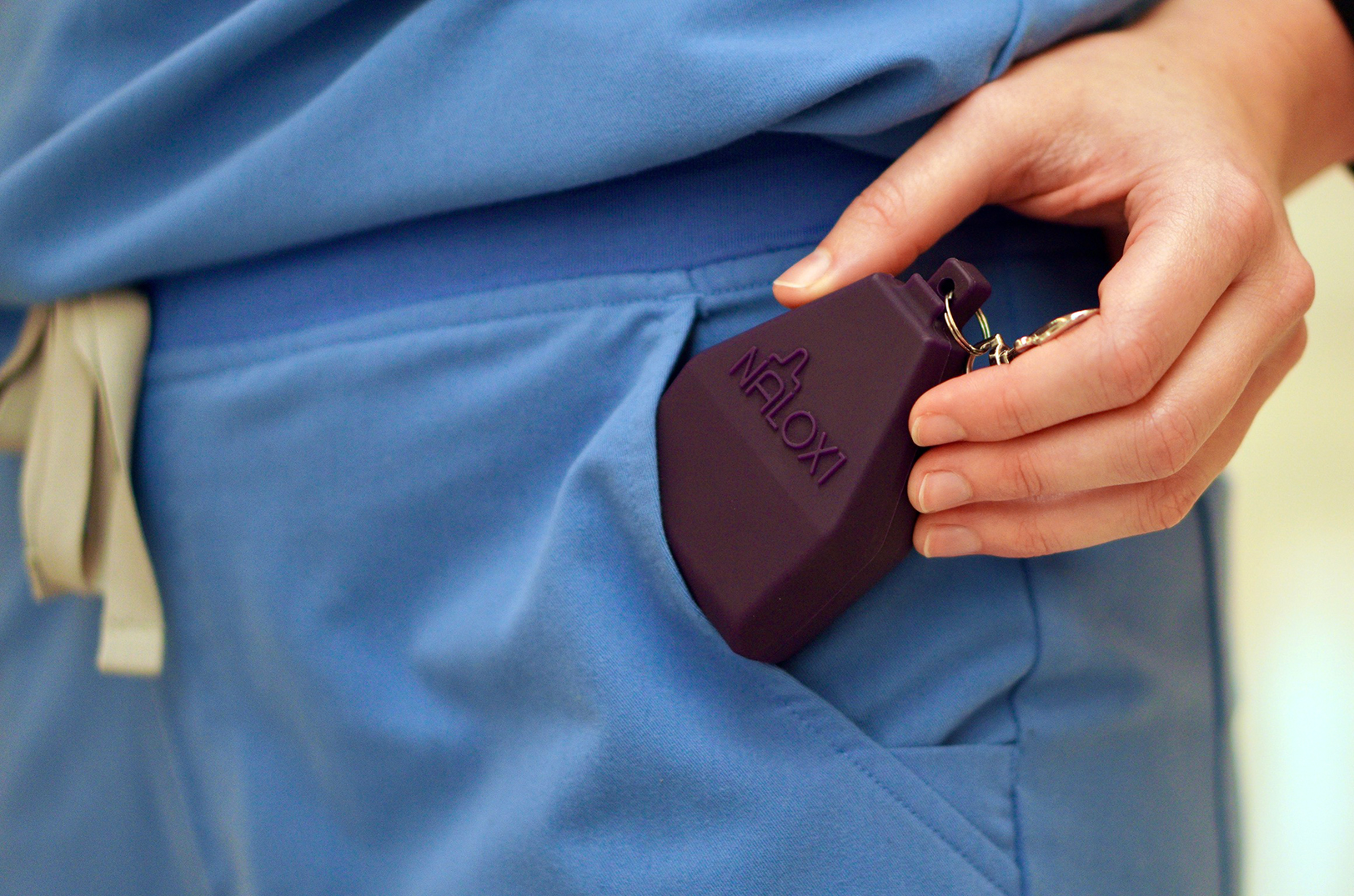
The pocket-friendly NALOX-1 carrying case for easy transport of naloxone; courtesy photo
By the numbers
A recent study published in the American Journal on Addictions revealed significant gaps in naloxone awareness and possession among U.S. adults. The study found that while 75 percent had heard of the medicine, only 53 percent knew it was available over the counter. Just 5.6 percent reported carrying it, and nearly 60 percent were unsure how to use it or where to get it.
Furthermore, white individuals, women and those with higher education levels were more likely to carry Narcan, while lower-income and Southern residents reported lower rates of awareness and possession.
Finally, only about one-third of participants knew that naloxone could be obtained from health departments, doctors’ offices or community programs.
Next steps for NALOX-1
Beyond its Amazon launch, nCase’s top goals include expanding partnerships with universities, hospitals, addiction centers and public health agencies and integrating NALOX-1 into existing naloxone distribution programs.
Ultimately, the team envisions a buy-one-donate-one model to subsidize free distribution to those at highest risk.
“If it were up to me, we’d give these away for free,” said Bitner-Glindzicz. “But the reality is, we need scale first.”
Haines Eason is the owner of startup content marketing agency Freelance Kansas. Previously he worked as a managing editor for a corporate content marketing team and as a communications professional at KU. His work has appeared in publications like The Guardian, Eater and KANSAS! Magazine among others. Learn about him and Freelance Kansas on LinkedIn.

Featured Business

2025 Startups to Watch
stats here
Related Posts on Startland News
Golftech startup raises $675K seed round, swinging for franchise expansion and commercial tech launch
A Lenexa-based tech company focused on accelerating skills for avid golfers hit a funding milestone this week, announcing a seed round meant to bridge the gap between on-course and off-course play through its innovative physical and digital solutions. Albatross Golf — which boasts two flagship offerings: GolfTRK and Noonan — on Tuesday shared news of…
Naughty or nice night for a drink: Your guide to Kansas City holiday bar getaways
The holiday spirit shows up in some unexpected places this year, with festively themed pop-up bars and nightlife experiences jingling through the season at nearly 30 Kansas City area businesses and venues — from the world’s loudest stadium to the smallest speakeasies. “The Gingerbread is our way of bringing extra holiday cheer to the heart…
Ice Cream BAE founder turns to Laotian home-cooking, offering up Mama’s egg rolls from new Lenexa noodle spot
Lenexa Public Market will soon be home to a new kitchen serving a mix of authentic flavors from Laos and Thailand — an authentic-to-home concept from an entrepreneur known for bringing fresh culinary experiences to diners from North Kansas City to South Johnson County. Chef and owner Adison Sichampanakhone plans a January opening for Saap…
Just funded: KCMO unveils $200K in grants for nearly two dozen restaurants, bars, coffee shops
Kansas City has an “enormous appetite” for outdoor dining, said Wes Rogers, highlighting the growing need for city leaders to be responsive to evolving industry and small business trends — and championing KCMO’s new outdoor dining grants program. Officials on Tuesday announced 20 inaugural recipients of the Outdoor Dining Enhancement Grant. It’s an initiative —…