

It’s going DAO: Why an NFT-fueled blockchain org is launching in KC alongside Global Pizza Day
May 1, 2025 | Haines Eason
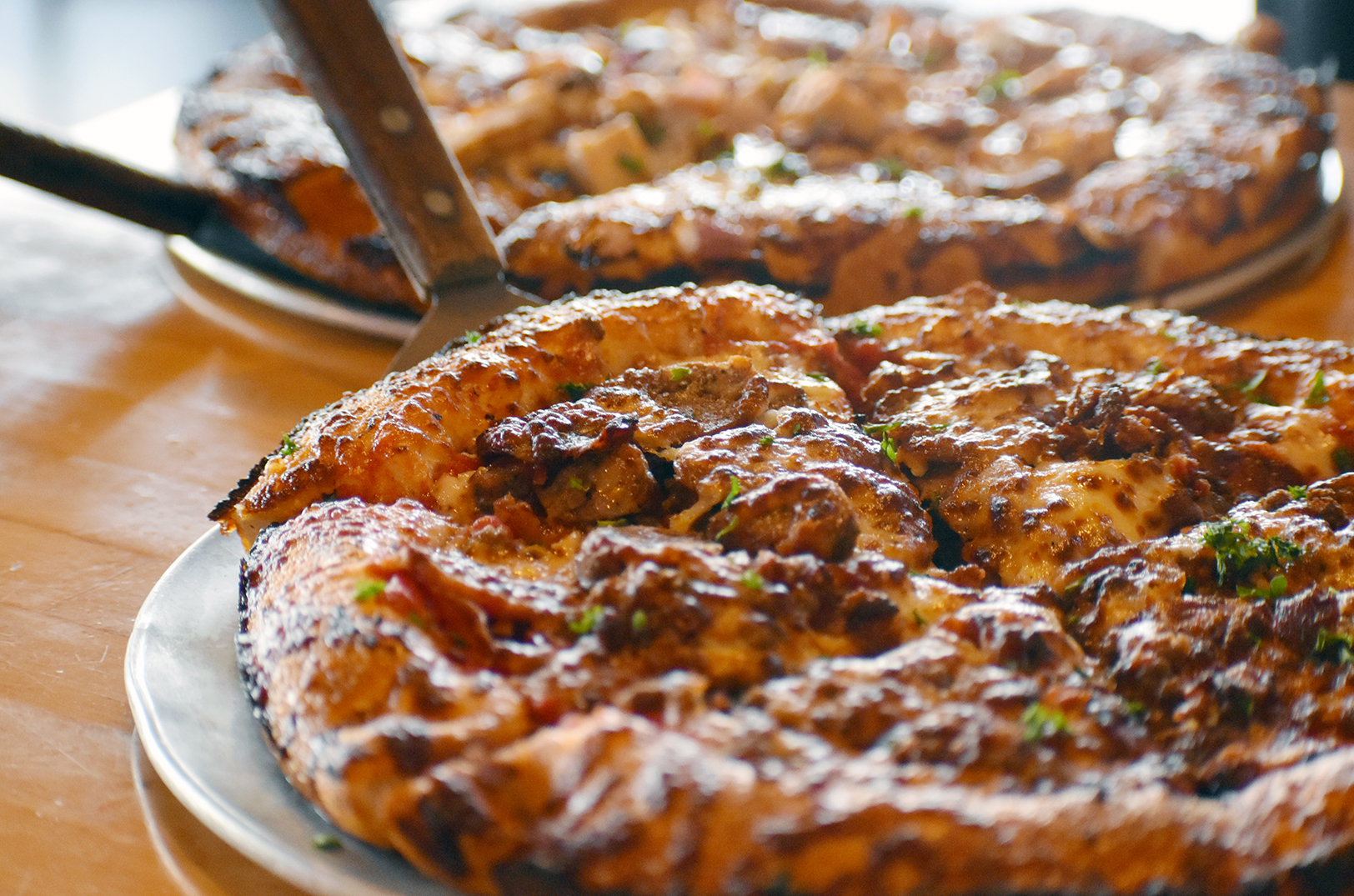
A pizza party in a Midtown eatery covered in art is expected to mark the launch of a Nouns DAO chapter in Kansas City — a group endeavoring to fund local creativity, support the public good and expand access to decentralized cultural funding.
But there’s more at stake than just getting a piece of the blockchain pie.
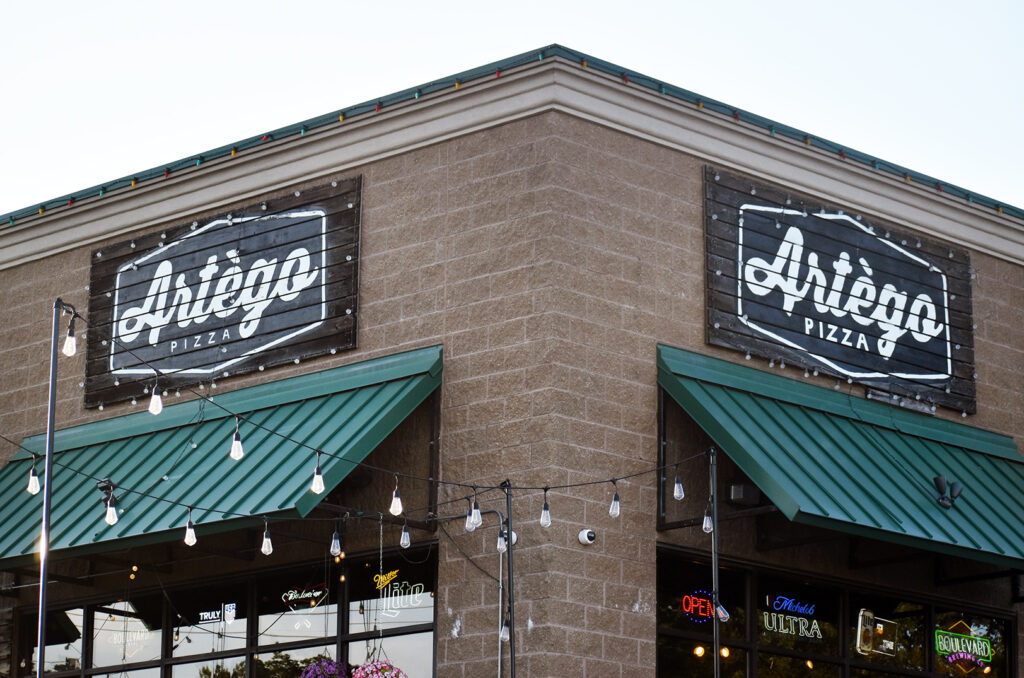
Artègo Pizza, 900 W. 39th St., Kansas City; photo by Tommy Felts, Startland News
“I want people to understand how they can empower themselves and their communities through participating in these DAOs,” said Mary McCawley, a digital art curator at and founder of Digital Dreams KC and key organizer for Nouns KC DAO.
“A lot of people are expressing that they are seeing and feeling a lack of funding that’s been cut because of the recent (presidential) administration’s policy decisions, and I feel that the answer is to take the power back on the grassroots level, to recognize that we don’t have to wait for Big Brother to put his hand out and make certain things possible.”
The launch event — 6 p.m. to 9 p.m. May 22 at Artègo Pizza, 900 W. 39th St. — coincides with Global Pizza Day in collaboration with Pizza DAO (a decentralized global initiative taking place in more than 300 cities worldwide).
Nouns KC DAO’s site is under construction but should go live at citynouns.wtf.

Why May 22?
Pizza DAO is an annual global pizza party that’s been sharing pies since 2021. It is a “community of 5,000+ artists, engineers, community managers, marketers, and pizzeria owners” collaborating to “spread the joy of pizza, the most popular food in the known universe.”
It organizes party sites on May 22 each year to mark the day Bitcoin — or any digital asset — was first used to buy a tangible item.
On that day in 2010, Laszlo Hanyecz deemed that pizza would be the world’s first real-world item purchased. He bought two pizzas for 10,000 BTC (or roughly $782 million in today-dollars).
Here’s how it works
Kansas City’s Nouns DAO chapter is expected to tap into the larger group’s positioning as a legend in the DAO space, McCawley said.
Nouns DAO operates by creating a work of art — an NFT, or nonfungible token — each day that is then auctioned to raise funds for the DAO. Those funds are used for just about anything: film and TV projects, nationwide cleanup actions, extreme sport athlete sponsorships, web3 infrastructure, etc.
The DAO has purportedly controlled upward of $44 million, though presently its holdings appear to be about 3,368 ETH, or just over $6.3 million USD.
Watch the video below for more on how Nouns DAO works.
Empowering digital democratic norms
If you’re a little lost here, let’s pause.
The term DAO is an acronym for “decentralized autonomous organization.”
These organizations are cropping up across the globe and are championed by blockchain enthusiasts — blockchain being the nearly immutable ledgering tech behind cryptocurrency.
Another group, KC Futures DAO, launched last year and is in a fundraising cycle. They’re partnered with KC nonprofit KC Digital Drive, which has a mission of making Kansas City a digital leader and to improve the quality of life for all people in the region.
(For crypto enthusiasts looking to network in the region, KC Digital Drive regularly plays host to “CryptoMonday” events in Kansas City.)
Blockchain’s primary strength is that it is a decentralized record of transactions or actions that each must be fully verified by multiple authorities — usually automated systems — before any subsequent transactions or actions can occur. This means every transaction is verified and settled and cannot be changed without subsequently invalidating all that come after.
“It’s a way that everyone can have a voice by voting as to how the funds are allocated and used. And it’s a way that people can empower themselves when they feel unempowered.”
— Mary McCawley,
Nouns KC DAO
If a party tampers with a past transaction, then every subsequent transaction becomes erroneous. This means tampering with or falsifying one record creates a subsequent chain of error pointing a curious party back to the tampering and the entity that performed that tampering.
And blockchain’s ledgers can be private, public or permissions-based, with a DAO’s likely being set to the latter so that only members can view all DAO actions or transactions.
Typically the greater a member’s investment in the DAO, the more votes they have as to the DAO’s actions. This creates, at least upon inception and in effect, a bottom-up style of decision making.
In a world where data manipulation — and information manipulation generally — is of growing concern, McCawley said, she sees DAOs and their blockchain tech as a way to code democratic norms into organizational decisions, financial decisions and more.
“It’s a way that the funds can’t be mismanaged,” she explained. “It’s a way that everyone can have a voice by voting as to how the funds are allocated and used. And it’s a way that people can empower themselves when they feel unempowered.”
Haines Eason is the owner of startup content marketing agency Freelance Kansas. Previously he worked as a managing editor for a corporate content marketing team and as a communications professional at KU. His work has appeared in publications like The Guardian, Eater and KANSAS! Magazine among others. Learn about him and Freelance Kansas on LinkedIn.


2025 Startups to Watch
stats here
Related Posts on Startland News
WillCo Technologies hiring 90 people after snagging energy-saving patent
The average american household wastes up to 61 percent of its energy input. Kevin Williams, CEO of WillCo Technologies, said that this is because of the way electrical grids are designed. Although the average consumer requires significantly less power during school and work hours, the grid keeps energy limits consistently high in order to sustain through…

Startland goes to Ireland with the Pipeline fellowship
This week, Startland News is traveling to Ireland with the Pipeline entrepreneurial fellowship program. Startland News editor-in-chief Bobby Burch is with the group as it hosts its finance module — in Belfast, Northern Ireland, and Dublin, Ireland — and celebrates its 10-year anniversary. Check out the video below for more information on the trip!
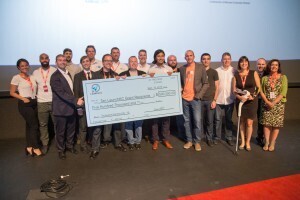
Meet Techweek Kansas City’s 2016 LaunchKC winners
After a morning evaluating 20 pitches at Union Station, a panel of LaunchKC judges revealed the 10 startups that each snagged a $50,000 grant. LaunchKC — which distributes $500,000 via 10, $50,000 non-dilutive grants — drew more than 400 tech startup applicants for the second year in a row. The 20 finalists included 11 from…

KCUR and Startland chat Techweek, Kansas City entrepreneurship
Startland News editor-in-chief Bobby Burch hopped on KCUR’s Central Standard to discuss Techweek Kansas City and challenges facing area startups. Listen to the conversation below. Special thanks to KCUR for sharing its content!