

Black farmers are losing ground in the fight to feed their communities, advocates say
March 27, 2025 | Taylor Wilmore
More than a century of systemic land dispossession and discriminatory practices has left Black farmers with less than 0.6 percent of U.S. farmland — less than a third of the 16 million acres they operated in 1910, according to local urban farming advocates.
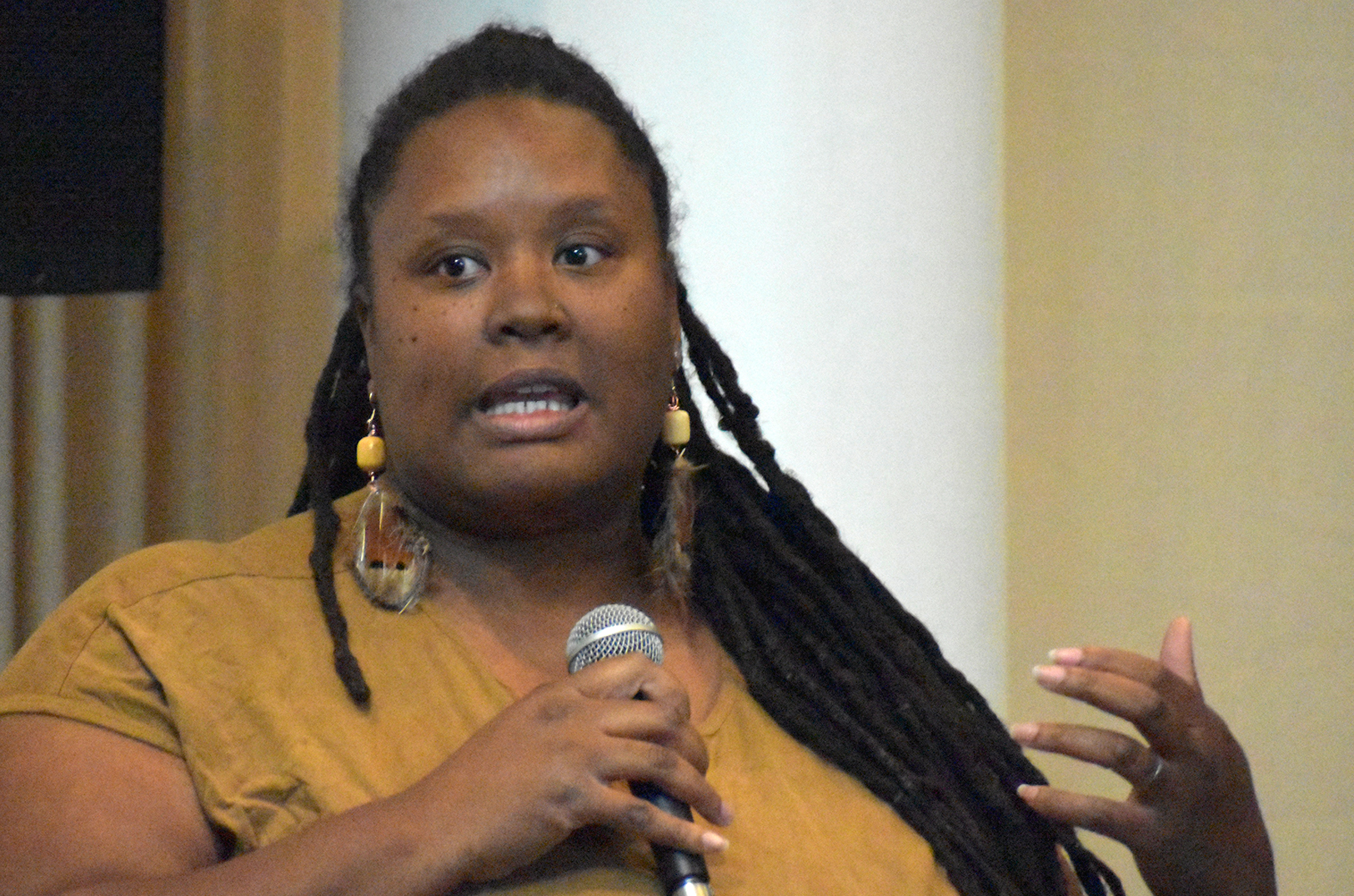
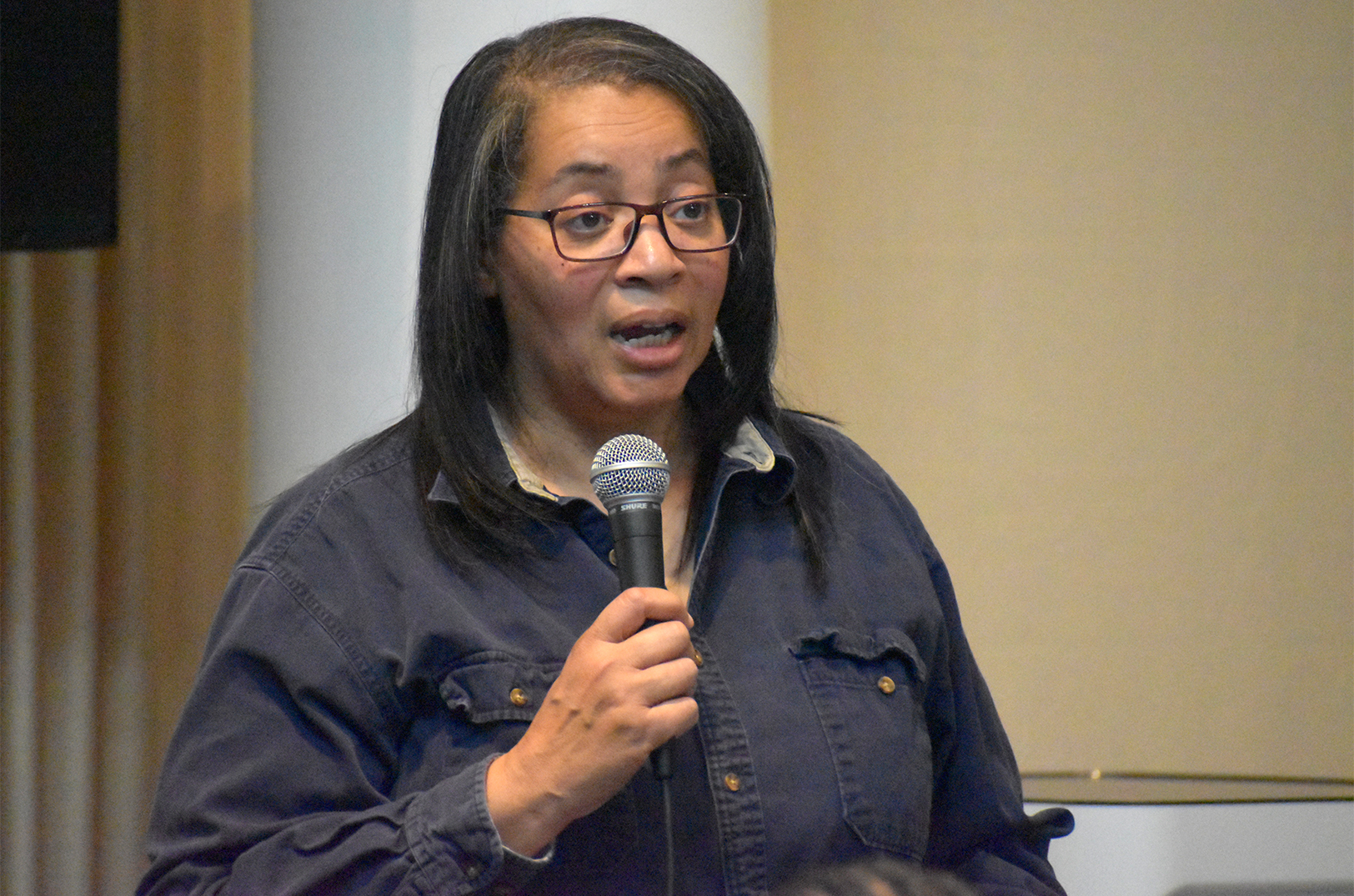
Alana Henry, executive director of the Ivanhoe Neighborhood Council, discusses the history of Black-led farming and efforts to limit it; photo by Taylor Wilmore, Startland News
They gathered Tuesday at Independence Boulevard Christian Church to confront this history and discuss solutions at the “KC Crisis of Black Food, Land & Survival Town Hall,” co-hosted by Black-owned Kansas City media outlets The KC Defender and The Kansas City Call.
Alana Henry, executive director of the Ivanhoe Neighborhood Council, made one point clear: the erosion of Black-owned farmland is not accidental.
“I want to shift the language from ‘loss’ to ‘theft,’” Henry said. “This isn’t a passive sort of occurrence that we’re just experiencing. It’s an intentional action.”
The town hall event featured panelists Alecia Kates, Craig Stafford, Mike Rollen, Nadine Farris, and Alana Henry, each bringing unique expertise and passion to the conversation.
A long history of stolen land
For generations, Black farmers have fought against exploitative sharecropping, discriminatory lending practices, and legal loopholes designed to strip them of their land, town hall participants detailed.
Between 1920 and 1997 alone, Black farmers lost an estimated $326 billion in farmland value.
“After emancipation, newly freed Black people were forced into exploitative sharecropping agreements that trapped them in cycles of debt and dependency,” said Mili Mansaray, editor for The KC Defender.
Pointing out their recurring history of discriminatory lending practices, Henry referenced the Pigford v. Glickman (1999) class action lawsuit against the USDA, which found that Black farmers were systematically denied access to the same farm loans and assistance programs available to white farmers.
Panelists expressed that this pattern of exclusion continues today through funding rollbacks of key agricultural support programs, particularly under the Trump administration’s attacks on diversity, equity, and inclusion (DEI), which have made this crisis even more urgent for urban farmers.
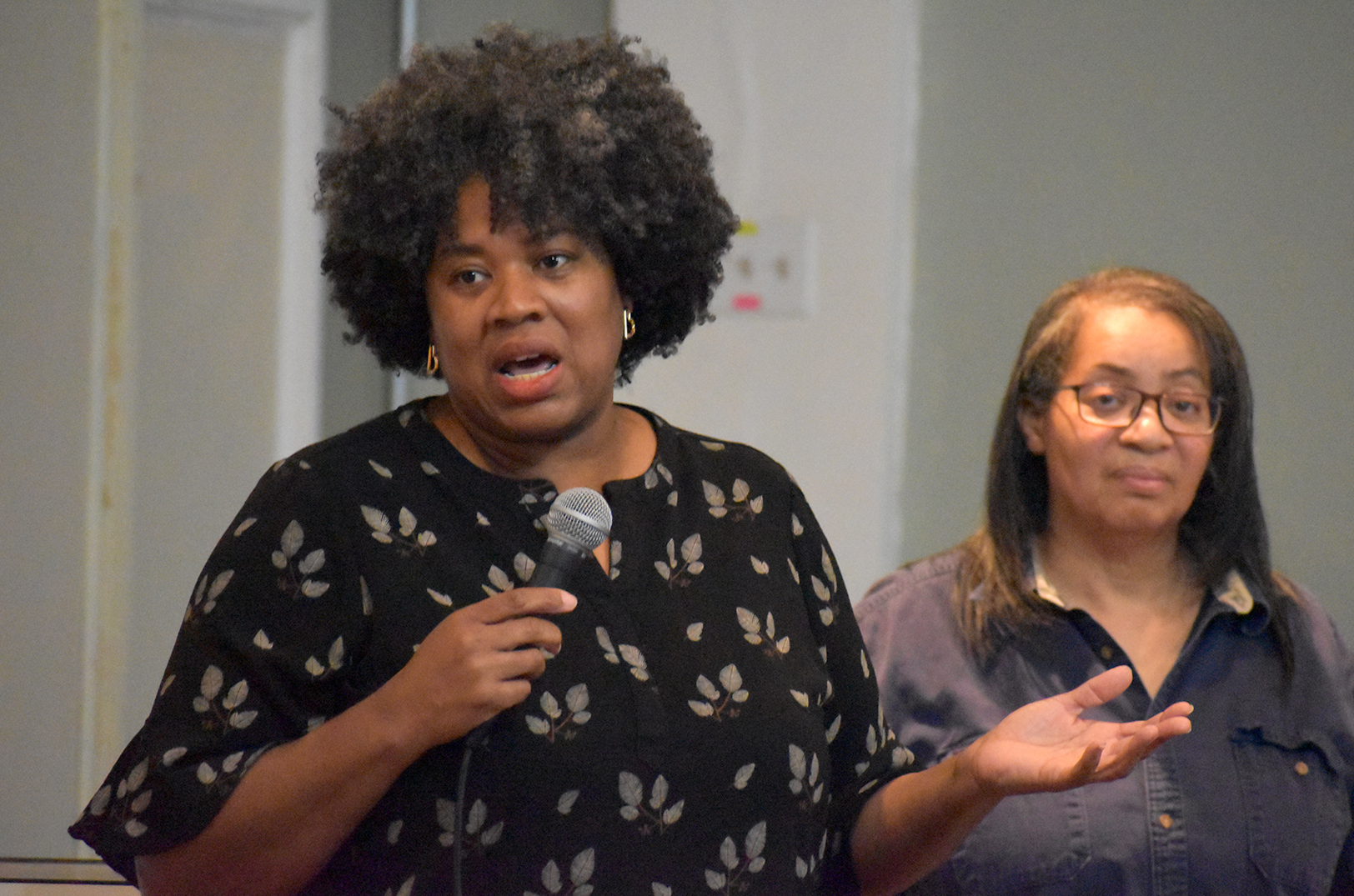
Alecia Kates, a board member for KC Black Urban Growers, views this moment as an opportunity for Black farmers to gain self-sufficiency outside of unreliable federal funding, she said.
“I really want us to see how we create new models where we could share knowledge, work together, and be less reliant on systems that don’t have our best interests in mind,” Kates said.
Federal funding rollbacks hit home
The USDA’s decision to terminate a $165,000 grant intended to fund the Ivanhoe Neighborhood Market delivered another major blow to Black agricultural efforts in Kansas City.

A crowd at Independence Boulevard Christian Church listens during the “KC Crisis of Black Food, Land & Survival Town Hall”; photo by Taylor Wilmore, Startland News
The market aimed to increase access to fresh produce for low-income residents and seniors, but the USDA pulled the funding over diversity, equity, and inclusion (DEI) concerns.
Henry, who runs the farmers market and the nonprofit behind it, sees this as part of a broader, politically motivated strike against Black self-reliance and determination.
“They are actively attacking our ability to just be ourselves, depend on ourselves, and take care of ourselves,” she said. “As community-run projects are defunded, the fight for food sovereignty becomes even more difficult.”
Tracy Allen, editor-in-chief of The Kansas City Call, echoed these concerns.
“We’ve seen grants and federal contracts eliminated. What we’ve noticed is that these lost funds are critical for the survival of organizations working to support Black farmers,” said Allen.

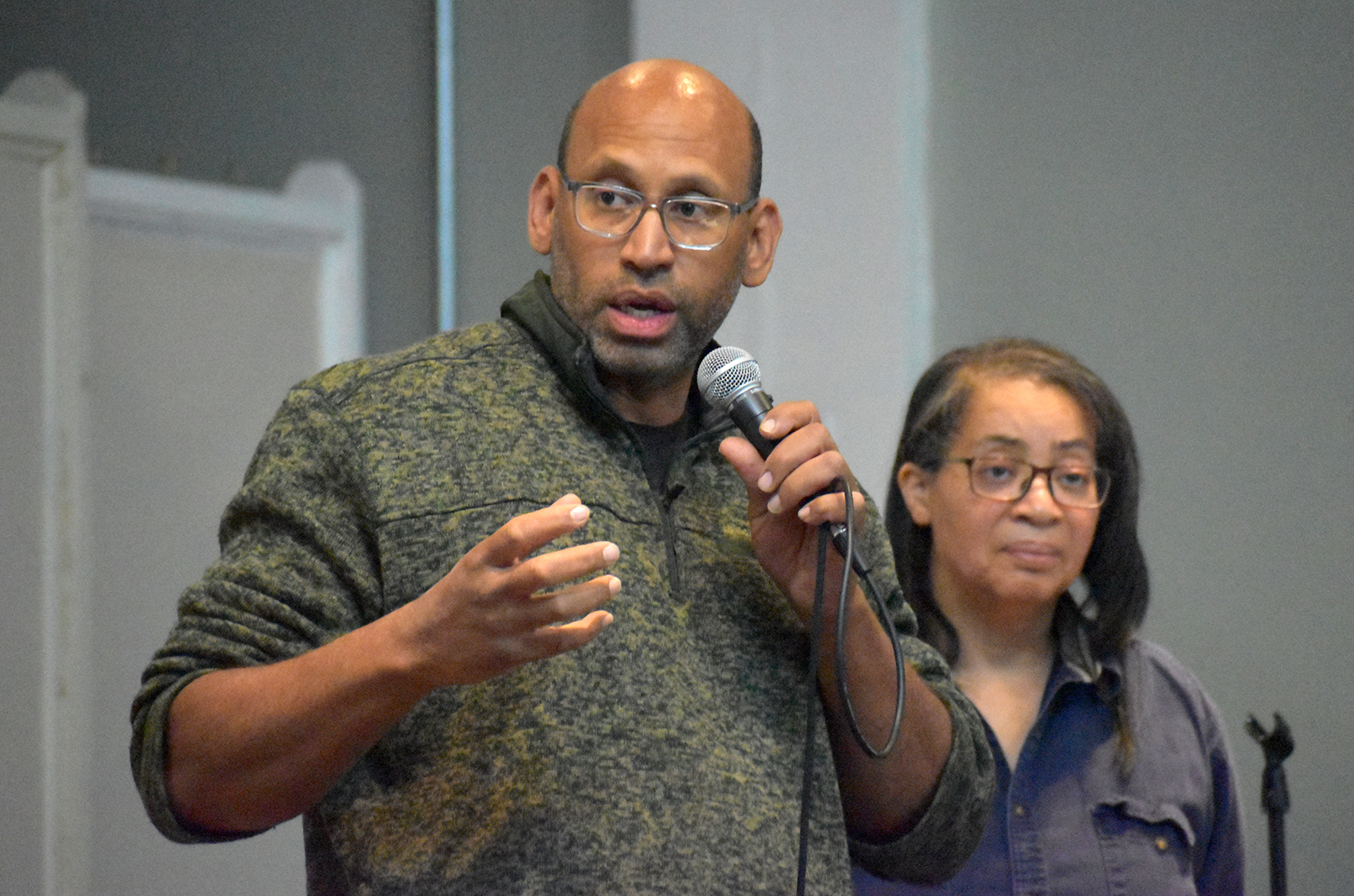
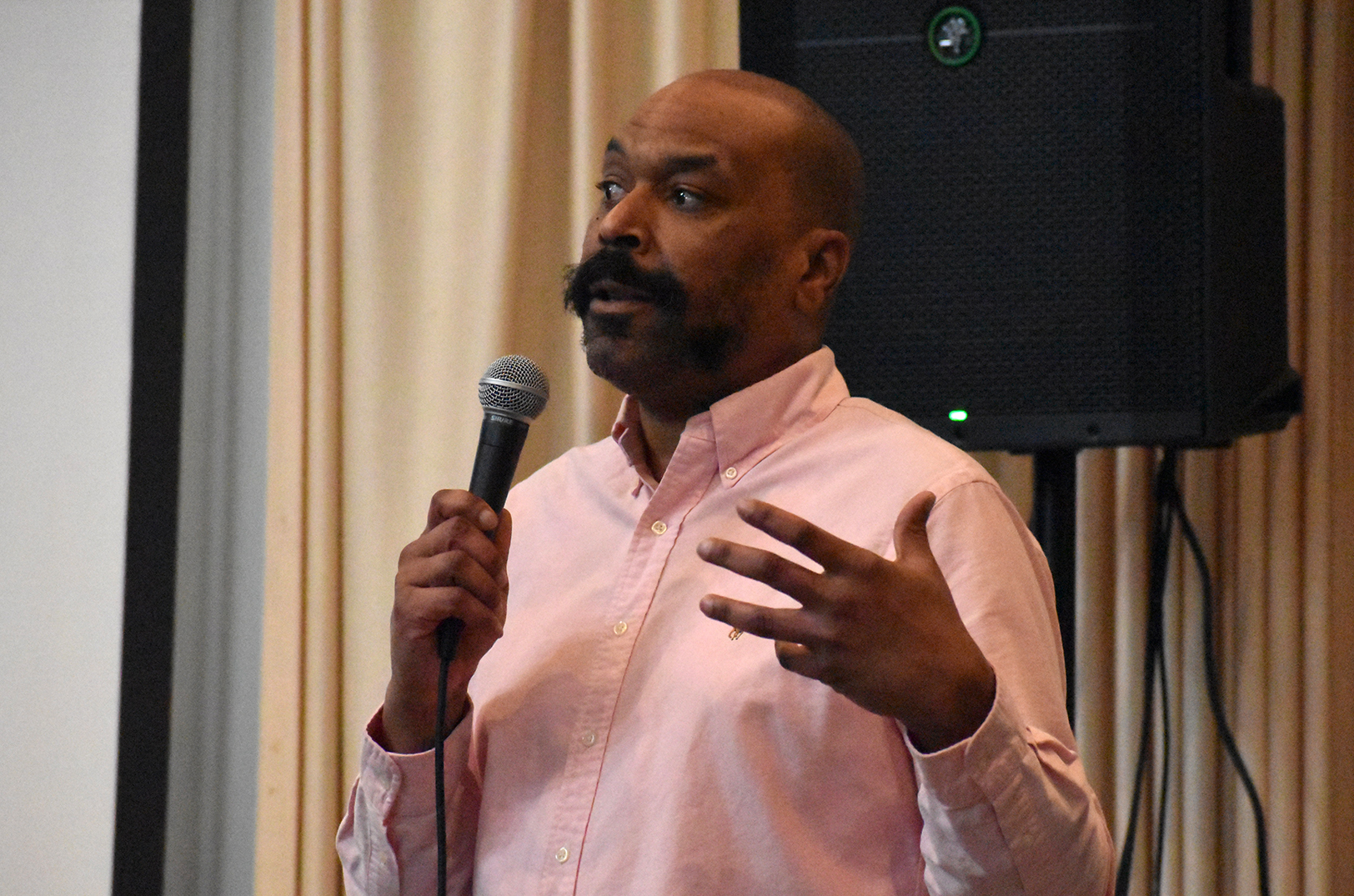
Mike Rollen, Ophelia’s Blue Vine, speaks during a town hall on threats to urban farming at Independence Boulevard Christian Church; photo by Taylor Wilmore, Startland News
The role of urban farming
Tuesday’s discussion underscored the importance of urban farming in addressing food insecurity, educating younger generations, and preserving Black cultural traditions.
“We care about the community, and we care about the need,” Henry said. “Yes, we could go to the Overland Park farmers market and make significantly more money on what we grow. But that’s not where our heart is. It’s not where our passion is.”
Mike Rollen, founder of Ophelia’s Blue Vine, highlighted how urban farming can be a powerful educational tool for children in underserved communities.
“Especially kids, they don’t have that education. They’ve never seen a sunflower or a green tomato,” Rollen said. “I wanted to give them that experience, to plant something so when people walk by, they can stop, smell it, and reflect.”
ICYMI: Ophelia’s Blue Vine Farm plants real food within a historic (and overlooked) KC community
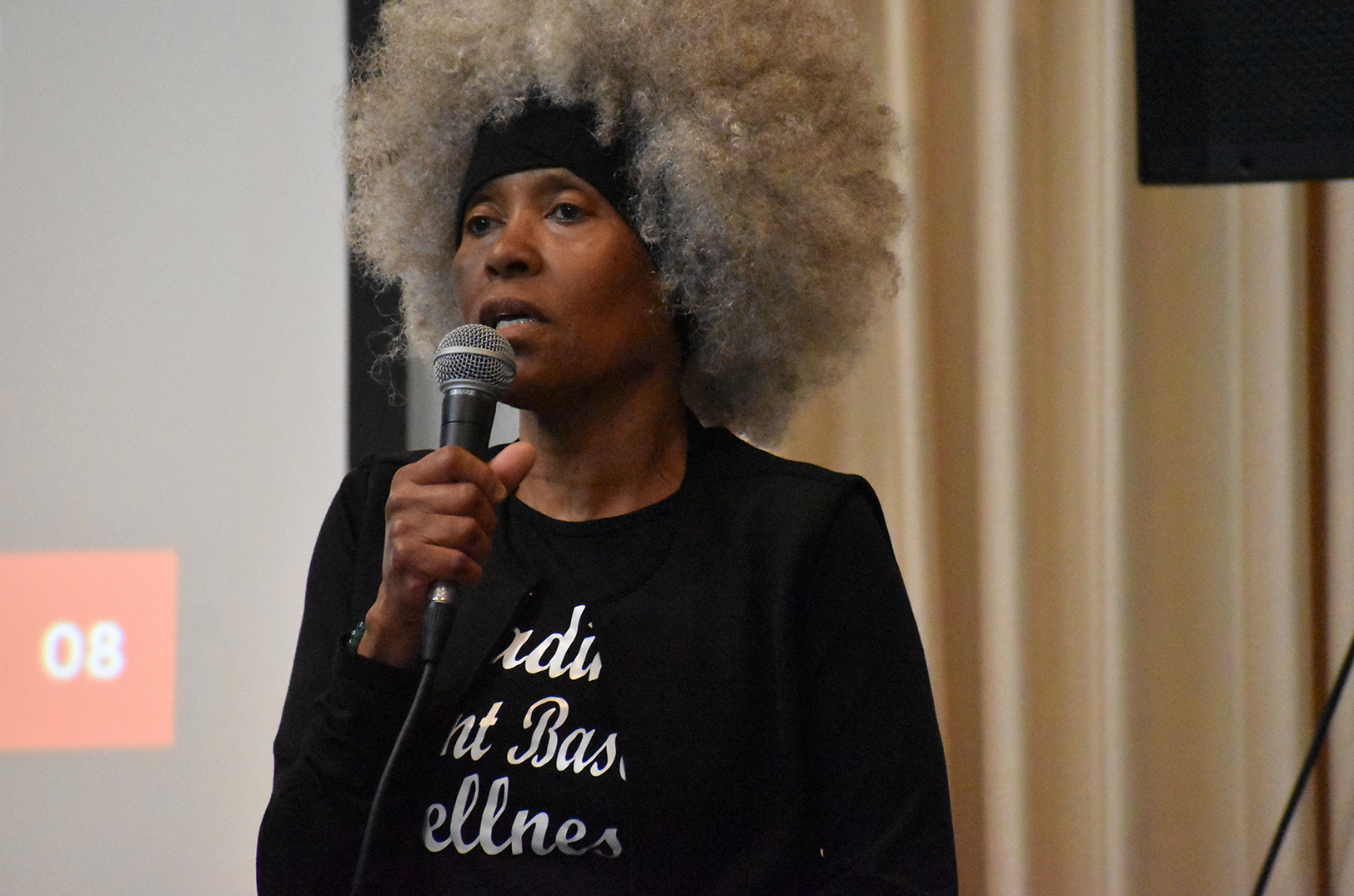
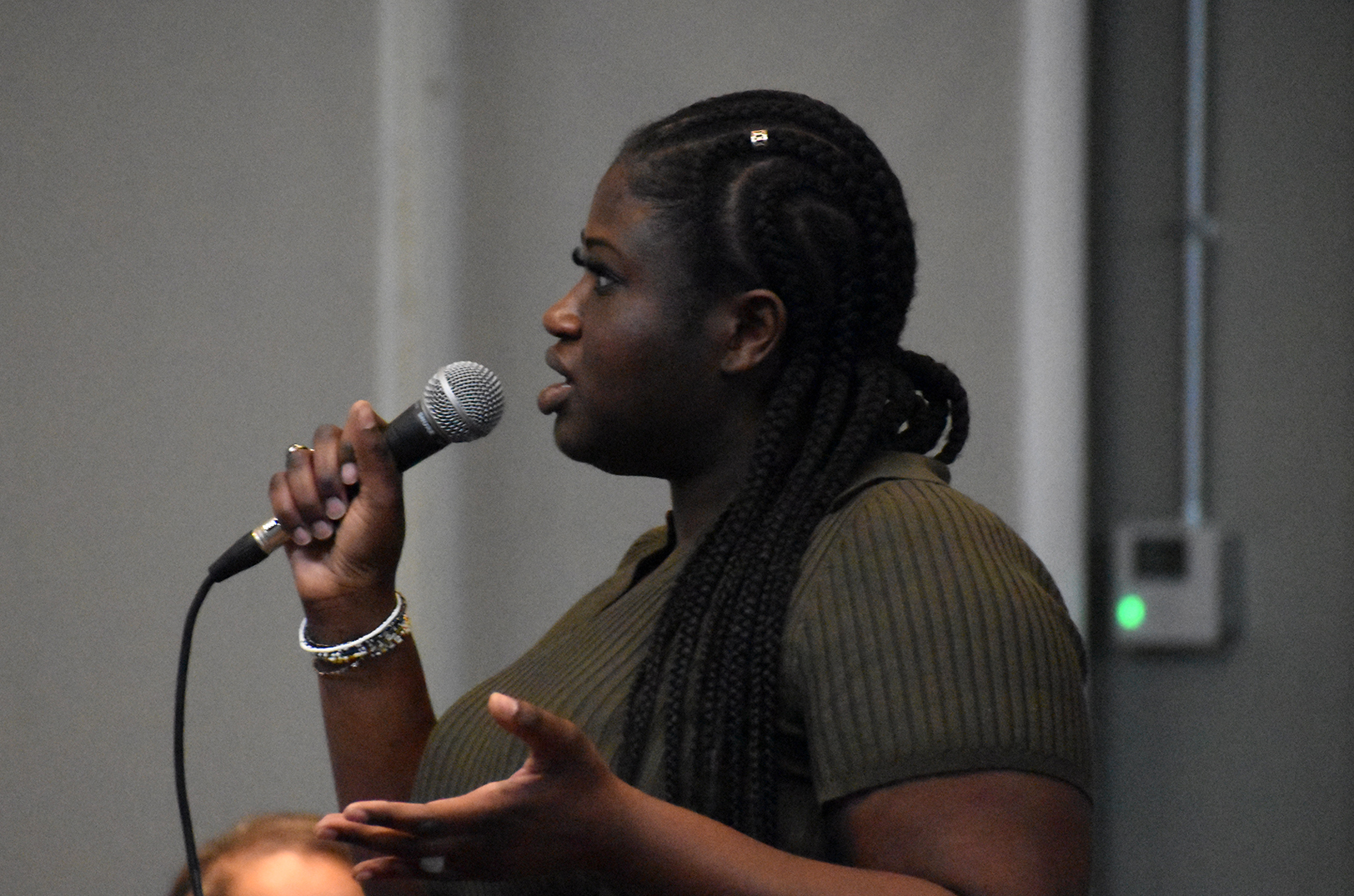
Nadine Farris, Well Inc., lends her voice to the town hall on urban farming; photo by Taylor Wilmore, Startland News
Nadine Farris, executive director of Well Inc., spoke about the broader impact of food access in Black communities.
“I’ve seen what processed food has done to my family; the amputations, the diabetes. My passion was to grow this food and give it to people,” Farris said. “What made it become such a blessing is when you start getting videos of people sending you pictures of the food that they cook and begin to like.”

Grants and grassroots action

Alana Henry, executive director of the Ivanhoe Neighborhood Council, discusses the history of Black-led farming and efforts to limit it; photo by Taylor Wilmore, Startland News
Despite setbacks, Henry is doing what she can to continue the work of Black farmers. She recently secured $150,000 in micro-grants with help from Third District KCMO Councilwoman Melissa Patterson Hazley to support local growers.
“It’s a step in the right direction to give Black growers the resources they need to thrive,” Henry said.
The panel also emphasized the importance of direct community involvement, with Allen urging attendees to go beyond discussion and take action.
“It’s easy to show up at a town hall and talk, but there are ways you can help,” Allen said.
Supporting local farmers
For those seeking to support Black farmers in Kansas City, the panelists offered clear steps:
- Volunteer: Local organizations such as the Ivanhoe Neighborhood Council and KC Black Urban Growers welcome volunteers to help with farming efforts, farmers markets, and community events.
- Donate: Financial contributions can help sustain Black-owned farmers markets and food distribution efforts.
- Shop local: Panelists encouraged attendees to buy directly from Black farmers and vendors at farmers markets to ensure their dollars directly benefit the community.
Black farmers and advocates at the meeting called for not only local support but also systemic policy changes to reverse decades of agricultural discrimination.
“This is not an anomaly,” Henry said. “This is happening across the country, and it’s been happening for many, many decades.”

Featured Business

Taylor Wilmore
Taylor Wilmore, hailing from Lee’s Summit, is a dedicated reporter and a recent graduate of the University of Missouri, where she earned her Bachelor’s degree in Journalism. Taylor channels her deep-seated passion for writing and storytelling to create compelling narratives that shed light on the diverse residents of Kansas City.
Prior to her role at Startland News, Taylor made valuable contributions as a reporter for the Columbia Missourian newspaper, where she covered a wide range of community news and higher education stories.
2025 Startups to Watch
stats here
Related Posts on Startland News

Back2KC effort attempts to bring Kansas City expatriates home to an emerging innovation hub
A first-of-its-kind event is drawing successful Kansas Citians who’ve left the region “Back2KC” Thursday and Friday for a hands-on glimpse at the city’s evolving innovation economy, Darcy Howe said. As managing director of the KCRise Fund — a co-investment fund that works with venture capital investors to support early-stage Kansas City companies — Howe saw…

Artist Vi Tran to KC-based innovators: Wipe ‘local’ label from your vocabulary
Some roots are best left behind, but not forgotten, said multi-faceted Kansas City artist Vi Tran. Others are worth holding close. Speaking at Startland’s recent Innovation Exchange, the actor, playwright, musician and owner of The Buffalo Room decried the idea that innovators who choose to stay in places like Kansas City are any less worthy…

The not-so-secret Sauce behind KC hip hop entrepreneur’s success: Authenticity
Royce “Sauce” Handy wears his influences and inspiration like pins on the outside of his well-worn jean jacket. The KCK-born hip hop entrepreneur embraces his identity: A collector of Goosebumps books. A student of history. A fan of 1990s family sitcoms. And he’s unapologetically black. His lips twist into a smile and his eyes brighten…

Startup Hustle podcast duo pledging $50K in Full Scale tech resources at Pure Pitch Rally
Early stage businesses need more than cash — they need the tools to grow, said the hosts of the KC-based Startup Hustle podcast. “Good ideas in startups move faster when they’re supported by successful business people in the community,” said podcast co-host Matt DeCoursey, announcing the plan late Wednesday to award $50,000 in tech resources,…