

Cracking egg-flation: How farmers, substitute ingredients help restaurants mitigate price spike
March 27, 2025 | Jill Wendholt Silva
Editor’s note: This story was originally published by Kansas City PBS/Flatland, a member of the Kansas City Media Collective, which also includes Startland News, KCUR 89.3, American Public Square, The Kansas City Beacon, and Missouri Business Alert.
Click here to read the original story.
Whether ordering an omelet, French toast, chicken n’ biscuits, chilaquiles, corned beef hash or eggs Benedict, eggs play a starring role at The Farmhouse.
“When you’re a brunch and breakfast place, eggs are everything,” said Vince Paredes, executive chef and co-owner of the award-winning farm-to-table brunch venue in the River Market. “We bake with eggs. They’re also the stand-alone showpiece, and the side.”
The USDA’s Food Price Outlook reports egg prices increased 53 percent over the past year, and prices are predicted to continue to rise another 41 percent in 2025. Bird flu outbreaks have tightened supply, forcing many supermarkets to limit the number of cartons retail customers can purchase during a single visit.
The soaring price of eggs also has forced restaurants and bakeries, both national chain operators and independently owned, to adjust their menu or raise prices.
But so far at least, it’s business as usual at The Farmhouse.

Turkish Eggs + Grilled Haloumi is one dish on the menu at Billie’s Grocery in Leawood, Kansas. Description: housemade labneh, Buttonwood farm poached egg, chili oil, za’ atar, roasted tomato, micro greens, grilled halloumi cheese, grilled baguette; photo by Jill Wendholt Silva, Flatland
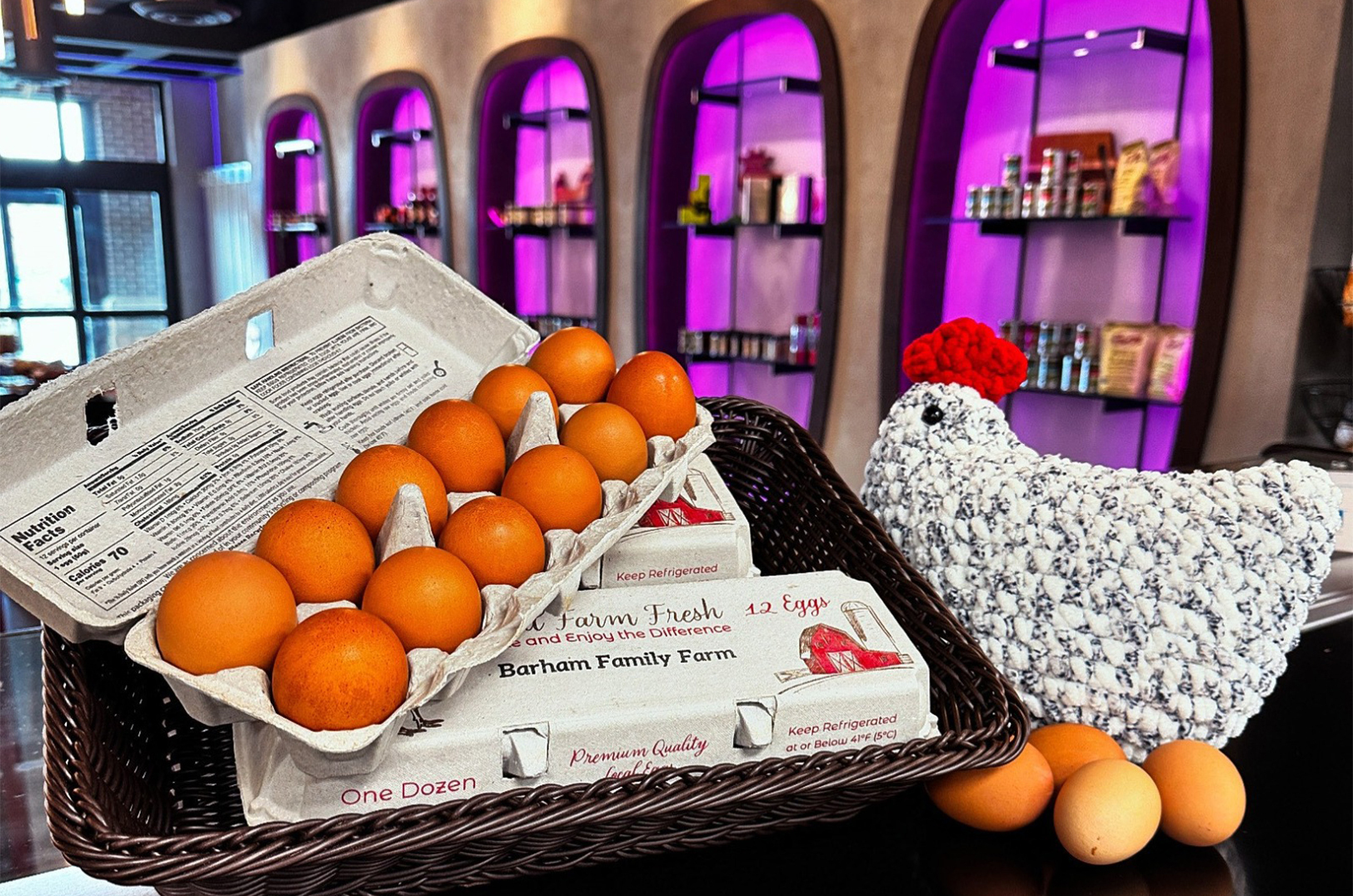
The resulting higher prices of commercially produced eggs have sometimes eclipsed the cost of premium brands as local egg producers have generally maintained stable production costs and pricing.
When Krause opened her first Billie’s Grocery location in Midtown five years ago, she initially went with lower-cost conventionally raised eggs. But as supply chains weakened during the COVID-19 pandemic, she switched to local eggs and does not plan to go back for another reason: taste.
Pasture-raised eggs mean the chickens spend more time in a larger outdoor space and forage on grass and bugs and tend to produce eggs with yellow-orange yolks, a difference many chefs say is reflected in the overall taste and texture. Some studies show eggs also contain higher levels of vitamins and antioxidants.
“We haven’t had to change a single thing on our menu,” said Krause. “You get what you pay for. If you go for conventional eggs, they’re not as nutrient dense. Thankfully we took that opportunity to switch to local farmers.”
Egg-less by choice
The average American eats approximately 288 eggs per year, but local home economists, cookbook authors and food bloggers Kathy Moore and Roxanne Wyss urge consumers experiencing sticker shock to keep calm and carry on.
“First and foremost, we need to recognize there are a variety of recipes that forgo eggs, and those that don’t may be worth altering,” Moore said. “It is a temporary situation, or we will learn and adapt. It’s no different than our great-grandparents did in World War II.”
Rationing of staple food items such as flour, sugar, butter, and eggs, was part of the war effort.
Eggs bind, thicken, emulsify, leaven, glaze and enrich, but especially in baking, there are alternatives for recipes that use fewer than three eggs.
Unsweetened apple sauce, canned pumpkin, mashed bananas, plain yogurt, and tofu can be used in quick breads, muffins, and brownies. Egg stand-ins also include aquafaba, the cooking liquid from chickpeas, as well as chia seeds, flax seeds or xanthan gum.
“You do want to use reputable sources for ideas to minimize the testing you would need to do,” Moore cautioned. “The good news is there is a lot of credible information out there.”
She suggested consulting the network of cooperative extension programs, including Kansas State and the University of Missouri.
Although supermarkets carry a wide variety of liquid egg products, Krause encouraged those who do not have allergies to skip commercial egg substitutes, which often contain oils, emulsifiers, stabilizers, gums, and artificial colors.
Instead, either reduce the number of eggs (Krause has used psyllium husk and water to replace the eggs in a favorite cinnamon roll recipe), or go for classic egg-less desserts, such as shortbread, biscuits, fruit crisp or a fruit pie.
“Our favorite way to avoid cracking an egg?” said Wyss, the co-author of “Delicious Dump Cakes” with Moore. “We’ve developed lots of delicious dump cake recipes that do not require eggs.”
Eggs are ‘elemental’
At Barham Family Farm in Kearney, Missouri, farmer Kenny Barham, whose products appear on 15 local restaurant menus and grocery stores, hasn’t seen his wholesale restaurant clients upping their egg orders, but he is gaining new retail customers.
“I know because they open the door and ask, ‘Where are the eggs?’”
Barham’s farm store is open three days a week and sells pasture-raised eggs for $4.75 per dozen. He recently upped the price 25 cents for retail and 10 cents wholesale customers, but not because of tightening egg supplies: The price of his cardboard cartons increased.
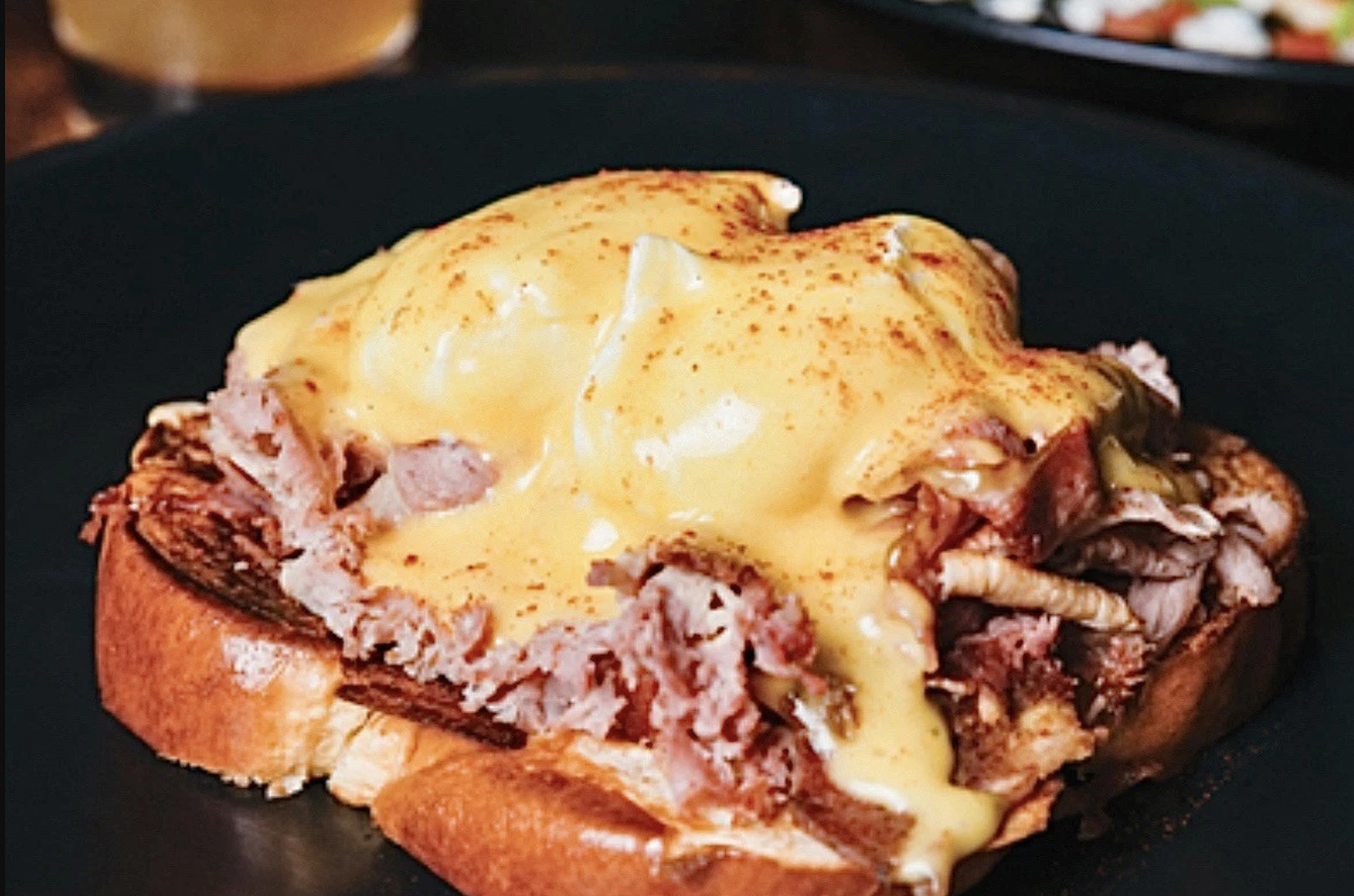
The Farmhouse eggs Benedict: Buttonwood Farms eggs, challah bread from Bloom bakery, Duroc ham; courtesy photo
Carne Diem, a whole animal butcher shop in The Village at Briarcliff, exclusively stocks Barham Family Farm beef, pork, chicken, turkey, duck, rabbit, and eggs. Chef-owner Sarah Nelson, who grew up near the farm, goes through about 30 dozen eggs per week.
She sells cartons to her retail customers for $5.50 a dozen. She also features the farm-fresh eggs in a fried egg sandwich and mixes them into house-made mayo and ranch salad dressings.
“Eggs are elemental,” said Nelson, who points to their use in everything from two-eggs-and-bacon breakfasts to corndog batter and brioche buns. “Our American diet is very egg-based. It’s the quintessential start to all of our days.”
Rather than curtailing egg consumption, she encouraged more chefs and home cooks to support local farmers.
“We realized sustainable and local were two of the things we could focus on to mitigate fluctuation (in price) both in the short term and the long term,” Nelson said. “In terms of meat, eggs and grains, there is literally no reason in the Midwest not to use local everything.”
Jill Silva is a James Beard award-winning food writer. She also works with local chefs, restaurants, farmers, and food artisans. Barham Family Farm is one of her clients.
Sweet Ways to Curtail Egg Consumption
Has the high price of eggs sent you scrambling for cost-effective substitutions for your favorite pastries and desserts?
Local home economists Kathy Moore and Roxanne Wyss of the “Plugged Into Cooking” blog offer some common ones to try:
For quick bread, muffins, or brownies:
1 egg = 1/4 cup unsweetened apple sauce, canned pumpkin or plain yogurt, or 1/2 banana mashed
For pancakes or waffles:
1 egg = 1 tablespoon flax or chia seed + 3 tablespoons water
To leaven a baked good:
1 egg = 1 tablespoon white vinegar + 1 teaspoon baking soda
Or you can try skipping the eggs altogether.
Rocky Road Dump Cake
Makes 1 (9- by 13-inch) cake
1 (15.25- to 18-ounce) box chocolate cake mix
1 (3.9-ounce) package chocolate instant pudding mix
1 3/4 cups whole milk
1 cup semisweet chocolate chips
1 1/2 cups mini marshmallows
1 cup chopped pecans
Preheat oven to 350° F. Spray a 9- by 13-inch pan with nonstick cooking spray.
In a large bowl, stir together cake mix, pudding mix, and milk until smooth. Spoon the batter into the prepared pan and spread evenly. Sprinkle evenly with the chocolate chips, then sprinkle evenly with marshmallows. Sprinkle the top evenly with pecans.
Bake for 25-30 minutes or until the edges of the cake begin to pull away from the sides of the pan.
Serve warm or at room temperature.
From “Delicious Dump Cakes” (St. Martin’s Griffin, 2016) by Kathy Moore and Roxanne Wyss

Featured Business

2025 Startups to Watch
stats here
Related Posts on Startland News

J Rieger continues its international push, adding whiskey distribution to northern neighbors
Fresh off its win as the KC Chamber’s top international small business, J. Rieger & Co. announced its expansion into Nova Scotia — a milestone as the Kansas City-based distiller enters the Canadian market. “We are thrilled to bring our range of artisanal spirits to Canada for the first time,” said Ryan Maybee, co-founder of J.…

Mid x Midwest returning in November with renewed vision to connect KC founders, VCs
The pilot Mid x Midwest event in fall 2022 supported the idea that early-stage tech founders and investors are hungry for more conversations post pandemic, Dan Kerr and Maggie Kenefake shared, spurring the return of the invite-only meetup in November. “We both showed up that morning to Hotel Kansas City and we walked into the…

PrairieFood grows power of its micro-carbon ag solution with a pipeline of human connection
Startland News’ Startup Road Trip series explores innovative and uncommon ideas finding success in rural America and Midwestern startup hubs outside the Kansas City metro. LAWRENCE — Entrepreneurship is all about networking, Robert Herrington said. “You never know where a pivot or direction is going to come from,” said Herrington, an early member of the Pipeline…

C2FO marks $300B in funding for businesses as entrepreneurs navigate ongoing credit crunch
Rapid marketplace expansion in the first half of 2023 helped push Leawood-based C2FO — the world’s on-demand working capital platform — past the $300-billion mark in total funding to its customers. This record funding amount reflects invoices paid an average of 31 days early via C2FO’s platform. C2FO gets vital, low-cost capital into customers’ hands…