

Concert: Black rockstars don’t just exist — they innovated the genre; how KC artists are still (song)writing history
February 24, 2025 | Nikki Overfelt Chifalu
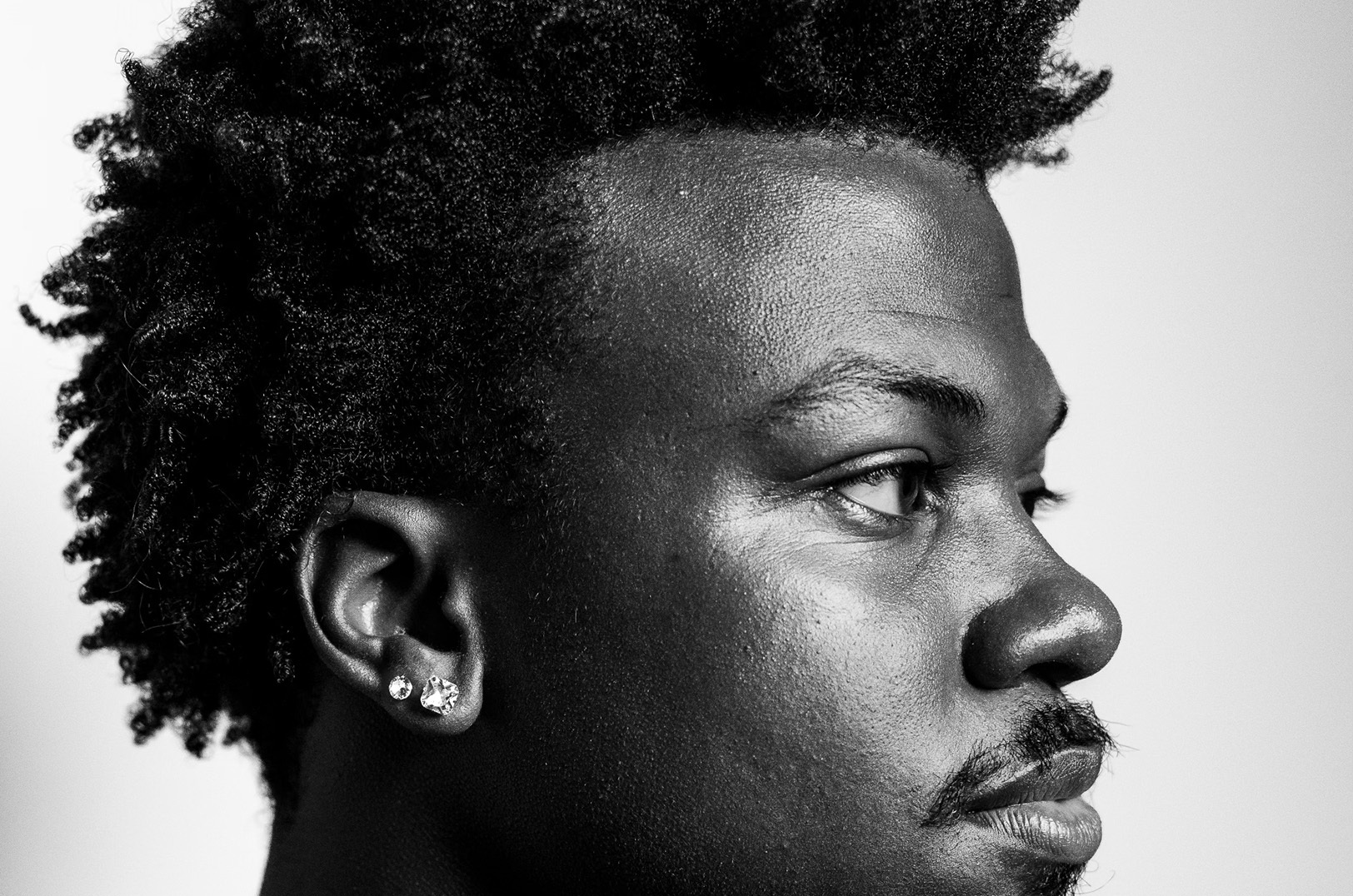
A rock concert Friday at the newly opened Zhou B Art Center in Kansas City does more than place Black artists center stage for one night, said Malek Azrael; it spotlights that Black creatives belong in every musical space.
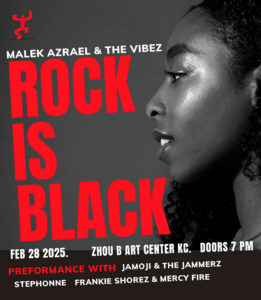
“There is such a beautiful, Black presence in Kansas City and rock,” said Azrael, who is collaborating with Izzy Vivas, arts director for the Zhou B Art Center KC, to bring the Rock is Black concert to life 7 p.m. Friday, Feb. 28 at 1801 E 18th St.
“We are more than just pop, hip hop, and jazz. We are all of that. We are. That’s something we do very well, but we’re so much more,” he continued. “I’m trying to show my community and show more of us that we are doing things outside of the confines of present day-genres and expectations.”
Azrael and his band the Vibez are set to perform Friday — and release their latest indie rock EP — along with fellow Kansas City-based artists Stephonne, Frankie Shorez and Mercy Fire, and Jamogi and the Jammers, all representing various genres of rock.
The timing and setting for the concert were too perfect to ignore, Azreal explained.
“Think about the history of the building (the reclaimed Crispus Attucks School in the 18th and Vine Jazz district), the month that we’re doing it in, the artists that we brought on, the story that we’re telling, the social climate that we’re in right now — this show went from just something that was making a statement and being a movement to something that the world really does need right now,” he said. “I think a lot of young, Black artists need it right now because there’s so much being thrown at us right now, and that’s across the board for any minority.”
Click here to purchase tickets for Rock is Black.
View this post on Instagram
“We want people to recognize that rock music is dynamic — not only musically — but also for those who create it and those who can listen to it,” Vivas added. “This is a safe space for people to explore something new and meet new people. It’s a celebration. We just want people to be themselves and be inspired from this event.”
After all, noted Stephonne Singleton — who will also be performing — rock and roll, at its core, is a Black innovation.
“It being something that was heralded by Little Richard and Sister Rosetta Tharpe, and so many others who are just so incredible,” they continued. “Rock is a base for so much of the music that is out, whether it be white, Black, brown, red, purple, or yellow.”
Music is the catalyst
Ending Black History Month with the concert is meant as a projection of moving forward, Vivas said.
“Black history does not end in February,” she explained. “It continues on, and people are actively writing that history.”
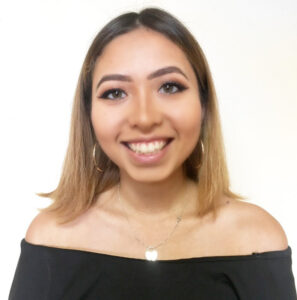
Izzy Vivas, Zhou B Art Center KC
Hosting the concert at the Zhou B Art Center KC is also significant, Vivas affirmed, noting the historic relevance of the former Crispus Attucks School, one of the first African American schools in Kansas City.
“The building itself was a huge legacy for educating Black children in Kansas City,” she added. “For the art center itself, education is a big part of what we want to do. And, yes, this is a form of entertainment and music is a form of connecting people, but it’s also a form of education.”
The show is an opportunity to remind people that human connections remain — even in tumultuous times, Vivas noted.
“Music is just the catalyst and the icebreaker to that,” she explained. “This show is as human as it can get when you hear the music, you hear the stories, you hear the joy, you hear the pain, and you feel everything.”
“It’s a universal language,” Singleton added. “It’s the language of love. It’s what we can all agree on no matter what else we don’t agree on. I think it’s a start. It’s this meeting point where a lot of possibilities for love and connection and new community and repair can really happen.”
Dynamic inspirations break boundaries
Azrael and Singleton have both loved rock music since they were young, they shared. Now, Azrael said, he strives to make music that he would have listened to on his MP3 player when he was growing up.
“I realized my story was a lot of other people’s stories: being this young, Black kid who grew up loving rock and loving R&B,” he explained. “I was listening to Nickleback and Luther Vandross. My dad introduced me to AC/DC and then I figured out Prince. It was just like all of these different melting pots.”
Azrael — who sang in choirs as a youth, started songwriting professionally at 18, and recorded his first album at 20 — also uses every music project to share his experiences through the lens of a Black, queer American, he noted.
“I’m trying to reconcile that experience in every inch of my journey and bring that to our band,” he added. “I have a really cool band that allows me to do that and supports me in it.”
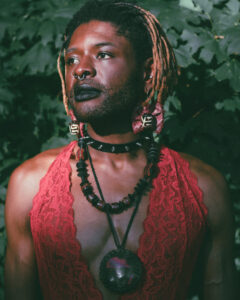
Stephonne Singleton, courtesy photo
For Singleton — who grew up singing in the church choir, writing songs, and teaching themselves to play guitar before majoring in vocal performance, performing as drag queen Kita Rose, and releasing their first solo album in 2015 — they remember the first time they heard Nirvana’s “Smells Like Teen Spirit” as a kid, they shared.
“I saw the video and it just captivated me,” they explained. “I felt like I finally heard music — since hearing Billie Holiday and Prince, which are my two main influences — that I could really identify with,” they explained. “It touched a nerve. It touched big feelings within me. And I’ve just been down that road ever since.”
“I’ve always loved all sorts of music from Alice In Chains to Nirvana to Prince, who to me is a king of rock and roll,” they added.
Singleton — who describes their style as alternative rock colliding with R&B with jazz, blues, and folk influence — called themselves a disruptive spirit with the spirit of rock always present.
“It takes a lot of nerve to be Black and queer in this world, let alone be either or,” they explained. “Rock — in that wide space of a genre — allows us to really take up space and be actual representations of everything that we’ve been through: all of our triumphs, all of our struggles, all of the bullshit that we frankly have to go through to just be heard.”
Through their own styles of rock, Vivas said, Azrael and Singleton are dynamic musicians that are pushing boundaries.
“I think when we think about rock, people often have an assumption of what that sounds like and what that looks like,” she continued. “There’s so much heart in their music, too, with not only their lyrics and how they vocalize and just how they sing, but instrumentally, too.They both really, I think, tell a story with their music.”

Featured Business

2025 Startups to Watch
stats here
Related Posts on Startland News

Cornstalks to cardboard: This KS company is turning farmers’ trash into sustainable fiber packaging
Startland News’ Startup Road Trip series explores innovative and uncommon ideas finding success in rural America and Midwestern startup hubs outside the Kansas City metro. WILLIAMSBURG, Kansas — One small town just south of I-35 in Franklin County — population 390 — soon will become home to a new world headquarters, said Mark Majors. Williamsburg’s…
Vine Street Brewing drafts ‘Afrodisiac’ Ale: A tribute to love, Black culture
A cross-Kansas City collaboration crafted specifically for the month of February could become a staple at Vine Street Brewing if customers fall in love with the blend as much as its brewers hope. Kansas City’s first Black-owned brewery — in partnership with André’s Chocolates and The Black Pantry — unveiled ‘Afrodisiac’ last week, offering a…

Fans packed Chiefs rally, one didn’t come home; citywide trauma from shooting won’t heal quickly, grief expert says
Trauma and grief come in waves, said Mindy Corporon, foreshadowing a long road ahead for those impacted — directly and indirectly — by Wednesday’s shooting near the Kansas City Chiefs’ Super Bowl victory rally. Like many across the region, Corporon, co-founder of the Merriam-based nonprofit SevenDays foundation, was watching the Chiefs parade on TV when…

Black leaders need to earn a ‘thriving wage’ before they can help others; an Evergy-backed cohort could help them ascend
A new program backed by entrepreneur support groups and Evergy aims to raise household income by at least 30 percent for participating Black professionals, nonprofit founders, and entrepreneurs, said Craig Moore II. “The ultimate goal is making sure you’re a leader who can do more than show up and talk about community — you have the…