

‘It’s pretty gross’: Nearly 30,000 federal workers in Kansas City brace for layoffs
February 3, 2025 | Suzanne King
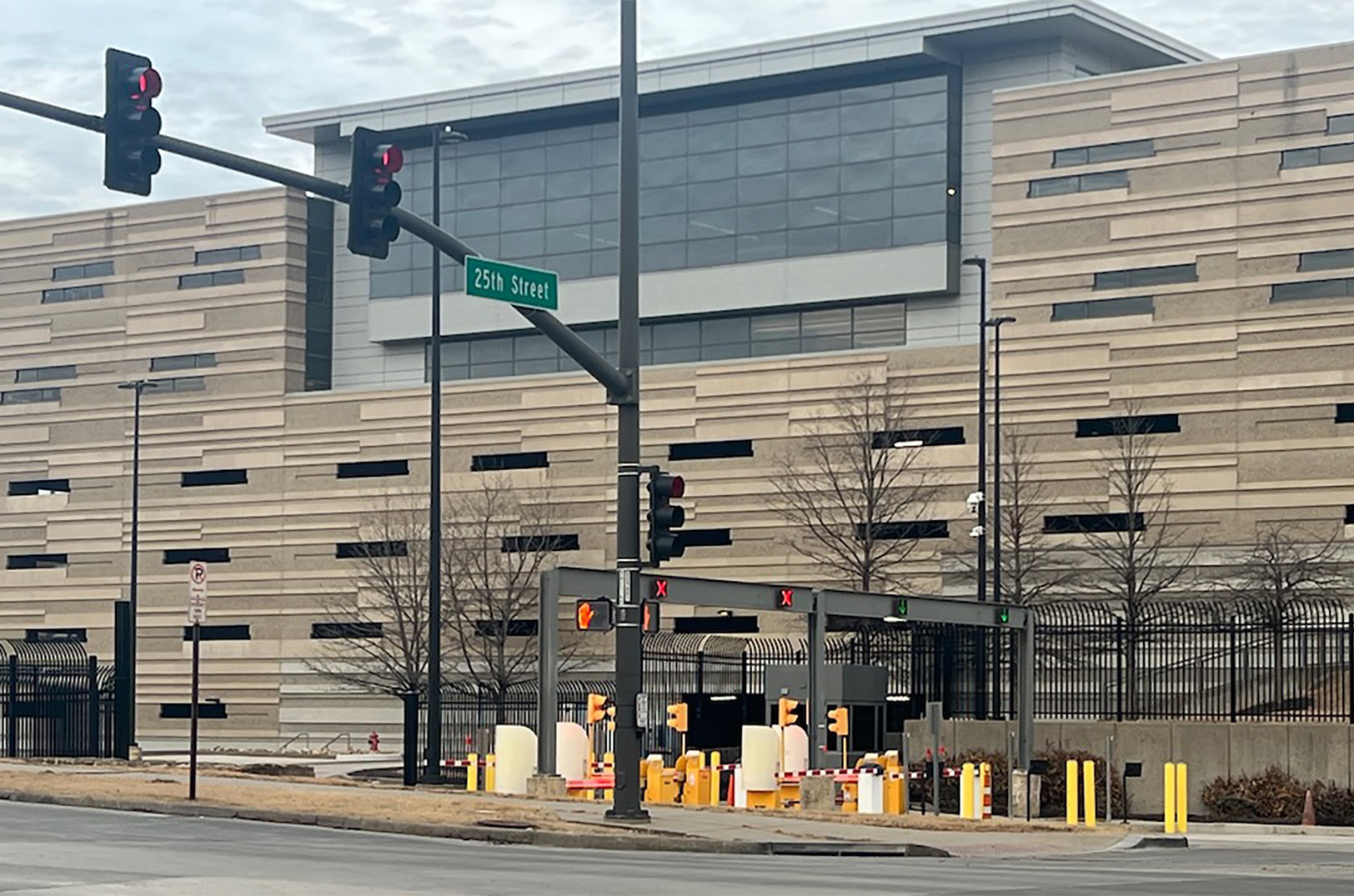
Editor’s note: This story was originally published by The Kansas City Beacon, a member of the KC Media Collective, which also includes Startland News, KCUR 89.3, American Public Square, Kansas City PBS/Flatland, and Missouri Business Alert.
Click here to read the original story from The Kansas City Beacon, an online news outlet focused on local, in-depth journalism in the public interest.
The federal government is by far Kansas City’s largest employer and a major economic engine; Experts warn the region’s economy will feel the pain when jobs disappear
Almost 30,000 federal employees in the Kansas City area are caught in the chaos that has defined President Donald Trump’s return to the White House.
So far, the Trump administration has reinstituted a policy making it easier to fire federal employees. It has ordered remote workers to return to the office. Federal agencies have been placed under a hiring freeze. And most civilian employees have been emailed a buyout offer that experts agree has tenuous legal standing.
“The federal workforce,” the Jan. 28 email to employees said, “should be comprised of employees who are reliable, loyal, trustworthy, and who strive for excellence in their daily work. Employees will be subject to enhanced standards of suitability and conduct as we move forward.”
The email, headlined “Fork in the Road,” promised “restructurings, realignments, and reductions in force. These actions are likely to include the use of furloughs and the reclassification to at-will status of a substantial number of federal employees.”
“It’s pretty gross,” said one federal employee in Kansas City who asked to remain anonymous for fear of retribution. “I went so far as to change my voter registration” from Democrat to independent.
He said he hoped that could spare him from a potential loyalty sweep that might use party affiliation as a metric.
“I knew this would probably happen,” said another local federal employee who also asked not to be named. “But in the first week he was in office?”
Federal job cuts will have ‘outsized impact’
While federal workers brace for more changes and fear for their livelihoods, economists warn that any major reduction in federal jobs — and the inevitable disruptions in government services that follow — could be devastating to Kansas City’s economy.
“It can cascade really easily,” said Chris Kuehl, co-founder of Armada Corporate Intelligence.
Since the Truman administration, the federal government has played a major role in the Kansas City area’s economic health. With 29,883 federal employees here, the federal government is by far the metro’s largest employer, accounting for about 3% of overall employment. And that figure doesn’t include contract workers or private companies that depend on federal contracts to do business.
The Internal Revenue Service, the Environmental Protection Agency, the Social Security Administration, the Small Business Administration, the Department of Veterans Affairs, the Department of Agriculture and the General Services Administration are just some of the federal agencies that have a regional presence.
“Even a small adjustment in the federal workforce will have an outsized impact on the economy,” said Brent Never, an associate professor of public affairs at the Henry W. Bloch School of Management at the University of Missouri-Kansas City.
Federal employees tend to be fairly well paid and their salaries are fueled by money coming from outside the community, making them even more valuable in economic terms. Federal workers spend at stores and restaurants, and on services inside the community.
Frank Lenk, director of economic research at the Mid-America Regional Council, estimates that each federal job, and the income it creates, fuels another job in the region. That means if 3,000 federal jobs permanently went away, Kansas City’s economy could lose about 6,000 workers overall.
“From an impact standpoint,” Lenk said, “those are powerful jobs.”
Federal workforce feels growing uncertainty
Before Jan. 20, the federal government’s approximately 3 million civilian employees probably would have said that they enjoyed job security.
But then came President Trump’s hiring freeze, his promises to slash jobs and his executive order requiring every employee to return to the office or get fired.
The Kansas City federal worker who said he changed his voter party affiliation out of fear of being fired said he took his government job because of its benefits — especially the benefit of working remotely.
Only going into the office once a week means he can be around when his kids get home from school. He saves an hour a day not having to commute, which gives him time to cook, rather than having to pay to eat out. And he avoids other ancillary expenses like parking and extra child care. Parking alone, he estimates, will run thousands of dollars a year if he has to return to the office full time.
“You’re not making a lot in pay being a federal employee,” he said, “but that one benefit of being able to telework means everything.”
Diana Hicks, a national vice president with the American Federation of Government Employees (AFGE) who oversees a district that includes Missouri and Kansas, said the union is fighting against the return-to-work order.
Many employees were hired with the promise of remote positions. And the benefit is baked into many of the union’s collective bargaining agreements, she said.
“They’re altering a condition of employment,” Hicks said.
The union is also advising its members to beware of the “deferred resignation” offer thousands of employees received on Jan. 28 in an email that came directly to employees from the U.S. Office of Personnel Management. Normally, communication from the government’s top personnel office would be filtered through individual agencies.
The “Fork in the Road” memo, which had the same title and highly similar content as one that Twitter employees received from tech billionaire Elon Musk in 2022, read more like a scene from “Severance,” the dystopian TV show, than an HR memo.
It offered employees the chance to resign now, but retain pay and benefits until Sept. 30. It was sent to all full-time federal employees except for military personnel, U.S. Postal Service workers, and people working in the areas of immigration enforcement and national security.
Employees who decide to accept it need only reply to the email, adding the word “resign,” by Feb. 6.
“At this time, we cannot give you full assurance regarding the certainty of your position or agency,” the memo advised employees who don’t accept the resignation offer.
But accepting it, many legal experts warned, would come with no guarantees and many questions. For one thing, a continuing resolution currently funding the U.S. budget expires March 14, more than six months before the promised last paycheck. And that’s not the only legal hurdle that could render the offer much less than promised, experts said.
Unions representing federal workers urged caution.
“There is not yet any evidence the administration can or will uphold its end of the bargain, that Congress will go along with this unilateral massive restructuring, or that appropriated funds can be used this way, among other issues that have been raised,” the National Treasury Employees Union told members in an email.
AFGE said the offer should not be viewed as voluntary.
“It is an attempt to get federal employees to resign,” said Hicks. “This is essentially a fast track, ‘You have a week to respond with no guarantee.’”
‘Reductions in force’ promised
It is unclear how many employees have returned the email. But a survey of 4,600 federal employees conducted by the Federal News Network found that three-quarters of respondents said they would decline.
Regardless of whether employees choose to leave, however, the Trump administration has promised a major overhaul of the civilian workforce and promised “restructurings, realignments and reductions in force.”
That means many of Kansas City’s federal employees are likely to end up on the job market. Kuehl said many will need training to easily fit into jobs currently available in private industry. So far, that doesn’t seem to be on the new administration’s to-do list.
Never, the UMKC professor, speculated that many of the federal employees who lose their jobs will face underemployment when they move to their next job.
“That has a large effect on a family’s wealth over time,” he said.
The federal downsizing could have economic implications beyond just the salaries that disappear. The services federal jobs provide will probably be disrupted, and that could also affect the region. If tax refunds are delayed, small-business or education loans go unprocessed or Social Security benefits aren’t paid, the effects will ripple through the economy.
On top of that, a raft of other executive orders have threatened federal funding to organizations across the region, creating widespread uncertainty.
The Trump administration may be betting that there’s enough bloat in the federal government to take out thousands of jobs without services being affected.
“That’s the open question,” Lenk said. “Can you have this kind of reduction and not have it significantly affect government services?”
And as for the administration’s stated goal to trim costs in order to cut the federal deficit, questions also exist about whether this plan will help.
Reducing the deficit may be a worthy goal, Never said, but cuts that cause disruptions in federal services and affect the economy could actually lead to bigger problems for the country than a large deficit.
“We have the most attractive debt because people know we’re good for it,” Never said. “But when the government becomes erratic, there start to be questions about our intent on paying our bills. That’s what would make our debt more expensive.”


2025 Startups to Watch
stats here
Related Posts on Startland News

In talent showdown with corporate neighbors, startups must hire smarter, say Digital Sandbox experts
Kansas City heavy-weights like Garmin and Cerner court developers at the student level, said Brody Dorland, discussing a talent showdown seen by startups across the metro. “How am I supposed to compete with that?” asked Dorland, co-founder of marketing tech firm DivvyHQ, during a recent Digital Sandbox: Summer in the Sand panel about growing startup…

KC Fed: Want to strengthen Kansas City’s job market? Narrow skills gap caused by digital division
Digital division in Kansas City is taking its toll on the local workforce, said Jeremy Hegle. More must be done to allow skilled workers access to technology — in turn offering them a chance to succeed in a rapidly growing electronic economy, added Hegle, Federal Reserve Bank of Kansas City senior community development advisor. In…

Vote now: Kansas Citians vie to lead tech, education panels at SXSW 2019
A cadre of Kansas Citians are hoping to take the podium at one of the nation’s largest tech and innovation conferences in 2019. At least four Kansas City tech and entrepreneurship leaders are vying for panel or speaking spots at the 2019 South by Southwest conference March 8-17 in Austin, Texas. SXSW recently opened voting…

Nominations for Techweek 100 list of premier KC innovators close Sept. 9
It’s not a ranking. Techweek 100 celebrates the whole spectrum of individuals and organizations who are impacting the business and technology landscape on a significant scale in cities like Kansas City, organizers said. Nominations close Sunday, Sept. 9. “Honorees include fast-growing technology companies, prominent sector investors, key contributing enablers of the digital ecosystem, those at…