

Founder Problems: Podcast captures the ‘messy middle’ you don’t see on entrepreneurs’ highlight reels
February 13, 2025 | Nikki Overfelt Chifalu
A new Kansas City-based podcast is skipping over the fairy tale stories of founding a startup; instead diving straight into the messy parts, the hosts shared.
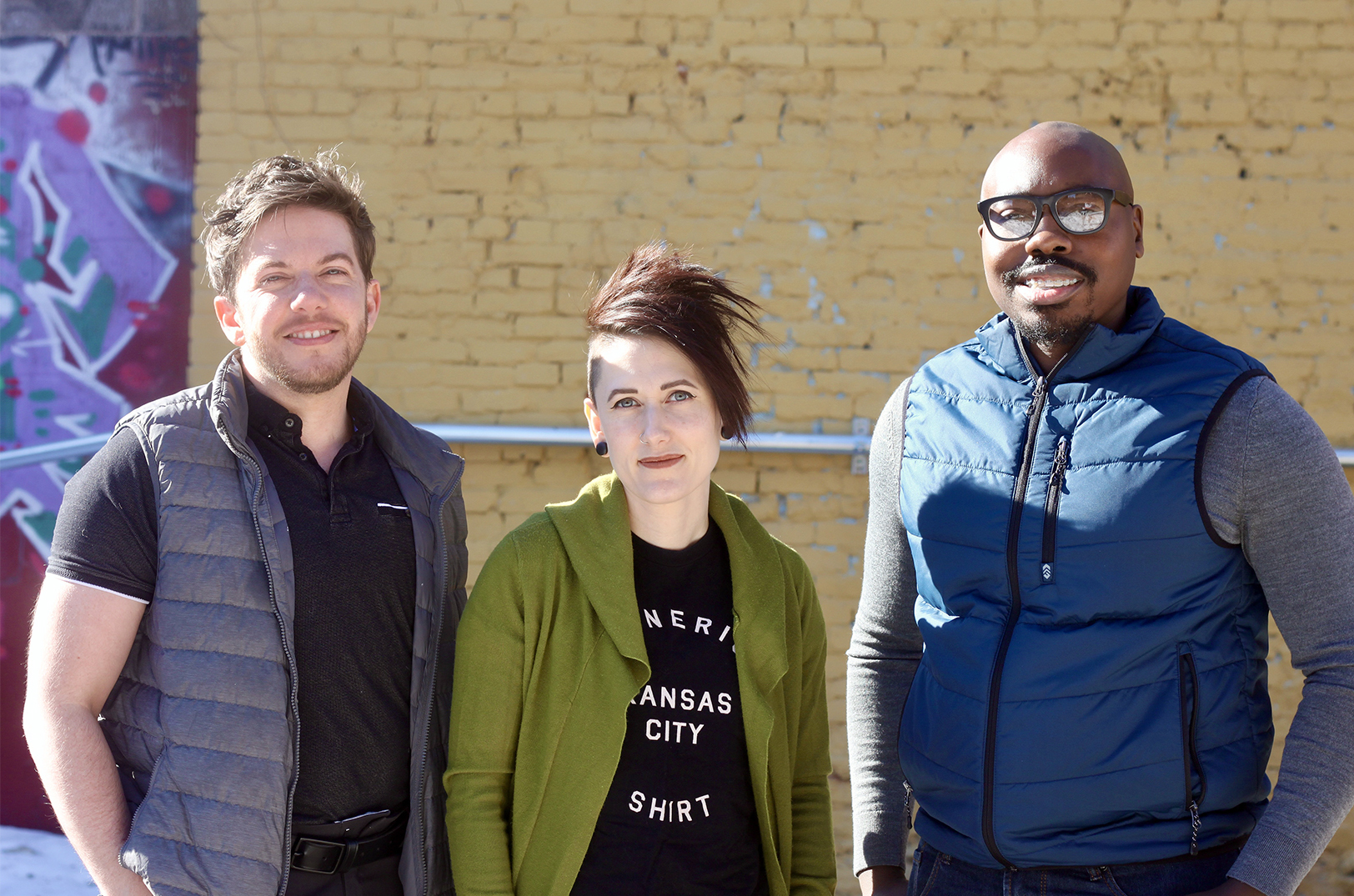
Founder Problems — hosted by local entrepreneurs Sarah Schumacher, Zach Oshinbanjo, and Lee Zuvanich — is embracing the aspects of starting and running a business that no one wants to talk about on podcasts or online content, they said.
Episode 3, for example: “When to Quit.”
“Everybody just fast forwards through the crappy part,” explained Oshinbanjo, founder of Vetelligence, a startup that’s trying to shift the way that the U.S. Department of Defense views personnel. “Or if they do (talk about it), they layer it like this film grain or something: ‘Ah, there’s hard times and I didn’t know if I was going to be able to do anything, but now I’m a gazillionaire.’ Nobody ever sees that beginning part.”
“It’s like we live in this world where everyone’s an expert,” he added. “Everyone’s a guru. No one’s ever a novice or inexperienced at things.”
Most people only focus on the highlight reels, continued Schumacher, founder of Cyclone Press, which helps entrepreneurs in Kansas City build better businesses through web design, development, and branding.
“For me, it’s the messy middle,” she said. “I think that’s the phrase that captures it the most, like when you’re in the day-to-day, dealing with client issues or fires you’re having to put out. No one’s talking about that aspect.”
For Zuvanich — who founded Appsta, a global marketplace that uses AI to standardize software development pricing for app founders — he wanted to recreate the feeling at Pipeline Entrepreneurs events, he noted, where participants spend the whole day talking theory and then afterward go out and get drinks together. Instead of presentations in front of their mentors, they were able to let loose and talk about their struggles.
“People would cry and share like, ‘I’m going through a divorce; I’m losing my house,’” explained Zuvanich, a member of the 2023 Pipeline fellowship and 2022 Pipeline Pathfinder cohort with Oshinbanjo. “There were always really, really hard things happening and you would have never known it from the presentations just a few hours ago.”
“So I was wanting to create something that captured that magic of, ‘Well, I feel empowered now that I know that everyone else is struggling just like I am,’” he added, “‘and we’re all going to figure it out together. They’re giving advice and we’re learning together.’”
The Founder Problems podcast — with a logo that features a dumpster fire (merch coming soon) and a tagline of “Unscripted, anti-hustle conversations with real founders working through real problems” — is also therapeutic for the hosts, they shared.
“We realized it would also be cathartic,” said Zuvanich, who also co-founded Transitional Justice, a nonprofit that aims to provide transitional housing for displaced transgender political refugees. “So we originally called it Founder Therapy, and then we would just meet and record venting. But then we started to get more structured.”
“We’re doing this, also, for each other,” continued Schumacher, who has 20 years of experience in the tech space and also does consulting for tech startups. “But it’s a different angle on it, where it’s like, ‘No, no, this is what this actually looks like.’”
“You have to be authentic to your experience,” added Oshinbanjo, who also is the executive director of KC-based nonprofit SITE: Social Impact, Technology and Engineering and works full-time as a grant administrator. “We’re being very intentional with how we’re communicating the daily kind of obstacles we have.”

Founder Problems podcast hosts: Zach Oshinbanjo, Sarah Schumacher, and Lee Zuvanich; photo by Nikki Overfelt Chifalu, Startland News
While Oshinbanjo and Zuvanich know each other through the Pipeline program, Schumacher and Zuvanich met at a networking event through a mutual friend. Oshinbanjo and Schumacher later met at a Pipeline event in Canada, although she isn’t a part of the program.
The three hosts first had the idea for the podcast last spring, they noted, and started recording in the summer. They didn’t release their first episode until Jan. 1, focusing first on navigating the right podcast publishing format and resolving editing/sound challenges. They plan to release a new episode every other Wednesday and are open to topic and guest suggestions.
“We’re trying to walk this line of, ‘How can we talk about our personal stories and operational perspectives, keep it unscripted, but then also provide value and takeaways?’” Schumacher said, noting they eventually plan to provide asset resources on the website.
It helps the balance of the podcast that they all bring a different perspective, she added: herself in the tech consulting space working with solopreneurs and startups, Oshinbanjo in the government contract and nonprofit space, and Zuvanich in the scaling tech startup/venture capital space.
“We’ve seen a lot of stuff,” she explained. “I don’t even like to talk about this one, but I co-founded a tech startup that was a horrible decision. So there’s stuff around that, too, where I have some very strong thoughts on co-founders and partnerships and choosing those people.”
“Everyone I talk to has a story,” she added. “So it’s walking this line of ‘Let’s try to address this gently’ but also ‘I’ve been through this; I have some thoughts when I see things and I’ve got to point stuff out.’”
The aim is to push to have authentic conversations, Oshinbanjo said.
“Like Lee said, the training is done,” he explained. “There’s no camera around. There’s no PR. I can just tell it like it is. I’m not up here for trying to get a check. I’m just telling people how it is.”
“When you can have those types of conversations,” Oshinbanjo added, “it really changes your perspective on going through these stages of small businesses.”

Featured Business

2025 Startups to Watch
stats here
Related Posts on Startland News

Biden-Harris official tours KC BioHub; region prepares to reapply for federal Tech Hubs funding
A visit from a top federal economic development leader early this month offered regional leaders an opportunity to showcase and build upon Kansas City’s strategy to increase domestic production of life-saving vaccines within the footprint of the newly established KC BioHub. Maryam Janani-Flores, chief of staff for the U.S. Department of Commerce’s Economic Development Administration…

How tech is making every industry in Kansas search for ‘the next version of themselves’
Navigating the path ahead starts with filling state’s workforce with tech innovators who can reshape Kansas to match its wildly disruptive potential, leaders say WICHITA, Kansas — The Sunflower State is seeing the seeds of tech momentum beginning to bloom, but Kansas has a long way to go before its time for harvest, said leaders…

Family-owned US Toy sells to Chicago-based novelty retailer; new owner pledges continued innovation
The strategic acquisition of a 70-year-old Grandview company that has become a household name for its novelty toys is expected to fuel its new owner’s ability to meet the evolving needs of modern-day customers. Chicago-based Windy City Novelties, Inc. announced the deal with US Toy this week, though financial details were not disclosed. Founded in…

Financier of the Year: Worlds’ biggest financial leaders applaud C2FO for job-creating capital access
C2FO would’ve been profitable in the US alone, CEO says; how solving for global needs made it an even stronger fintech leader The impact of one Kansas City-built fintech company is being felt far beyond the borders of the U.S., said Sandy Kemper, detailing how C2FO’s strategy to go global is creating hundreds of thousands…