

Entrepreneurship is the path to freedom; how Black business pioneers’ legacies still stand today
February 4, 2025 | Brandon Calloway

Editor’s note: The perspectives expressed in this commentary are the author’s alone. Brandon Calloway is CEO and Co-Founder of Generating Income For Tomorrow (G.I.F.T.), and now writes a weekly blog, The Equity Advocate.
In the past eighteen months of traveling from city to city, I’ve made it a point to delve into the histories of Black people in these various locales. A recurring narrative began to emerge — one of Black men, either born into the shackles of slavery or in its looming shadow, who forged paths to freedom and respect through their business acumen. These men didn’t just stop at personal success; they turned their fortunes towards advancing the cause of Black equality.

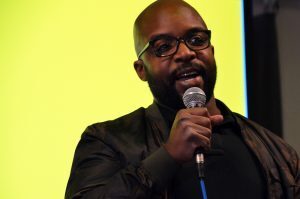
Brandon Calloway, The Equity Advocate, Kansas City GIFT
This historical pattern underscores a thesis I often argue: that all injustices are rooted, at their core, in economic inequality. The stories of these men not only bolster this view but also challenge current corporate and entrepreneurial leaders to recognize the significant, active roles they must play in propelling our society toward the equitable America we envision.
Consider the life of James Forten of Philadelphia — born free in 1766 but surrounded by the injustices of his time. His critical life experiences shaped during the U.S. Revolutionary War, when as a young sailor, he endured captivity on a British prison ship. Returning to Philadelphia, Forten worked under a master sailmaker, and his innovation in sail design would mark a turning point in maritime technology.
The success that followed allowed him to acquire and lead a sail loft, turning it into a lucrative business that employed over forty workers. Forten then channeled his economic might into the abolitionist movement, supported educational programs for Black youth, and championed voting rights — melding his business success with a fierce commitment to civil rights and becoming an integral figure in the battle for the rights of African Americans during the early years of America.
In Miami, Dana Albert Dorsey, the son of former slaves, emerged as the city’s first African American millionaire — a remarkable feat in the face of the severe racial segregation that limited opportunities for Black individuals during the early 20th century. Dorsey saw an unmet need in the housing market and began constructing homes for African American families, who were systematically marginalized from other city areas.
His initiatives didn’t stop there; he expanded into building Miami’s first Black hotel and a bank, thus providing essential services to the Black community and directly confronting racial barriers. He even purchased a beach for Black people during the Jim Crow era, a bold move when they were barred from other city beaches. Dorsey intertwined his business ventures with civil rights efforts, funding scholarships and donating real estate for educational and recreational facilities, demonstrating how entrepreneurial success could be leveraged to advance civil rights and community development.
Right here in Kansas City, the story of Hiram Young speaks to the liberating power of entrepreneurship.
Born into slavery, Young bought freedom for himself and his wife with the earnings from his own labor and early business efforts. In the 1840s, he established a flourishing wagon manufacturing business in Independence, Missouri, a pivotal supply point for westward expansion. Known for their high quality and durability, Young’s wagons turned a substantial profit, which he reinvested into local Black communities and abolitionist causes. His commitment to civil rights extended beyond his business, as he supported the Underground Railroad and promoted social justice through economic empowerment. He was a founding member of the St. Paul African Methodist Episcopal church in 1866 and opened the only school for African American children in Independence — Young School, which still stands today.
James Forten, Dana Albert Dorsey, and Hiram Young illustrate the significant impact entrepreneurial success has had beyond mere business achievements. They used their economic gains as platforms to challenge and dismantle systemic racial injustices and advocate for civil rights. Their legacies serve as potent reminders of the critical role business leaders must play in advocating for and achieving broad social change, particularly in addressing racial inequalities.
Much more than just historical footnotes; they are guiding lights for contemporary efforts to combat racial injustice through economic empowerment.
This understanding deepens my commitment to the work we undertake at Generating Income For Tomorrow (G.I.F.T.). While it’s evident that many leaders in mid to large businesses are not engaged in the fight for economic justice, G.I.F.T. is actively investing in and nurturing the next generation of Black entrepreneurs. These are the individuals poised to follow in the formidable footsteps of Forten, Dorsey, and Young.
By empowering them, we not only honor the past but pave a way forward, ensuring their legacy of entrepreneurial success and civil rights advocacy continues to inspire and effect change in our communities.
Brandon Calloway is a distinguished leader with extensive experience in both the nonprofit and business sectors. As the CEO and co-founder of Generating Income For Tomorrow (G.I.F.T.), Calloway is dedicated to closing the racial wealth gap in Kansas City. He is also the founder of Darkmoon Comics and Blerd TV, initiatives aimed at amplifying Black representation in media.

Featured Business

2025 Startups to Watch
stats here
Related Posts on Startland News
nbkc launches Entrepreneur in Residence incubator: ‘I have a whole company behind me’
Less than a year after its inaugural Fountain City Fintech accelerator debuted, nbkc bank has launched a new incubator program designed to tackle common banking industry problems with start-up-style ideation, problem solving, and tenacity, said Megan Darnell. The goal: building new companies along the way, the nbkc program manager said. “Kansas City has every single…

Jolie Justus’ open letter to startups: In many ways, the city has failed you — let’s do better together
[Editor’s note: Startland News invited Kansas City mayoral candidates Jolie Justus and Quinton Lucas to compose open letters to address their potential constituents in KC’s entrepreneur community of startups, makers, creatives and risk-takers. Justus’ response is below. Lucas did not participate. The vote is set for Tuesday, June 18.] I trust this community to see…

Forget the war on drugs — Marijuana is a war on chronic pain, says founder in ProjectUK cohort
Don’t look at marijuana through a societal lens, said Jessica Sanders. Instead view the natural substance as a potential life-saving measure. “My mother had multiple sclerosis and seeing her suffer really changed a lot about me,” explained Sanders, founder of Lisa’s Gifts — a high-quality THC extraction facility named after Sanders’ mom, expected to provide and…

We Grow KC investment summit aims to harness opportunity zones to empower neighborhood social fabric
Investment is a two-way street that can have a positive impact on both investors and community residents, said Dianne Cleaver. A new gathering — the June 26-27 We Grow KC Opportunity Zones Investor Summit — aims to bridge the potential divide between such neighbors with the back of Cleaver’s Urban Neighborhoods Initiative, the Ewing Marion…