

Kansas City jazz swings harder: How KU is building on the city’s historic musical legacy
January 21, 2025 | Courtney Lane
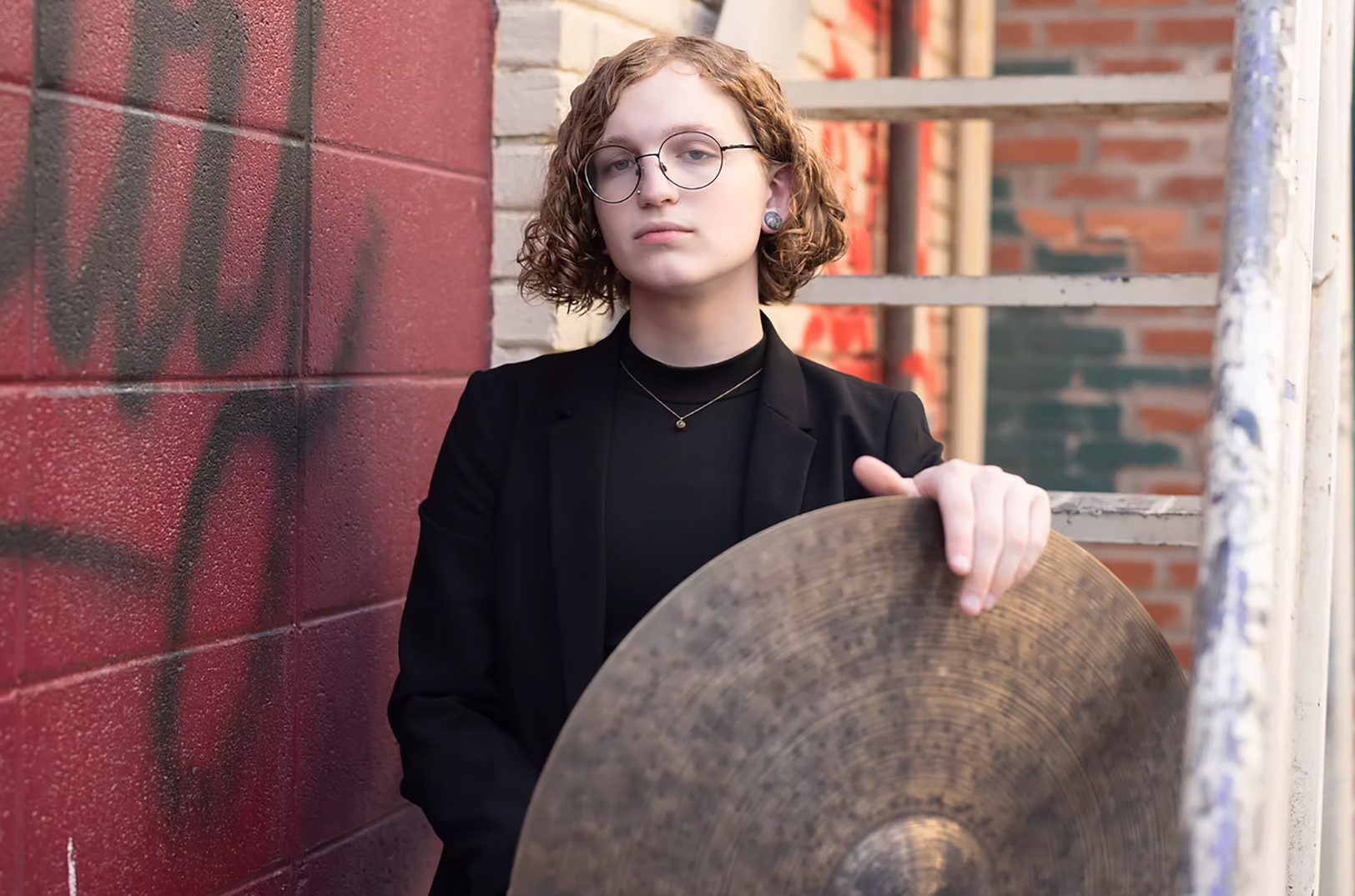
Editor’s note: This article was written for a class at the University of Kansas’ William Allen White School of Journalism and Mass Communications and distributed through the Kansas Press Association.
Icons like Charlie Parker and Count Basie define Kansas City’s jazz legacy. But today’s contemporary artists — such as Blue Noyes and Nic Weaver — are nudging the experimental spirit forward, pushing traditional boundaries for the next generation of musicians.
While iconic venues like the Pla-Mor Ballroom — once graced by Ella Fitzgerald and Stan Kenton — and Paseo Hall, a cornerstone of the 18th and Vine district until 1941, have disappeared, Kansas City’s jazz scene thrives in modern hubs like Green Lady Lounge, Post Coffee Company, The Blue Room, and the Mutual Musicians Foundation.

Brandon Draper, University of Kansas associate professor
After jazz was born in New Orleans, its journey up the Mississippi shaped distinct regional styles in Chicago and New York. But in 1919, the National Prohibition Act was passed causing an abrupt halt to the jazz boom – but not in Kansas City, not under the hand of political boss Tom Pendergast, whose grip on the local Democratic Party allowed gambling and speakeasies to flourish, allowing Kansas City to become the unexpected heartland of jazz.
“Musicians would get done with their gigs, and then they would go to the Black Musicians union and have jam sessions till the wee hours of the morning,” said Brandon Draper, associate professor of jazz at the University of Kansas. “And it’s at those sessions that Miles Davis and Charlie Parker and Dizzy Gillespie met each other and developed bonds.”
Today, the Mutual Musicians Foundation (MMF) – once home of the Black Musicians Union – carries on this legacy. The venue has a rare license to sell liquor until 6 a.m. on weekends, keeping the tradition of late-night jam sessions alive.
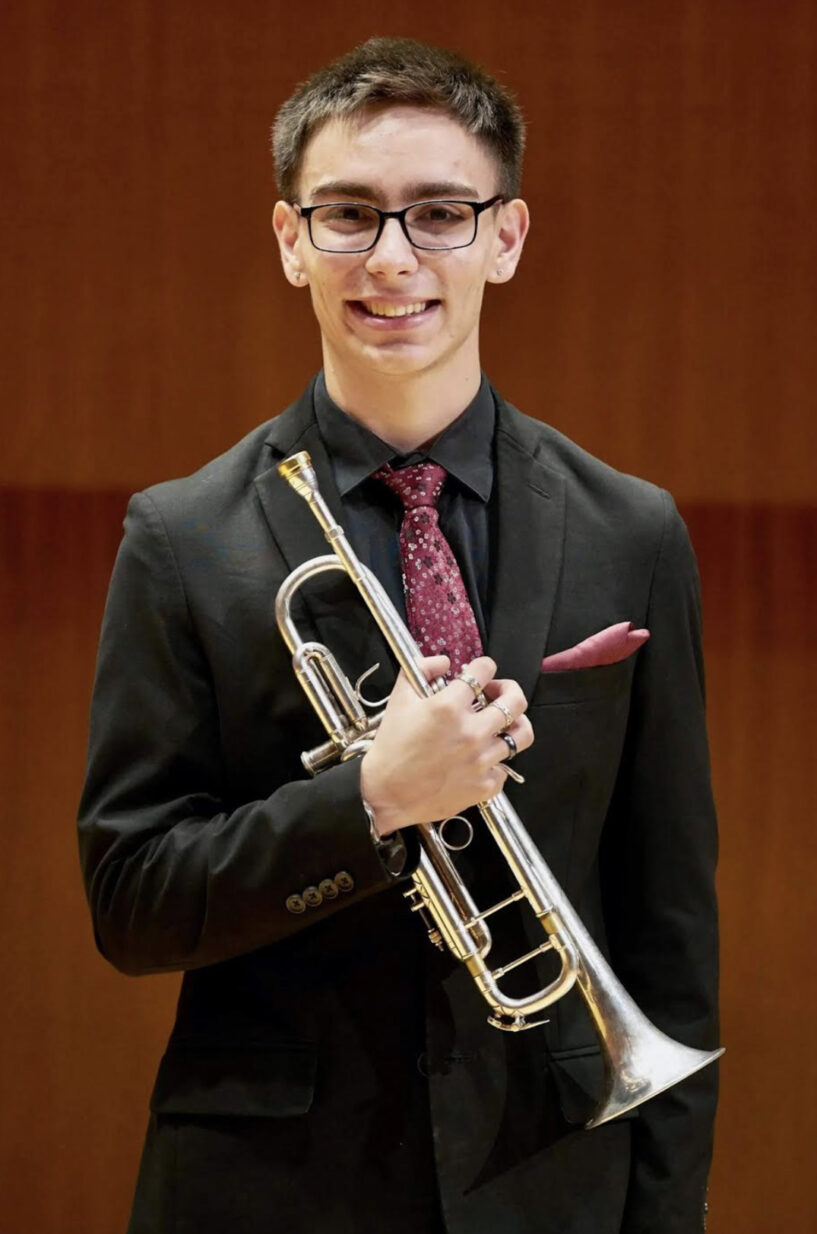
Nic Weaver, University of Kansas student and trumpet player
“There’s pictures of, like Count Basie and Charlie Parker up on the wall,” said Nic Weaver, who plays the trumpet. “[It’s] like, ‘hey, they played here’ back in their day, and we’re part of that lineage now.”
Institutions like the MMF sustain Kansas City’s legacy, while the University of Kansas shapes its future, fostering young musicians under educators like Draper.
At KU, Draper emphasizes three stops on the spectrum of teaching future musicians: mastering tradition, innovating within it, and, ultimately, finding an individual voice. He believes that this approach results in a well-rounded musician.
“At the University of Kansas, we are more encompassing,” said Draper. “All three of those with a real emphasis on getting to that third level as deeply as we can without leaving any stones unturned.”
Draper estimates that approximately 20 current KU musicians regularly take part in Kansas City’s jazz scene, alongside more than 60 alumni who continue to contribute to its growth.
Kansas City jazz is rooted in traditional blues, emphasizes 12-bar progressions, lower keys, and extensive improvisation. However, Draper makes an important note about its difference from other jazz traditions.
“One difference about Kansas City swing is it swings harder,” said Draper. “The swing value of the eighth notes is tighter and more bouncy, making it more akin to dancing.”
This distinctive style — less rigid than Chicago or New York jazz — allowed musicians to embrace riffs and experimentation, fostering a vibrant underground scene.
While KU fosters musicians in the classroom, venues like Green Lady lounge and Post Coffee Company offer a proving ground for Kansas City’s next generation of jazz innovators.
Blue Noyes, a KU sophomore and jazz studies major, says that many venues still have that speakeasy charm.
“[Green Lady Lounge] still has the same vibes as it would have in prohibition,” Noyes said. “Everyone’s drunk, and they’re probably not supposed to be, but like, everyone is, and there’s loud music.”
Performing in Kansas City since high school, Noyes has navigated the underground experimental scene and traditional jazz venues like Green Lady Lounge and Black Dolphin. Green Lady, she notes, is the city’s highest-paying gig for musicians (she didn’t give any figures), but she’s equally drawn to more unconventional spaces, like Post Coffee Company’s Broadway location and its Arts on Broadway series.
“They’ve got this little underground layer almost, that’s dark lighting and grungy,” said Noyes, a drummer. “I did a gig there once where we were doing completely free improvisation behind a poet. We were improvising with the feeling, with the mood of what they were doing.”
The Arts on Broadway series, which began as a monthly event in May 2024, quickly gained popularity and now hosts diverse performances monthly. Between February and April, Noyes plans to take part in the shop’s Mario Kart Championship, where a 10-piece band will perform the soundtrack of Mario Kart 8 live — an ambitious blend of gaming nostalgia and live jazz.
Courtney Lane is a senior from Little Rock, Arkansas, studying multimedia journalism and photography.


2025 Startups to Watch
stats here
Related Posts on Startland News
Wonder developers eye emerging businesses and creatives for Troost
Business is brewing at the former Wonder Bread bakery. With a flurry of activity at 30th and Troost, the historic site is undergoing a transformation: from yet another vacant space on the corridor to an anchor for residential and commercial life on Troost. “They’ve gutted the inside and they’ve done a ton of work,” said…
You don’t have to pick a side, neighbor-led Troost Coalition says
It’s about bringing residents back to Troost Avenue, Cathryn Simmons said. And that means challenging the status quo. “This used to be a free-for-all. Troost was the Wild Wild West of Kansas City,” she said. “You could come over here and do anything you wanted. Legally.” A founding member of the Troost Coalition, Simmons helped…
Video: Nonprofit wants to bring coworking, craft fairs and farmers markets to Troost
Nonprofit group Troost Market Collective hopes to revitalize a section of Troost Avenue — from 31st to Linwood — bringing a coworking space, art collective and maker spaces, as well as regular festivals and farmers markets. While other developers are busy building residential and retail space along the Troost corridor, Troost Market Collective co-founders Katie Mabry…
Troost revival: Can a brewpub, retail and 670 housing units mend racial divide?
No turning back now, Ilan Salzberg said. “This is real,” the Wonder lofts developer laughed, gesturing at the freshly installed kitchen cabinetry and hardware in a model apartment unit at 30th Street and Troost Avenue. Wonder is expected to be the first of three major residential developments to open between 27th Street and Armour Boulevard…