

Aussie livestock tech company tags Johnson County for its new North American HQ
January 29, 2025 | Startland News Staff
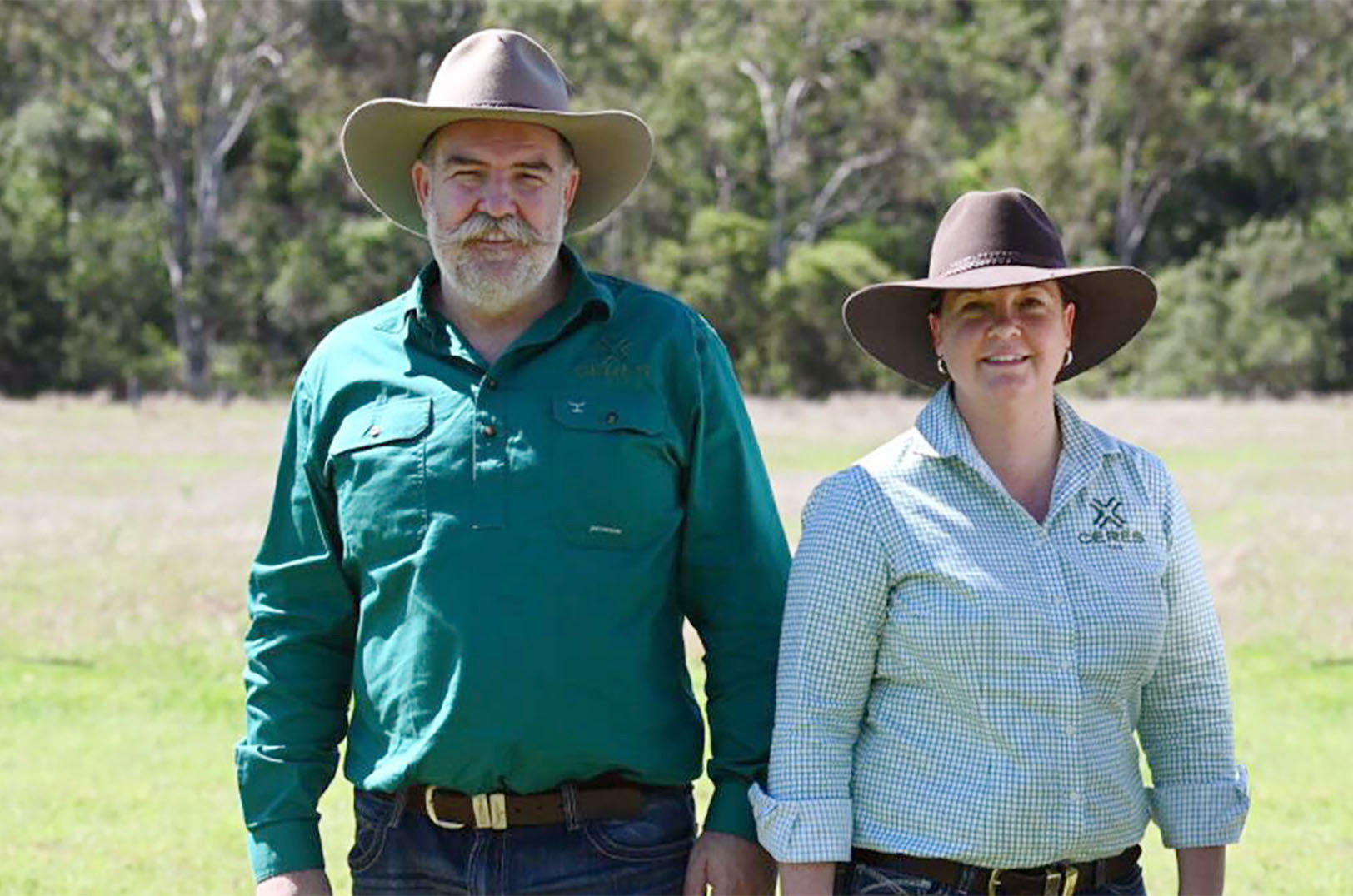
An Australian leader in direct-to-satellite animal monitoring technology announced its plans Wednesday to establish North American headquarters at the Aspiria Campus in Overland Park — bringing a half-dozen jobs and paving the way for more tech innovators from Australia to land in the local market.

“The Kansas City region was the clear choice,” said David Smith, founder and CEO of Ceres Tag, which makes durable, solar-charged smart monitoring sensors that can be attached to wildlife or livestock. “This region offers the perfect environment to grow our presence and deliver our groundbreaking technology — poised to transform animal health science for businesses across North America.”

Ceres Tag flagship product; courtesy image
Founded by Smith and his wife, Melita, in 2016, the company offers insights previously unavailable to farmers, ranchers and wildlife managers to improve productivity, profits and conservation. By delivering plug-and-play solutions that integrate seamlessly with existing software systems, Ceres Tag empowers a variety of end-users with a scalable and less-intrusive approach to animal monitoring, boosting productivity and profitability.
Its new headquarters will initially support four to six employees, with additional sales representatives positioned strategically across the United States.
The move further strengthens the Kansas City region as a hub for animal health technology and innovation, said Kimberly Young, president of the KC Animal Health Corridor, an affiliate of the Kansas City Area Development Council.
“Ceres Tag’s investment in our region reinforces our global reputation as a leader in animal health innovation,” she explained. “Representing 56 percent of total worldwide animal health, diagnostics and pet food sales, the Animal Health Corridor is home to some of the most cutting-edge technology in our industry, and we’re thrilled to welcome Ceres Tag to our robust network.”
With headquarters in Kansas City, Ceres Tag is actively seeking partnerships with businesses across the animal health sector to enhance insights and improve customer outcomes.
Young animal health professionals, digital natives with a heightened focus on animal welfare, represent a key demographic for Ceres Tag’s technology, the company said. By improving market access and providing unprecedented insights into animal health and performance, Ceres Tag equips ranchers, farmers and more with the tools they need to adapt to evolving industry demands and ensure optimized solutions for their own businesses and customers.
Click here to learn more about Ceres Tag.

Featured Business

2025 Startups to Watch
stats here
Related Posts on Startland News

Melissa Roberts: How an Olathe hate crime affects your tech business
Editor’s note: The opinions in this commentary are the author’s alone. In the startup world, outside the Facebook echo chamber, it can be hard to see how political trends impact your business. I understand why. When you’re struggling to weed through the constant churn of working the problem, identifying a new problem and working that…

Jaguar Land Rover invests in artificial intelligence startup Mycroft
Mycroft has received a significant boost in horsepower. Only a few weeks after entering 500 Startups, Mycroft has landed a strategic partnership with Jaguar Land Rover. The Kansas City-based artificial intelligence startup is among the first startups to enter the Portland-based Jaguar Land Rover Tech Incubator, which will provide Mycroft with a $110,000 investment and…

KC-based OYO Fitness closes a historically successful Kickstarter
To say that OYO Fitness has a successful Kickstarter campaign would be an understatement. The Kansas City-based fitness firm folded up and then crushed its recent crowdfunding effort, which raised a stunning $659,000 for its collapsible and compact exercise device. OYO’s DoubleFlex Black campaign — which snagged pre-orders from 4,200 backers — was the second…
Survivor, innovator Kim Gandy rewards patients for sticking to treatments
In her 20 years working as a transplantation clinician, Kim Gandy found it baffling that a seemingly simple problem had such a difficult time finding a solution. Transplant patients consistently struggled to adhere to their health regimens, resulting not only in significant costs for care providers but also death. “We were literally losing patients,” Gandy…