

How ’bout those cheeeeeese mochis? Korean chicken spot gets into the game with its own head-turning plays
January 25, 2025 | Nikki Overfelt Chifalu
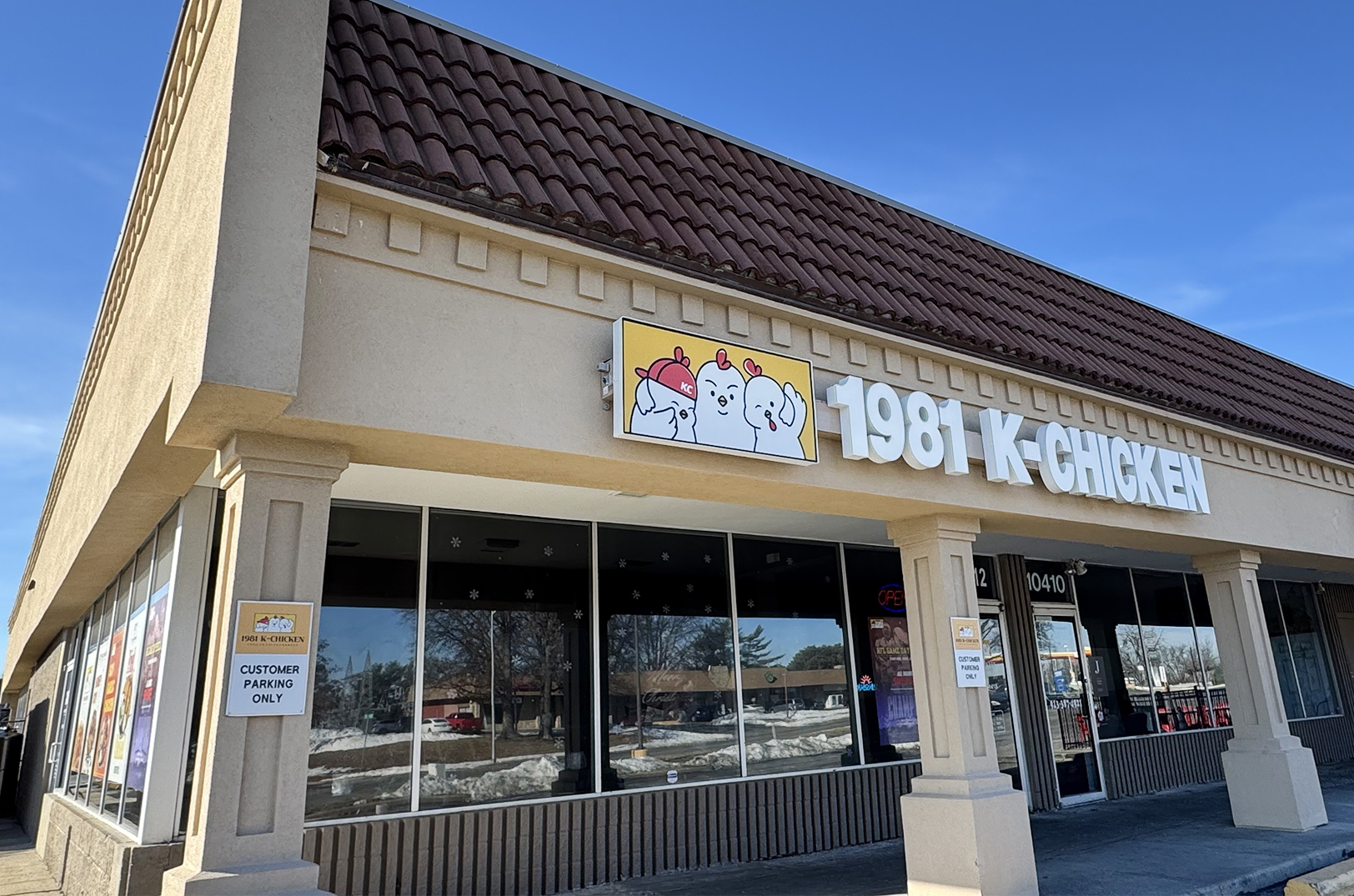
After their decade of conversation got old, three lifelong friends finally achieved their dream of opening a restaurant together, Kue-Jin Hwang shared. Now they’re hoping to capture Chiefs’ fans’ hunger for a three-peat at their Overland Park restaurant.

Sung Jo, Kyoungmin Kim, and Kue-Jin Hwang, 1981 K-Chicken, in early 2024; photo by Lucie Krisman, Johnson County Post
Hwang, Kyoungmin Kim, and Sung Jo — friends for more than 30 years (each represented in the brand’s playful chicken logo) — launched 1981 K-Chicken this summer at 10412 Mastin St.
“We’ve been talking about it, but never took any action on it,” Hwang explained. “But it was time. We were all born in 1981, and then we walked into our 40s like, ‘We can’t just talk about it. We’ve got to do something. So let’s do it.’”
The restaurant, which boasts several TVs to watch Kansas City sports teams, serves crispy fried chicken — wings, sandwiches, and boneless wings — with a variety of signature sauces and seasonings, including soy garlic, spicy soy garlic, and honey soy.
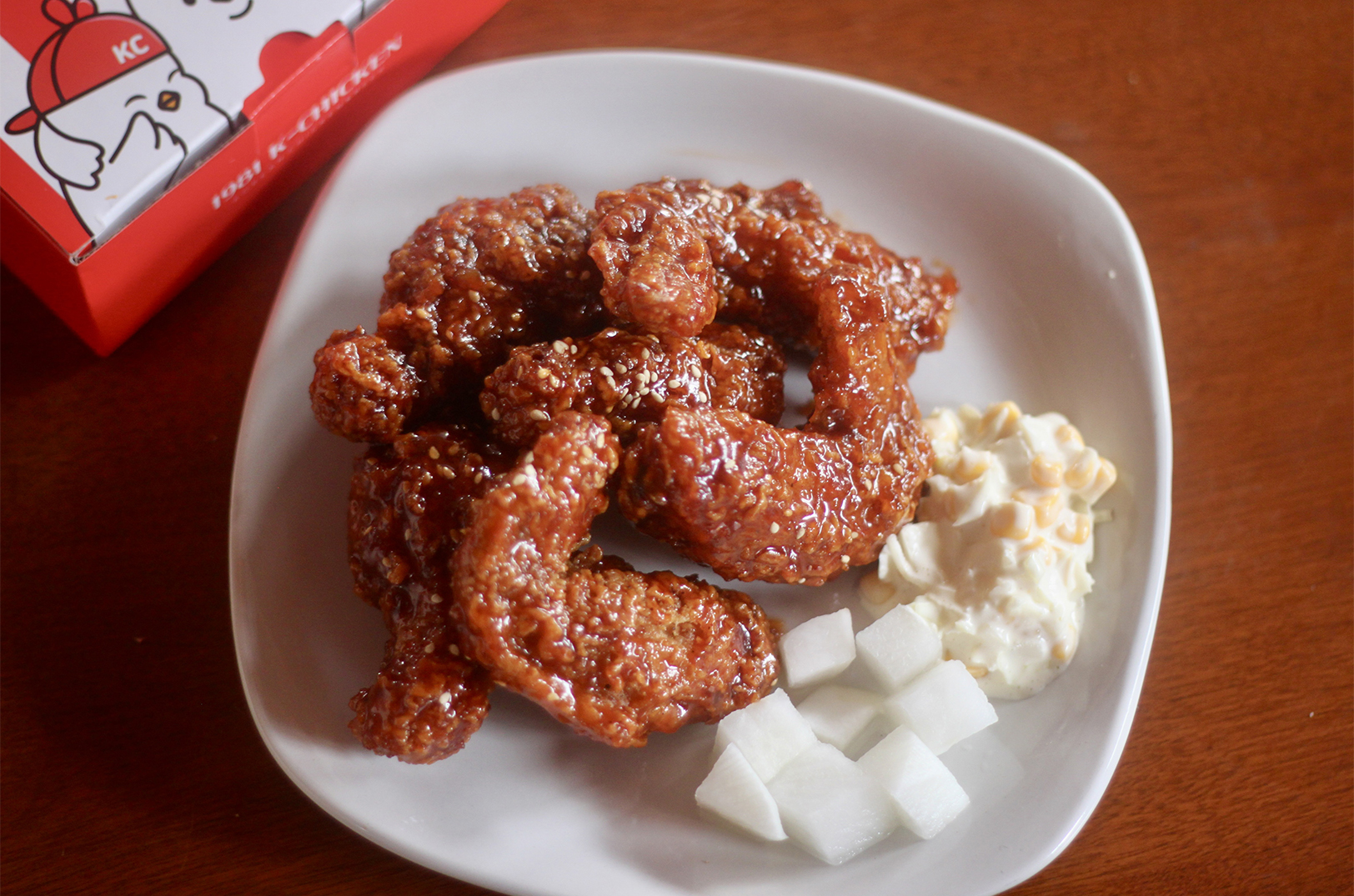
Sauced chicken wings from 1981 K-Chicken; photo by Nikki Overfelt Chifalu, Startland News
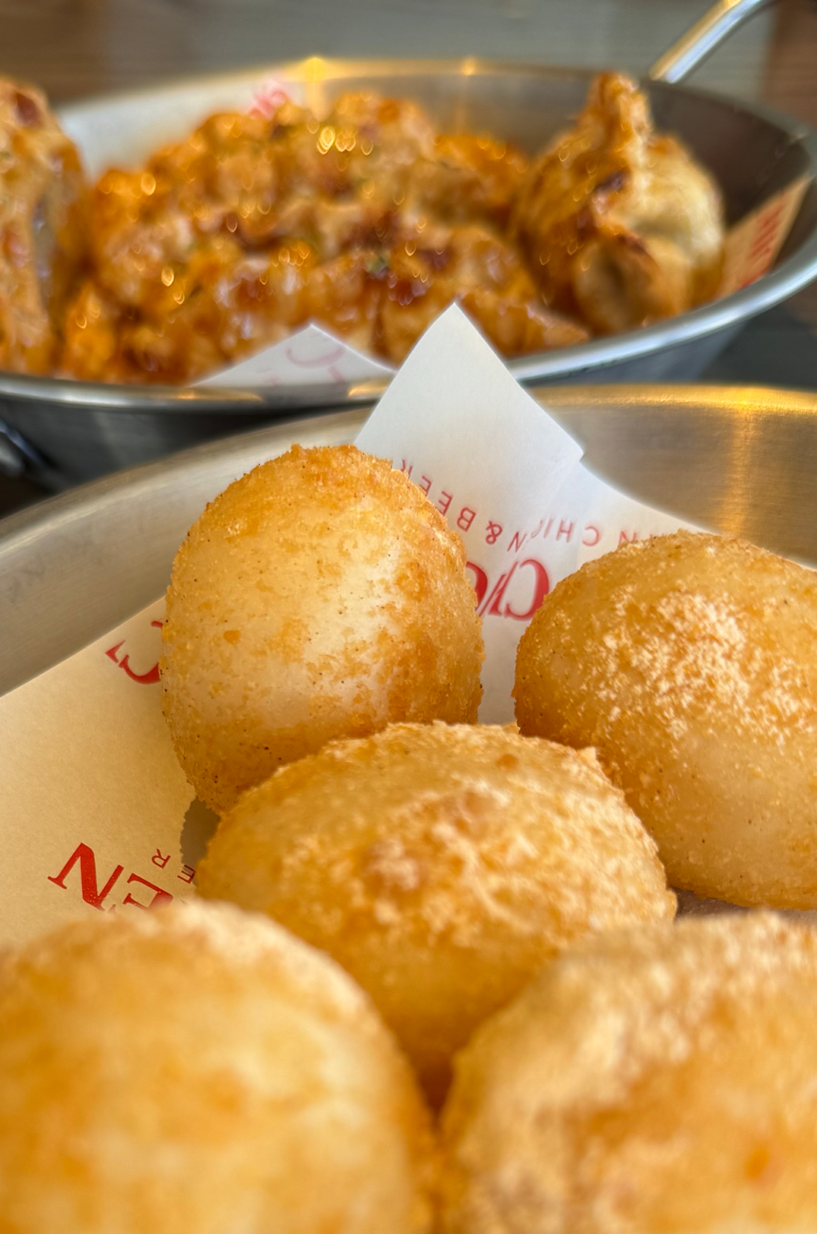
Mochi donut cheese balls at 1981 K-Chicken ; photo by Tommy Felts, Startland News
The menu also includes crowd-favorite appetizers like mochi donut cheese balls, fried dumplings and mozzarella sticks, salads, and Korean favorites like kimchi fried rice, bulgogi, and Budae-jjigae (military stew), plus Korean beer (Terra) and specialty drinks (Milkis and Pororo juice for kids).
“We definitely want this place to be casual,” Hwang said. “We want this to be more or less a sports bar where people come in, have a drink, and eat chicken — a fun place.”
The friends held a soft opening for 1981 K-Chicken in June and celebrated the grand opening in August. In between, the first-time business owners made tweaks based on customer feedback, Hwang noted, and dealt with cleanup and repairs after a car hit the side of their building.
They made improvements to their service, as well as added a couple of items to their menu like a six-piece wing option for lunch and a french fry combo with up to four choices (garlic, onion, honey butter, cheese, cajun, melted cheese, or truffle oil).
“We’re learning a lot,” he continued. “I think there are kinks that we’ve still got to work out. But I think our customers love our food, and we’re really thrilled about that.”
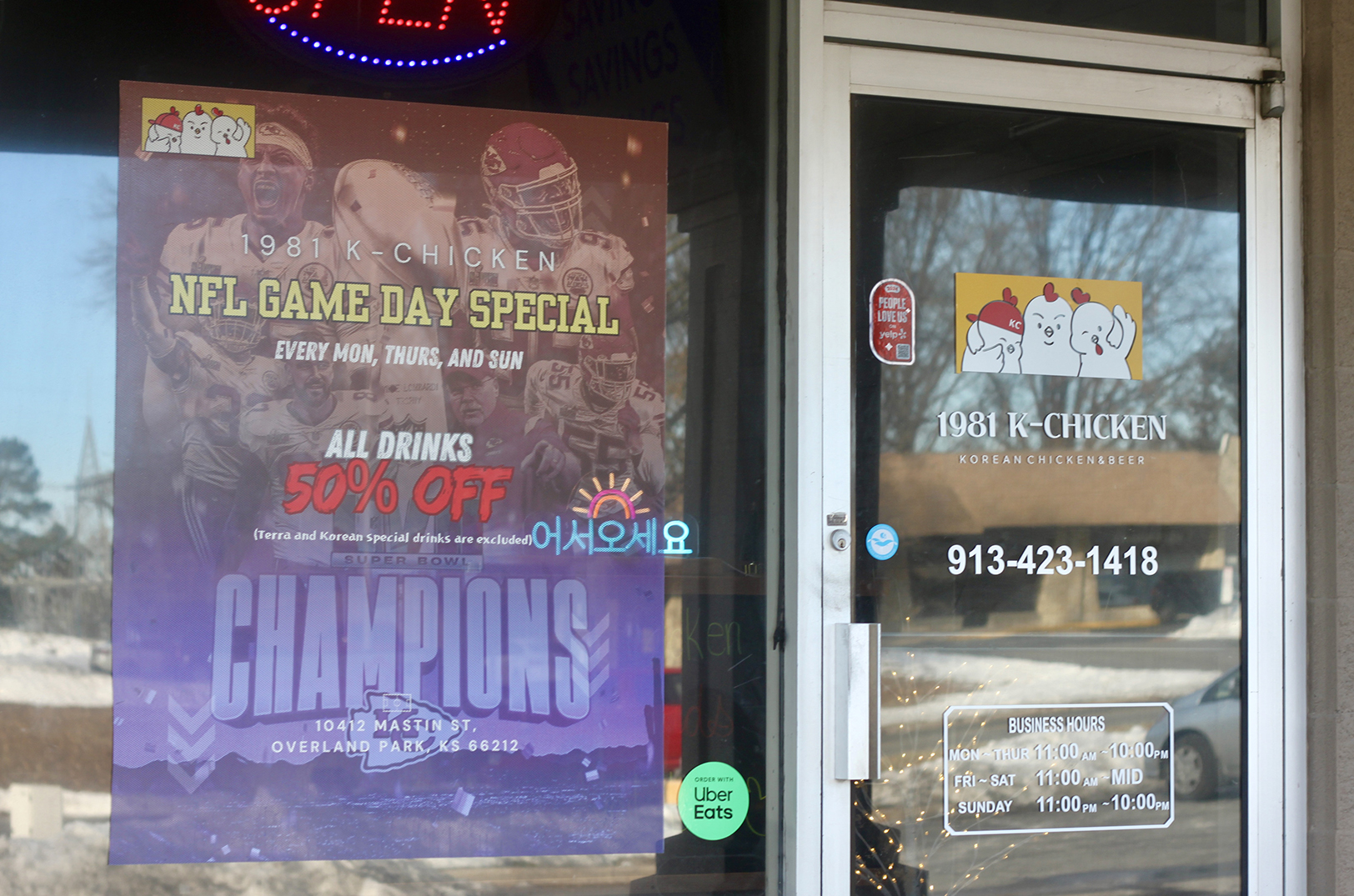
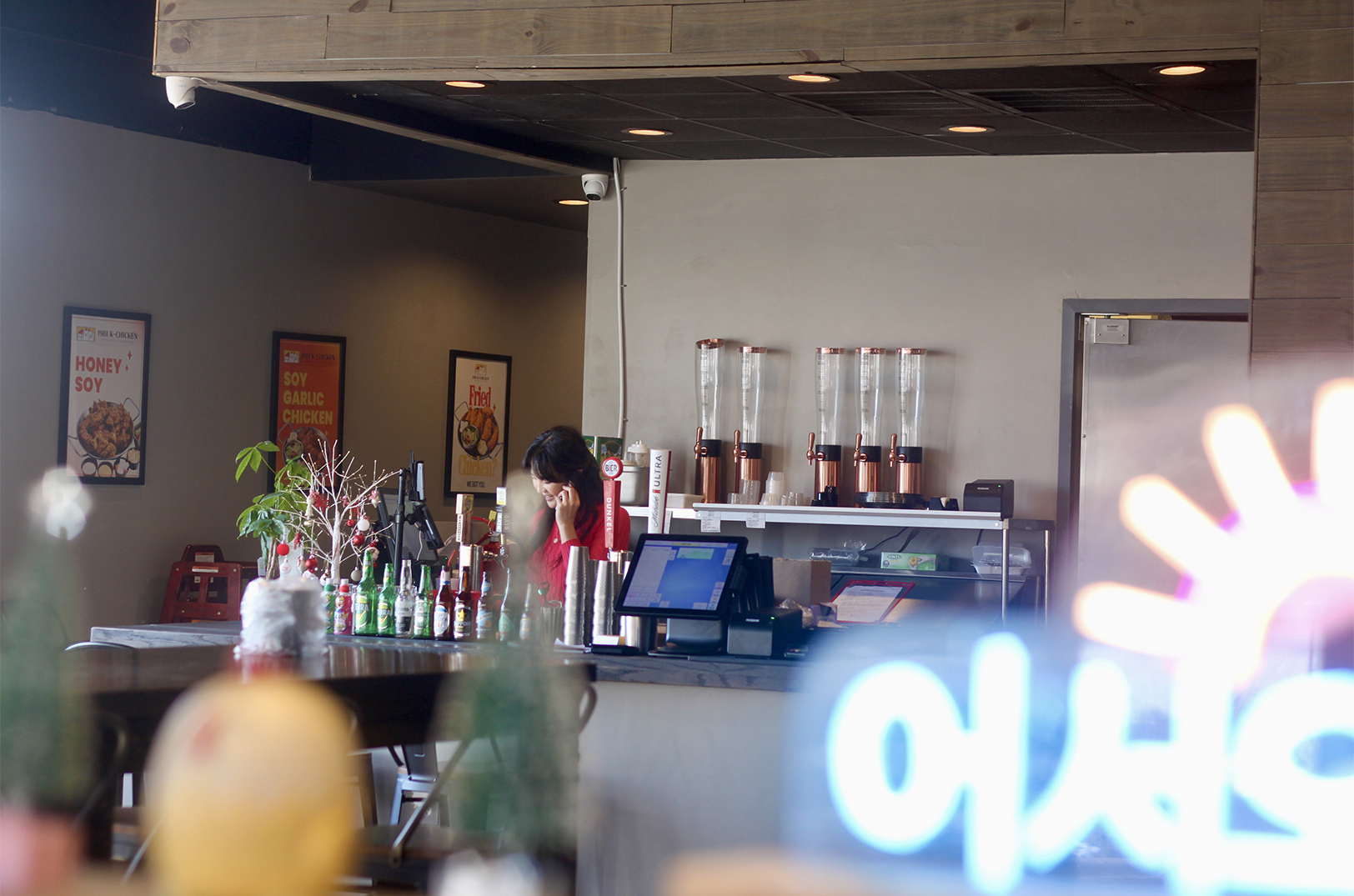

The location the co-founders chose — previously the beloved and storied Steve’s Villa Capri Italian restaurant — is in a neighborhood with which they are all familiar, Hwang shared. He and Kim used to live in the area and other Korean businesses and organizations are close by, including the Korean American Society of Greater Kansas City.
“We saw potential here,” he explained. “It used to be a restaurant, so we didn’t have to make a lot of changes. We felt like there were not many options for the people living around here. There’s a bar, but it’s not really a restaurant.”
“Then it’s right off the highway, so it is convenient for people,” he added.


2025 Startups to Watch
stats here
Related Posts on Startland News
Neighborhood smart cans help Kansas Citians save the planet from their kitchens
Newly introduced composting technology is already turning new ground in Kansas City, Kristan Chamberlain said, with more solar-powered compost cans arriving later this spring across the metro’s urban landscape. Her social venture, KC Can Compost, installed three of the devices in October — free to use for KCMO residents wanting to deposit their soil-making food…

Voodoo Volleyball bounces back in OP: Father-daughter duo doubles as new venture’s setters
Quinn Austin put several sports to the test as a preteen — racing from basketball practice to softball to volleyball. But she latched on to just one. “Volleyball. It was my sport. Everyone was having a good time,” she said. “We just loved the cheers — a cheer when we got a hit, a cheer…

Black farmers are losing ground in the fight to feed their communities, advocates say
More than a century of systemic land dispossession and discriminatory practices has left Black farmers with less than 0.6 percent of U.S. farmland — less than a third of the 16 million acres they operated in 1910, according to local urban farming advocates. They gathered Tuesday at Independence Boulevard Christian Church to confront this history…
Cracking egg-flation: How farmers, substitute ingredients help restaurants mitigate price spike
Editor’s note: This story was originally published by Kansas City PBS/Flatland, a member of the Kansas City Media Collective, which also includes Startland News, KCUR 89.3, American Public Square, The Kansas City Beacon, and Missouri Business Alert. Click here to read the original story. Whether ordering an omelet, French toast, chicken n’ biscuits, chilaquiles, corned beef hash…