

Capital connector’s message to women: Your investor pool isn’t just sharks; dive in and learn to swim
October 31, 2024 | Nikki Overfelt Chifalu
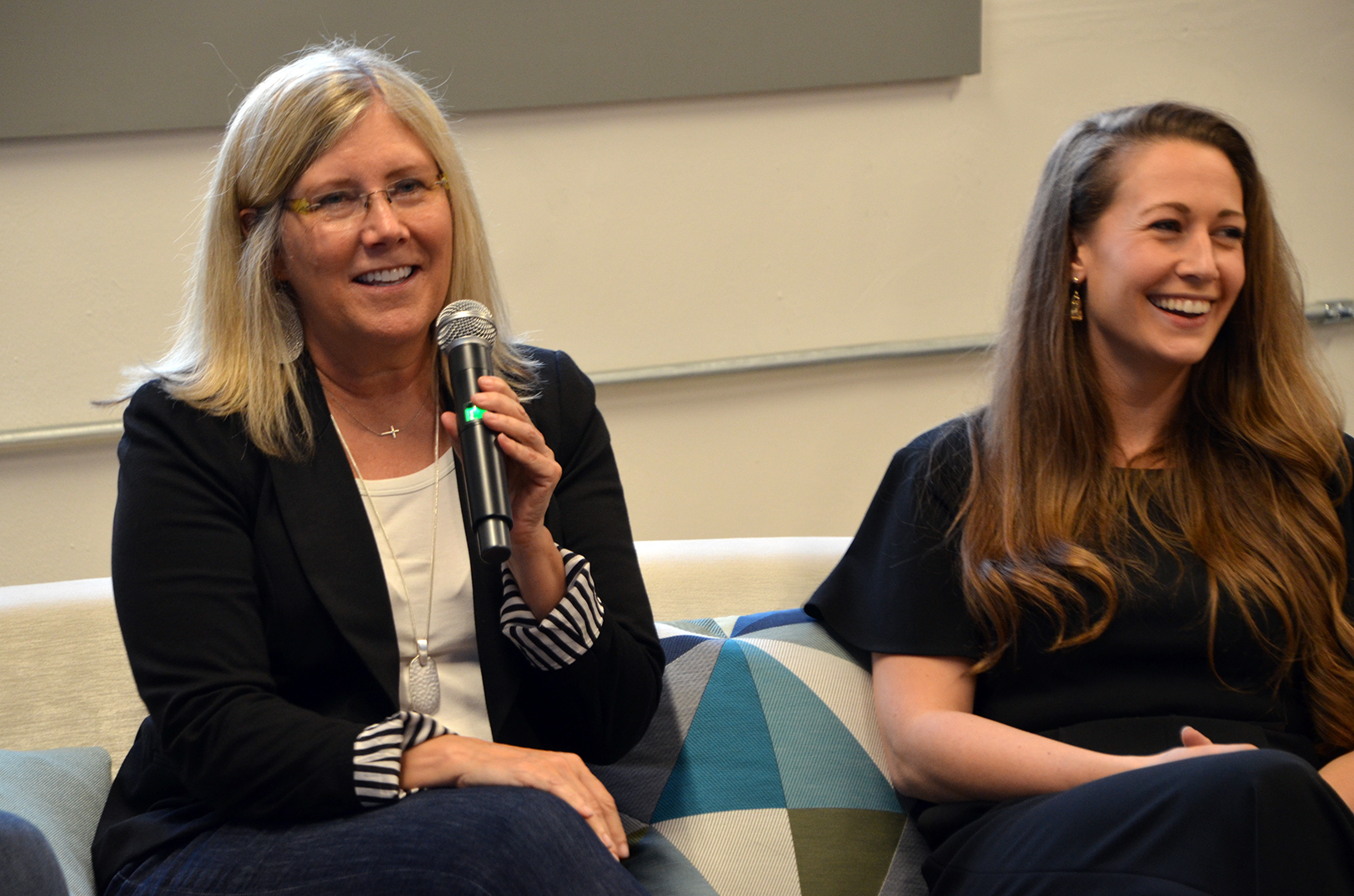
When it comes to navigating the waters of capital and equity, Women’s Capital Connection angel investment network and the Women’s Business Center serve as a guide to both entrepreneurs and investors, Kelly Sievers shared.
“All the education that we do and all the connections that we make, I would say that’s really the key,” explained Sievers, managing director of Women’s Capital Connection, which is a part of the entrepreneurial hub at Enterprise Center in Johnson County (ECJC) and the OneKC for Women alliance, along with the Women’s Business Center.

Kelly Sievers, Women’s Capital Connection, Women’s Business Center
Equity funding involves many misconceptions that need debunking, she noted, including thinking it’s always like the TV show “Shark Tank” when an entrepreneur faces investors, and that if they’re not looking to raise $10 million, a business leader must figure out how to fund the venture themself.
“People are kind of scared of it,” Sievers continued. “I think there’s just a lot of education that continues to need to be done in this space, especially, I would say, in the conservative middle of the country. You hear about these companies raising tens of millions of dollars on the coast and you hear about investors in Silicon Valley that’ll write a check for a back-of-the-napkin idea. In the middle of the country, we need to know it’s a relationship thing, too. A lot of this is about relationships.”
Approaching that education gap, the Women’s Business Center and ECJC offer two programs to help women — and men — get prepared to raise money: “Making Sense of Capital” and “Equipped for Equity.”
Making Sense of Capital — a workshop conducted by attorneys from the Polsinelli law firm’s venture capital division — is great for both founders and investors, Sievers said.
“Some of them are trying to determine if that’s the route they want to go,” she explained. “I think there’s a lot of folks out there that don’t really know the path to go fund their business.”
Through the program, investors learn to make better-examined investment decisions and entrepreneurs learn to negotiate with confidence, according to program support materials. Topics in the angel investment-focused workshop include: the ins and outs of business entities, convertible debt, priced rounds and valuations, and the deal from both sides.
“It’s a process, and it’s different from getting debt funding,” Sievers said. “With equity funding, you’re raising money, you’re diluting your company — as far as how much you own of it. And then those investors are going to want you to grow up big really fast and exit out of it, so everybody gets paid.”
Click here to register for Sessions 1 and 2 of Making Sense of Capital on November 19 and here to register for Sessions 3 and 4 on December 10.
For those founders who are ready to raise capital, Sievers noted, Equipped for Equity serves as a five-part program for six to eight entrepreneurs. It allows each participant to dive deep into their pitch decks, while learning more about the investment process and what type of equity they should raise from what type of investor.
“That’s a really hands-on program,” she explained. “It’s really getting under the hood and working on your pitch.”
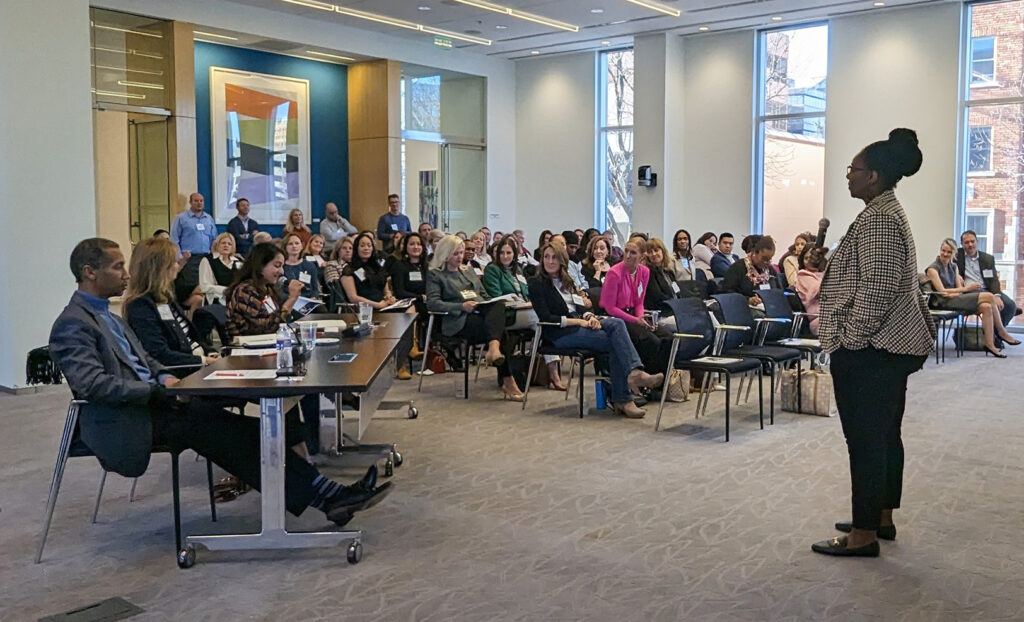
Aviva Ajmera, CEO and founder of SoLVE KC, third from left, speaks April 2024 Dolphin Tank event for Heartland women in tech, organized by Springboard and presented by Women’s Capital Connection and the Women’s Business Center via the OneKC for Women alliance; courtesy photo
Relationship building remains at the core for the Women’s Capital Connection (WCC) angel investment network — the equity investment arm of the OneKC for Women alliance — which has been matching investors to women-led ventures in the Midwest since 2008, Sievers shared.
“Two percent of venture capital goes to women,” she noted. “It’s still pretty low.”
The WCC network — founded by 33 women investors — started just 18 months after the Mid-America Angels network, the first angel investment group in the area; also a part of the ECJC hub. To date, 25 women-led companies have received funding, with more than $5 million dollars contributed to the region, according to the network’s site.
“We were really early on,” Sievers said. “Now there’s quite a few groups and networks and funds — which is awesome — because there’s a lot more opportunities for entrepreneurs to get funded. But they have to find the right place.”
The WCC helps entrepreneurs access capital by introducing vetted companies to relevant funds and investor networks, Sievers said.
“It’s really about guiding both the entrepreneurs and the investors onto what is a good deal,” she continued. “Raising capital is a full-time job in itself. Where do you spend your time most efficiently?”
“There are investors out there who want to invest money in early-stage companies, but don’t know how to find them,” she added, noting she has relationships with angel groups for women-led ventures across the country. “So they come to us. We are the connectors.”
Together, the WCC and Mid-America Angels host a biannual Venture Lounge event to provide the opportunity for company founders, angel investors, and resource organizations to get acquainted and optimize the investment process, Sievers said.
“It’s a great way to connect entrepreneurs and investors together,” she added.

Featured Business

2024 Startups to Watch
stats here
Related Posts on Startland News

Early childhood isn’t a money maker, but can be a money breaker: ECJC initiative links lack of child care to business’ bottom lines
Access to safe and affordable child care is an issue that should concern everyone, Judy Bumpus acknowledged. Research indicates the current capacity to provide child care within the Kansas City metro is only 45 percent, according to the director of client services for the Kansas City Women’s Business Center, with 80,000 children still needing childcare…

KC Black Owned’s fall summit returns this weekend with corporate backing, tools for Black entrepreneurs
A summit planned for Saturday at the Kansas City Convention Center aims to inspire Black business owners and equip them with the resources, strategies, and connections needed to thrive in today’s competitive marketplace. The Global Strategies Summit for Market Innovators — organized by KC Black Owned — is deeply rooted in its founder’s drive to…

This Midtown pizza shop sliced through challenges, topping years of popup work with grand opening
Orange By: Devoured — the flagship pizza shop from Jhy Coulter — is finally ready for the public, she said, after enduring years of pop-ups to keep the dream alive, renovations, and the closure of business lending platform Mainvest that took founders by surprise. “I am tired — I’m exhausted,” Coulter said with a laugh,…

Exited founders: Face the tough conversations first; avoid a messy post-honeymoon breakup
Preparing for an exit begins with co-founder alignment at the startup’s launch, three veteran Kansas City founders agreed. “You are getting married to your founders,” explained Tony Caudill, who co-founded two tech startups with his best friend — including aware3, which was acquired in 2018 by Nelnet. “Just like when you find your mate of…