

Design-Zyme, KU researchers latch onto $3M SBIR award for Lyme disease vaccine
October 17, 2024 | Startland News Staff

Startland News’ Startup Road Trip series explores innovative and uncommon ideas finding success in rural America and Midwestern startup hubs outside the Kansas City metro.
LAWRENCE — Vaccine development at KU Innovation Park could help stop an uptick in Lyme disease in its tracks, using a just-announced $3 million in federal funds to bring a potential end to a long-held, nearly invisible threat.
A collaboration between the Lawrence-based biotech startup Design-Zyme and researchers at the University of Kansas recently was awarded the Small Business Innovation Research (SBIR) grant to fund the research and development of a vaccine specifically to stop Lyme disease.

Peter A. Petillo, Design-Zyme
The effort is pioneered by Peter A. Petillo, founder and CEO of Design-Zyme, and P. Scott Hefty, professor of molecular biosciences and director of the National Institutes of Health-funded Center of Biomedical Research Excellence in Chemical Biology of Infectious Disease at KU.
Their vaccine technology uses hyaluronic acid as an adjuvant, a substance added to vaccines to help the body create a stronger immune response. It will target multiple strains of the pathogen Borrelia burgdorferi, the primary bacterium that causes the disease. It is spread to humans through the bite of infected black-legged ticks, also known as deer ticks.
“The idea of using hyaluronic acid as an adjuvant against a bacterial target, which Lyme disease is, is something that has never been investigated,” Petillo said. “The idea was to take our existing Lyme disease vaccine and apply a new adjuvanting strategy. It is designed to work against all forms of Lyme disease that we know of.”
A rising threat
More than 63,000 cases of Lyme disease were reported to the Centers for Disease Control & Prevention in 2022. Between 2016 and 2021, the Kansas Department of Health & Environment reported an average of 31 cases annually.

P. Scott Hefty, University of Kansas
Many cases, however, can go undetected and recent estimates suggest that upward of 476,000 people in the U.S. may be diagnosed and treated each year. Lyme disease can cause acute disorders and is also associated with chronic issues like arthritis. A previous vaccine was discontinued in 2002, and no other approved vaccine is currently on the market.
“Phylogenetically, it’s very distant from many other bacteria,” Hefty said. “Given the public health significance and the challenges associated with it, it became a really intriguing question and problem that I wanted to help commit my professional career to better understand.”
Preliminary data around the vaccine’s efficacy, developed in Hefty’s lab in partnership with Petillo, was supported by a J.R. & Inez Jay Fund research award in 2023.
That data led to the SBIR award, which is a Direct to Phase II (D2P2) award. Petillo and Hefty showed sufficient data to bypass Phase I, funding meant to generate preliminary results. The SBIR contract is from the National Institute of Allergy & Infectious Diseases (NIAID), part of the National Institutes of Health.
The hyaluronic hype
Hyaluronic acid might sound familiar to anyone who has spent time in a store’s skincare or supplements aisle. It’s produced naturally in the body, mainly in the eyes, joints and skin. Products boast of its benefits, ranging from anti-aging results and moisturizing skin to alleviating acid reflux and treating burns and wounds.
Petillo has been working on hyaluronic acid since the late 1980s and said the molecule is near and dear to his heart. As a linear carbohydrate, it has different functions as its length changes.
“As you reduce the size of the hyaluronic acid, you can find this sweet spot, which is what we’ve done with our adjuvanting strategy,” Petillo said. “You can boost the immune response of something that is already slightly immunogenic on its own.”
The ultimate goal of the SBIR grant is to have a self-adjuvanting Lyme disease vaccine ready for preclinical development. Ideally, the vaccine wouldn’t need an additional adjuvant to increase its effectiveness.
“If you can package the adjuvant with the vaccine itself, you may be able to reduce the dose of either the adjuvant or the vaccine, or hopefully, both,” Petillo said.

An aerial view of the KU Innovation Park in Lawrence; photo courtesy of the KU Innovation Park
A collaborative success
Both Petillo and Hefty attribute the success of this project to the ongoing collaboration between Design-Zyme, located at KU Innovation Park’s west facility, and KU researchers. Design-Zyme’s very first intern from KU now serves as the company’s chief science officer. Both sides of the partnership — industry and academia — serve a purpose.
“For the most part, individual faculty at an academic institution are really good at basic discovery, basic characterization, a lot of the preliminary research that goes on,” Hefty said. “Most of us are not trained or have the expertise in how to translate that information into a commercial sector component. This is a great example of how a local company and Pete’s expertise marries with the scientific expertise and resources at the university.”
On the other side of the equation, Petillo said small companies can’t do it all.
“These strategic partnerships — in this case, with Scott and his colleagues — have been incredibly fruitful for us,” Petillo said. “It allows us to tap into expertise that we don’t have and allows us to move forward an asset like this Lyme disease vaccine in a way that would not be possible in the absence of collaboration.”
Hefty enlisted Kathryn Reif, associate professor and Bailey-Goodwin Endowed Chair in parasitology in the College of Veterinary Medicine at Auburn University, and Robin Orozco, assistant professor in molecular biosciences at KU, to complete the team.
Hefty and Reif are focused on challenge studies, while Orozco provides her expertise in immunology.
“This relationship has long-standing benefits not only with our graduate training but also with our junior faculty,” Hefty said.
Stopping the uptick
A quick online search about the 2024 tick season shows similar results: ticks are thriving.
This season got off to a record start in the northeast, Wisconsin and California, among other places. Data from the Environmental Protection Agency shows that the incidence of Lyme disease in the U.S. has nearly doubled since 1991, noting that the life cycle and prevalence of black-legged ticks are strongly influenced by temperature. And as temperatures stay warmer for longer, ticks are becoming increasingly active.
“It has been argued that it’s not necessarily a real public health crisis yet,” Petillo said. “I think it is already. This is one of the reasons why we’ve chosen Lyme disease as a target.”
This story is made possible by Entrepreneurial Growth Ventures.
 Entrepreneurial Growth Ventures (EGV) is a business unit of NetWork Kansas supporting innovative, high-growth entrepreneurs in the State of Kansas. NetWork Kansas promotes an entrepreneurial environment by connecting entrepreneurs and small business owners with the expertise, education and economic resources they need to succeed.

Featured Business

2024 Startups to Watch
stats here
Related Posts on Startland News

KCultivator Q&A: Morgan Perry reads KC on egos, excuses — no Northland passport required
Editor’s note: KCultivators is a lighthearted profile series to highlight people who are meaningfully enriching Kansas City’s entrepreneurial ecosystem. Library shelves offer more than the theatrics of the written word, said Morgan Perry. Though she sees power in learning through entertainment, the resources available to vulnerable and other hungry audiences in need are anything but…
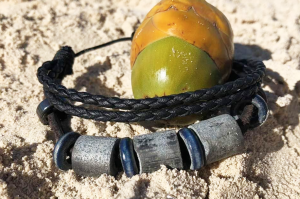
Beach-loving couple hopes to dissolve fear of sharks with Shark OFF repellent bracelets
Saving limbs, lives, and long-villainized, cartilaginous creatures of the sea — it’s the mission behind a first-of-its-kind Overland Park startup, Shark OFF, said Shea and Geoff Geist. “You’re more likely to get killed by a cow. You’re more likely to die falling out of bed,” said Geoff Geist, half of the husband-wife duo who founded…

LA transplant encourages online shoppers to Continue Good after the sale
Online apparel store Continue Good inspires each customer to complete a small act of kindness, said Mollie Beck, noting the organization’s donations to KC-based anti-trafficking nonprofit Exodus Cry turn the small deeds into a more tangible impact. “I love inspiring people to continue to do good to others, but I wanted to just do more…

Fund Me, KC: Clean Slate hopes to give homeless fresh start with mobile shower unit
Startland News is continuing its segment to highlight area entrepreneurs’ efforts to accelerate their businesses. This is an opportunity for entrepreneurs — like those behind Clean Slate Mobile Shower Unit — to share their crowdfunding stories to gain additional support. Who are you and what is your organization? My name is Kelsha James I am…