

A business strategy that never changes: Founders must learn to evolve, expert says
September 3, 2024 | Nikki Overfelt Chifalu
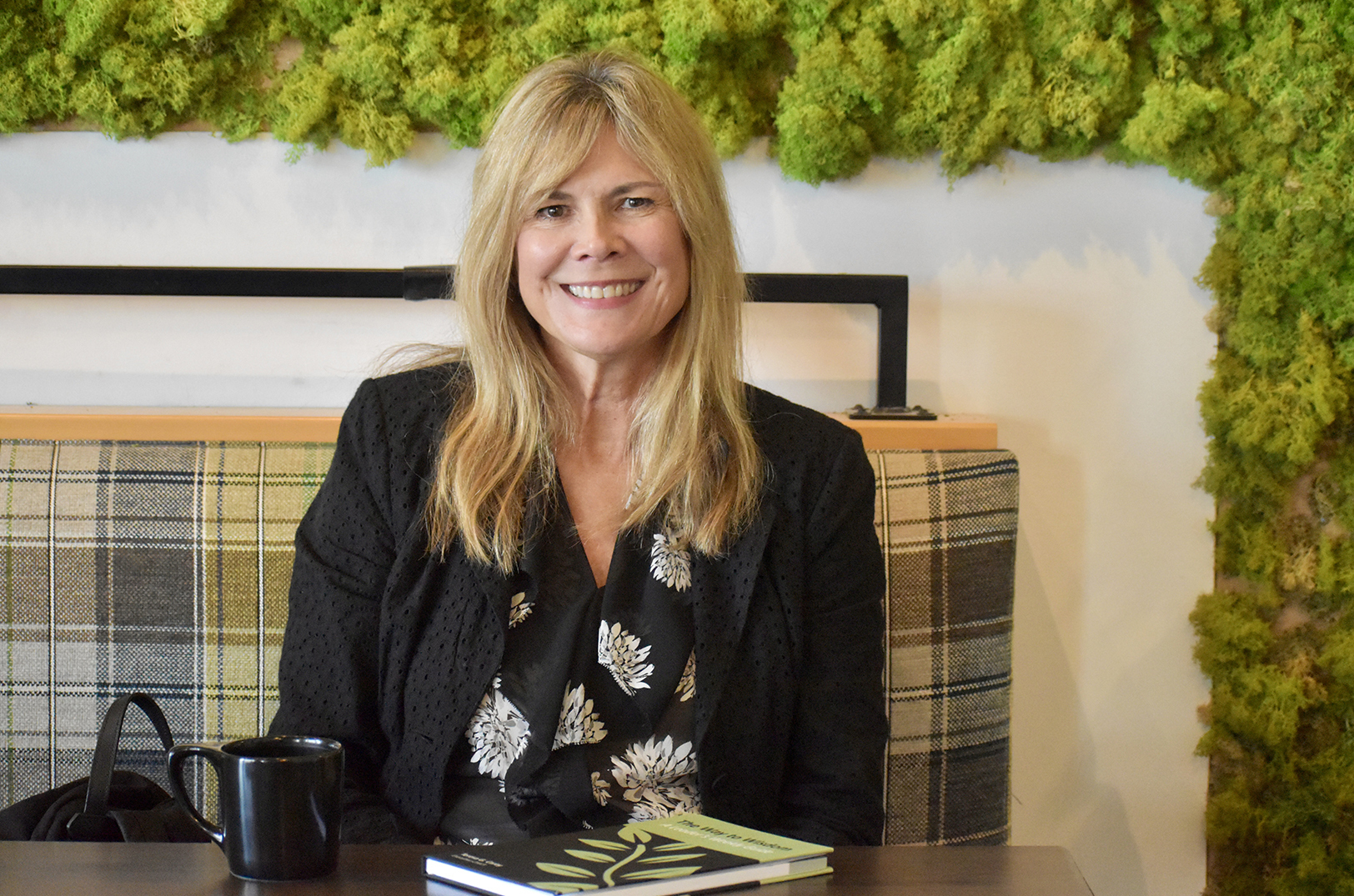
In her three decades as an executive leadership coach, Teresa Carey’s seen a lot of changes, she shared. But at the core, people are still the same, she added.
“People still want authenticity,” said the founder of PerformancePointe. “Relationships matter. Trust matters. So some things will never go out of style. The craving for connection will always be there.”

This summer, Carey celebrated 30 years in business and released her second book, “The Way to Wisdom: A Leader’s Weekly Guide.” Now, she’s reflecting on what she’s observed over the past three decades of working with some of Kansas City’s top founders and executives in pre-rapid and rapid growth organizations.
“A leader must continue to immerse themselves in development and in the personal and professional change process,” she explained. “There’s an absolute stark difference between those who do and those who don’t.”
“So whether that’s with a coach, a mentor, an advisory board for small businesses, you really need an opportunity to be able to reflect, learn, and then keep applying what you’ve learned,” she added. “That’s something that will never change.”
Another constant is the need for founders to assess their strengths and weaknesses. Playing from a place of strengths is key, and outsourcing or hiring internally to address any gaps is critical in leveraging both time and talent. Carey said she sees this as a growing pain for leaders as an executive coach today, and she saw this previously as a longtime FastTrac master facilitator for the Kauffman Foundation.
“If you want to be a strategic leader and focus on the business versus in the business — as Michael Gerber and ‘The E-Myth Revisited’ says — that’s an imperative,” she said.
What has changed? Technology, she noted.
“I joked about this on a podcast that I did a couple of months ago,” she explained. “We were laughing about the physical Rolodex versus a CRM system or app and the size of the equipment then. Then today, you’ve got the cloud, you’ve AI, all those major shifts. Adaptation is key.”
Growth as a way of life (or exit)
Carey understands that every founder’s journey is different, she acknowledged, drawing upon her own experiences as a coach. Her journey started on her family’s farm in North Carolina — “the rawest form of entrepreneurship” — she noted.
But Carey’s professional career truly began at a document technology company, where she held positions in sales, sales training and development, and sales leadership.
When she left that company, Carey shared, she was in sales leadership, ultimately deciding she wanted to return to her first love: training and development.
“I had the fortune of working on a coaching program,” she explained. “At that point, a lot of people weren’t talking about coaching. It was newer, so I decided to start a training business.”
“Then over time, I realized companies didn’t want sheep dipping,” Carey added. “What they really needed was shepherding to get the ROI and the proven performance that was needed from leaders. They would need a coaching experience.”
After starting her training business, Carey said she realized companies would start demanding more ROI on their development dollars. Fortunately, her former role had included launching a sales coaching program for leaders and account managers. Over time, she shifted her business to coaching, and for the past 13 years, has focused exclusively on coaching the executives and leaders of pre-rapid and rapid growth entities.
Just like other founders, Carey hit an inflection point, she continued, when she had to decide where to take her business from a growth perspective.
“At one point, I had 10 coaches on my bench,” she explained. “Then over time, I scaled back and re-simplified. So that was my own journey. Everybody kind of has their own journey.”
“I think that’s one reason I had such respect for FastTrac and Mr. K (Ewing Kauffman),” she added. “He said, ‘You can have a lifestyle business or you can have a growth business.’ Lifestyle doesn’t mean hobby. That’s different. It just means that you build it based on an exit strategy and I think it’s been a lesson in my own development.”
Carey started facilitating FastTrac in 2001, in a post-9/11 world when there were a lot of layoffs in the area, she detailed. She worked to bring FastTrac to Right Management Consultants, one of her coaching clients at that time, and delivered more than 100 programs for them. That led to her becoming a facilitator and master facilitator for Kauffman, teaching others how to lead the program.
“It was great having the opportunity to help over 2000 other facilitators experience the power of that process,” Carey added.
Don’t skimp on the deep work
The genesis for Carey’s “The Way to Wisdom” book, she shared, was working with founders and executives in the pre-rapid growth stage, where it takes a different set of skills and competencies to move from a startup into rapid growth.

“You’re really transitioning from a functional leader, to an enterprise leader,” she explained. “One thing that executives may not take the time to do — and I saw this repeatedly — is reflection time. The deep work that it takes to sit down: ‘What did I learn this week? What specifically am I better at? How can I continue to improve?’ That kind of reflection is really needed to continue to deepen your leadership acumen.”
So Carey came up with a weekly journaling framework with questions around different topics that she believes are imperative for leaders, she continued. There are also quarterly reflections and a yearly reflection at the end.
“Now, someone might take more than a year; they might take less than a year,” Carey added. “But the point is to give yourself enough time for that needed leadership lesson, the application lesson, the reflection, and then the deepening of wisdom.”
“In the 20 years I have known Teresa, she has consistently provided business executives with innovative tools to take leadership to the next level,” said Drew White, CFO of Kansas City-based Tesseract Ventures, in a review of the book. “By adopting Teresa’s leading-edge approach, leaders can utilize this effective pathway to drive themselves and their organizations forward to achieve desired results.”
In her 30 years of coaching, Carey noted, some core leadership skills haven’t changed.
“Communication, solid decision-making, and visionary thinking have staying power.” Carey continues. “In addition, ‘Taking a pause for the cause’ has always been a helpful practice, yet today is even more important than ever for pre-rapid and rapid growth leaders. Prioritizing think time fuels innovative and strategic thinking.”
“As quickly and dynamically as things are changing, leaders need to be nimble and strategically agile,” she added. “Paradoxically, this also begs the need to slow down. The busier you become, the more imperative it is to block time weekly to reflect.”

Featured Business

2024 Startups to Watch
stats here
Related Posts on Startland News

Meat the moment with valor: Veteran cattle rancher deploys co-op model to save the Midwest cowboy
WESTON, Mo. — Almost a decade after launching KC Cattle Company — his veteran-owned and -operated wagyu beef company — Patrick Montgomery is forging a new path to help fellow ranchers and farmers survive. He’s now digging his spurs into Valor Provisions, a direct-to-consumer online marketplace offering premium proteins from small, independent, veteran-owned ranches like…

Student-raised meats graduate to university storefront as consumers look closer at what makes the cut
WARRENSBURG, Mo. — A new partnership puts pork chops, brats and select cuts from across farming projects at the University of Central Missouri in a retail storefront accessible to community members shopping for locally raised meat. UCM Farms — which spans more than 1,000 acres of farm ground within 10 miles of campus — is…

Nonprofit founder, tech people leader join Kauffman as trustees on shared mission: economic inclusivity
The year-long transformation of the Ewing Marion Kauffman Foundation continues this week as the influential philanthropic organization announced two new trustees meant to bolster its rebooted grantmaking strategy and commitment to driving equitable economic mobility in Kansas City. Newly appointed leaders to the Kauffman Foundation’s Board of Trustees, Aimée Eubanks Davis and Kristen Ludgate bring…

No cookie-cutter way to create an entrepreneur, so what’s the catalyst? Inside KU’s venture test lab
Editor’s note: The University of Kansas’ School of Business is a partner of Startland News. It’s a practical testing ground for KU students to flex their entrepreneurial muscles, Ryan Rains said, describing a business program built for could-be entrepreneurs who aren’t necessarily even business majors — and who, ultimately, might choose to abandon their concept…