

How a $4B Panasonic plant could ‘revolutionize region’s economy’ — starting next year
September 21, 2024 | Martin Rosenberg
Editor’s note: This story was originally published by Kansas City PBS/Flatland, a member of the Kansas City Media Collective, which also includes Startland News, KCUR 89.3, American Public Square, The Kansas City Beacon, and Missouri Business Alert.
Click here to read the original story.
Kansas Gov. Laura Kelly believes the opening of the $4 billion electric car battery manufacturing plant in DeSoto early next year will revolutionize the region’s economy, lifestyle and self-image.
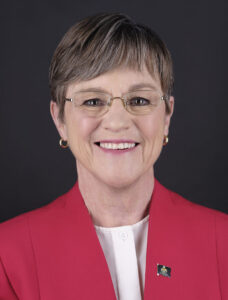
Gov. Laura Kelly, D-Kansas
Kansas and the Kansas City region will find themselves among elite, fast-charging locales around the globe whose fortunes are aligned with the push to create a sustainable future, she and others believe.
“The overall impact of this is just truly transformational,” Kelly said of the massive 4.7 million square-foot Panasonic plant nearing completion. “The northeast quadrant of our state will look very different and feel very different,” the governor said.
Regional planners and government officials see the K-10 corridor linking Kansas City to Lawrence becoming a pulsating artery serving workers traveling to thousands of new jobs, new homeowners, burgeoning towns and new businesses attracted to the area.
Decades from now, some visionaries say, light rail and electrified highways to charge electric vehicles will extend from Topeka through Lawrence to Overland Park and Kansas City and on to KCI International Airport.
The challenge — as big as the opportunity — will be to manage all that growth without triggering massive suburban sprawl that saps local government treasuries, chokes farmland and open spaces and stymies needed improvements in our energy grid, water and wastewater infrastructure.
The good news is undeniable.

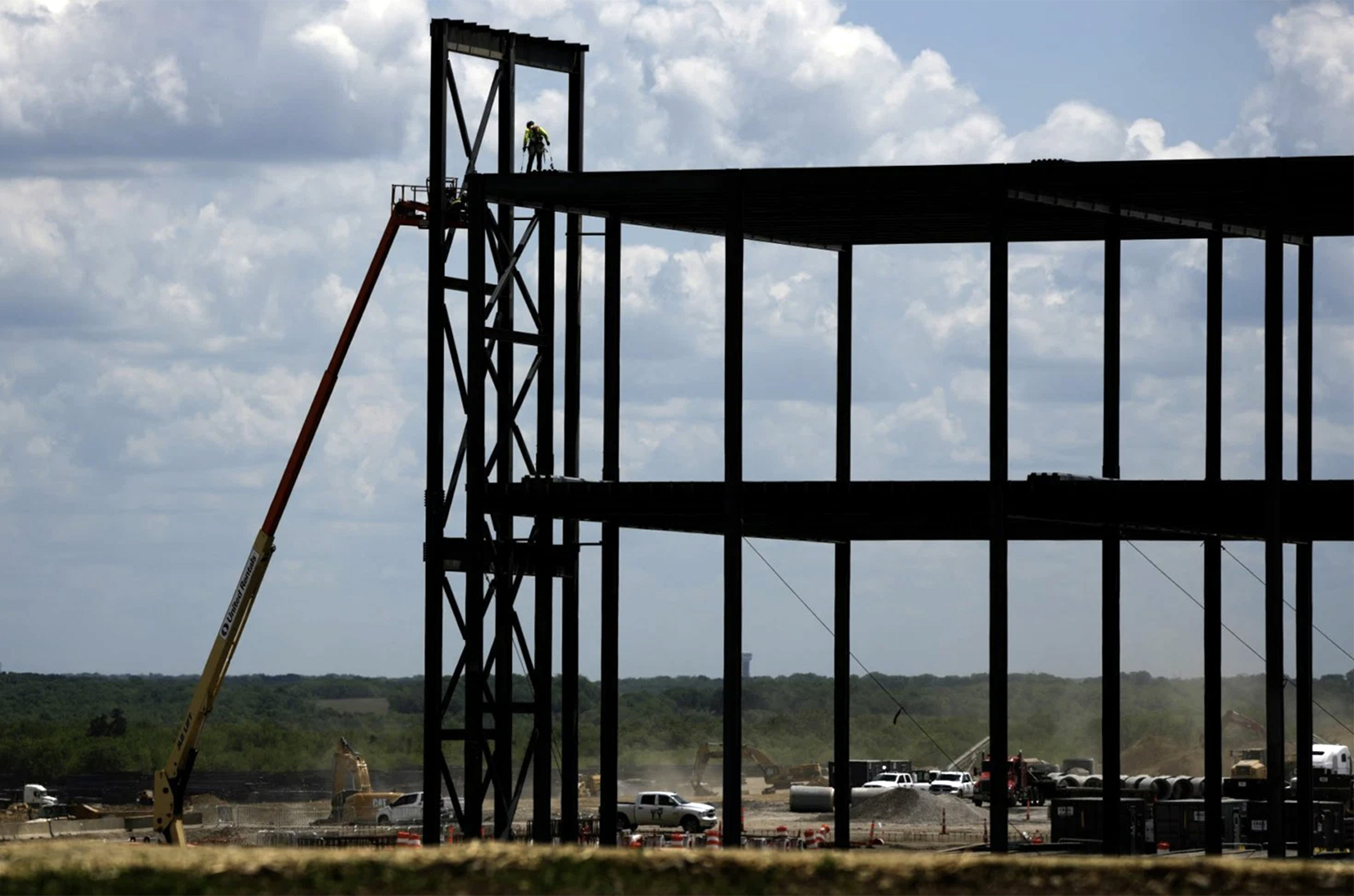
Panasonic Energy’s electric vehicle battery plant in De Soto, which will open in 2025, will be the biggest battery plant in the world; photo by Martin Rosenberg, Flatland
Allan Swan, president of Panasonic Energy of North America, in June said the DeSoto plant, “will be the largest battery manufacturing plant in the world.”
“The technology we are bringing to Kansas … is the topflight technology in the world,” he said.
The 309-acre Panasonic site has been stitched to the state’s highway grid by a massive, speedy, innovative effort by the Kansas Department of Transportation to build out the road infrastructure to accommodate the 4,000 workers who soon will travel to the site.
Panasonic executives said they are deliberately recruiting workers from all over the region to mitigate traffic congestion caused by workers flocking to the plant.
Calvin Reed, Kansas secretary of transportation, said that the state embraced new proactive project management techniques to design and construct $65 million worth of local roadway spanning 4.5 miles from K-10 to the plant. “It worked extremely well,” he said.
“We need infrastructure in Day One for 4,000 workers,” Reed said.
The governor and Reed spoke about the Panasonic effort and its implications in exclusive interviews with Flatland.
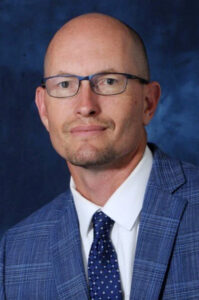
Calvin Reed, Kansas Secretary of Transportation
For Kelly, Panasonic’s arrival is the capstone of $20 billion in new capital investment in the state made on her watch as governor coming from 1,300 economic development wins.
The jobs Panasonic is creating will lead to further significant job growth.
“We expect suppliers to set up shop. We expect another 4,000 jobs,” Kelly said.
Panasonic’s impact extends well beyond jobs and transportation, and the state has geared up to address multiple issues, she said.
“Huge childcare needs will develop,” Kelly said. “There will be a huge impact on the higher education system.”
Tom Jacobs, director of environmental programs at the Mid-America Regional Council (MARC) agreed that the impact could be extensive. “If people who work there chose to live close to the plant and additional businesses are started to support it, that could lead to higher housing needs, watershed issues and more.”
“As a result of Panasonic, a number of folks are ramping up efforts to do more corridor planning,” Jacobs said.
Jeremy Knoll, director of sustainability for BNIM Architects, said that Gov. Kelly and state legislative leaders should now convene a summit of officials and planning experts to get ahead of the growth and the sweeping changes coming to the region with Panasonic. “Absolutely, the time is right,” he said. BNIM has about 70 architects in Kansas City, Des Moines, San Diego and Washington, D.C., Knoll said.
Preliminary discussions that included Panasonic were held a year ago, he said. Panasonic at that time indicated it did not want to see the kind of unplanned sprawl here that a similar battery plant in Nevada triggered.
“I see 4,000 jobs in the K-10 corridor as a risk (if they are created) without any thought given to density – just building suburbs, spreading housing and cities across the earth like butter on toast.”
“The risk is we develop Kansas City to Lawrence as continuous urban sprawl,” Knoll said.
Building with some density with multi-story structures, he said, would better guarantee that the local tax base will stay vital and support needed development of energy, water and wastewater infrastructure.
Now is the time to develop statewide energy codes for Kansas and Missouri, two of just a handful of states in the nation who now do not have them, he said.
“We can really create a transformational investment in the future of the Kansas City region,” Knoll said.
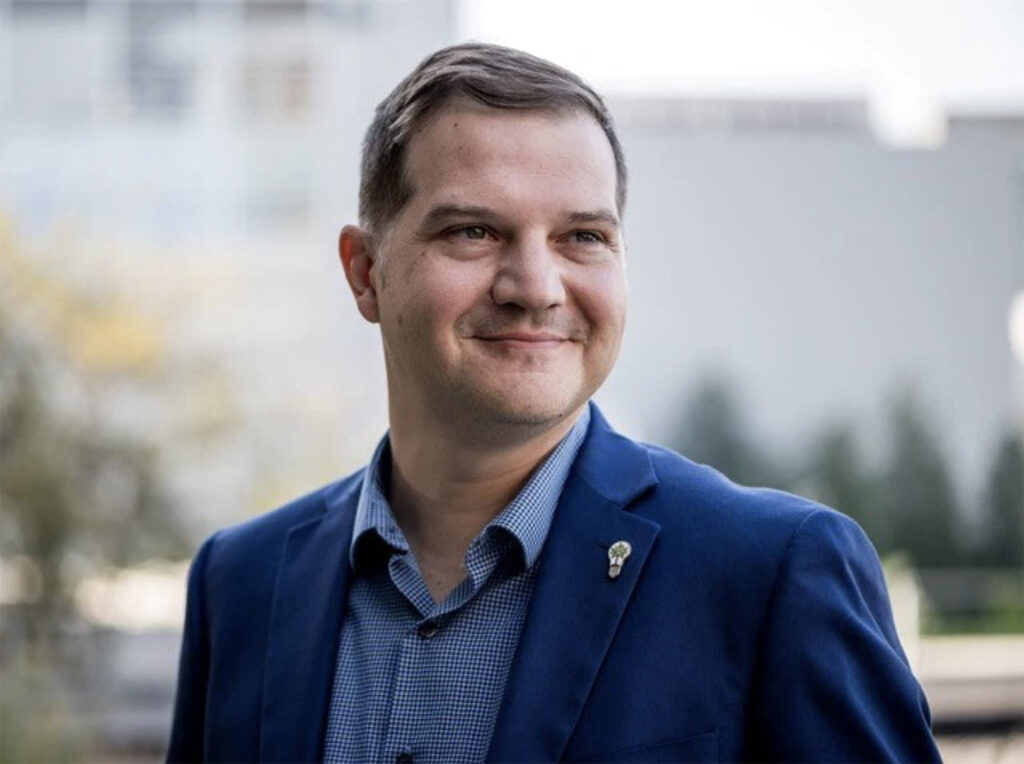
Jeremy Knoll, director of sustainability for BNIM Architects; photo courtesy of BNIM Architects
Reed said new planning efforts are coming on the transportation side, updating decades-old plans tied to the I-70 corridor between Topeka and Kansas City.
“K-10 was built in the late 1970s and early 1980s,” Reed said. Its adequacy and needs will be getting major attention.
“We have to consider how to move large amounts of people in the Kansas City metro area. How can I-70 and I-35 be better connected to K-10, and how can K-10 better link DeSoto to Kansas City?” he said, adding, “We will announce our intentions in the next year or so.”
“This is the opportune time to have the conversation. There is unprecedented federal support for things like this,” Reed continued, alluding to the Biden administration’s Bipartisan Infrastructure Act, which is funding $550 billion worth of projects tied to roads, bridges, mass transit, and more over five years.
For Gov. Kelly, the impact of the Panasonic project is huge and ongoing.
“It already has changed Kansas’s perception of itself – the fact that we were able to attract a business like Panasonic,” Kelly said. “People out in Hays are fully aware this is happening. They have a sense of pride and anticipate what else is to come,” the governor said.
Martin Rosenberg is a Kansas City journalist and host of the Grid Talk podcast on the future of energy.

Featured Business

2024 Startups to Watch
stats here
Related Posts on Startland News
Engineering KC: Global talent builds success for Taliaferro & Browne
Editor’s note: The following feature on Taliaferro & Browne is part of a three-part series on the potential for immigrant or foreign-born entrepreneurs to help reshape Kansas City’s startup ecosystem. Read more about how a Kansas senator’s Startup Act legislation could reduce barriers here. Check out a warning from a leading Kansas City tech CEO…

App snaps pics of items to ease moving process, MovinHouz founders say
What started as a couple of bad moving experiences developed into a mobile app to simplify the relocation process, said MovinHouz co-founders. Dominic Klobe and Chris Perrin, co-founders of Olathe-based MovinHouz, a tech startup incubated at Digital Sandbox KC, are building an app that connects moving companies to customers in need of their services, Klobe…
Student investors hope to make inroads with KC founders through pitch day
A group of student investors in the Kansas City University Venture Program are working to jump start deal flow and create relationships with Kansas City entrepreneurs. Launched in 2017, the student-led fund is hosting a pitch event to start a dialogue with area startups in hopes of finding their newest investment deals, said Nate Crosser, a…

NBA hires Alight Analytics to collect, analyze data from fans’ social engagement
The volume of data created within a professional sports team’s fan base is enormous, said Matt Hertig, chief executive officer of Alight Analytics. “Being able to see all of that data together across all of the popular social channels — from Facebook, Youtube, Twitter, Instagram, Snapchat — in one place and really understand the correlation…