

K-State 105 entrepreneurship project advances economic growth in Douglas County
September 10, 2024 | Startland News Staff
Editor’s note: The following story was originally published by K-State News.
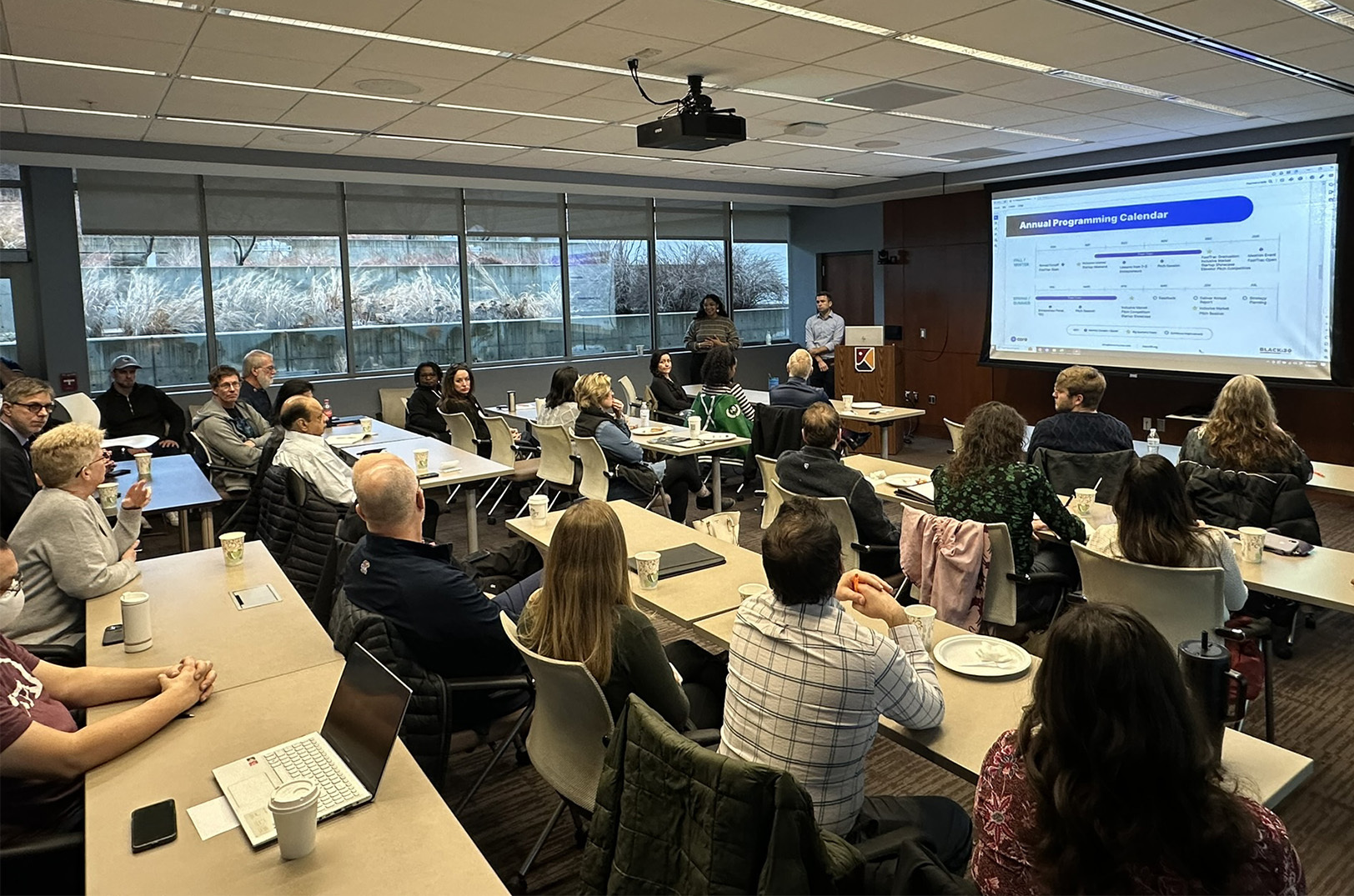
MANHATTAN, Kansas — A K-State 105 project is boosting economic growth in Douglas County by building an entrepreneurship ecosystem. Project organizers say the effort The network of aspiring entrepreneurs and established businesses could add 1,300 technology and 300 non-tech, high-paying jobs to Douglas County by 2040, organizers said. And the effort likely can be replicated in every Kansas county.
In collaboration with K-State Research and Extension, Kyle Johnson, founder of Douglas County CORE, Inc., said the network of aspiring entrepreneurs and established businesses can likely add 1,300 technology and 300 non-tech, high-paying jobs to Douglas County by 2040.
If they do, Johnson said the potential increase in the local gross domestic product — an indicator of economic prosperity based on the total market value of local goods and services — could hit $1.2 billion.
“Any community that is interested in growing their own economic development efforts through entrepreneurship can learn from what Douglas County CORE has done and what it aspires to do,” said Marlin Bates, director of K-State Research and Extension’s office in Douglas County.
Douglas County CORE — an acronym that stands for Connections, Opportunities and Resources for Entrepreneurs — was developed to make entrepreneurship easier in the county.
That work so far has focused on establishing quarterly programs to attract entrepreneurs, including a competition to pitch ideas and award funds to the winners as well as monthly meetings, fellowships, advisors, capital and microgrants, Johnson said.
“None of those concepts existed in Douglas County with any scale or consistency, except for maybe assistance with certain kinds of capital raises,” he said.
“Our program is different because it is led by entrepreneurs,” Johnson added. “We advocated for these concepts for years while building our own businesses and finally decided a new non-profit would need to exist to deliver the programs we envisioned.”
Click here to learn more about Douglas County CORE and its programs.
Bates was already involved in Douglas County CORE through his office’s community development work. The collaborative work recently received financial support from the K-State 105 program, which was established to support economic growth and advancement in Kansas.
K-State 105 leverages the statewide K-State Research and Extension network to deliver the full breadth of the university’s collective knowledge and solution-driven innovation to every Kansan, right where they live and work.
Additionally, K-State 105 forges the connections and partnerships that create access to additional expertise within other state institutions and agencies, nonprofits and organizations — all part of an effort to build additional capacities and strengths in each of the state’s 105 counties.
“The timing of this work is important to consider,” Bates said. “The COVID-19 pandemic shifted interest in entrepreneurship. It used to be that entrepreneurs pursued their business ideas because they wanted to, but we’re now seeing more entrepreneurs emerge out of necessity. With more interest in entrepreneurship, communities should be actively recruiting aspiring entrepreneurs into the ecosystem to more fully consider their paths forward.”
Douglas County CORE set a goal to attract 100 entrepreneurs in 2024. In the first four months of the year, 94 had already signed up.
The group is planning a startup weekend Oct. 4-6 at the KU Innovation Park, during which it will help early-stage tech projects or businesses prepare a pitch deck or prototype. Johnson says the group still has 10 spots available.
“One of our primary jobs is to develop and launch new programs quickly,” Johnson said. “We don’t let fear or over-analysis get in the way of progress. We’ve been discussing these concepts since 2014, and we’re focused on delivering results for entrepreneurs in Kansas.”


2024 Startups to Watch
stats here
Related Posts on Startland News
Coworking studio the GRID marks grand opening in Overland Park
Already popular in downtown Kansas City, coworking options are now expanding further south into the metro area. Jennifer Stearns, community manager at the relatively-new GRID collaborative workspaces in Overland Park, said that coworking has a bright future in not only Kansas City but also in its suburbs. The facility opened their doors in April, but…

Reporting from Ireland: A pint with Pipeline fellow Jeff Rohr
Belfast, Northern Ireland — Keen to tap Irish hospitality and a culture of innovation, members of the Pipeline entrepreneurial fellowship program have incurred no shortage of either in Northern Ireland’s capital city. After a morning of “speed dating” with Irish entrepreneurs, 13 fellows in Pipeline’s 2016 fellowship class joined alumni at Brewbot to continue fostering…

‘5 things on my desk’ with ShotTracker co-founder Davyeon Ross
Startland News and the Kansas City Star have partnered to publish content as part of the Star’s new special section, “Spirit.” This story was originally published in the Star’s Sept. 18 Sunday edition. Kansas City doesn’t need an NBA team for it to stand out in the world of basketball. Working with partners like Golden…
WillCo Technologies hiring 90 people after snagging energy-saving patent
The average american household wastes up to 61 percent of its energy input. Kevin Williams, CEO of WillCo Technologies, said that this is because of the way electrical grids are designed. Although the average consumer requires significantly less power during school and work hours, the grid keeps energy limits consistently high in order to sustain through…