

Why this Missouri founder’s auto tech startup accelerated even as the ‘world was ending’
August 28, 2024 | Nikki Overfelt Chifalu
Editor’s note: The following story was produced through a paid partnership with MOSourceLink, which boasts a mission to help entrepreneurs and small businesses across the state of Missouri grow and succeed by providing free, easy access to the help they need — when they need it.
SPRINGFIELD, Missouri — With two decades of experience in the automotive industry, Kevin Wyas noticed consumers needed an easy and cost-effective way to program their vehicles.
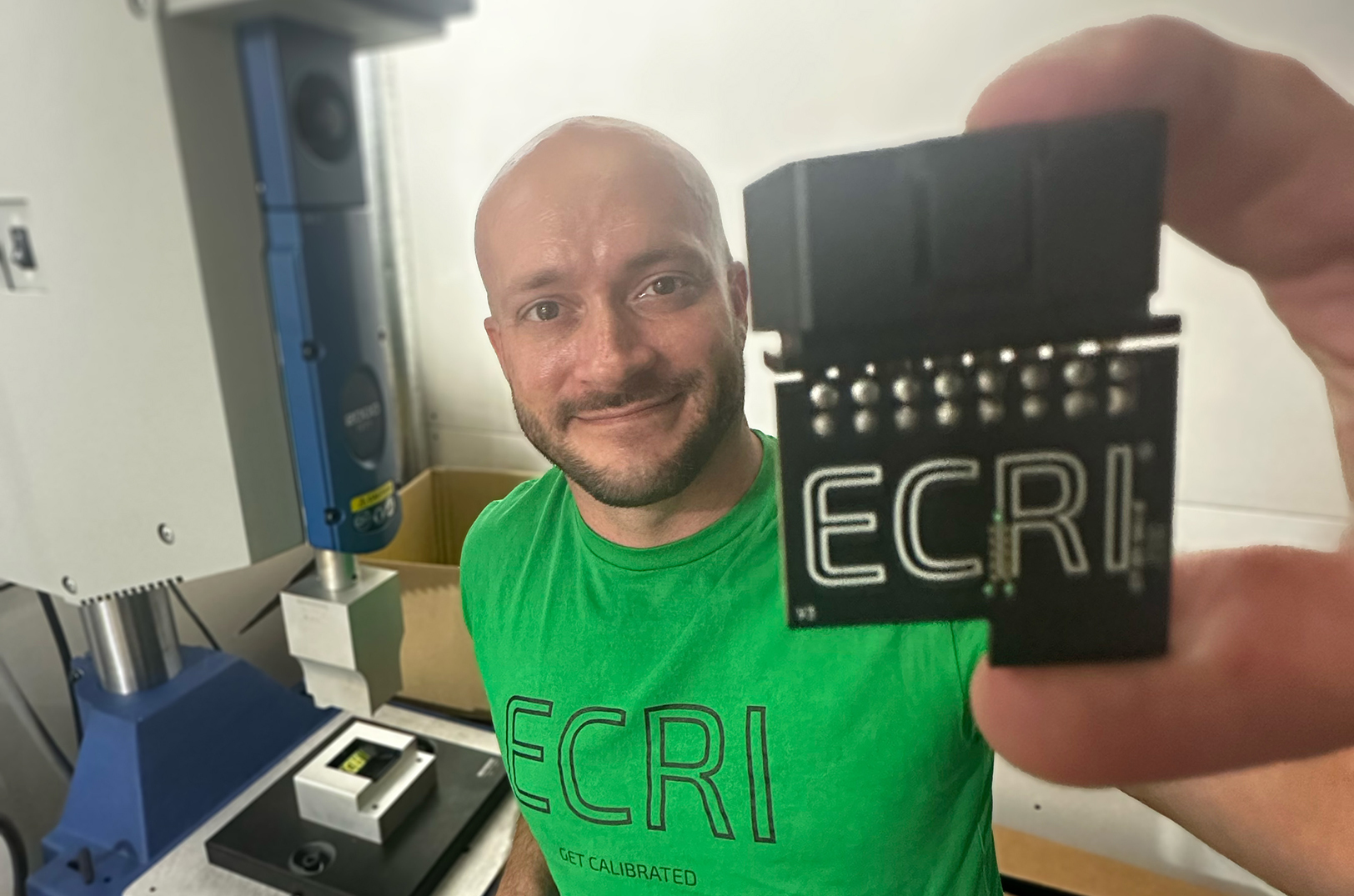
So in early 2020, the Springfield, Missouri, entrepreneur launched ECRI, a wireless vehicle calibration device that is compatible with multiple vehicles. The patent-pending technology allows the owner to program a potentially unlimited number of settings — like tire size, gear ratio and lighting — wirelessly via the ECRI app.
“To get the factory systems to work with those aftermarket parts, we do the programming for that,” Wyas said. “You can use ECRI as that bridge between the aftermarket and the OEM (original equipment manufacturer) to make those parts compatible and to make the vehicle understand that it is functioning as intended.”
When ECRI was first introduced, the main market was Jeep Wranglers (2007-current), he noted, but the technology also supports Dodge Rams (2009-current) and other mid-2000s and newer vehicles.
“That’s one of the unique things about my product,” Wyas said. “There’s other programmers on the market, but a lot of them are standalone products — not app-based. We can reuse the same piece of hardware for all those different applications.”
“In the past, you’d just have mountains and mountains of these programmers because everything was so specific,” he added. “Where, with this, it’s a more universal tool that could be reused. It becomes more of a tool for your toolbox, rather than something that’s just married to your vehicle.”
Revving up a business as the pandemic began
Wyas is no stranger to starting a business in a less than ideal time. In 2001, right before 9/11, he launched his business selling Jeep accessories. He sold that business in 2017 to start developing the technology for ECRI, which he launched in January 2020, right before the pandemic started.
“It’s fitting with this one that I would launch right as the world was ending again,” he said. “I figured, if you can survive starting out in the worst possible conditions, that’s a pretty good test. And when times get better, you’re going to do all right.”
After a positive initial response upon launching ECRI, Wyas said, he had to rework his product because of the nationwide vehicle chip shortage.
“On top of just being hard to get, one of the chips went up by about 12 times the cost,” he explained. “Rather than having to raise prices for my customers, it’s like, ‘Let’s redesign the board.’”
In the new design, Wyas noted, he wanted to use as many U.S.-based suppliers for the new board components as possible and use Missouri-based companies for the injection molding and packaging.
“We had to go through FCC testing and all sorts of stuff,” he said. “But we finally finished with that last year and have been back at market.”
Wyas is excited about the future of ECRI, he said. The company has plans to roll out new models and offer a wholesale program for dealers soon, plus launch a whole new module that will expand the product’s functionality.
“It’ll couple in with our existing module, but add more features and more customizations for customers that really like to dig in a little deeper,” he said.

The ECRI vehicle module links up with the app on your phone to help you customize aspects of the vehicle; image courtesy of ECRI
Roadside assistance from a MOSourceLink Resource Partner
A key resource in Wyas’ entrepreneurial journey has been efactory in Springfield, he noted, which is part of the IDEA Commons district, Missouri State University’s vision for an urban innovation park.
In 2013, efactory opened as a talent development and business support hub that provides workspaces, free mentorship and no-to-low-cost programming.
“We’re just trying to meet people where they are,” explained Nicki Donnelson, director of marketing and communications for efactory, “so that they can really focus on the big picture for their business, which is making sure that they can start, scale and succeed.”
Wyas started out coworking at efactory.
“It was cool being around that community spirit of entrepreneurialism,” he said, “where you’re not competing with each other, but you’re pushing each other at the same time.”
Now that ECRI has grown, Wyas has his own office in the incubator space where he does all of the programming, assembly and packaging of the devices.
“What’s huge is — compared to my old business — you don’t have long-term leases,” he explained. “You don’t have to pay for internet, trash, utilities. All those little things that are beyond the price of the rent, you don’t even have to worry about.”
Wyas also has taken advantage of the programs and resources that efactory provides that have not only taught him more about things like venture capital but also have provided valuable connections. He even recorded and produced his Wrench Party Podcast at efactory.
“Something really unique about efactory is you don’t feel like they’re hoping for your success just so they have their paycheck,” he noted. “They’re hoping for your success just to see you do well and to see the community do better.
“They provide these extra resources that’s going to benefit the state and everybody.”
During Wyas’ time at efactory, Donnelson said, she has seen ECRI evolve as the founder has taken on new product development roles, expanded his marketing and focused on the future.
“He’s grown so much,” she added. “And it’s exciting to see that he’s going, ‘OK, so what’s next?’”

Featured Business

2024 Startups to Watch
stats here
Related Posts on Startland News
UMKC’s Bloch School announces new Dean
University of Missouri-Kansas City announced last week the appointment of a new Dean for the Henry W. Bloch School of Management. Brian Klaas, Ph.D., is currently senior associate Dean for research and academics and director of the Riegel & Emory Human Resource Center at the Darla Moore School of Business, University of South Carolina. UMKC…

Nile Valley Aquaponics grand opening brings sustainability, hope to community
A sustainable greenhouse with the aim to empower one of Kansas City’s most underserved communities launched on Friday after two years of raising funds and preparation. With partners such as the City of Kansas City, Mo., Kansas City Power and Light, Barkley and HOK, Nile Valley Aquaponics celebrated with an open house at the site…

Royal Street Ventures, Kauffman Foundation announce KC University Venture Program
The early-stage capital scene in Kansas City is getting a youthful shot in the arm. Designed to give Kansas City-area university students interested in entrepreneurship and private finance deep and real-world experience, the newly announced Kansas City University Venture Program aims to create a pipeline of experienced, young early-stage investors. Led by Royal Street Ventures…

Random act of kindness fueled by KC’s startup community goes viral
Openness, willingness, humility, diligence and kindness. These are the words that Donald Carter would use to describe Kansas City’s startup community, which he said had a profound impact on his life perspective. “(These values) are prevalent among all the people from the startup community I’ve met, which made a deep impression on me,” Carter said.…