

Scaling fintech: Missouri Coast CEO nets solution to Platte River’s fish-flinging kayak attacks
August 30, 2024 | Julie Freijat
Editor’s note: This story was originally published by Kansas City PBS/Flatland, a member of the Kansas City Media Collective, which also includes Startland News, KCUR 89.3, American Public Square, The Kansas City Beacon, and Missouri Business Alert.
Click here to read the original story.
A little ripple tears through the muddy water.
It’s small. It’s so small, in fact, that coupled with the regular movements of the river, you wouldn’t even notice it — unless you knew what to look for.
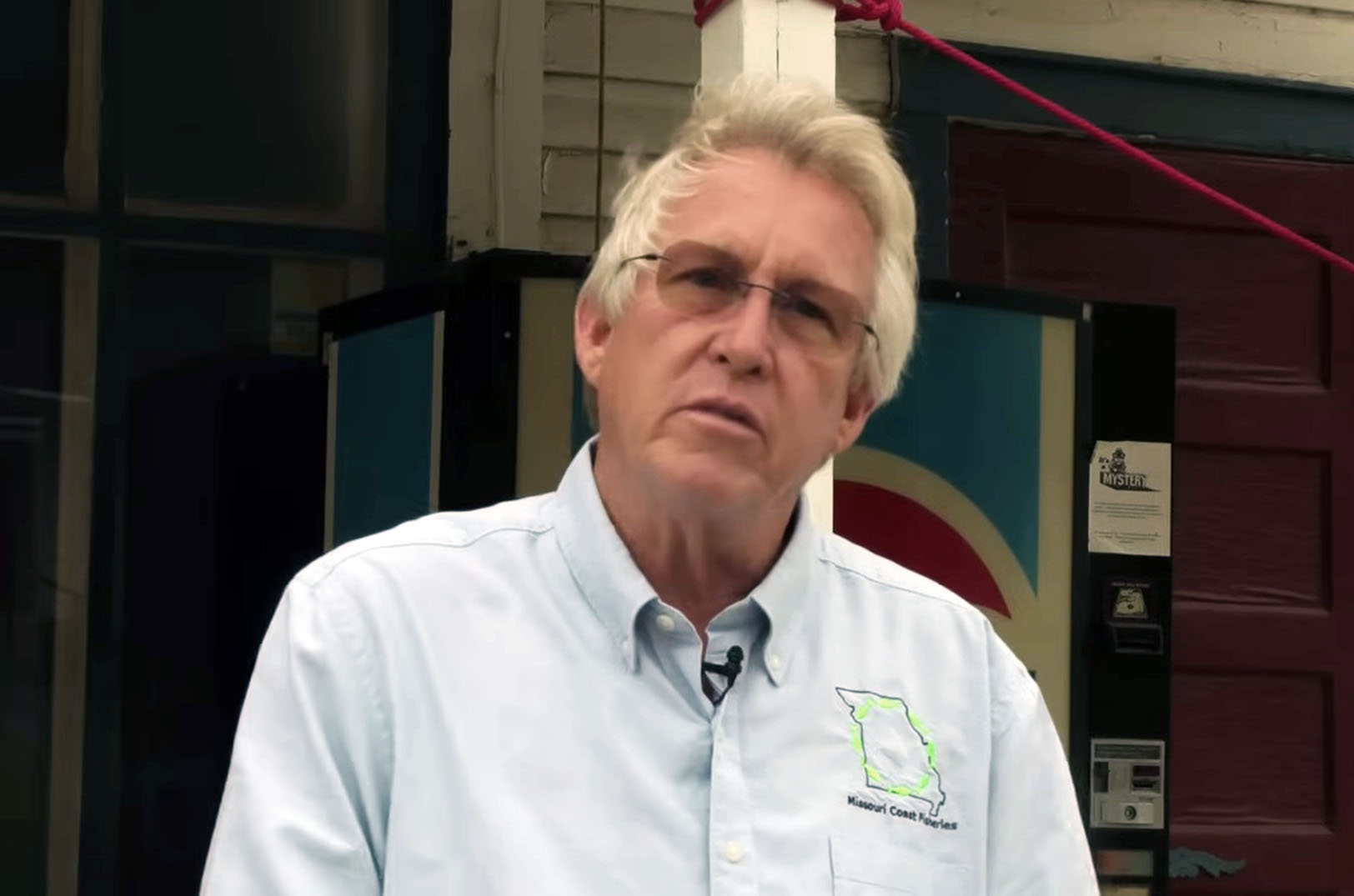
Greg Trial, Missouri Coast Fisheries; image by Flatland
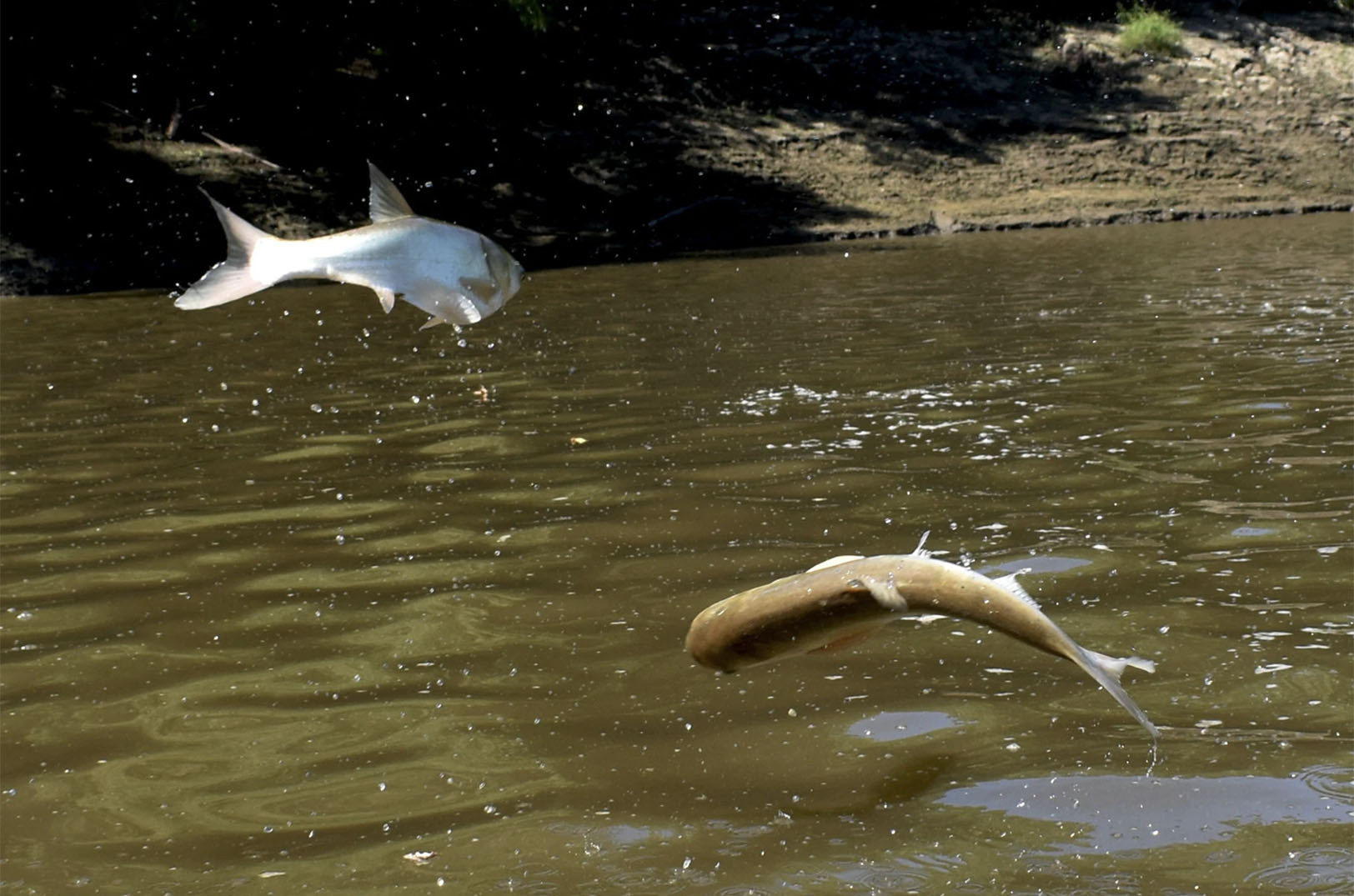
Within seconds, a silver carp flies out of the water and launches itself several feet into the air. Spatters of water and algae fly out in every direction.
If you’re lucky, the fish will fling itself straight back into the water and swim away.
If you’re not so lucky, however, you could find yourself cleaning fish scales off your clothing — or out of your hair.
“This is one of the reasons why we are fishing them, because they are hazardous to people that are out recreationally boating, out fishing, out in their canoe, out in their kayak,” said Greg Trial, the co-founder and chief executive officer of Missouri Coast Fisheries.
Missouri Coast Fisheries, founded in 2019, catches silver carp and sells products they make from the invasive fish.
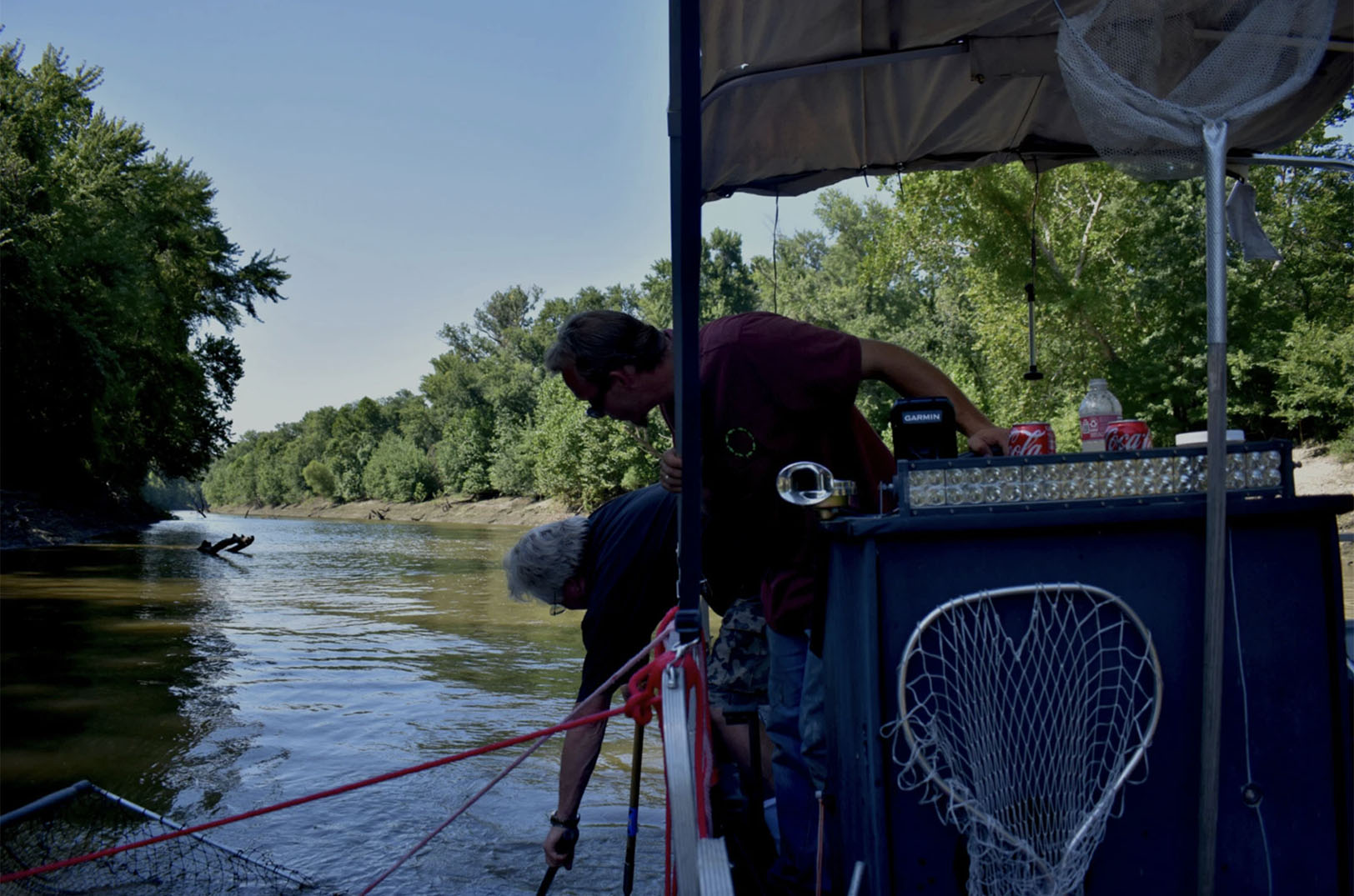
Greg Trial reaches down to pull a carp out of his net. Trial said the carp often tear through their nets; photo by Ceilidh Kern, Flatland
What are invasive carp?
The term “carp” can describe several different species. For instance, the common carp is considered a nuisance species. In the United States, four species of carp – bighead, black, grass and silver carp – are considered invasive.
“They (carp) are not native to the state of Missouri or to North America at all, which in and of itself doesn’t present any issues other than they’re extremely invasive, meaning that they’re very successful at reproducing and because of that [success], are able to spread to different habitats – to different rivers – very readily (and) easily,” Joe McMullen, a scientist at the Missouri Department of Conservation, said.
These carp were introduced to the United States in the 1970s to control algae in aquaculture ponds. Their populations in the U.S. have spread via flooding or leaping over barriers, and they can outcompete native fish and disrupt the food web.
Silver carp have a reputation for leaping out of the water when disturbed, a characteristic that is particularly dangerous for fish that can weigh more than 20 pounds.
The size of carp varies by species. For instance, in March, an angler caught a bighead carp in the Mississippi River that weighed more than 90 pounds.
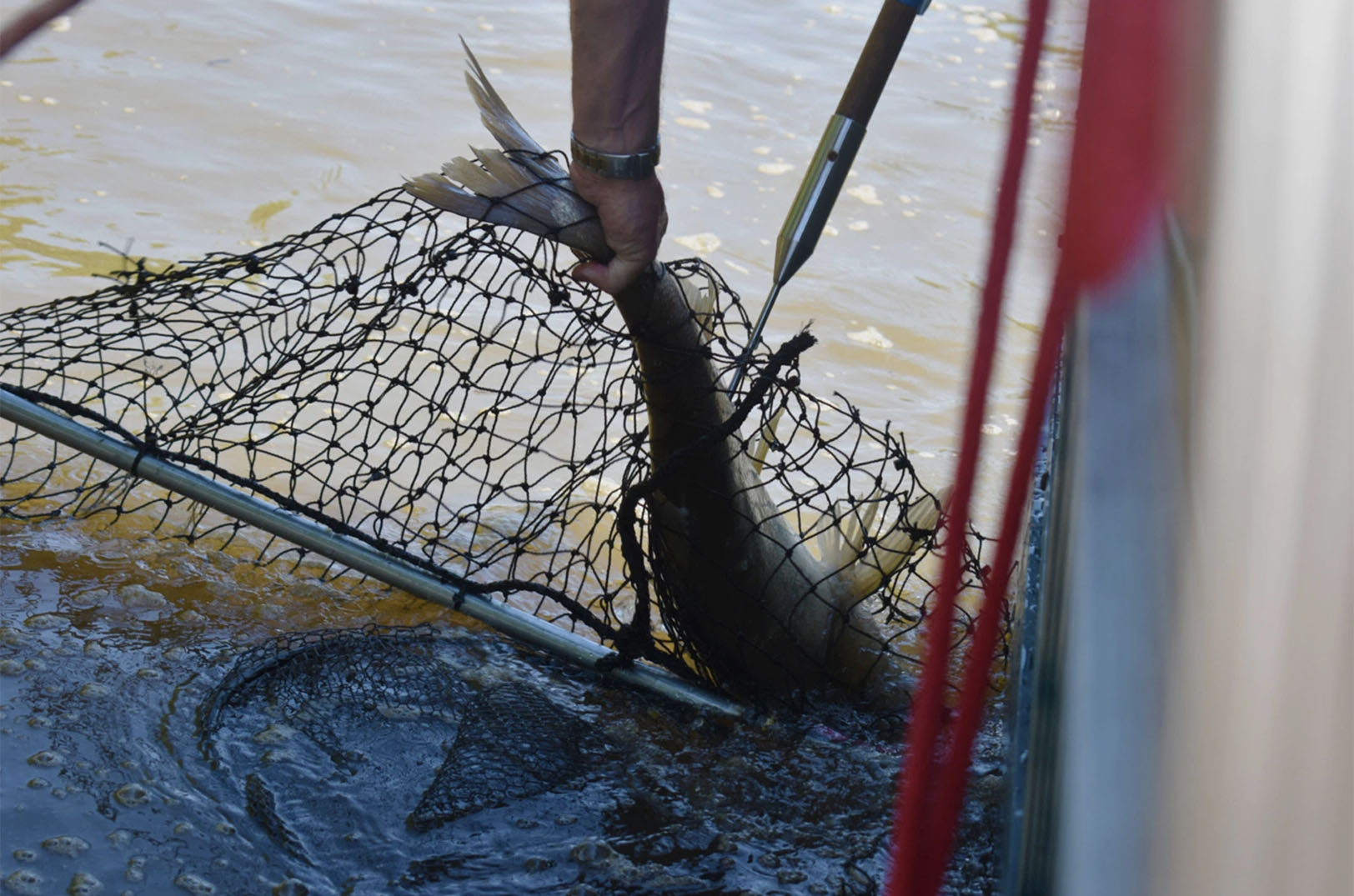
Greg Trial spears a carp in a net. Trial said the carp can be dangerous to fishermen and boaters; photo by Ceilidh Kern, Flatland
What can we do with invasive carp?
Trial and his co-founder Jim Finke, who is also president of Missouri Coast Fisheries, are experimenting with several products made from carp, such as bait and dog treats.
They don’t waste any part of the fish, Trial said.
“(We) sat down one afternoon over a cup of coffee and a fish and we took the fish apart piece by piece and tried to match a market to each one of the components,” Trial said.
They have used some of the fish bones to produce jewelry and other portions to create leather.
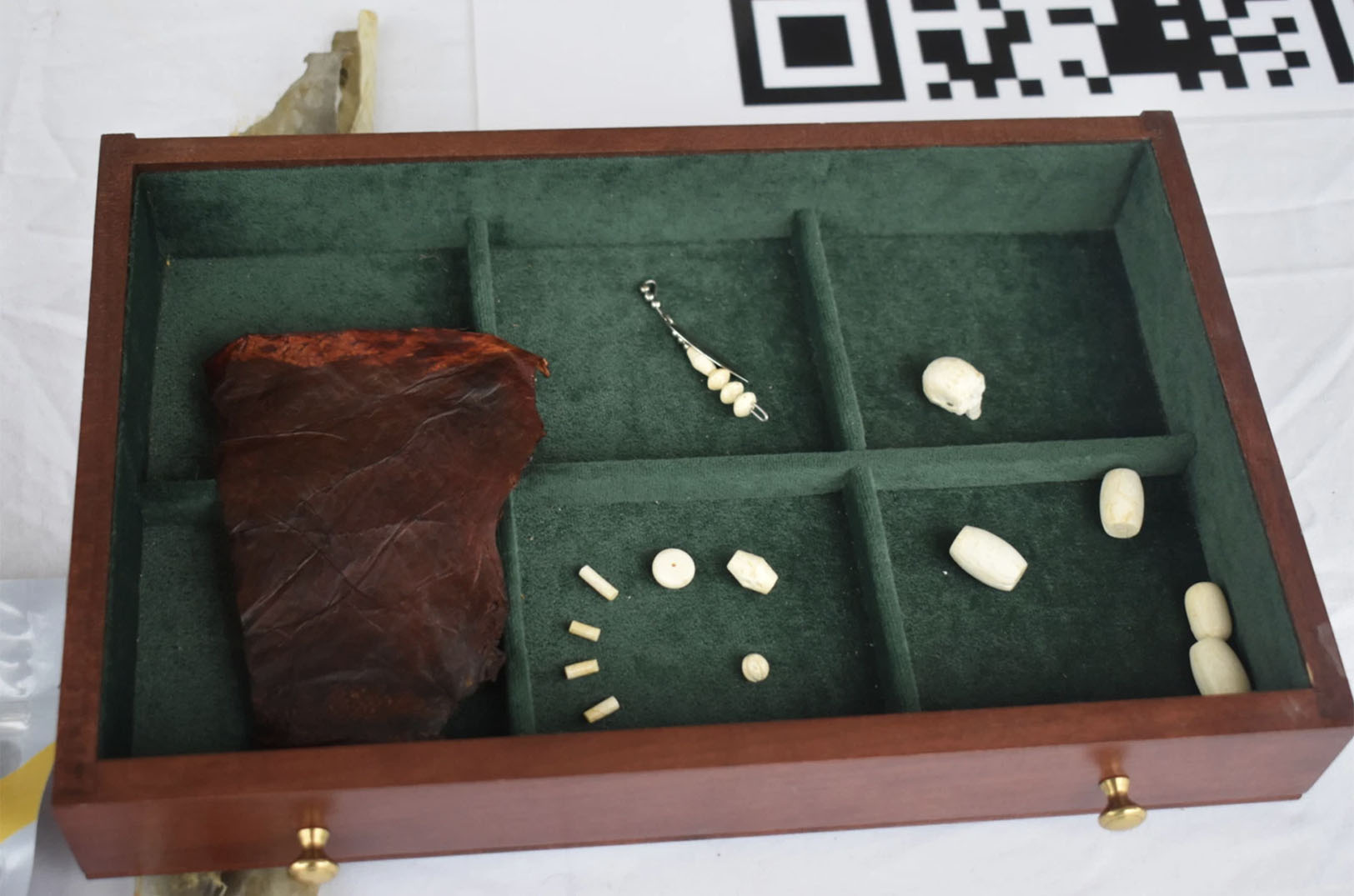
Missouri Coast Fisheries has been making several products from the carp. They have used different parts of the fish to create items like jewelry and leather; photo by Ceilidh Kern, Flatland
The flying nature of the silver carp inspired Trial and Finke to experiment with how and where they catch the fish.
Currently, Missouri Coast Fisheries has a contract with the Missouri Department of Conservation to fish for carp commercially out of the Platte River. In fact, they’re the only individuals allowed to fish commercially out of that river.
The Platte River is a safer environment to fish in and easier to navigate, Trial said. It’s also narrower than the Missouri, which makes it easier to catch the fish, Trial said.
The only rivers in Missouri where licensed individuals are permitted to fish commercially are the Mississippi, the Missouri and a small section of the St. Francis River, according to McMullen.
McMullen has been evaluating Missouri Coast Fisheries’ work on the Platte River.
Missouri Coast Fisheries also wanted to use a type of net that isn’t permitted, McMullen said.
“One of the reasons that we’ve allowed them to use this type of net on the Platte River where commercial fishing is not permitted is because we’re fairly confident that there will be no impacts to other native fish,” McMullen said.
“…we’re pretty confident that Missouri Coast fisheries is not going to be catching anything but silver carp because it relies on the fish having to jump out of the water, to wind up in the net or in the boat, and other fish just don’t do that.”
Flatland interns Ceilidh Kern and Matthew Petillo contributed to this piece.
Julie Freijat is a Kansas City PBS/Flatland reporter and a Report for America corps member working with the Mississippi River Basin Ag & Water Desk. Her work is made possible, in part, through the generous support of the Ewing Marion Kauffman Foundation.


2024 Startups to Watch
stats here
Related Posts on Startland News
Olathe-based Flow Forward raises $1M for vascular device
After completing a preclinical study, Olathe-based Flow Forward Medical nabbed another round of capital for its vascular device. The firm raised another $1 million from a group of unnamed, individual investors, bringing the firm’s total raised to $7 million. Flow Forward created the AFE blood pump system, which is designed for temporary use to quickly…

Park Hill toured the country for its new innovative learning program
The Park Hill School District is introducing a new approach to learning that aims to cultivate more innovative thinking among its students. Starting in Fall 2017, Park Hill conceptualized the LEAD Innovation Studio, a high school in which students will focus on project-, problem- and professional-based learning. The studio aims to not only address growing…

International coworking firm WeWork taps Crossroads for big space
WeWork, an international coworking firm with offices in 37 cities and 12 countries around the globe, is snagging four floors in Kansas City’s Corrigan Station for a new 40,000 square feet space. With locations in Hong Kong, London, Buenos Aires, New York City and many others, the cosmopolitan coworking company will occupy the third through…

Events Preview: Most Likely to Succeed, Digital Sandbox
There are a plethora of entrepreneurial events hosted in Kansas City on a weekly basis. Whether you’re an entrepreneur, investor, supporter, or curious community member — we recommend these upcoming events for you. Are you hosting a relevant community event? Feel free to add it to the FWD/KC calendar for increased exposure. Once your event…