

$500K state grant bolsters KU’s startup ecosystem; here’s what KU Innovation Park is launching with the funds
August 23, 2024 | Lindsey Slater
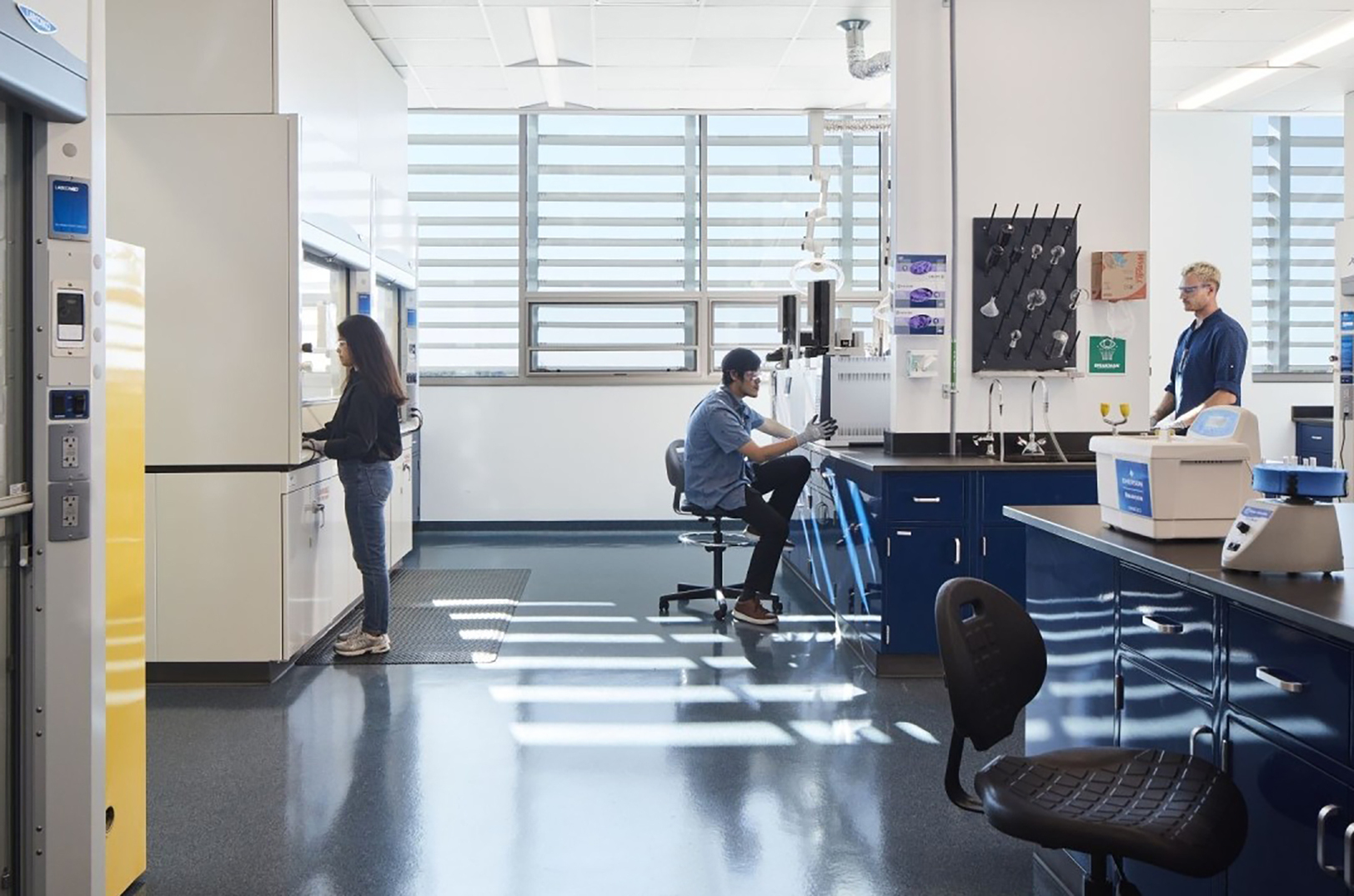
LAWRENCE, Kansas — A $500,000 Forging Opportunities for Research, Growth & Entrepreneurship (FORGE) grant from the Kansas Department of Commerce will help KU and KU Innovation Park create software, infrastructure and financial mechanisms needed to bridge the gap between academia and industry, growing the state’s economy while enhancing the university’s teaching and research missions.
As the university’s strategic economic development partner, KU Innovation Park will lead the development and implementation of three initiatives to boost innovation and entrepreneurship.
- The Park’s next facility will have an international launch pad. The 2,000-square-foot space will have both lab and office areas for international companies interested in both proximity to KU and access to its resources and expertise.
- Developing an angel investor network will help cover the strategic gap in accessing capital for early-stage companies.
- An SBIR/STTR boot camp will assist researchers in crafting successful proposals to access the largest source of non-dilutive funding for innovative technologies.

Adam Courtney, KU Innovation Park
“This partnership exemplifies our commitment to fostering a dynamic entrepreneurial ecosystem,” said Adam Courtney, CEO of KU Innovation Park. “By leveraging the resources and expertise of both the Park and the university, we can propel academic innovations to market and provide critical support to early-stage companies in the region.”
Click here to read the full press release from the University of Kansas Office of Research below.
University researchers who develop new technologies face a number of hurdles in getting those innovations from the lab to the market. A $500,000 Forging Opportunities for Research, Growth & Entrepreneurship (FORGE) grant from the Kansas Department of Commerce will help KU create software, infrastructure and financial mechanisms needed to bridge the gap between academia and industry, growing the state’s economy while enhancing the university’s teaching and research missions.
“With this support from the Kansas Department of Commerce, we will be able to develop fundamental building blocks that assist established companies in accessing KU resources while also developing an infrastructure that supports KU startups in their entrepreneurial journey,” said Tricia Bergman, associate vice chancellor for economic development.
Some companies proactively seek to partner with university researchers but don’t know who in the university to contact to get started. KU staff will use some of the FORGE grant to develop a Jayhawk Front-Door Chatbot that company representatives and economic development professionals can use to understand what resources the university has and who within KU might be able to provide assistance. The chatbot is a large language model software that employs natural-language-processing techniques to quickly search many KU websites for answers to a prospective partner’s question.
“The chatbot will be especially beneficial as we consider expertise across all of our campuses,” Bergman said. “For example, suppose someone is interested in understanding if we could help them with material testing capabilities or in identifying a resource that works in air purification. The answers to these questions are not straightforward unless you know exactly where to go. The chatbot will be helpful in providing initial options that we can quickly and efficiently discuss with the industry partner.”
The grant will also support the construction of an international launchpad at KU Innovation Park. This 2,000-square-foot space will house a research laboratory and offices for international firms interested in being close to KU to access its research expertise and resources. Construction on the Park’s next phase of development, including the launchpad, is expected to begin in 2025.
“Establishing an international launchpad at KU Innovation Park will enable companies from around the world to seamlessly tap into resources and knowledge at the university,” said Courtney. “This space will lower the barriers for international companies to start and grow a presence quickly in Kansas, creating new collaborations and economic growth.”
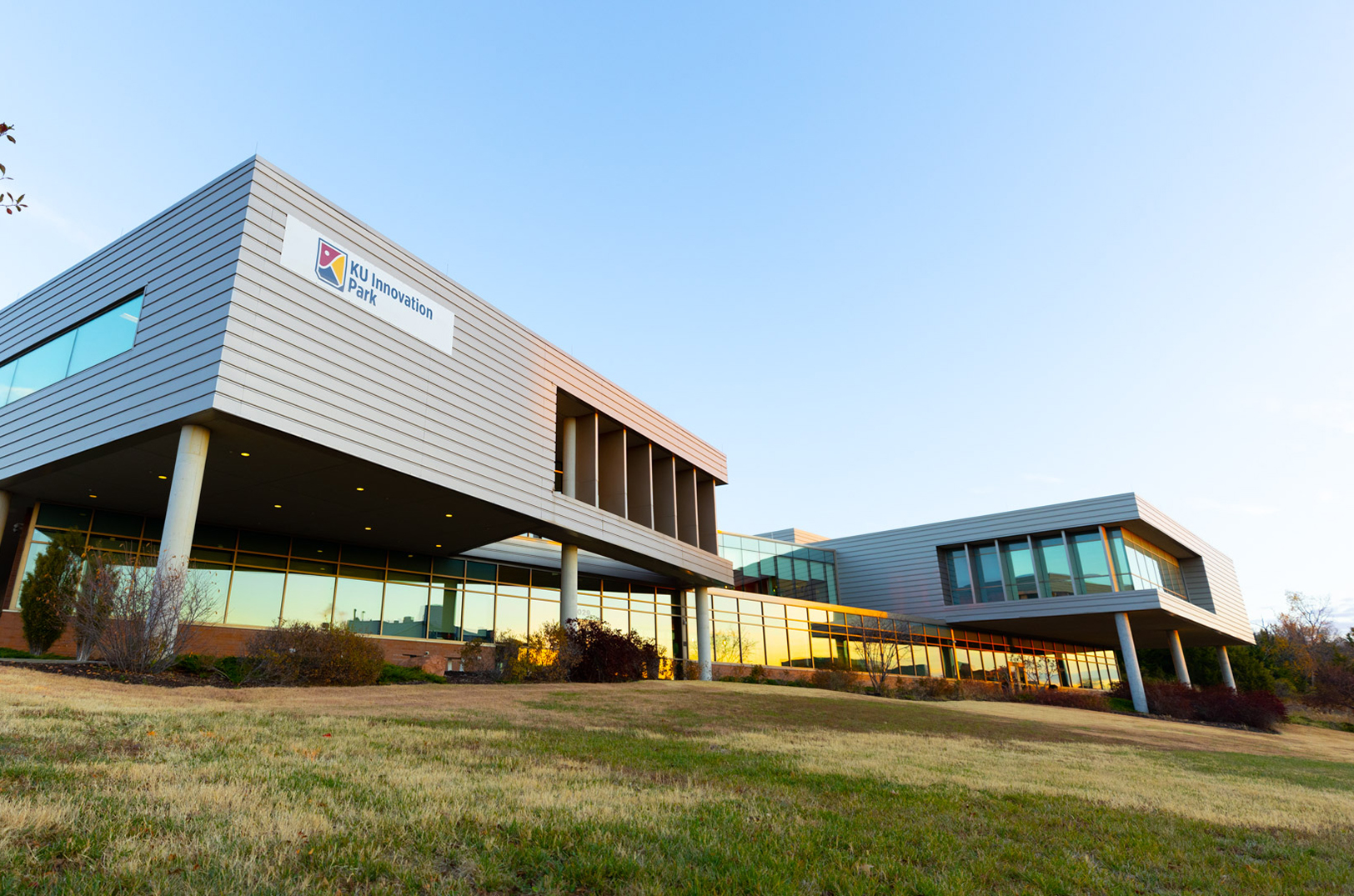
Photo courtesy of KU Innovation Park




Nurturing innovation
In addition to software and research space, the FORGE grant will support financial mechanisms that will help KU nurture the development of new innovations more fully before they are spun out into a Kansas startup company. The Rock Chalk Ready Fund will provide four to six, $35,000 pre-company grants to “de-risk” the technology or business model of a potential startup working with KU intellectual property. De-risking means identifying critical milestones that will increase the likelihood of forming a sustainable startup company. Examples of potential milestones could include creating prototypes, collecting key data, performing a regulatory analysis or other activities that demonstrate the viability of a technology or business opportunity. Master of Business Administration students at KU will participate as part of each pre-company team to provide support from a market and business perspective.
An additional Rock Chalk Raise Fund will provide a smaller pool of $20,000 for early startups to travel to out-of-state conferences or investor meetings. This second fund will provide the startup an opportunity to validate its idea with potential customers and reach new audiences.
“We’re appreciative to the state for supporting us through FORGE and helping KU develop new models to advance innovation arising from research at both Lawrence and the medical center,” said Cliff Michaels, executive director of the KU Center for Technology Commercialization. “The goal is multifold — to move opportunities closer to ‘go, no-go’ decision points and, when possible, also better position those opportunities for whatever their next steps might be.”
Recipients of either fund, as well as others across KU, will be eligible to participate in a two-day boot camp that walks them through the process of applying for the Small Business Innovation Research (SBIR) or Small Business Technology Transfer (STTR) program. SBIR and STTR are equity-free funding opportunities provided by the U.S. Small Business Administration. Participants will also receive group and individual coaching as they work through the grant applications. The SBIR and STTR boot camp coaching are similar to other training programs offered to help KU researchers earn federal grants, returning tax dollars to the state.
Stimulating investment
The final initiative supported by the FORGE grant will be the creation of an angel network to encourage alumni, parents, friends and others engaged with the university to invest in KU-affiliated opportunities. According to a University of Michigan study, the Midwest and Great Lakes regions account for only 7% of all venture capital deals. The membership-based angel network allows KU startups to regularly present their plans to prospective investors, improving their access to capital. The goal is to host an initial launch event in 2024 with 25 to 35 investors and four to five angel investment-ready companies.
“The angel network will engage the extensive alumni community and provide opportunities to invest during the critical early stage for KU-affiliated startups,” Courtney said. “This will accelerate innovation and bring vital capital into the community, strengthening the entrepreneurial ecosystem.”
The administration of the initiatives is through the KU Office of Economic Development and is spread across several departments and university affiliates. KU Innovation Park will lead the development and implementation of the international launchpad, SBIR/STTR boot camp and angel investor network. The KU Center for Technology Commercialization will spearhead the Rock Chalk Ready and Rock Chalk Raise Funds. KU Analytics, Institutional Research & Effectiveness will develop the chatbot, and KU Marketing will create a web portal that both internal and external stakeholders may leverage to more efficiently identify resources and expertise.
Taken together, each element of FORGE activities creates a holistic, streamlined ecosystem that supports a growth trajectory for technology and startups. For example, a proposal supported by the Rock Chalk Ready or Raise Fund may go on to win an SBIR grant after completing the SBIR/STTR Bootcamp. That new startup may then present its more realized business plan to the angel network and external venture capital opportunities needed to begin selling products. Startups may not follow this path exactly — the featured resources combine to provide a road map with opportunities to “hop on or off,” depending on technology or startup maturity. Additionally, for companies that may be interested in licensing or further developing technology, the Jayhawk Chatbot will provide rapid visibility into existing KU technologies.
“The FORGE grant through the Kansas Department of Commerce enables KU to develop tools, processes and new resources that will help to drive economic growth for both existing companies as well as new startups,” Bergman said.


2024 Startups to Watch
stats here
Related Posts on Startland News
ProjectUK introducing specialty accelerator’s latest cohort Oct. 10 at Travois
Project United Knowledge is the only Kansas City accelerator that truly fosters collaboration between entrepreneurs and those in the industry establishment, said Quest Moffat. “It’s the biggest and most dramatic reason that we’re different from other accelerators in the Midwest region,” said Moffat, ProjectUK founder. “Co-building is where the corporation and the people that run…

Techweek opens Monday with KC Mayoral Candidate Tech Forum; launches app with full schedule
Candidates to be Kansas City’s next mayor will take the stage Monday at Union Station in one of Techweek KC’s first events of 2018 to talk tech and its importance in shaping the city’s future, said Ryan Weber. “We’re still a long way from the [April 2] primary election, but this forum will help voters…

CommunityAmerica innovation lab launches AI chatbot to help students complete FAFSA
A new artificial intelligence-fueled chatbot and FAFSA help site aim to digitally remove barriers faced by first-generation American students, children of divorce and others hoping to obtain financial aid to attend college. It’s about delivering peace of mind to members of CommunityAmerica Credit Union, which developed the technology, said Anita Newton, chief innovation officer for…

Digital Sandbox KC mixes in Carroll’s Irish Bitters, TravelHive, iSocial and Grant Company
After more than five years, Digital Sandbox KC’s proof-of-concept program continues to see a high volume of quality applicants with a wide range of concepts, said Jeff Shackelford. Four startups receiving project funding from Digital Sandbox KC were announced Thursday. Two of those awards are in partnership with Innovation Stockyard in St. Joseph, said Shackelford,…