

These ‘Urban Heroes’ are helping evolve downtown KC; here’s why they’re on the right path
April 12, 2024 | Tommy Felts

In a prelude to today’s celebration of downtown Kansas City’s evolution and momentum, four “urban heroes” were honored Thursday for their passionate work to make downtown a more vibrant place to live, work, and play, organizers said.
Winners of the “Urban Hero Awards” ranged from honorees on the east side to the Crossroads and the downtown core — encompassing the wide swath of Kansas City represented by the Downtown Council of KC, which organized the awards along with today’s annual luncheon.
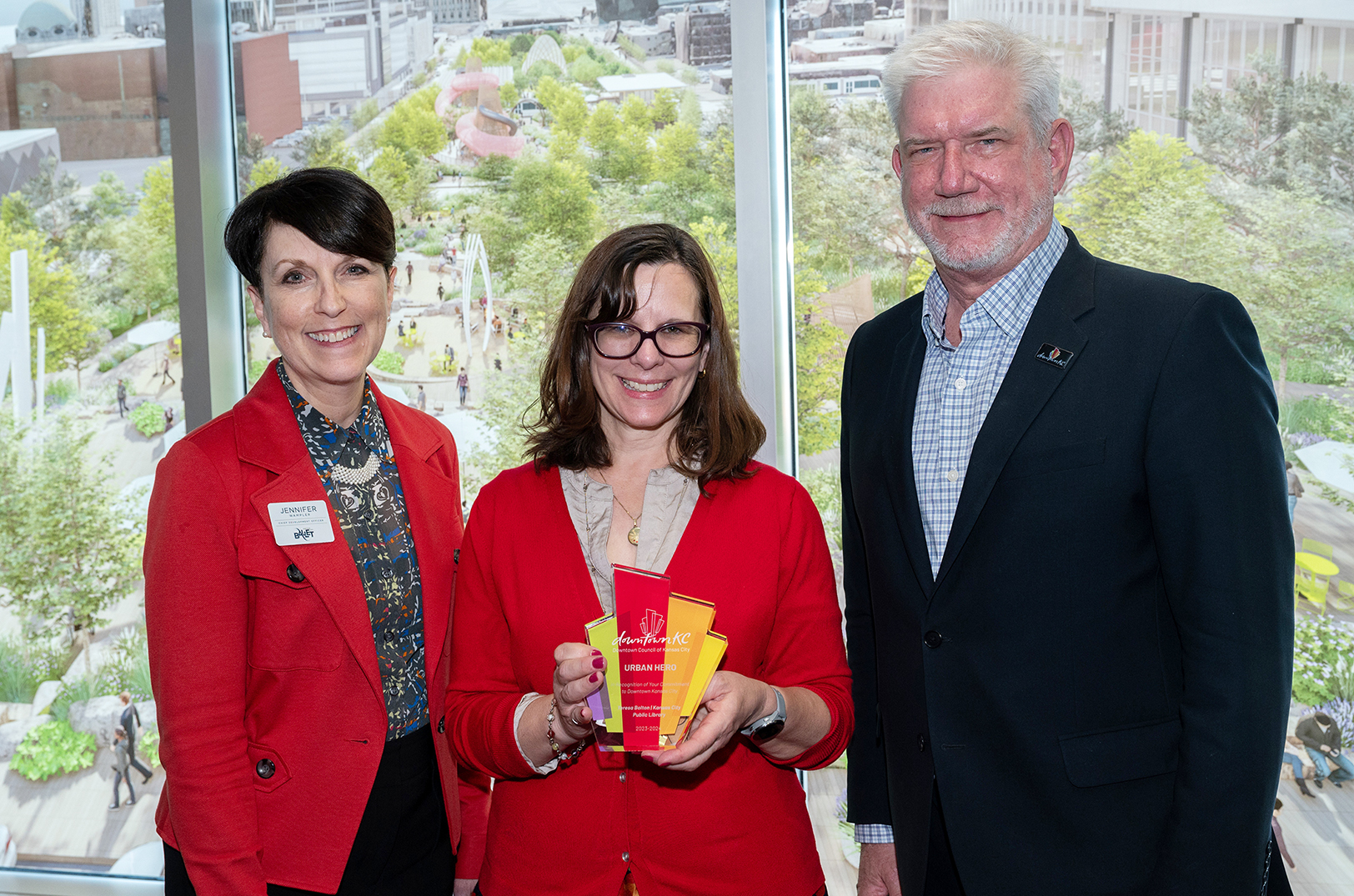
Jennifer Wampler, KC Ballet; Teresa Bolton, KC Public Library; and Bill Dietrich, Downtown Council of Kansas City; photo courtesy of Downtown Council of Kansas City
Among the latest round of urban heroes:
- HITIDES Coffee (Michele and Johnny Dawbarn)
- Vine Street Brewing (Kemet Coleman, Woodie Bonds, Jr., Elliott Ivory, Annie McGinnis)
- Allan Gray (The Zhou B Arts Center)
- Teresa Bolton (KC Public Library – Central Branch)
Vine Street Brewing previously was named one of Startland News’ Kansas City Startups to Watch in 2024, as well as earning numerous brewing competitions and industry awards in recent months. The business — Kansas City’s first Black-owned brewery — was founded in 2023 in the city’s historic jazz district.
“At Vine Street Brewing, we’re not just crafting beer — we’re fermenting the ‘Kansas City spirit’ and blending the flavors of 18th & Vine to help foster Kansas City’s cultural identity on the world stage,” said Coleman, co-founder of the business. “We are deeply grateful to receive the Downtown Council’s Urban Hero Award and will continue to play our part in strengthening the heartbeat of our city.”

Jennifer Wampler, KC Ballet; Kemet Coleman, Elliott Ivory, Annie McGinnis, and Woodie Bonds, Jr., Vine Street Brewing; and Bill Dietrich, Downtown Council of Kansas City; photo courtesy of Downtown Council of Kansas City

Jennifer Wampler, KC Ballet; Johnny and Michele Dawbarn; and Bill Dietrich, Downtown Council of Kansas City; photo courtesy of Downtown Council of Kansas City
Down the street in Kansas City’s East Crossroads, HITIDES Coffee is among a growing handful of ventures for serial entrepreneurs Michele and Johnny Dawbarn, whose headquarters and tiki-themed space anchors the corner of 18th and Cherry streets.
“Being a community based business that provides a connecting space (HITDES) as well as fabrication services (Collective EX/sewKC), we’ve been able to continue to grow as we work together with others locally,” said Johnny Dawbarn. “Every project, event and partnership allows us to expand as Kansas City continues to evolve.”
“Being recognized like this just validates that what we are providing and the quality of work is relevant and meaningful,” he continued. “It’s what you really hope your original ideas will become in the beginning. This kind of recognition suggests you’re on the right path.”
Click here to check out past winners of the Urban Hero Awards.

Featured Business

2024 Startups to Watch
stats here
Related Posts on Startland News
Neighborhood smart cans help Kansas Citians save the planet from their kitchens
Newly introduced composting technology is already turning new ground in Kansas City, Kristan Chamberlain said, with more solar-powered compost cans arriving later this spring across the metro’s urban landscape. Her social venture, KC Can Compost, installed three of the devices in October — free to use for KCMO residents wanting to deposit their soil-making food…

Voodoo Volleyball bounces back in OP: Father-daughter duo doubles as new venture’s setters
Quinn Austin put several sports to the test as a preteen — racing from basketball practice to softball to volleyball. But she latched on to just one. “Volleyball. It was my sport. Everyone was having a good time,” she said. “We just loved the cheers — a cheer when we got a hit, a cheer…

Black farmers are losing ground in the fight to feed their communities, advocates say
More than a century of systemic land dispossession and discriminatory practices has left Black farmers with less than 0.6 percent of U.S. farmland — less than a third of the 16 million acres they operated in 1910, according to local urban farming advocates. They gathered Tuesday at Independence Boulevard Christian Church to confront this history…

Cracking egg-flation: How farmers, substitute ingredients help restaurants mitigate price spike
Editor’s note: This story was originally published by Kansas City PBS/Flatland, a member of the Kansas City Media Collective, which also includes Startland News, KCUR 89.3, American Public Square, The Kansas City Beacon, and Missouri Business Alert. Click here to read the original story. Whether ordering an omelet, French toast, chicken n’ biscuits, chilaquiles, corned beef hash…