

Honey bunches of joy: How this Raytown bee farm landed its blooming business model
April 11, 2024 | Joyce Smith
Editor’s note: This story was originally published by Kansas City PBS/Flatland, a member of the Kansas City Media Collective, which also includes Startland News, KCUR 89.3, American Public Square, The Kansas City Beacon, and Missouri Business Alert.
Click here to read the original story.
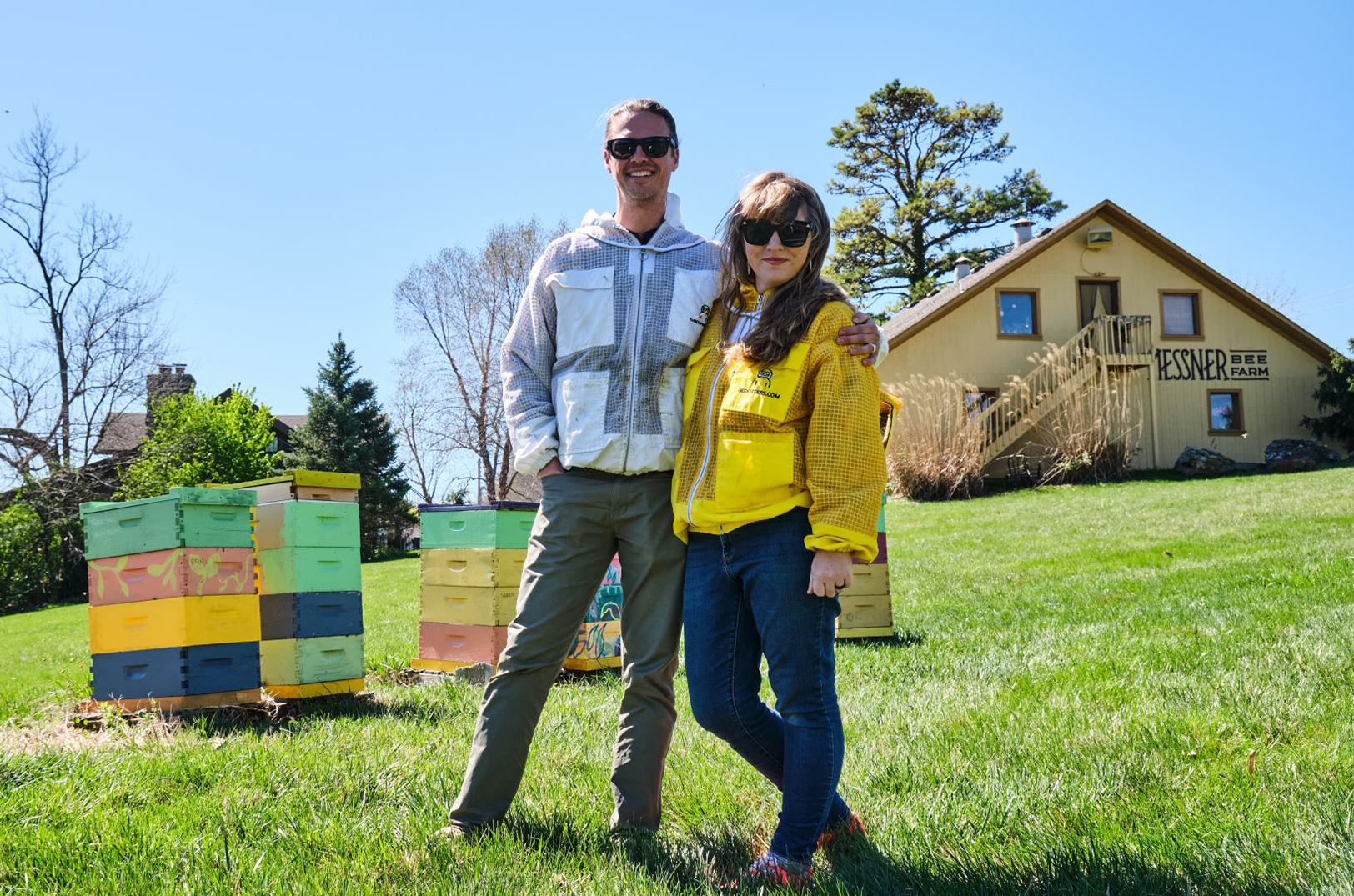
Erik and Rachael Messner’s home on an acre in south Kansas City gave them plenty of room to indulge in a host of hobbies.
They made coffee liqueur, ceramic jewelry, soap and more, gifting the items to family and friends. They shared “maybe a dream” of selling them one day.
For their soaps, they even created a “Messner Family Farm” label.
“I didn’t want to give it to anyone without a label. I thought it looked better,” Rachael said. “But everyone turned around and thought we had started a business. That was exciting.”
But it was their two beehives, buzzing with activity inside, that would turn that dream into a booming four-acre complex on the eastern edge of Raytown.
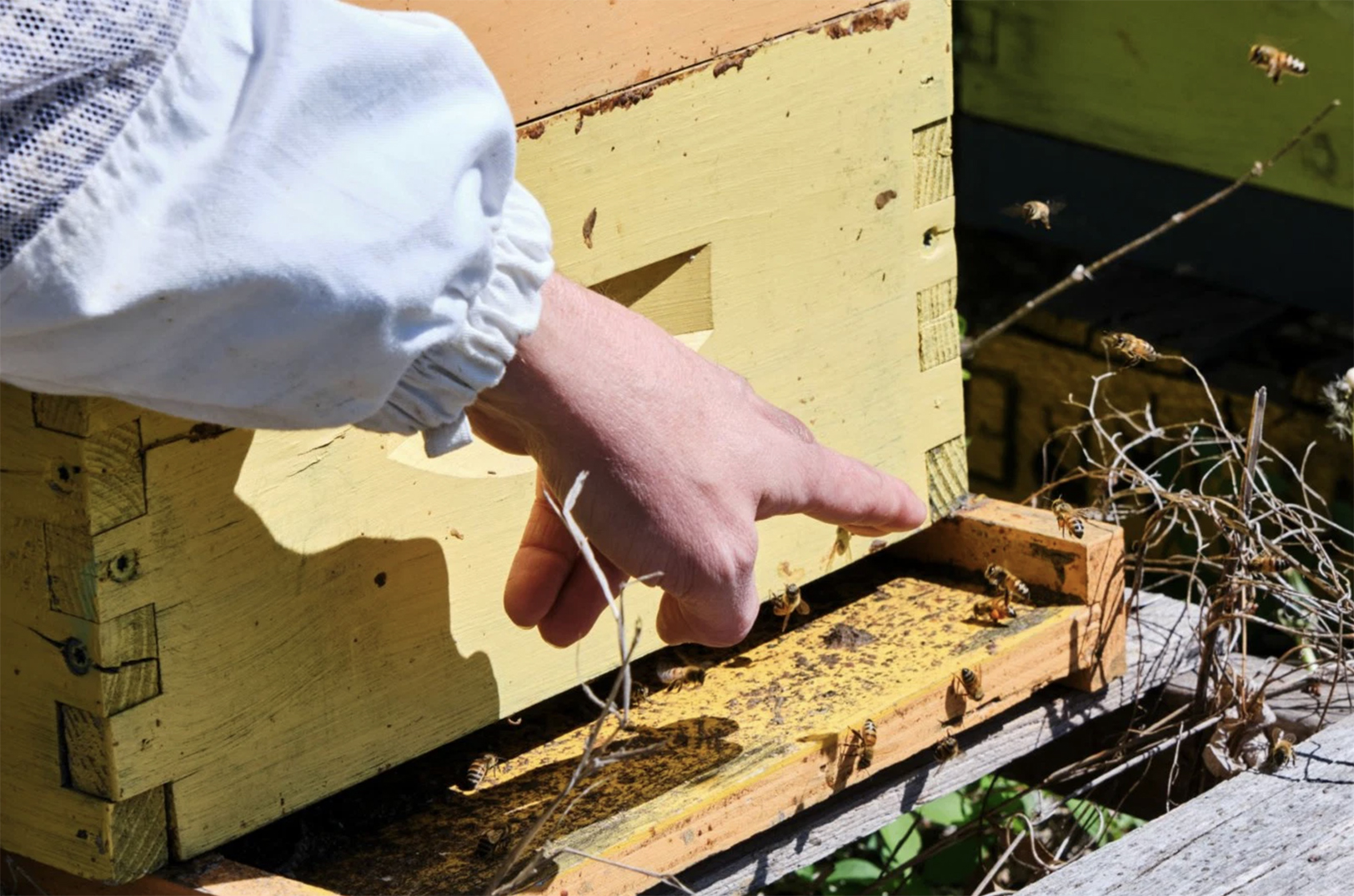
Erik Messner describes the bees at Messner Bee Farm; photo by Dominick Williams, Flatland
Building buzz
The Messners netted their first real harvest of honey and beeswax from the two hives in the summer of 2014. They bottled the honey and made beeswax lip balm, added their ceramic jewelry, spun wool and soap to the inventory.
Rachael then put on a Crossroads craft fair, inviting other area makers to take part.
But her customers were particularly drawn to the bee products.
She also worked for a variety of entrepreneurs, gaining experience in bookkeeping and accounting, human resources, customer service, business licensing and more. By fall of 2015, when she was making enough money on the family business, Rachael quit her part-time job to do more events.
“It was about getting in front of as many faces as possible. Just non-stop go, go, go,
making connections,” she said. “I was wholesaling the lip balm at local businesses. I always gave away free samples. People love free samples.”
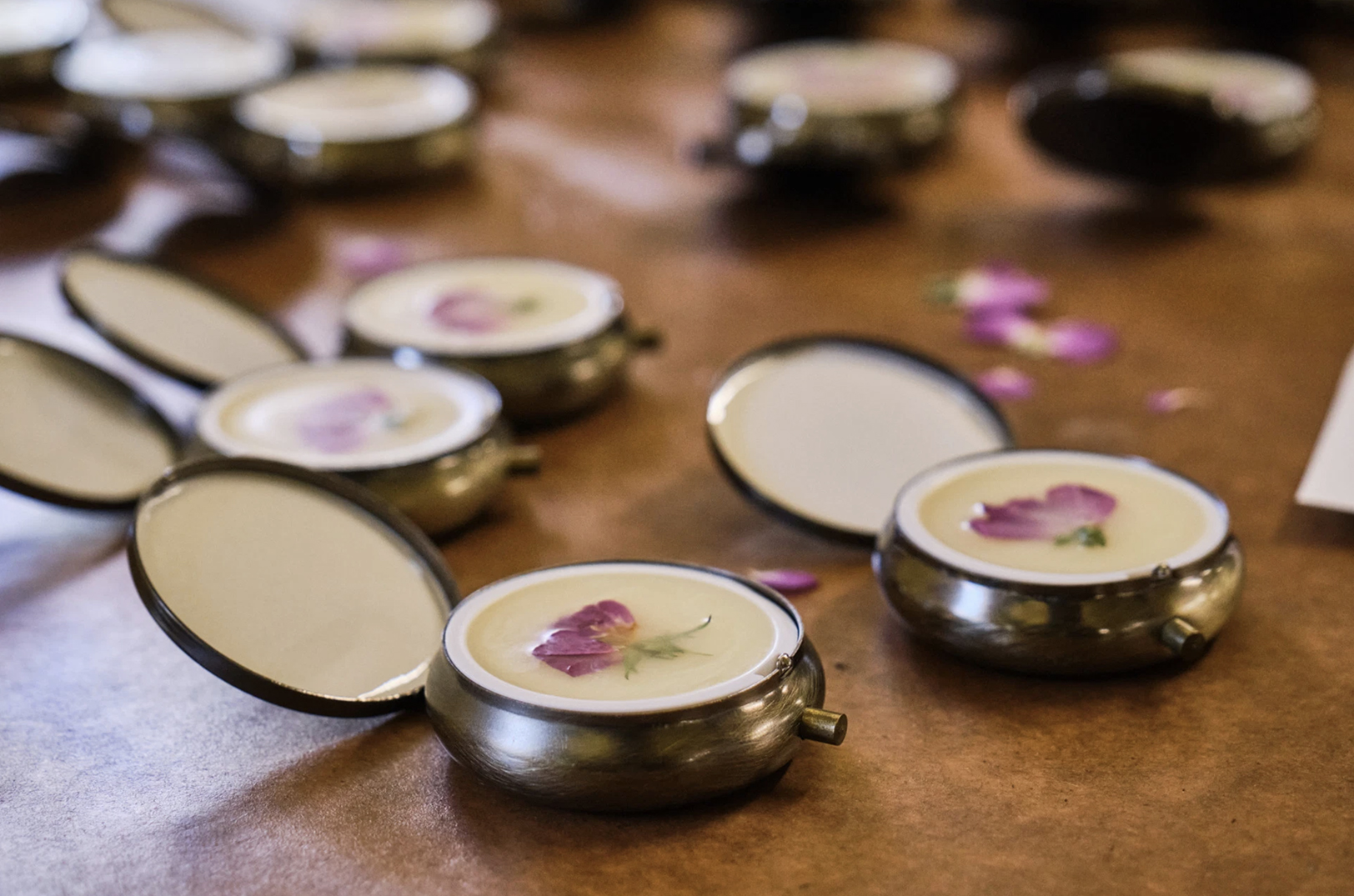
Messner Bee Farm produces a popular line of lip balms; photo by Dominick Williams, Flatland
She would sell so many products at shows such as Boulevardia, Kansas City Pride, the Kansas City Renaissance Festival and area farmers’ markets that she would come home and stay up until 2 a.m. rebuilding the inventory for that day’s sales.
“That’s not unusual at craft sales. People are out there hustling,” she said.
By 2017, the business had grown to the point that the couple had to make a choice. They could stay at the current sales level with some craft shows and wholesale customers, or expand by hiring employees and opening a commercial kitchen.
“We have a consumable product. People who bought one lip balm came back and wanted six,” she said. “I would have had to start turning customers down, turn wholesale customers down, stop adding more events.
“We are two humans, and I was sleep deprived. But we weren’t going to put the brakes on the growth.”
Family connection
Erik’s mother had four acres at 8301 Westridge Road in Raytown. She ran her interior design shop in one of the buildings, temporarily living in another. A refurbished barn on the site was used for events. But she wanted to sell it all.
Erik and Rachael bought the property, gutting the interior design shop for a production facility and a retail shop that opened in October 2017. They moved into the house.
Messner Bee Farm continued to grow until the COVID-19 pandemic. Then they developed a hand sanitizer, focusing on online sales that grew 1,000% during 2020. During the pandemic, the shop was temporarily closed and became a shipping and receiving area.
Erik, a structural engineer, started working for Messner full time in late 2022.
In October 2023, the couple moved production to the barn’s basement and reopened the shop in November. They started the year with eight employees and ended it with 15.
They now have 35 bee colonies at the Raytown headquarters and three other area locations. There are more than 30,000 bees per colony.
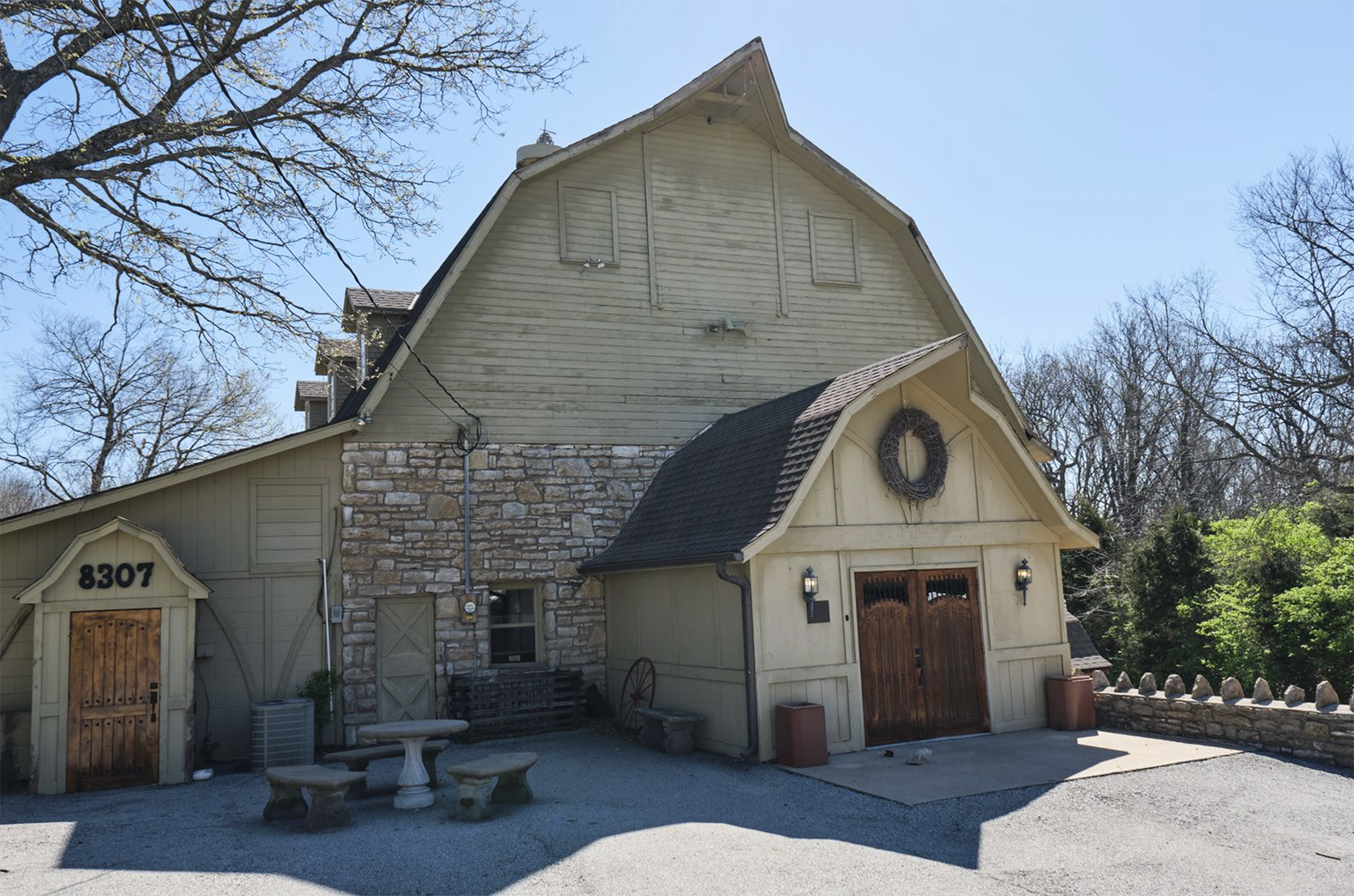
This barn at Messner Bee Farm houses an event space and production facility; photo by Dominick Williams, Flatland
‘Learning curve’
At first Erik wanted an all-natural colony. But he said that wasn’t what was best for his bees, so he looked to the successful companies with the lowest losses.
“The learning curve is so steep. You are making sure they have room to grow, that diseases are under control, and hoping and praying that everything is going well in there,” Erik said. “The bees taught us to value science, listening to the bees and what they need and how to care for them.”
Some beekeepers have only one harvest a year. Messner has two. The spring harvest produces light-colored honey with a floral flavor, which is already presold. The summer harvest is a darker, nuttier honey. They sell raw, infused and cream styles.
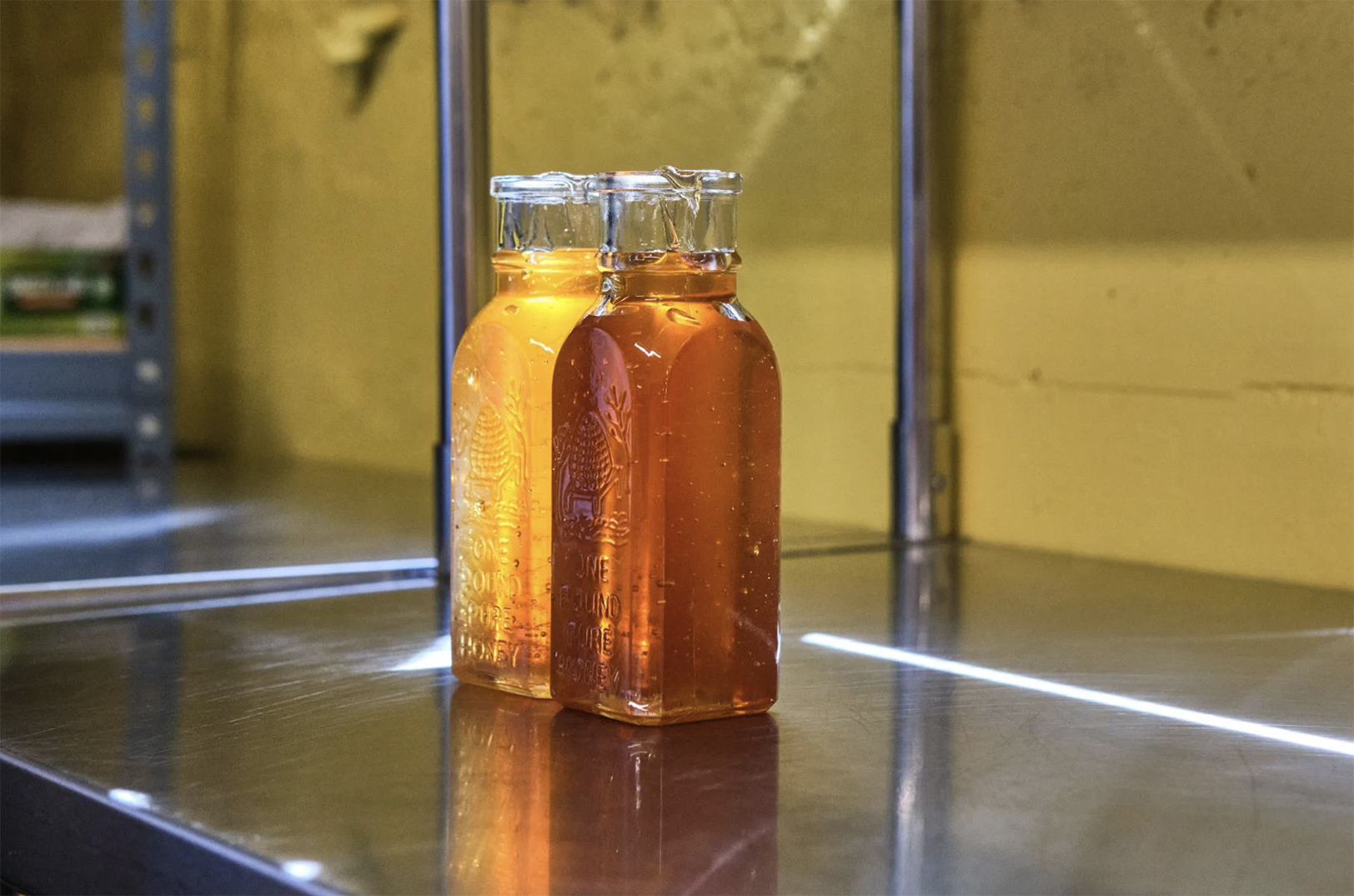
Messner Bee Farm has spring and summer harvests that produce two distinct types of honey; photo by Dominick Williams, Flatland
The other half of their business is beeswax products, including lip balm (from lavender lemonade to strawberry rhubarb), honeysuckle vanilla hand salve, solid perfume and cologne in such scents as honeysuckle, and lavender oatmeal soap.
They get ideas from customers and employees. But while no one was asking for honey cotton candy, it is now a top seller.
Employees in “Beeswaxland,” in the lower level of the barn, came up with a new solid perfume scent called “As You Wish” and described as a juicy berry blossom, light and sweet. The staff collaborated on the label, name and what pressed flower to put inside.
Production employees also spend time working retail so they can see firsthand what customers like about the products, how they engage with the label, and if the labels are easy to read and understand.
That respect and empowerment for employees helps them keep workers. Job openings often attract hundreds of applications.
Some days the couple are focused on production, some days retail, some days the bees, and some days all three.
Bringing joy
“Being around the bees just brings me lots of joy. Even though I know they don’t recognize me, I still feel a connection. I miss them when I can’t see them,” Erik said. “When you figure out how to just be successful in keeping them alive it feels good to know that you are helping advance the cause of honeybees specifically and pollinators in general. It feels good to be on that side of the conversation when you are talking about the environment.”
“It feels good to know that you are helping advance the cause of honeybees specifically and pollinators in general. It feels good to be on that side of the conversation when you are talking about the environment.”
— Erik Messner, Messner Bee Farm
Their customers like buying natural environmentally friendly products where they can interact with people who make them, the Messners said.
“I’ve been a return customer for several years. I won’t buy honey from anyone else. Quality product and carefully shipped,” posted one customer on their Etsy page. Another declared: “Best honey in the land!”
While customers liked their solid deodorant, it was labor intensive and not fun to make. So, they dropped it because it didn’t fit into their philosophy: Bringer of joy.
“It is extremely difficult to make a business in bees. If you do everything right and the customers really love it, you make a little bit of profit. Then you grow but the growth sucks that little bit of profit,” Erik said. “As soon as I see the money hit the bank it is always going to something else, reinvested in the business. There’s never a point where ‘Oh, I made it.’”
Their rapid growth — about 40% annually on average — comes with its own issues.
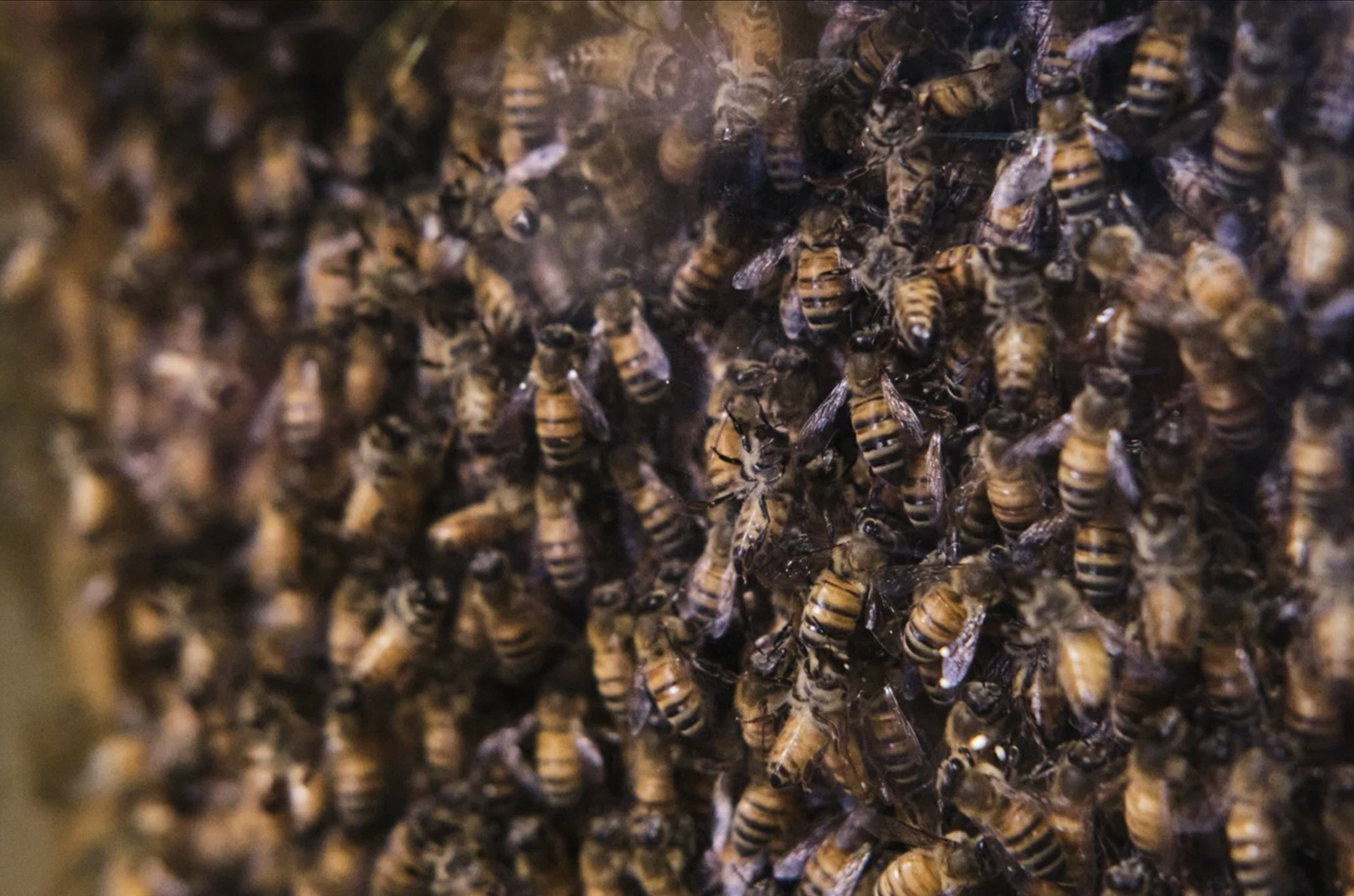
A bee hive hard at work at Messner Bee Farm; photo by Dominick Williams, Flatland
In hindsight, the couple said they might have delegated more quickly, such as outsourcing label manufacturing instead of doing it by hand. Still, some things they delegated were not handled, leaving them scrambling.
Their retail shop carries their products as well as bee and other nature themed items — jewelry, toys, stickers, stuffed animals, T-shirts, hoodies and tea towels from neighbor Green Bee Tea Towels.
Some of their products are also sold at Made in KC, Shop Local KC and Whole Foods Markets. They hope to start selling soon on e-commerce site Shopify, as well as increase their social media presence. Their mobile pop-up shop, Beeatrix the Trolley, still heads to events and serves as a promotional tool. They would also like to expand their Raytown shop and add an education center.
Rachael said she doesn’t want to make the business sound romantic or easy. The Messners work every weekend, missing out on social events, and sleep.
“It is really hard. But I wouldn’t want to do anything else,” Rachael said. “It is great to be able to create and make brands that people want to buy. The farm, the employees, the customers, the brand and products, and that we get to advocate for honeybees.
“We’re a small business. We know the future is unwritten.”
Flatland contributor Joyce Smith covered local restaurants and retail for nearly 40 years with The Kansas City Star. Follow her on X and Facebook at #JoyceKC, and Instagram and Threads at #joyceinkc.


2024 Startups to Watch
stats here
Related Posts on Startland News
Meat the moment with valor: Veteran cattle rancher deploys co-op model to save the Midwest cowboy
WESTON, Mo. — Almost a decade after launching KC Cattle Company — his veteran-owned and -operated wagyu beef company — Patrick Montgomery is forging a new path to help fellow ranchers and farmers survive. He’s now digging his spurs into Valor Provisions, a direct-to-consumer online marketplace offering premium proteins from small, independent, veteran-owned ranches like…
Student-raised meats graduate to university storefront as consumers look closer at what makes the cut
WARRENSBURG, Mo. — A new partnership puts pork chops, brats and select cuts from across farming projects at the University of Central Missouri in a retail storefront accessible to community members shopping for locally raised meat. UCM Farms — which spans more than 1,000 acres of farm ground within 10 miles of campus — is…

Nonprofit founder, tech people leader join Kauffman as trustees on shared mission: economic inclusivity
The year-long transformation of the Ewing Marion Kauffman Foundation continues this week as the influential philanthropic organization announced two new trustees meant to bolster its rebooted grantmaking strategy and commitment to driving equitable economic mobility in Kansas City. Newly appointed leaders to the Kauffman Foundation’s Board of Trustees, Aimée Eubanks Davis and Kristen Ludgate bring…
No cookie-cutter way to create an entrepreneur, so what’s the catalyst? Inside KU’s venture test lab
Editor’s note: The University of Kansas’ School of Business is a partner of Startland News. It’s a practical testing ground for KU students to flex their entrepreneurial muscles, Ryan Rains said, describing a business program built for could-be entrepreneurs who aren’t necessarily even business majors — and who, ultimately, might choose to abandon their concept…