

Growing movement by Black farmers seeds plan to honor land, ancestors while cultivating better health
April 19, 2024 | Taylor Wilmore
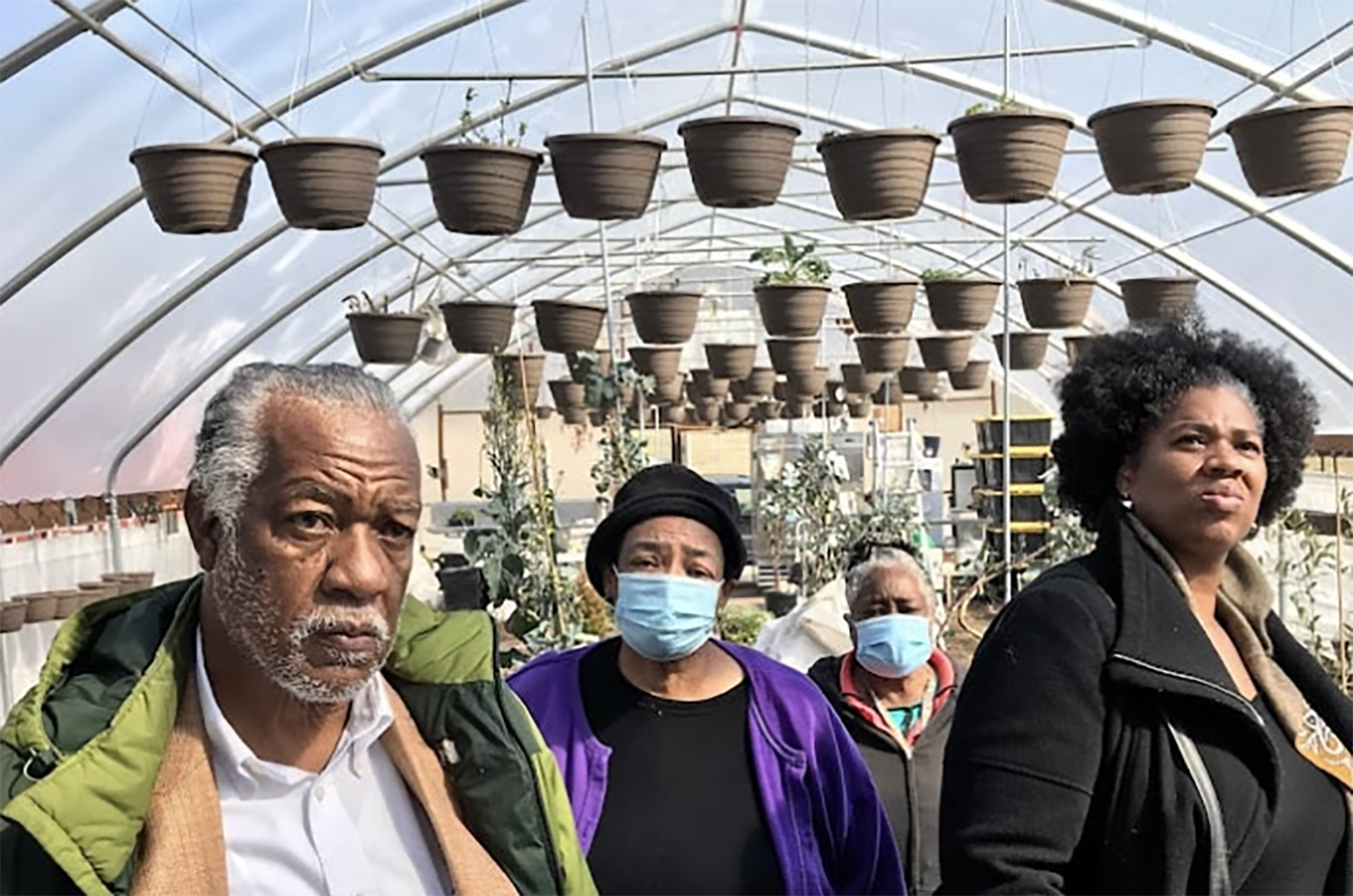
Dina Newman wanted to reclaim Black growers’ seat at the table — helping an overlooked community in Kansas City create their own healthy and affordable food systems to nourish themselves.
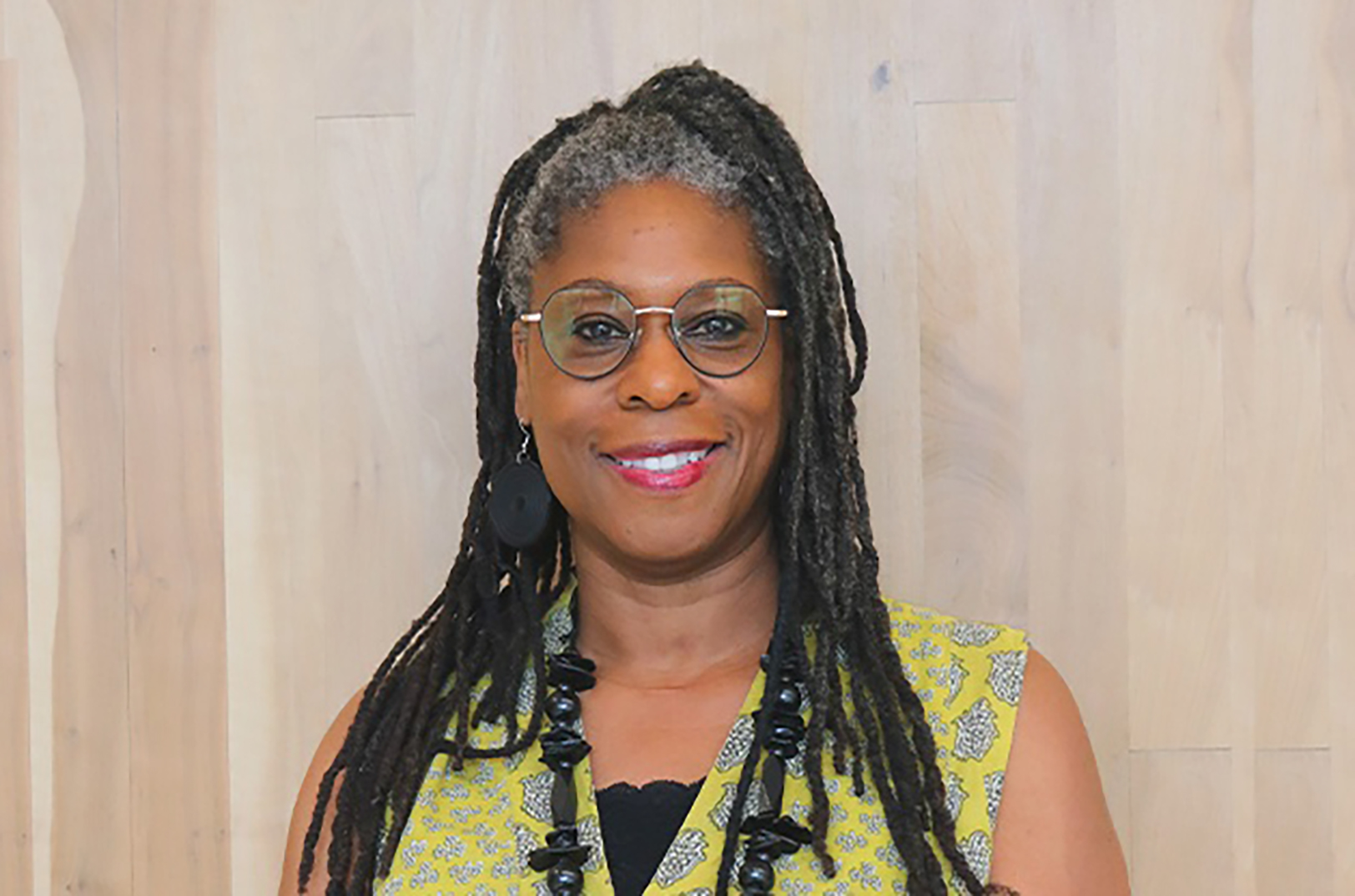
Dina Newman, Kansas City Black Urban Growers (KCBUGS)
“When I’m talking food system, I’m talking from a seed to plant,” said Newman, founder of Kansas City Black Urban Growers (KCBUGS). “When you look at that whole process, there’s not a lot of Black people involved on the industrial side of it. Without representation, our voices are not being heard.”
With many urban farms in the city’s predominantly Black third district — but with a disproportionate absence of Black farmers — KCBUGS aims to close that systemic gap by financially supporting growers, and offering workshops and training, she said.
“It’s our communities; we have to be there,” Newman said.
Given the disproportionately high rates of chronic diseases within the Black community, she also advocates for greater representation of Black growers in cultivating nutrient-rich food systems to enhance overall health and well-being.
“Food is medicine. We need to know where foods are coming from, how we’re growing our food, and how it’s been distributed to our communities,” said Newman. “Those are the foundations of having a healthy community, healthy families, and healthy lives.”
From the ground up
KC Black Urban Growers came to fruition in 2011 when Newman started her own small affinity group to create a shared community for Black growers. Noticing that Black faces were missing in the urban agriculture space, she and the group wanted to plant solutions.
“We were we were looking at, ‘What does the Kansas City food system look like? How do we make an impact? How do we feed our community and our families and ourselves?’” said Newman.
In 2022, she found herself discussing the need for a Black-led organization focused on agriculture during a panel discussion. Her words would catch the attention of a funder who saw the potential in her vision. KCBUGS officially became a nonprofit in June of that same year.
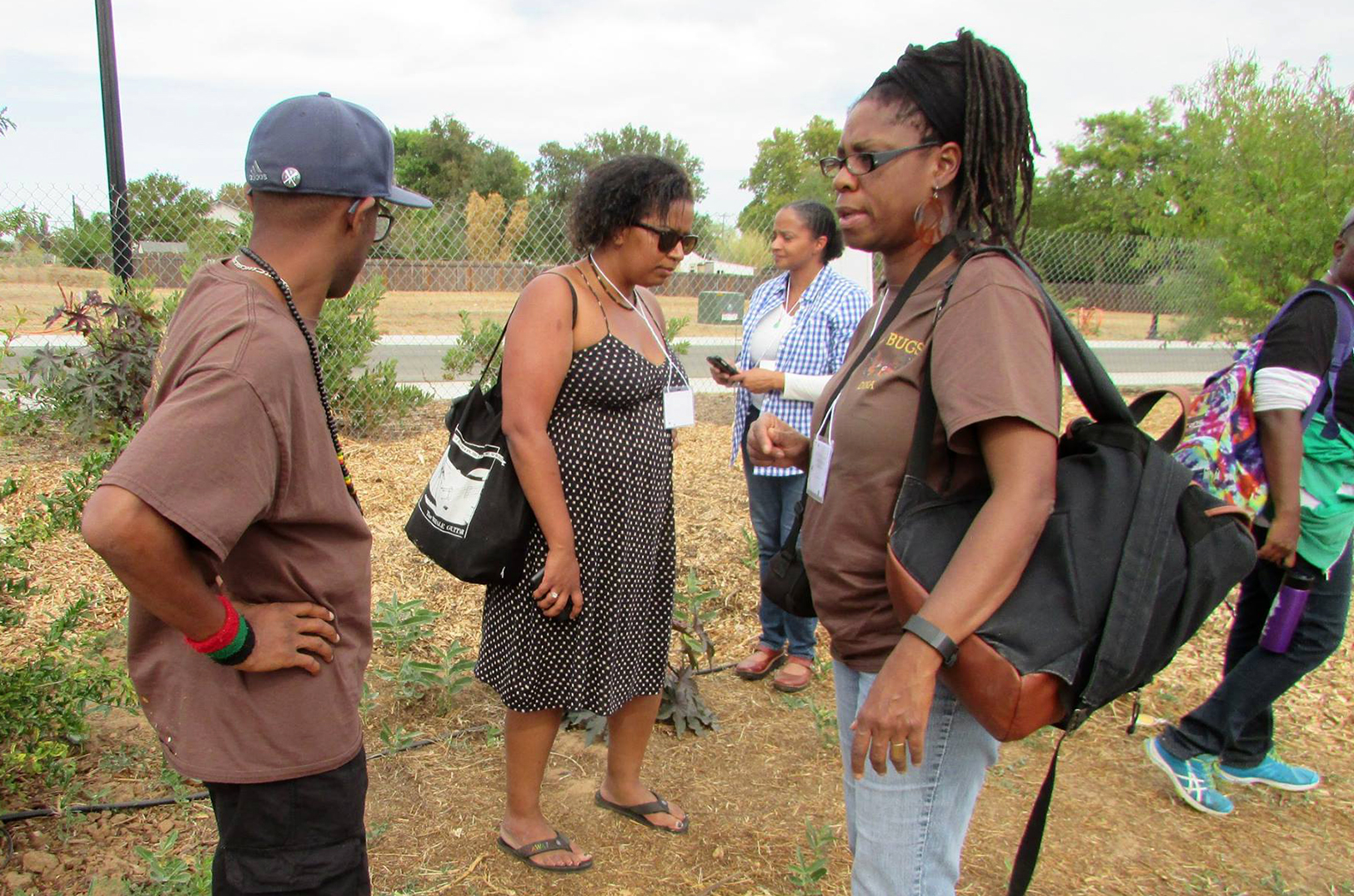
Dina Newman, right, leads a Kansas City Black Urban Growers (KCBUGS) farm tour
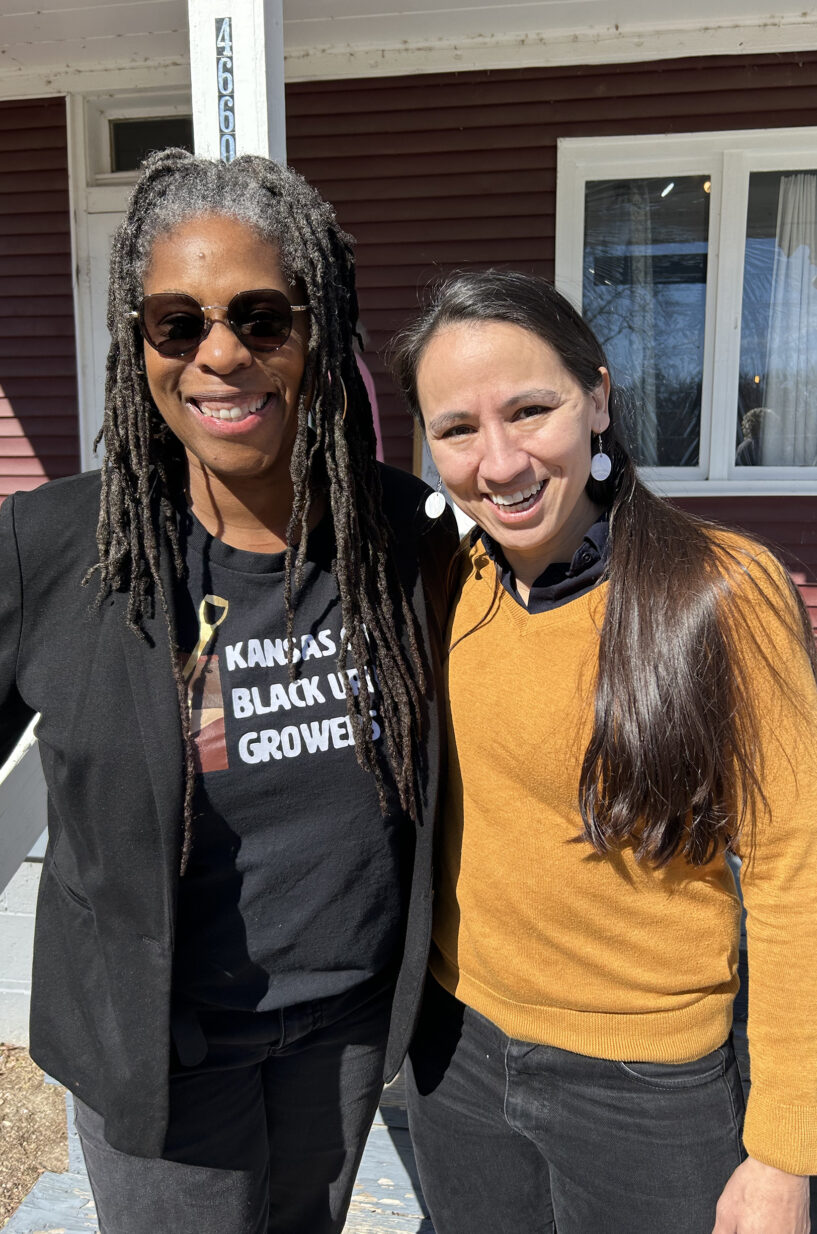
Dina Newman, Kansas City Black Urban Growers (KCBUGS), with U.S. Rep. Sharice Davids, D-Kansas
Plowing through barriers
Today, KCBUGS has about 85 members, ranging from individuals with just a single plant at home to those with acres of land. The organization holds bi-monthly meet-and-greet sessions with guest speakers to talk about topics that address the obstacles Black farmers might face.
“Land access is an issue. Funding is a huge issue,” said Newman. “Historically, Black farmers have been denied millions of dollars, and unfortunately, we’re still kind of seeing that trickle-down effect.”
In 1984-1985, the USDA allocated $1.3 billion for land acquisition, with only 209 out of 16,000 loan recipients being Black farmers. Missouri, which had 2,000 to 3,000 Black farmers in 1930, now has just 200 in 2024, according to Newman.
Through its grant program and meet-and-greets on grant writing, KC Black Urban Growers aims to provide much-needed financial assistance and resources for Black growers to materialize their farms and be able to purchase more land.
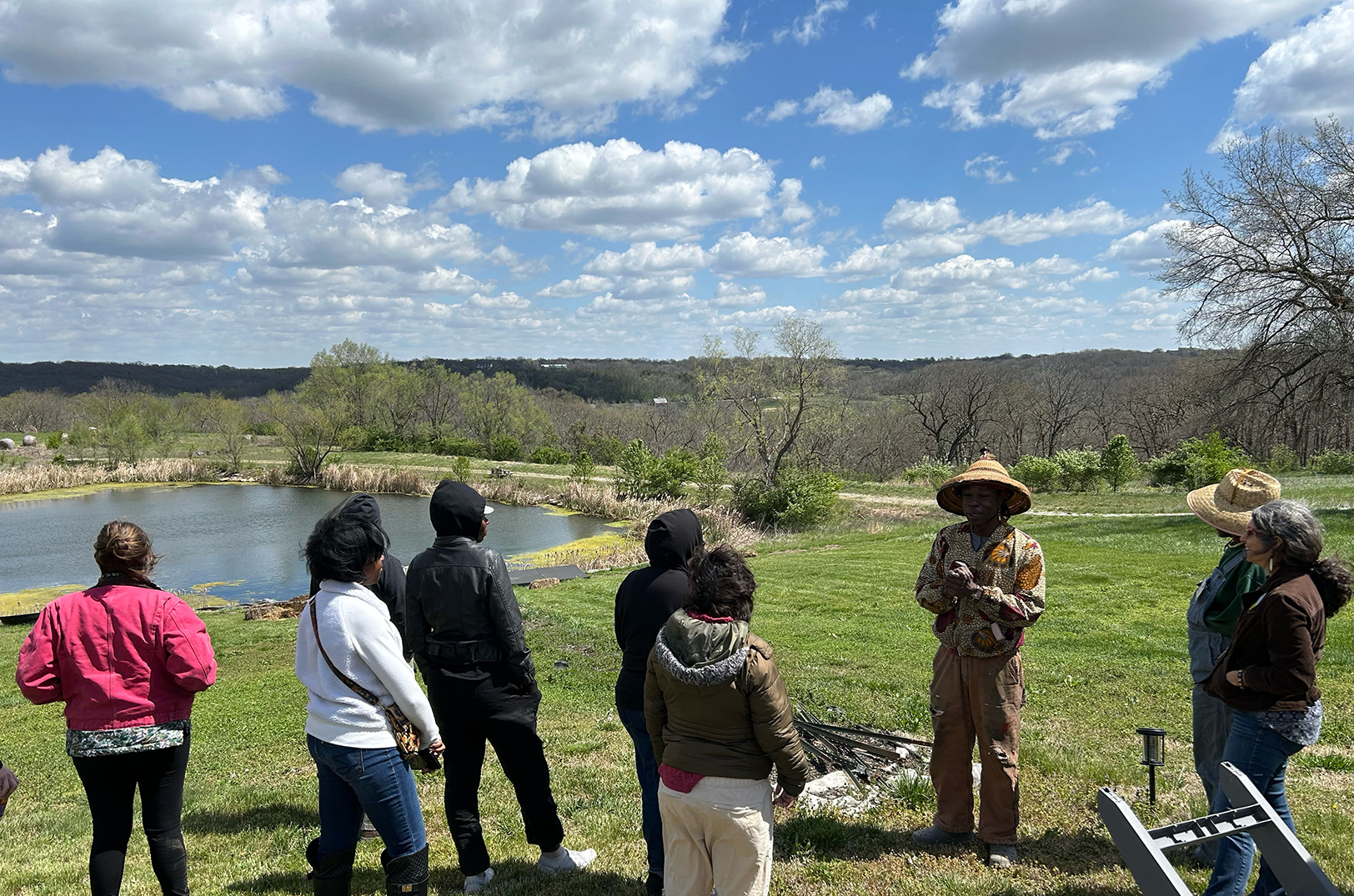
Members of Kansas City Black Urban Growers (KCBUGS) take a farm tour
Embracing cultural roots
As KCBUGS grows and expands, Newman is looking into the organization having its own location to be able to delve deeper into food education for farmers.
“I would love to be able to have on-site training with everything from food distribution, to learning how to can and process food, to medicinal food and how culture and creativity plays into our lives,” she said.
At the heart of KCBUGS, she believes Black farmers embrace “afri/agri-culture,” connecting culturally with the past by honoring the stories, growing techniques, and legacies of Black growers from the era of slavery to the present day.
“There’s this cultural aspect that I believe goes back to our ancestors, and we try to incorporate that in the work that we do,” said Newman. “We honor our ancestors, and we honor the land.”
For the future, she envisions making a space where all Black farmers, whether urban or rural, can enjoy access to resources, support, and opportunities to realize their agricultural dreams.

Featured Business

Taylor Wilmore
Taylor Wilmore, hailing from Lee’s Summit, is a dedicated reporter and a recent graduate of the University of Missouri, where she earned her Bachelor’s degree in Journalism. Taylor channels her deep-seated passion for writing and storytelling to create compelling narratives that shed light on the diverse residents of Kansas City.
Prior to her role at Startland News, Taylor made valuable contributions as a reporter for the Columbia Missourian newspaper, where she covered a wide range of community news and higher education stories.
2024 Startups to Watch
stats here
Related Posts on Startland News

Concerned tech leaders pen amicable yet stern letter on KCMO’s proposed Airbnb, Homeaway rules
An advocacy group representing the area tech industry has offered a series of concerns on how the City of Kansas City, Mo., could regulate home-sharing services like Airbnb or Homeaway. In a letter to the Kansas City Council regarding proposed regulations on homesharing, the KC Tech Council said the area now has an opportunity to…

Prairie Char, Integrated Animal Health sweep international ag, bio tech competition
Two tech firms based in Lawrence, Kan., swept the top awards at a recent national agriculture and biotech conference. Beating out more than 500 international competitors, Prairie Char and Integrated Animal Health snagged first and second place, respectively, at the North Carolina Biotechnology Center’s annual entrepreneurial showcase. “What this says is that Kansas is very…

Chris Brown: Where to Incorporate? Delaware, Missouri or Kansas?
Editor’s note: Opinions expressed in this commentary are the author’s alone. This article is general in nature and does not constitute legal advice. Readers with legal questions should consult an attorney. Entrepreneurs often think they need to incorporate in Delaware. In this article, we’ll look at whether that is the best decision (hint – often…
Vibrant clothing, mission guides socially focused startup By Grace Designs
A social impact firm with the mission to empower women in Ghana and India recently beat out more than 40 other firms to win the Regnier Venture Creation Challenge, earning it $20,000. Co-founded by Emily Moon and Kelsey Carlstedt in 2015, By Grace Designs is a nonprofit that sells handmade, culturally-authentic clothing online, offering vibrantly…