

Injuries pushed this dancer from the stage to his startup; ClassKid keeps his craft in the spotlight
April 16, 2024 | Katie Bean
Startland News’ Startup Road Trip series explores innovative and uncommon ideas finding success in rural America and Midwestern startup hubs outside the Kansas City metro.
[divide]
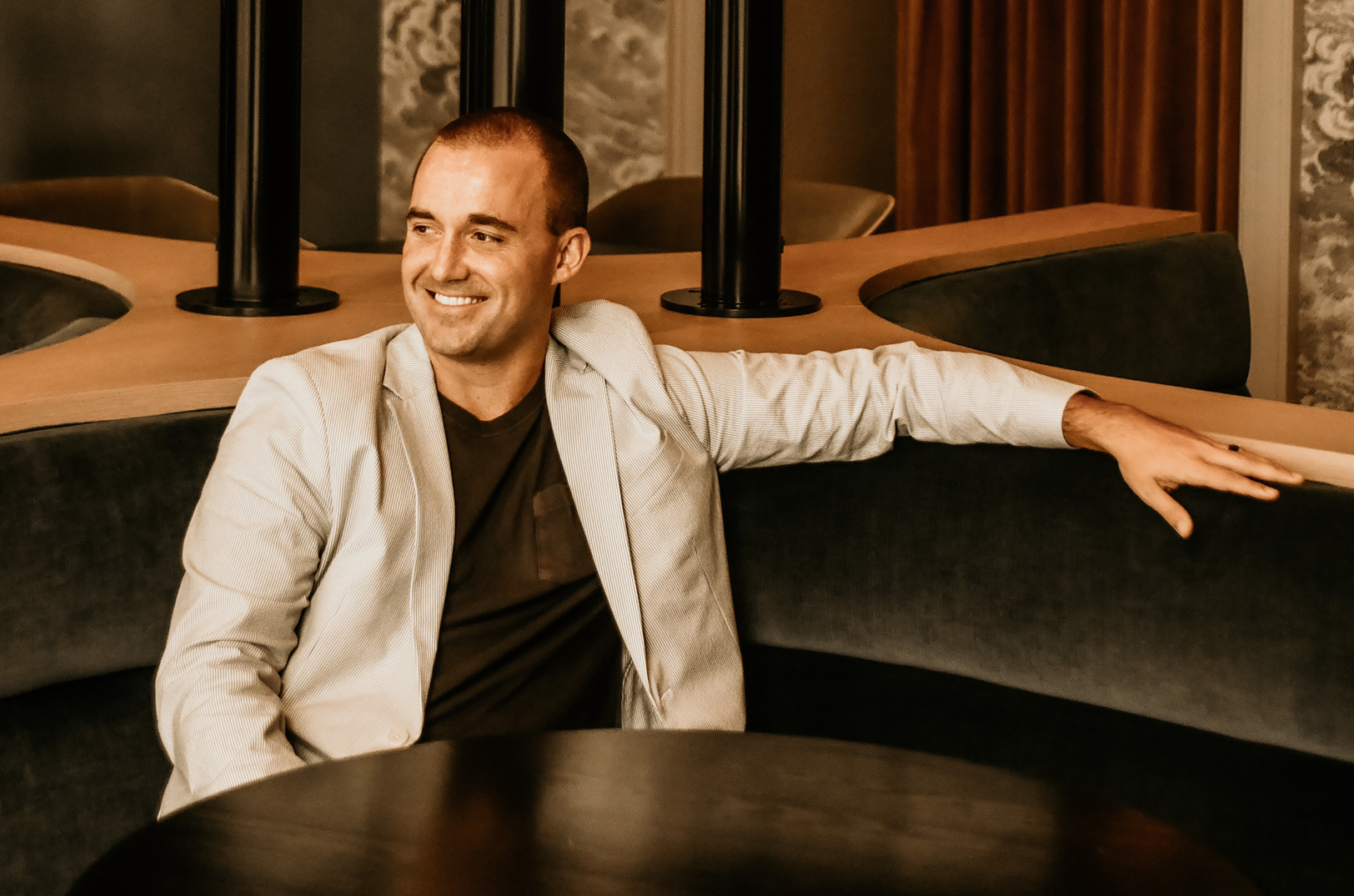
TOPEKA — A career as a professional dancer only momentarily upstaged Austin Roberson’s childhood ambitions to become an inventor, the Kansas startup founder said.
Roberson — the entrepreneur behind ClassKid, an end-to-end operating system for dance studios and other organizations — was tapped to play Danny in a children’s performance of Grease when he was about 10 years old and said he “just fell in love” with the arts. He continued dancing through high school and decided to bypass college to focus on his craft.
The aspiring performer’s dance career, however, was cut short by back pain and surgery in his twenties — sending Roberson into a second act that would see him revisit memories of chatting with his dad over the kitchen countertop about inventions he’d bring to market one day.
Ultimately, ClassKid took center stage.
In October, the Topeka-based startup closed a deal with a private equity firm. Though Roberson couldn’t disclose the terms, he said the support came at a pivotal moment, as he was facing burn out from the dance-infused tech venture.
“It was my father-in-law who said, ‘I think I heard a saying one time: Once you get to the end of your rope, you’re just supposed to let go.’ And it seems like the less I tried to control everything, the more people surrounded me and supported me.”
Now, he’s refreshed and ready to tackle new markets. After exiting beta mode, Roberson said, he plans to onboard anyone currently on the waitlist before entering a new niche of music schools. Next year, he plans to expand the platform internationally.
“I feel like we’re in a really good position to just go for it,” he said. “I’m glad I made it. But, you know, it’s not for the faint of heart.”
Back on the market
Roberson initially left dance after having cysts removed from his tailbone. He used his downtime to pursue a new skill — teaching himself digital marketing. With a new path ahead of him, Roberson was “in and out of college” at the University of Kansas, where he double majored in strategic communications and Spanish. Meanwhile, he found himself teaching at the dance studio where he trained growing up.

Austin Roberson, ClassKid
“So fast forward a few years, and I’m working at a studio, still trying to wrap up college, knowing I have a knack for digital marketing, kind of trying to figure out what to do with my life,” he said.
The studio owner, Roberson’s former dance teacher, asked him to apply what he had learned to come up with a marketing plan for her. His first project was a Facebook ad promoting a free drop-in class.
“It worked really well. I remember the first time somebody showed up with the free trial coupon, I remember looking at the owner, and she looked at me just so surprised that it actually worked,” Roberson said.
In the tight-knit circle of dance studio owners, word spread about his skills. By Roberson’s late twenties, he was helping more than 100 clients worldwide with digital marketing. As he delved further into this niche market, he found that “marketing software was nonexistent.”
“Fifty percent of the industry still to this day does not use software,” Roberson said. “It was an industry that hadn’t experienced much innovation in my lifetime. … I was the first growth marketer to really enter that niche. And it was the niche that I not only grew up in, but obviously a niche, therefore, that I just love and care a lot about. So I love the customer, and I love the fact that I was helping more kids experience what I would call a life-changing impact of community.”
Roberson discovered studios that were using software had to cobble together various tools for their websites, email and texting, but he said many of them were workarounds. He searched and searched for an all-around tool that would simplify the process to no avail.
“There’s really no CRM for kids’ activities,” he said.
Changing direction
It was clear Roberson would have to create the platform he wanted to offer, he said. His first attempt at a SAAS was called Studio Suite. Initially, it focused on the customer journey from lead generation to class signup and assessing the fit of the student with the studio. But Roberson quickly realized it was just another in a line of tools that studios would have to add on to email, texting, class scheduling and other subscriptions.
A turning point for Roberson and his business followed the onset of the COVID-19 pandemic, when studios were forced to shut their doors for in-person classes.
“And so people were like, ‘hey, we love this,’ but in the pandemic, it just wasn’t sticky enough to keep customers — because they didn’t need marketing if they’re closed,” he said. “That’s when we got the clarity around, well, what if, instead of just getting into the point at which they would buy another system, we actually become the system that would process those payments, that would take the class attendance, that you could essentially build classes and courses inside of it?”
When clients would call to cancel their subscription during the pandemic, Roberson said, he would offer the service to continue for free until they could open again. He also polled them about their software needs.
“They all said, ‘Yeah, I use seven tools, five tools, three tools,’ and they’re paying upwards of $500, $600, $700 a month in some cases on these subscriptions,” he said.
Roberson decided he had to create the tool his clients needed. He reached out to a friend who owned a dance studio.
“I said, ‘I want to build an all-in-one software,’” he recalled. “She said, ‘Hey, I believe in you. I trust you. Let’s start a business together.’ And so COVID and the hard times were actually the birth of ClassKid. And it’s a pretty cool story. … I used to think for a while coming out of COVID that I was a little crazy because, I’m like, ‘I’ve started this brand new business in a niche that is struggling.’”

Austin Roberson, ClassKid
Choreographing a solution
On top of the challenges his industry faced during the pandemic, Roberson was embarking on a major software build — and neither he nor his cofounder had coding experience.
Roberson viewed his role as a choreographer for the project, he said. He knew what problem needed to be solved, though in the beginning he didn’t know every step he would take to solve it. ClassKid required a different approach than Studio Suite in that he sought feedback early and often. The software is for kids’ activities of all types, from dance studios to gymnastics to daycares and preschools.
“We had the project estimated and it was coming out somewhere between $300,000 and half a million dollars just to do this thing,” he said. “And we’re like, OK, well, we love the industry, we want to do it. We know there’s a problem to solve. But before we do that, let’s see if anybody else feels this way.”
Roberson approached his current customers, explaining the idea and pre-selling discounted subscriptions.
“We gave them a link, and 125 kids’ activity centers went and paid for two years of a product that didn’t exist. And that’s when we said, ‘I think it’s a good idea. I think we should do this.’”
First, he worked with a team that took him through the discovery process, brainstorming and convening focus groups to determine the minimum viable product. From there, he said, they were able to see what resources were needed and worked with hiring agencies to build the team. Initially, he worked with a software house in Ukraine, but Roberson said he’s since brought all the company’s development jobs stateside because the time difference was a challenge.
Getting the project to beta stage in summer 2022 was formative for ClassKid, Roberson said. In testing, one of the modules presented a setback.
“When we designed the billing initially, we didn’t know what we know now,” he said. “And so we actually had to totally rebuild the billing module, and that took about five months.”
He’d hoped to launch more features throughout beta mode, he said, but instead, “we’ve tried to help the features that are there mature.”
“For us, if we’re going to have 5,000, 10,000, 15,000, 25,000 customers worldwide one day, it doesn’t matter how fast you ship stuff when you first went live with the product,” Roberson said. “What matters is that you’re going to live for a decade as a software company, you’re going to live long enough to serve those people and meet those numbers, and you have to have a high-quality solution to do that. We were very intentional about taking (2023), not releasing a lot of new features, but fixing and enhancing what’s already there. That was very intentional and looking back, I’m really glad we did it.”
He expects ClassKid to exit beta mode this fall.
[divide]

This series is possible thanks to Go Topeka.
Go Topeka seeks economic success for all companies and citizens across Shawnee County through implementation of an aggressive economic development strategy that capitalizes on the unique strengths of the community.


2024 Startups to Watch
stats here
Related Posts on Startland News

Tesseract pairs one-button robotic badge with real-time, multi-industry workforce tracking
A new site management platform — complete with wearable robots designed to automatically document work as it happens — is expected to help construction, infrastructure, and military teams gain real-time clarity across their projects and workforce, said John Boucard. “Instead of relying on spreadsheets, manual reporting, or guesswork, leaders now have continuous visual and sensor…

LISTEN: KoraLabs connects AI to the field, helping agtech grow a more sustainable future
On this episode of our 12-part Plug and Play Topeka podcast series, we speak with Luca Corinzia of KoraLabs — an agtech pioneer based in Switzerland that’s bridging the gap between scattered farm data and actionable insights. KoraLabs’ AI-driven “digital twin” platform integrates field data, satellite imagery, soil and weather models to help agronomists and…
10 top event picks for GEWKC; build your own schedule from 60+ sessions
With dozens of events on the calendar for GEWKC, Union Station will be bustling with activity, said Callie England, noting organizers intentionally curated a week where attendees can’t go wrong — no matter how they fill out their itinerary. “While the schedule can feel full, it’s truly the best of the best,” said England, director of…

How AI changes the the founder code: ‘This is all moving faster than anyone expected’
New tech opportunities — like artificial intelligence — hold the potential to equalize the Kansas City region among more established startup hubs, investment leaders said Thursday, but to fully take advantage, entrepreneurs who want strong, lasting companies must have a fire inside them. Not to mention grit. “Several really incredible entrepreneurs said, ‘I think the one…