

Deep fake election ahead: Prepare for AI-generated misinformation arms race, warn KC experts
March 7, 2024 | Nikki Overfelt Chifalu
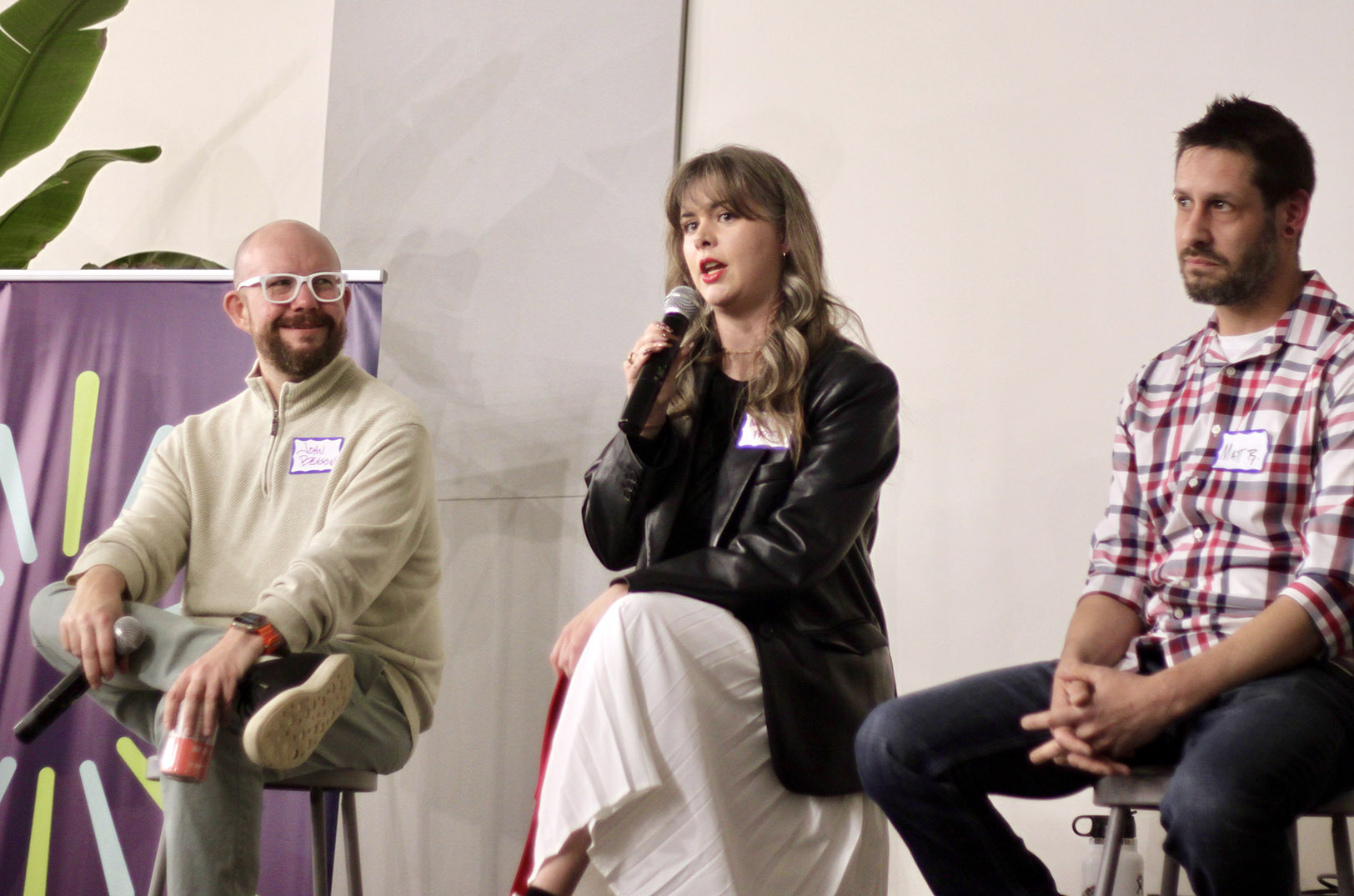
With the deployment of AI-generated content rapidly advancing just as the U.S. hurtles toward one of the most divisive election seasons in its history, developer Michelle Frost offered two words of advice: buckle in.
“It’s gonna be a shit show of a year as an election cycle,” the Johns Hopkins artificial intelligence grad student told a crowd gathered Tuesday for the Kansas City AI Club, “because we have tools that didn’t exist in the last [presidential election] — not that they didn’t exist — but they weren’t being as utilized and people are using them now.”
“Think of the misinformation that’s come across the past two presidential campaign seasons and amplify that,” added Frost, a developer at Kansas City-based Crema. “Right now, there’s not really a great way for an individual to decide if something has been AI generated or not.”
The looming election was just one of several AI-infused topics tackled by Frost and fellow panelists — John Benson, solutions architect at Stinson LLP; Matthew Rodriguez, application security engineer at Children’s Mercy Kansas City; and John O’Byrne, security counsel and chief risk officer at National Advisors Trust — during a conversation on “Balancing Ethics, Privacy, and Security in the Age of AI” at the Keystone Innovation District. The panel was moderated by Alex Colley, co-founder of the digital marketing agency dameSpeak, and featured an appearance by Wilbur, Frost’s dog.
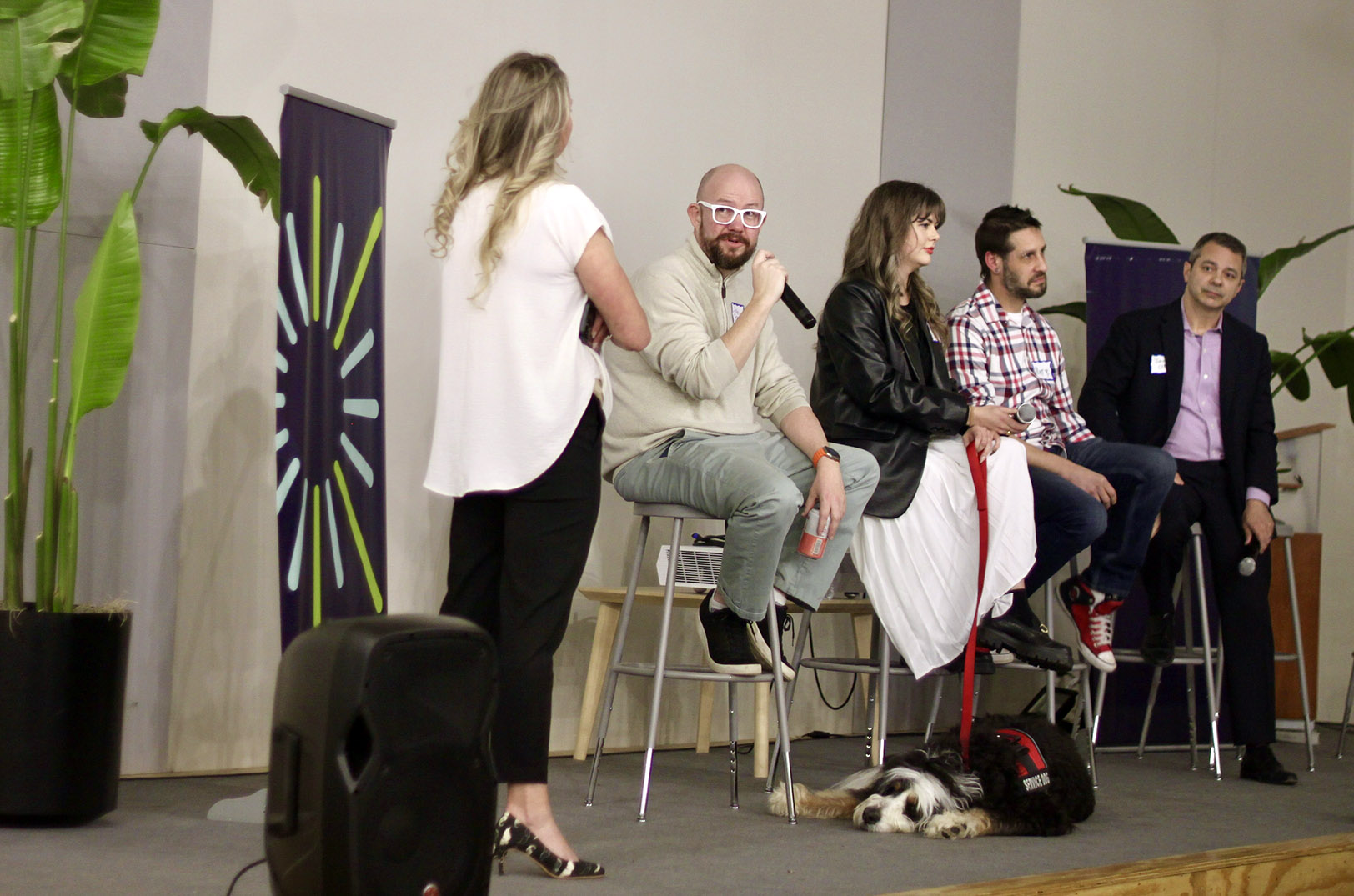
John Benson, Stinson LLP; Michelle Frost, Crema; Matthew Rodriguez, Children’s Mercy Kansas City; and John O’Byrne, National Advisors Trust; appear during a Kansas City AI Club conversation on “Balancing Ethics, Privacy, and Security in the Age of AI”; photo by Nikki Overfelt Chifalu, Startland News
In the 2016 and 2020 campaign cycles, Frost continued, there already was plentiful textual misinformation that people automatically believed. This election will add a visual element thanks to AI tools. For example, she mentioned the AI-generated “swaggy” images of Pope Francis that went viral on social media in summer 2023.
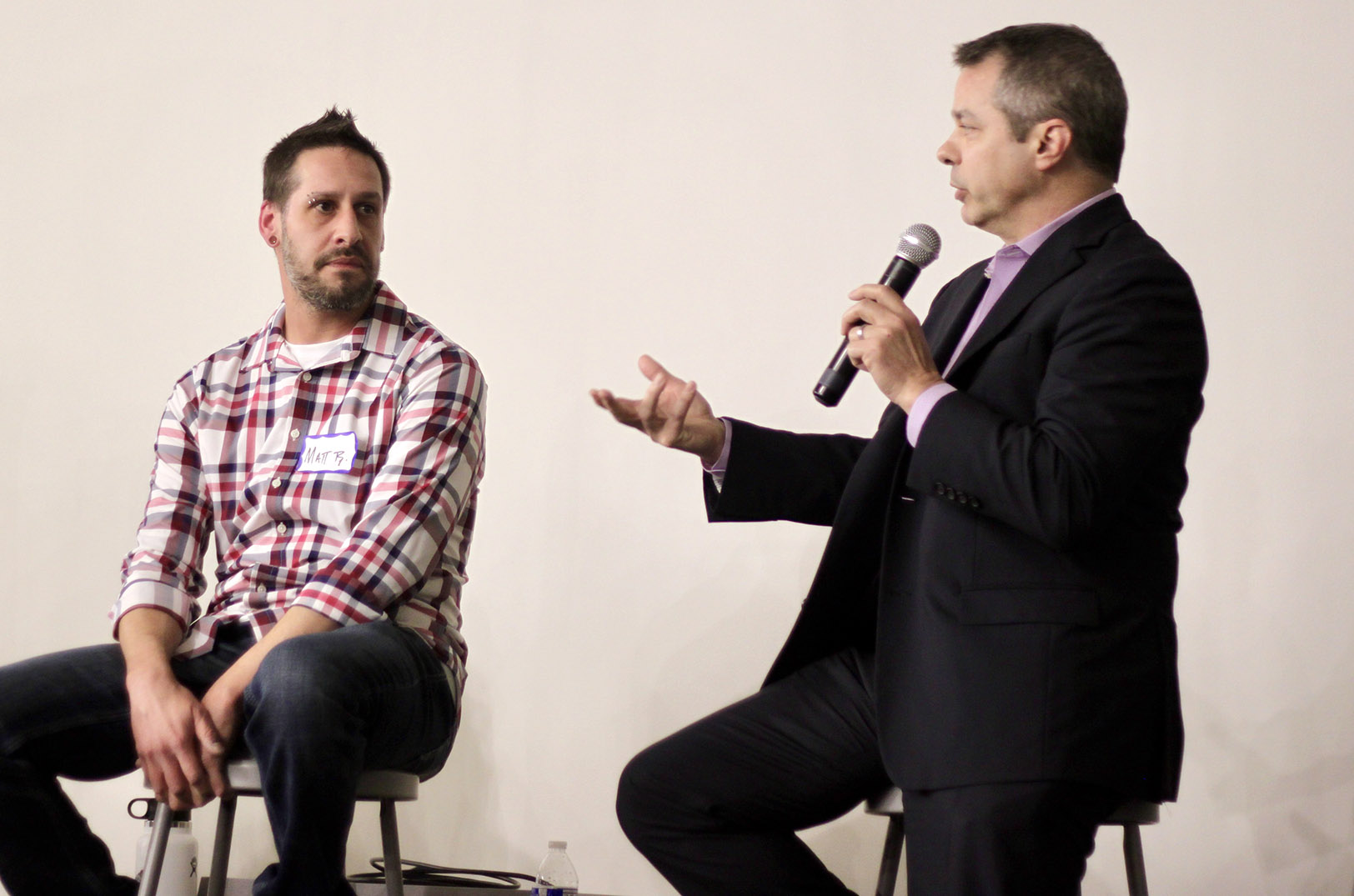
John O’Byrne, National Advisors Trust, speaks during a Kansas City AI Club conversation on “Balancing Ethics, Privacy, and Security in the Age of AI”; photo by Nikki Overfelt Chifalu, Startland News
“We all laughed about it; it was a really great image,” she explained. “But if you sat back and you thought about it, you’re like, ‘Yeah, that’s obviously AI-generated because the Pope has a binary character.’ Because we know what to expect of a Pope’s character and so we can guess that he’s not walking around with a $5,000 puffy jacket. But most of us don’t have a binary character. The presidential candidates certainly don’t. So it would be very easy for someone to generate something [that is believable to many Americans].”
ICYMI: Apple co-founder tells Kansas crowd: The real threat from AI is misinformation
While it might be easy for some people to discern that a photo is a fake, Frost noted, many will believe what they see.
“It comes down to responsible usage,” she said. “There’s an arms race for determining what is AI generated and what is not.”
“The thing that scares me, politically,” O’Byrne added, “is that because of the misinformation and because of the acceleration of the technologies and the things it is able to do, are we continuing to bifurcate the country and soundproof the two echo chambers that are currently in existence? It saddens me to watch that happen to our world.”
According to Benson, he believes the Russians — who have been accused of spreading misinformation in the two most recent U.S. presidential elections — will also play a part in this election cycle, noting their playbook in 2020 looked a lot like their Cold War strategy detailed in the “Long Telegram” sent by then-U.S. Diplomat George Kennan in 1946.
“They’re people of pattern,” he explained. “I think they’re gonna do the exact same thing, except with the other technology. It’s scary. But honestly, I think I’d be more worried, if I didn’t think that everybody has already made up their minds.”
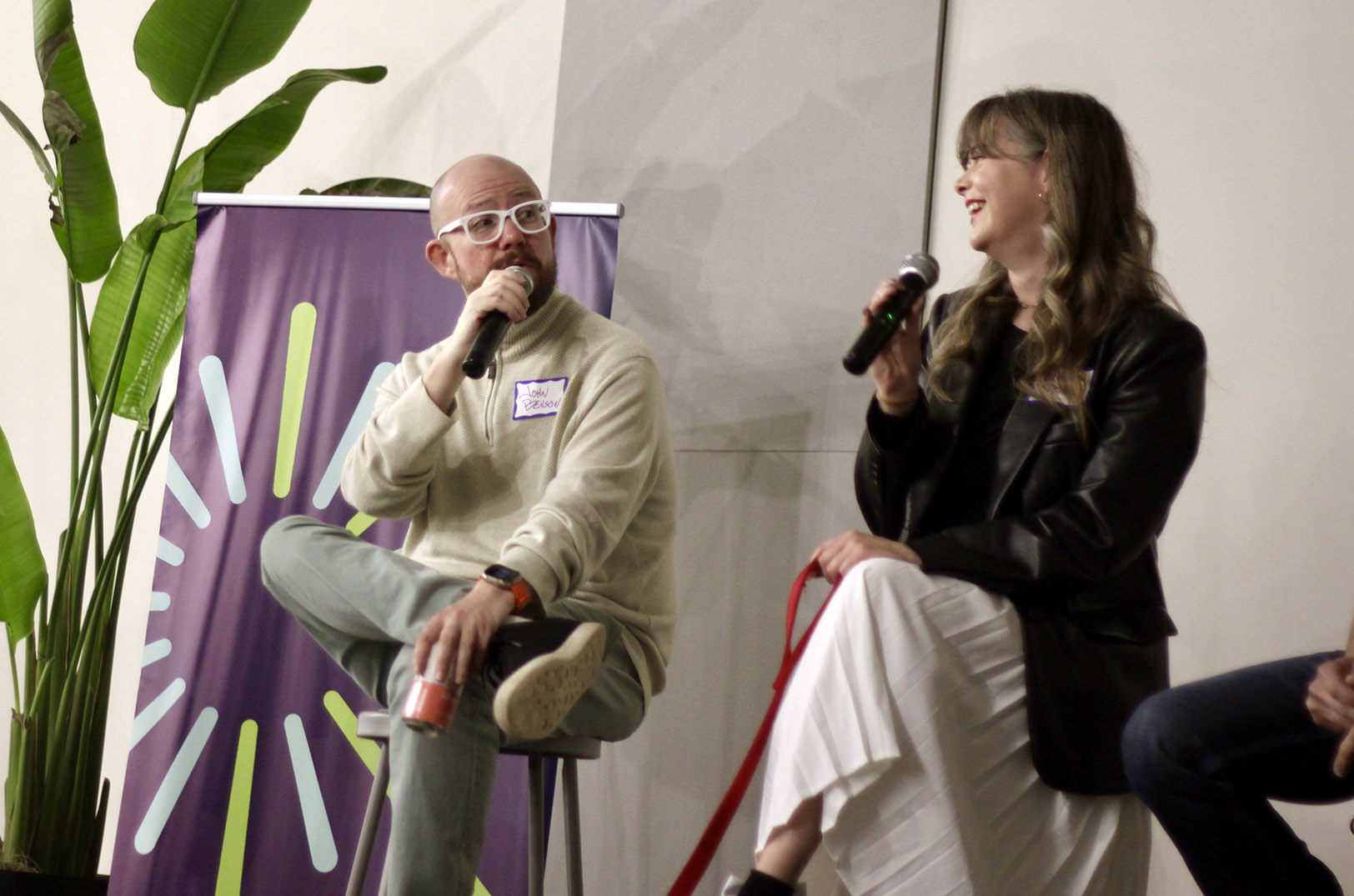
John Benson, Stinson LLP; and Michelle Frost, Crema; share a laugh during a Kansas City AI Club conversation on “Balancing Ethics, Privacy, and Security in the Age of AI”; photo by Nikki Overfelt Chifalu, Startland News
Despite the doomsday talk, Frost shared, she’s a pragmatic optimist when it comes to AI and wouldn’t be in the field if she didn’t believe in the great things that can be done with the technology.
“I think that we do need to focus on that,” she said.
But that also means people in tech must shepherd advancements down the right paths, Frost continued.
“It comes down to these types of conversations, right?” she explained. “Where we’re critically thinking and we’re saying, ‘Do we have the solutions? No. Can we get the solutions? Maybe. Should we be thinking about them? Yes.’”
“And it is going to change,” Frost added. “Everything changes really quickly. That’s what being human is. So it just comes down to us adapting, but then also not turning a blind eye either.”

Featured Business

2024 Startups to Watch
stats here
Related Posts on Startland News
WillCo Technologies hiring 90 people after snagging energy-saving patent
The average american household wastes up to 61 percent of its energy input. Kevin Williams, CEO of WillCo Technologies, said that this is because of the way electrical grids are designed. Although the average consumer requires significantly less power during school and work hours, the grid keeps energy limits consistently high in order to sustain through…

Startland goes to Ireland with the Pipeline fellowship
This week, Startland News is traveling to Ireland with the Pipeline entrepreneurial fellowship program. Startland News editor-in-chief Bobby Burch is with the group as it hosts its finance module — in Belfast, Northern Ireland, and Dublin, Ireland — and celebrates its 10-year anniversary. Check out the video below for more information on the trip!
Meet Techweek Kansas City’s 2016 LaunchKC winners
After a morning evaluating 20 pitches at Union Station, a panel of LaunchKC judges revealed the 10 startups that each snagged a $50,000 grant. LaunchKC — which distributes $500,000 via 10, $50,000 non-dilutive grants — drew more than 400 tech startup applicants for the second year in a row. The 20 finalists included 11 from…

KCUR and Startland chat Techweek, Kansas City entrepreneurship
Startland News editor-in-chief Bobby Burch hopped on KCUR’s Central Standard to discuss Techweek Kansas City and challenges facing area startups. Listen to the conversation below. Special thanks to KCUR for sharing its content!