

Quick studies: These Kansans just left their college careers for $500K (and a crash course in startups)
March 12, 2024 | Nikki Overfelt Chifalu
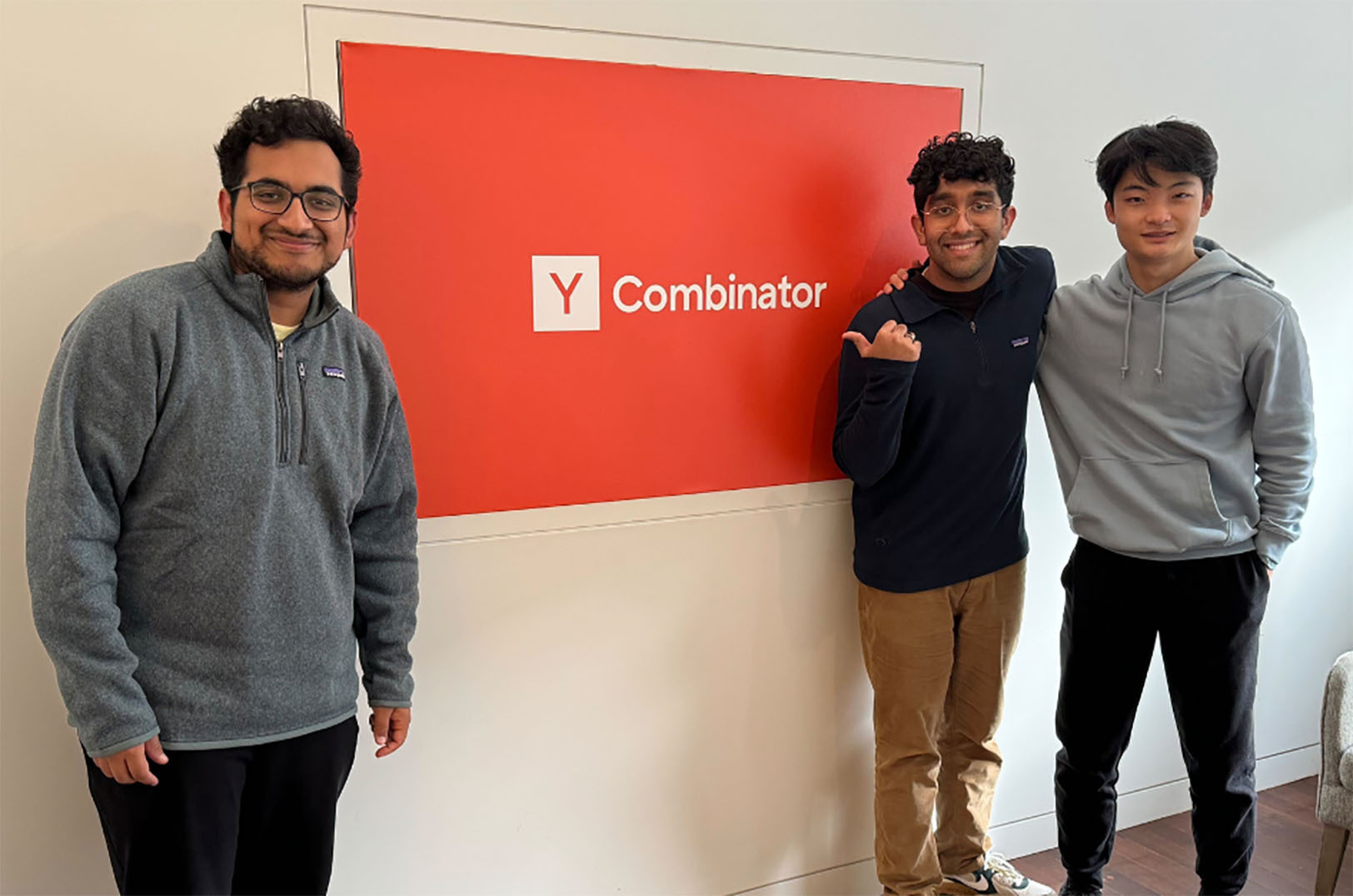
When a friend encouraged Aditya Joshi and Varun Verma to apply for the Y Combinator accelerator program, the Wichita natives didn’t expect to land an interview, they shared — much less get accepted.
“Truly, all we had was this idea and a couple of months under our belt of just talking to different folks,” Joshi explained, noting the idea they pitched wasn’t even the startup they’re now launching. “So when we got in, we were completely shocked.”
Berkeley, California-based Blume — an administrative automation platform for health insurance brokers founded by Joshi, Verma, and Ethan Hou — is in the latest class for the Y Combinator startup fund and accelerator program, which has been used to launch 4,000 companies including Airbnb, DoorDash, Stripe, Instacart, Dropbox, and Coinbase.
The combined valuation of Y Combinator companies is more than $600 billion, according to the funder, which offers programs and resources that support founders throughout the life of their companies.
Click here to learn more about Y Combinator’s standard deal, which invests $500,000 in exchange for 7 percent of a participating company, plus an incremental equity amount that will be fixed when it raises money from other investors.
“It’s also a no-brainer,” Joshi said of joining the accelerator. “This has been all three of our dreams to build a startup.”
“So having the opportunity to learn from the people that have done it themselves — and then also funded thousands of successful companies — it seems like the obvious decision to just take the leap and do whatever we needed to to join the batch and keep learning,” he added, noting the the trio have stopped taking classes at Cal-Berkeley to focus on the startup.
Click here to read more about Blume.
Verma — who grew up on the same street as Joshi and ran an esports company with him while at Wichita East High School — said they’ve already had the opportunity to hear from and speak with the founders of Airbnb and Instacart.
“Learning their stories is always great and very inspiring,” he added.
The accelerator program also gives them the advantage of connecting with a wide cross-section of experts, he noted.
“There’s a lot of really talented engineers that have spent a lot of time at big tech companies and also building infrastructure from scratch,” he explained. “Us being much younger, speaking to these more talented engineers is really necessary at this stage.”
Blume beginnings
With his parents as doctors — and his own experience studying to join the profession — Joshi knew that healthcare would be an interesting and impactful vertical for a startup, he shared. And through his internship last summer at one of the country’s largest health insurance companies, he realized the software in the space was lacking.

“We were comparing that with the software at other big tech companies that Varun and Ethan had worked at and it just seemed like a huge disparity,” he said.
So the trio spent last semester talking to anyone they could in the insurance space, Joshi noted, including carriers, brokers, and employers.
“(We wanted) to figure out how they’re interacting with the insurance ecosystem and where the biggest gaps are, especially with the new onset of AI tools,” he explained. “Where can we start filling in those gaps and making people’s lives easier?”
After pivoting to working with brokers instead of dealing with all the red tape involved in their initial idea, the Blume software they are building will save brokers — on average — 9 hours a week of manual data entry, according to the startup’s website.
“They have to do a ton of manual and redundant workflows,” Joshi explained. “We’re building software that helps them automate all of those workflows. So that they can spend time dealing with their customers, helping them save money, rather than just inputting data back and forth between four or five different platforms.”
Right now, Joshi noted, they are working with brokers to determine their largest pain points to build out the software. The co-founders want to launch the platform in the next couple of months and aim to have their software in 500 different agencies by the end of the year.
“We’re hoping to have a lot of those be in Kansas,” he added. “Because there’s a ton of brokers in Kansas, which is also why we have looked to — after the (Y Combinator) batch — be back home and be where our users will be.”
This story is made possible by Entrepreneurial Growth Ventures.
 Entrepreneurial Growth Ventures (EGV) is a business unit of NetWork Kansas supporting innovative, high-growth entrepreneurs in the State of Kansas. NetWork Kansas promotes an entrepreneurial environment by connecting entrepreneurs and small business owners with the expertise, education and economic resources they need to succeed.

Featured Business

2024 Startups to Watch
stats here
Related Posts on Startland News

Zee underscores artists’ need for positive venues; creative powerhouse opens pocket of support
Zahra Briggs developed her creative voice in Kansas City; now she’s setting the stage for fellow independent artists who struggle to find venues that match their vibe — and often have to pay to perform. She’s even creating a version of herself in the metaverse to open access further. A singer and songwriter herself, Briggs — who…

MyAnIML earns NSF funding, patent; now facing new phase of growth with industry validation
Thanks to a recent federal grant — along with a newly secured patent on its first-of-its-kind, proprietary facial recognition tech for cows — MyAnIML is proving its place as a leader within a herd of ag innovation, Shekhar Gupta said. The Overland Park startup received a 250,000 Phase I grant from the National Science Foundation…

KC’s next LGBTQ+ space wants to be more than just a raging club; How this permanent takeover aims to better reflect queer nightlife
Westport nightlife is set for transformation as a sweeping expansion adds seven late-night hotspots to the historic entertainment district — anchored by a new bar catering specifically to Kansas City’s LGBTQ+ community. Q Kansas City — a collaboration with Lance Pierce of Queer Bar Takeover — is expected open its doors in October at 504 Westport…

Chef brings Urban concept back to Troost; $25K GIFT grant boosts fight against gentrification
Chef Justin Clark’s latest venture — an eatery that blends Asian and soul food influences — aims to not only blur the boundaries between menus, but break down dividing lines within and between communities. “The goal was to create familiar items that everyone actually can relate to as Americans, but then again, we add some…