

Looking for the right exit? Driven founders first must know their startup’s destination
February 7, 2024 | Nikki Overfelt Chifalu
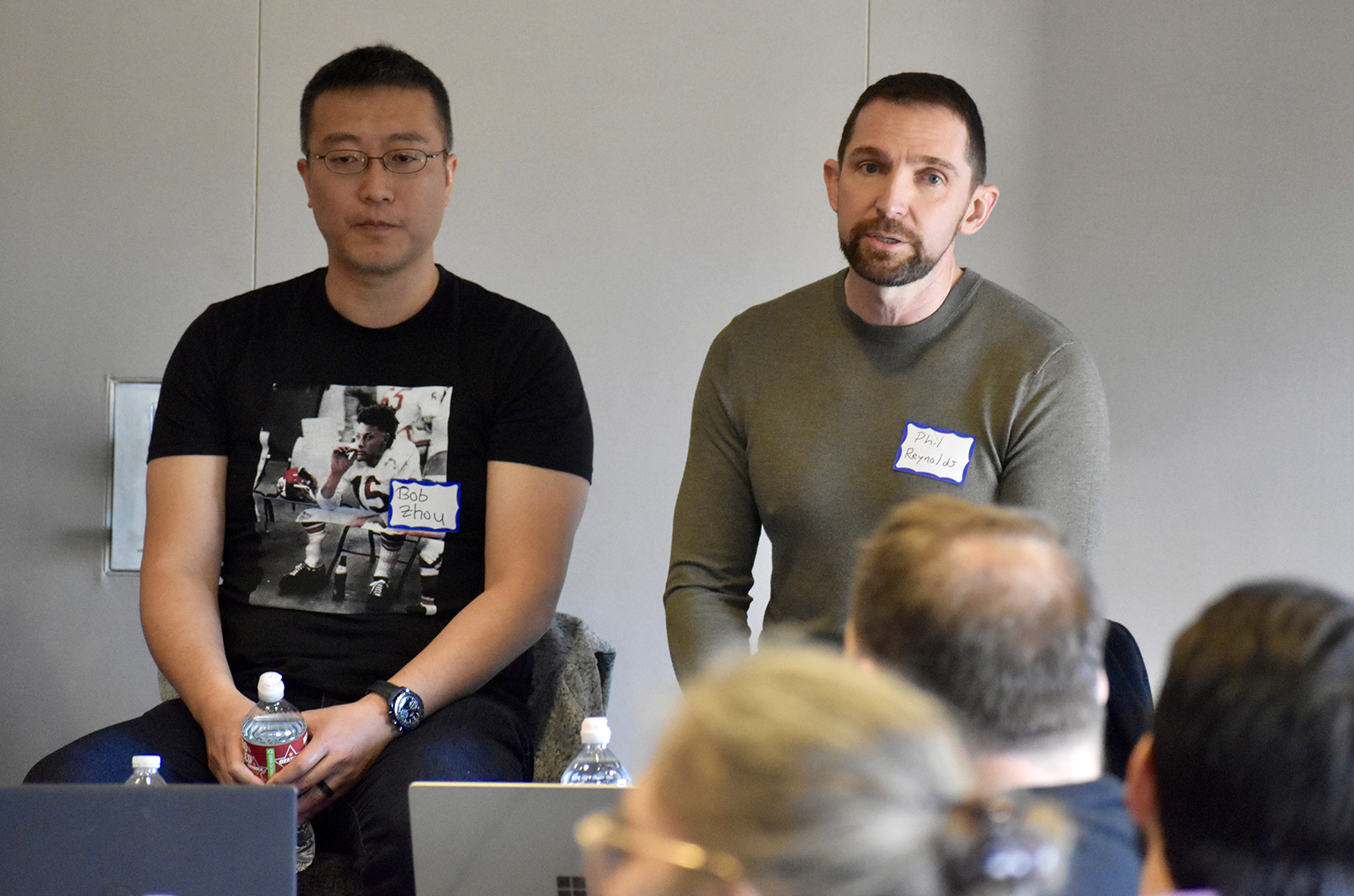
Setting an exit goal early is crucial when founding a startup, shared Robert Zhou, a Kansas City serial entrepreneur-turned-angel investor.
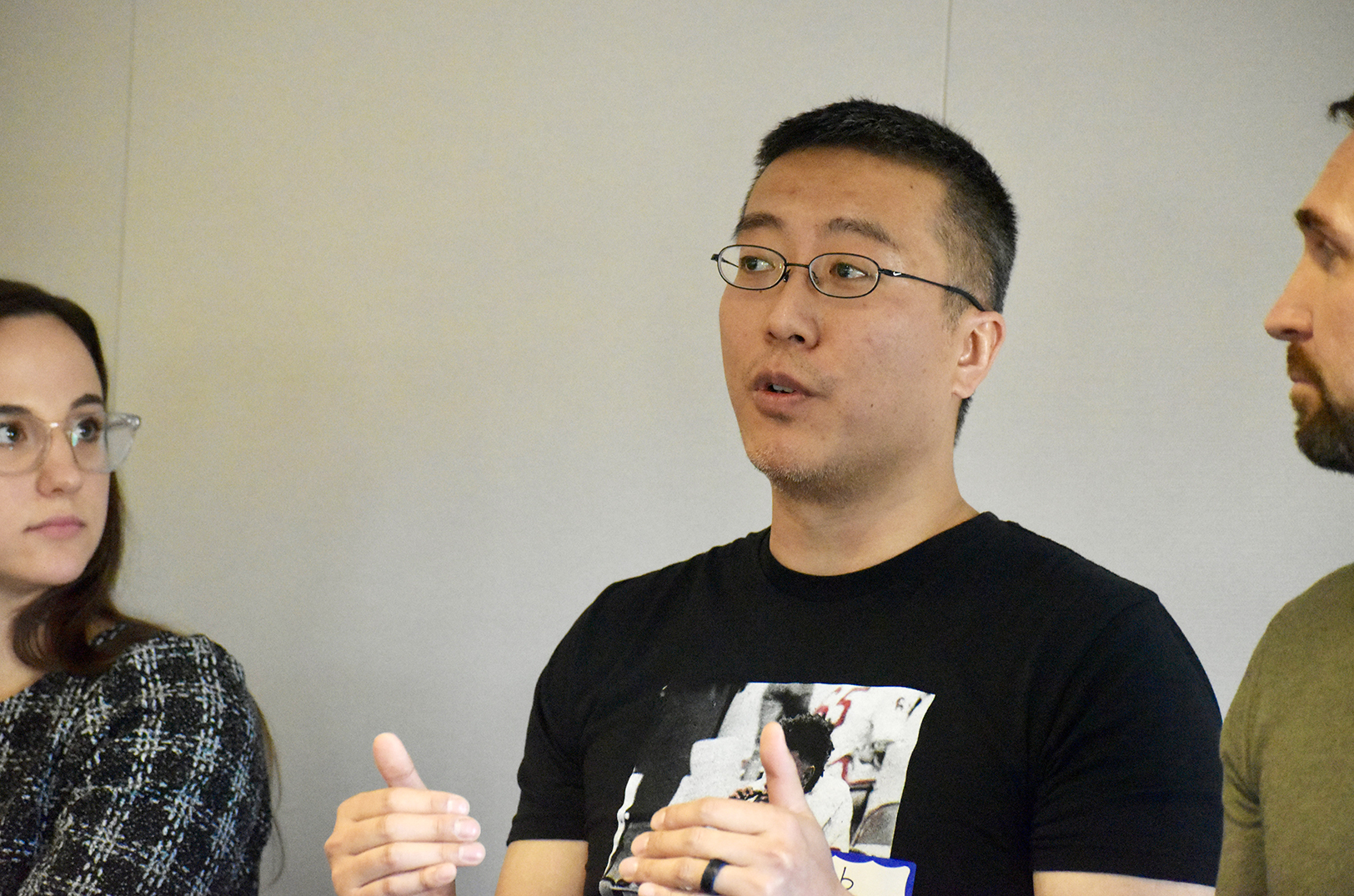
Robert Zhou shares insight from his startup’s exit during a UMKC Technology Venture Studio Sound Byte panel on preparing for mergers and acquisitions at Husch Blackwell; photo by Nikki Overfelt Chifalu, Startland News
“Every startup I mentor, I ask the founder this from Day 1: ‘What’s your goal?’” he explained. “‘Are you trying to build a business that you ultimately sell for $10 million? Is it $1 million? Is it $100 million?’ So the answer that the founder gives is really, really critical. Because if you think about the strategy of building a $500 million company versus $50 million versus $5 million, it’s a completely different landscape, completely different approach.”
“The strategy and approach of your whole entire life cycle really depends on this key question of where you want to exit,” he added.
Zhou — who has navigated multiple successful exits, including those of Red Nova Labs and Legalfit, which had a combined enterprise value of over $100 million — offered his insight Tuesday during a UMKC Technology Venture Studio Sound Byte panel on preparing for mergers and acquisitions at Husch Blackwell’s local headquarters on the Country Club Plaza.
Tuesday’s conversation also included Phil Reynolds, co-founder and CEO of DevStride, and Paige Reese and Gabriel Riekhof, both associates at Husch Blackwell, a startup-friendly law firm with offices in Kansas City.
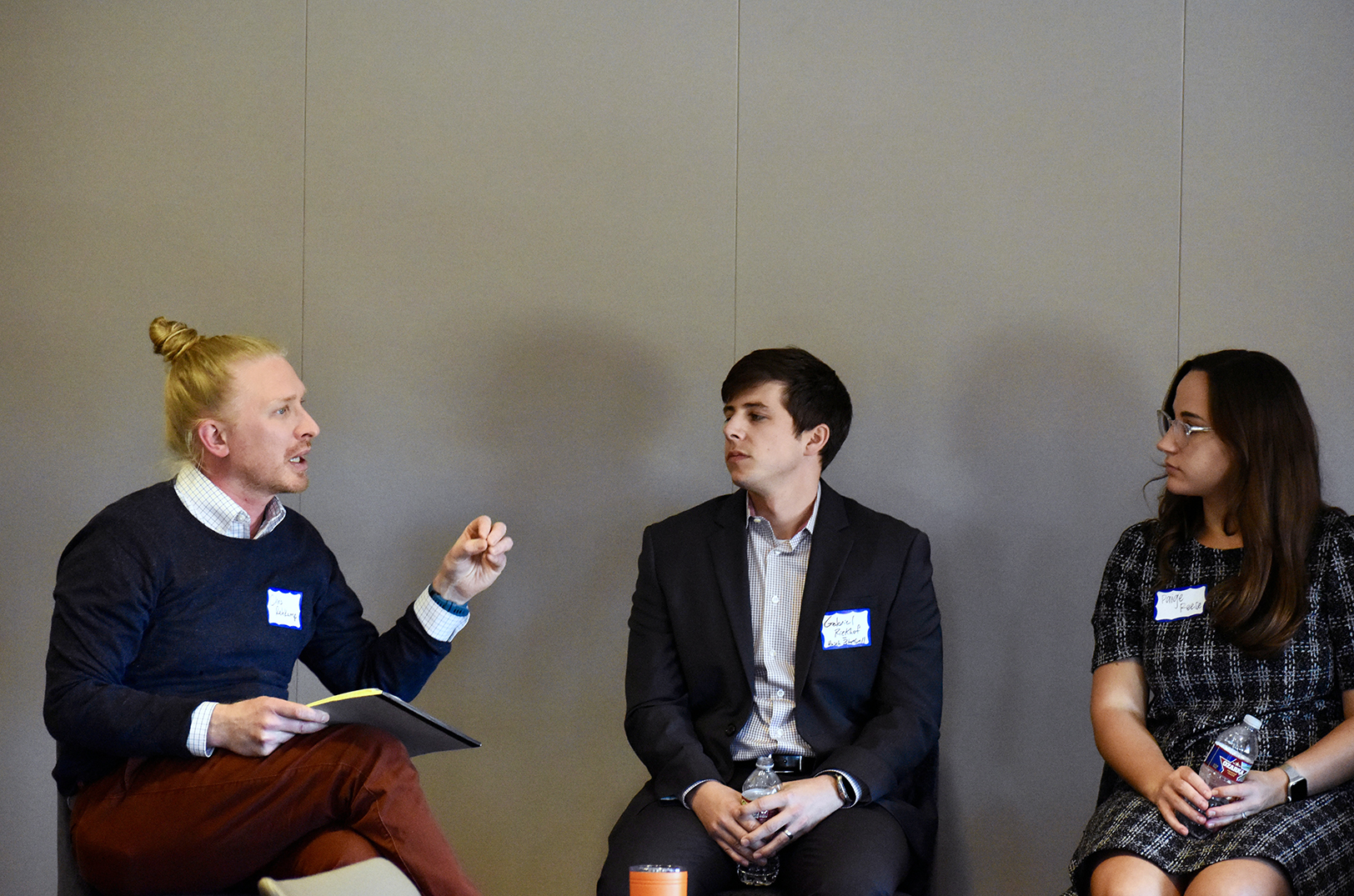
Chris Rehkamp, Tech Venture Studio, moderates a panel conversation alongside Gabriel Riekhof and Paige Reese, both of Husch Blackwell; photo by Nikki Overfelt Chifalu, Startland News
“I agree very much that your exit horizon matters a great deal,” noted Reynolds, who navigated an exit with his previous startup BriteCore. “If you’ve accepted capital from an outside firm, their exit horizon matters more than yours. They get to tell you when you exit, so you need to understand that.”
Planning that “ending” is just one of several steps a founder should take early in the life of their startup to prepare for an exit, according to the panelists. It’s important for founders to begin shaping the narrative of what they are hoping to accomplish, Reynolds said.
“The people who are likely to acquire you are going to be following along,” he explained. “Probably the biggest mistake I see early founders make on this front is changing their story as the reality of the ground changes. It undermines their credibility.”

Phil Reynolds, DevStride, center, speaks alongside angel investor Robert Zhou during a UMKC Technology Venture Studio Sound Byte panel on preparing for mergers and acquisitions at Husch Blackwell; photo by Nikki Overfelt Chifalu, Startland News
It’s also crucial to begin building relationships early with private equity firms, investment bankers, and attorneys, Zhou said.
“It’s not something you can wait until, ‘Hey, I’m ready to sell; OK I gotta go do all this work,’” he continued. “The work needs to happen very early.”
Building connections with other players in the legal tech space — before it was time to sell, Zhou noted, was key to Legalfit’s acquisition by Centerbase.
“The reason we were able to get multiple buyers to compete was because a lot of those relationships were built many, many years before we were selling the company,” he added.
It’s also important to be tracking the startup’s key performance indicators — like revenue, growth, net dollar retention, revenue retention — early and often and adjusting where needed.
“All these key factors should really be visible — and not only visible — it should be something that you’re constantly checking against,” he explained. “At Legalfit, we took all our KPIs and we made them into these digital dashboards; they were in real time. We had them all over the office and for all sorts of different departments. So that made it extremely easy when we were ready to sell the company.”
“Getting your business ready to sell is exactly the same as growing your business over time,” he added.

Featured Business

2024 Startups to Watch
stats here
Related Posts on Startland News

LEANLAB earns another top-tier funder with $76K+ grant from Bill & Melinda Gates Foundation
A hefty new grant from the Bill & Melinda Gates Foundation will allow LEANLAB Education to expand its incoming 2019 K12 Fellowship from six to 10 innovation teams, Katie Boody said. The $76,500 in funding also allows the education accelerator to grow beyond pilot sites to form the Visionary School Network and award honorariums to…

Competitive scoring for medical marijuana licenses pit startups against time as window narrows
Missouri entrepreneurs hoping to roll into the multi-million dollar medical marijuana industry first must jump a number of hurdles. Step one: Obtaining a license. “Missouri is very competitive,” said Dre Taylor, founder of Nile Valley Aquaponics. “So you know, if you’re trying to win the application, you need to have your ducks in a row.”…

Chris Harris transformed a blighted neighborhood with a golf course; now his effort is hitting the road
Teaming up with America’s car clubs is driving a local community change effort to a nationwide scale, said Chris Harris. “I don’t want to stop here,” said Harris, owner and operator of the Harris Park Midtown Sports and Activities Center — officially shifting gears to a “Phase 2” after seeing the positive change caused by…

Father turns grief over son’s loss into healthtech solution for speedier medical records transfers
Chris Jones’ quietly sunny disposition belies the hard knocks peppered throughout his past. Then again, the full-time consultant, masters candidate, and now startup founder sees all past experience as a catalyst for growth, he said. “Everything you’ve been through in life prepares you for this moment, now,” said Jones, founder of MatchRite Care. “So you…