

Looking for the right exit? Driven founders first must know their startup’s destination
February 7, 2024 | Nikki Overfelt Chifalu
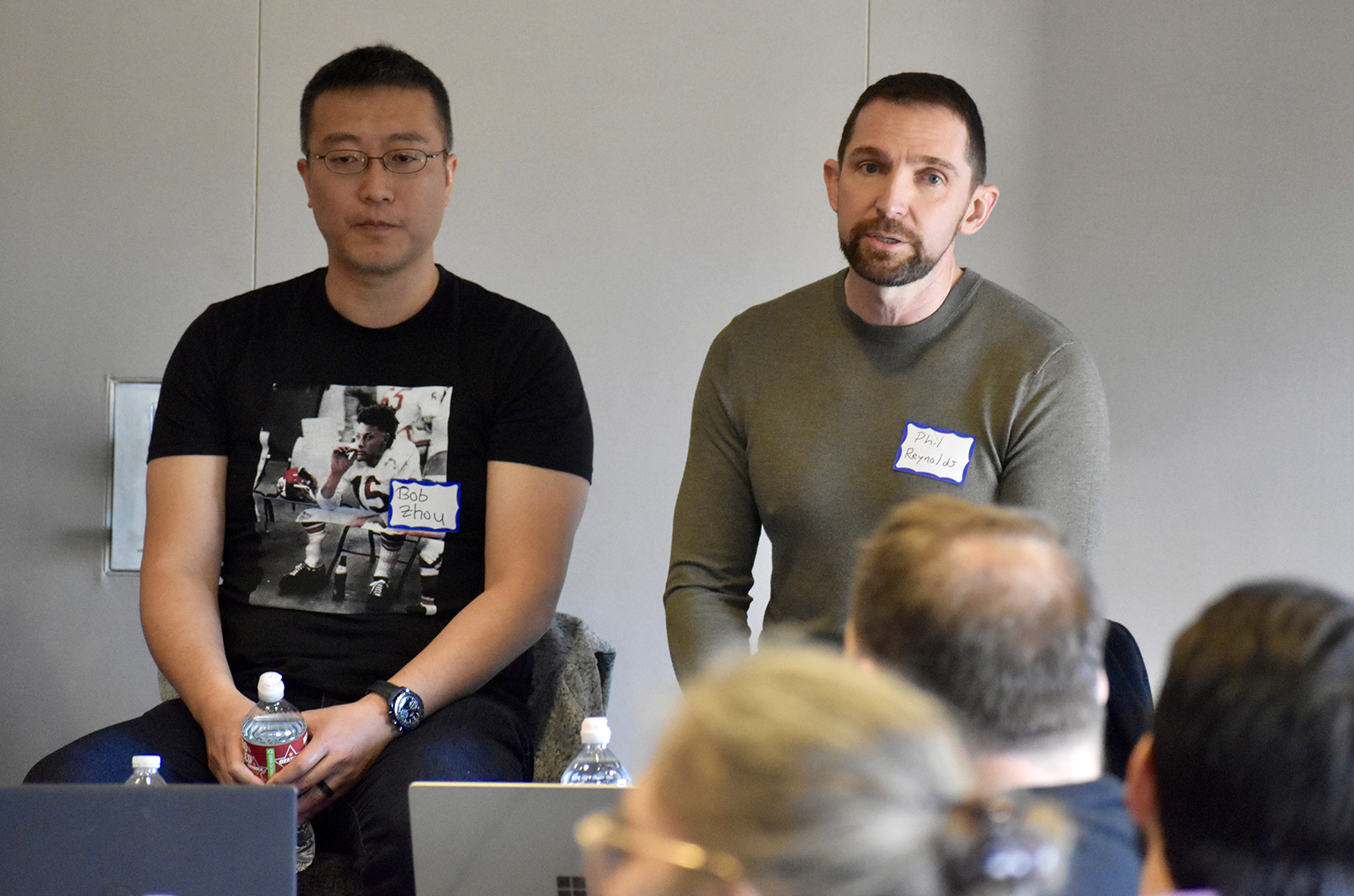
Setting an exit goal early is crucial when founding a startup, shared Robert Zhou, a Kansas City serial entrepreneur-turned-angel investor.
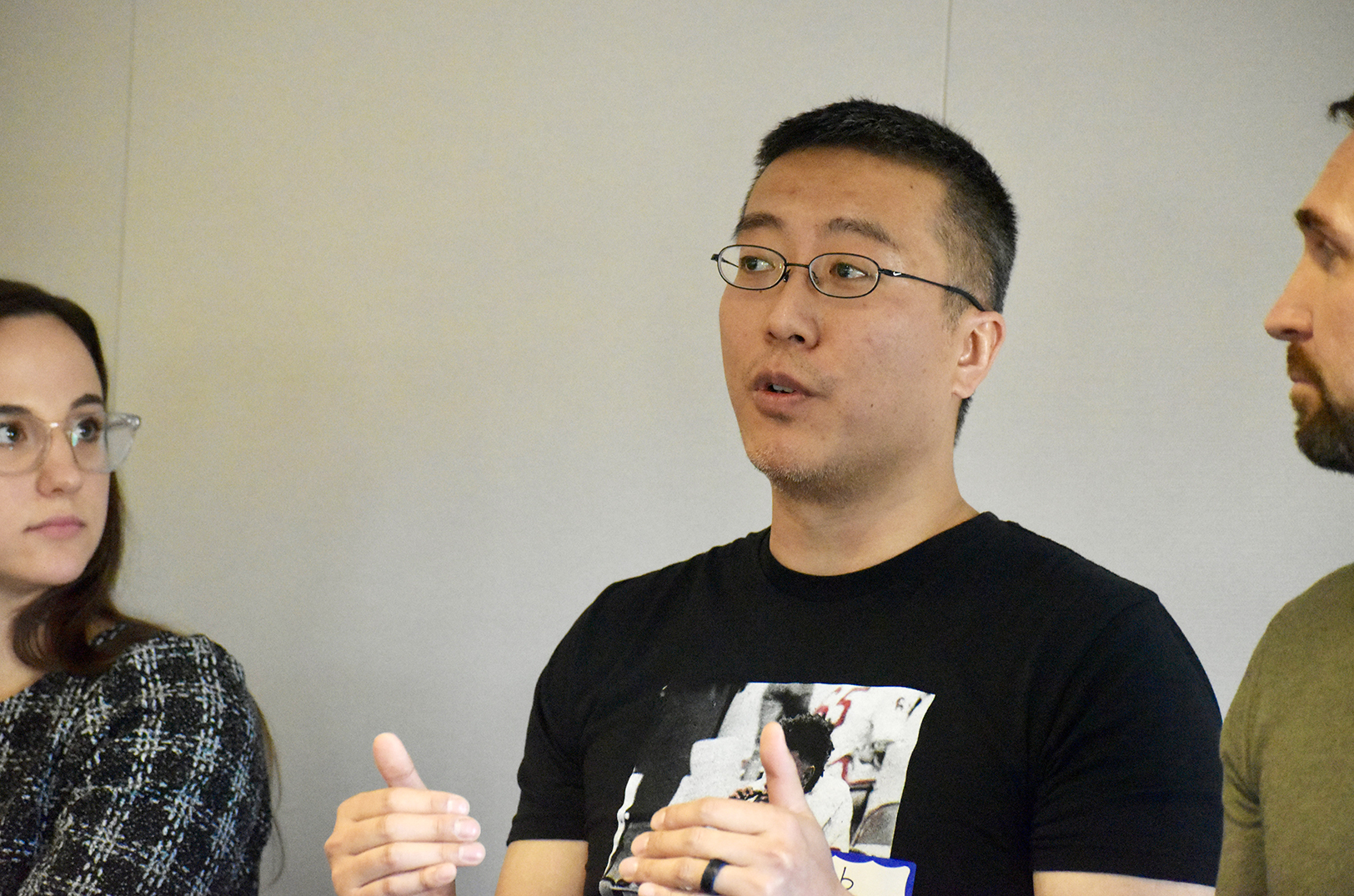
Robert Zhou shares insight from his startup’s exit during a UMKC Technology Venture Studio Sound Byte panel on preparing for mergers and acquisitions at Husch Blackwell; photo by Nikki Overfelt Chifalu, Startland News
“Every startup I mentor, I ask the founder this from Day 1: ‘What’s your goal?’” he explained. “‘Are you trying to build a business that you ultimately sell for $10 million? Is it $1 million? Is it $100 million?’ So the answer that the founder gives is really, really critical. Because if you think about the strategy of building a $500 million company versus $50 million versus $5 million, it’s a completely different landscape, completely different approach.”
“The strategy and approach of your whole entire life cycle really depends on this key question of where you want to exit,” he added.
Zhou — who has navigated multiple successful exits, including those of Red Nova Labs and Legalfit, which had a combined enterprise value of over $100 million — offered his insight Tuesday during a UMKC Technology Venture Studio Sound Byte panel on preparing for mergers and acquisitions at Husch Blackwell’s local headquarters on the Country Club Plaza.
Tuesday’s conversation also included Phil Reynolds, co-founder and CEO of DevStride, and Paige Reese and Gabriel Riekhof, both associates at Husch Blackwell, a startup-friendly law firm with offices in Kansas City.
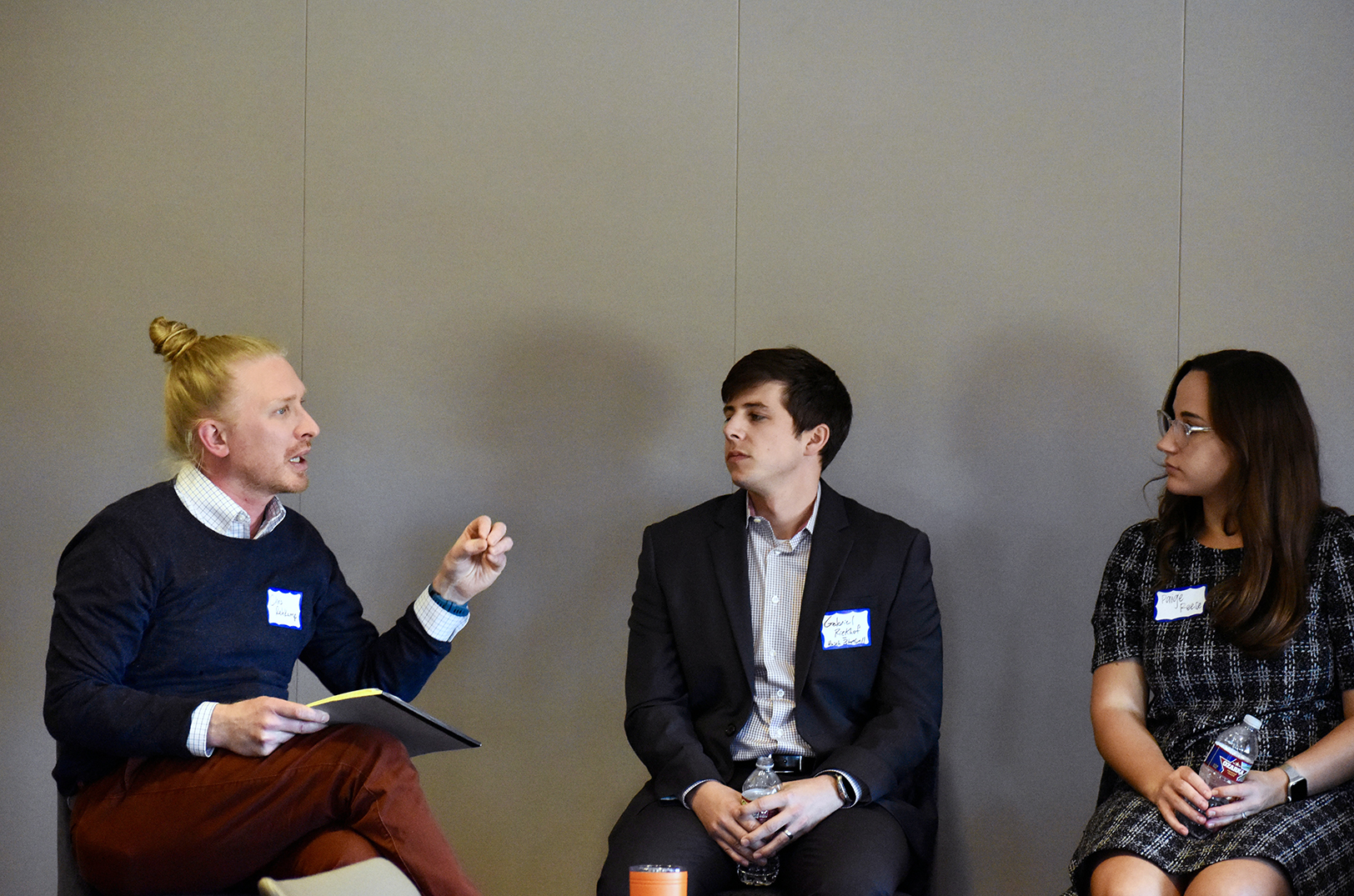
Chris Rehkamp, Tech Venture Studio, moderates a panel conversation alongside Gabriel Riekhof and Paige Reese, both of Husch Blackwell; photo by Nikki Overfelt Chifalu, Startland News
“I agree very much that your exit horizon matters a great deal,” noted Reynolds, who navigated an exit with his previous startup BriteCore. “If you’ve accepted capital from an outside firm, their exit horizon matters more than yours. They get to tell you when you exit, so you need to understand that.”
Planning that “ending” is just one of several steps a founder should take early in the life of their startup to prepare for an exit, according to the panelists. It’s important for founders to begin shaping the narrative of what they are hoping to accomplish, Reynolds said.
“The people who are likely to acquire you are going to be following along,” he explained. “Probably the biggest mistake I see early founders make on this front is changing their story as the reality of the ground changes. It undermines their credibility.”

Phil Reynolds, DevStride, center, speaks alongside angel investor Robert Zhou during a UMKC Technology Venture Studio Sound Byte panel on preparing for mergers and acquisitions at Husch Blackwell; photo by Nikki Overfelt Chifalu, Startland News
It’s also crucial to begin building relationships early with private equity firms, investment bankers, and attorneys, Zhou said.
“It’s not something you can wait until, ‘Hey, I’m ready to sell; OK I gotta go do all this work,’” he continued. “The work needs to happen very early.”
Building connections with other players in the legal tech space — before it was time to sell, Zhou noted, was key to Legalfit’s acquisition by Centerbase.
“The reason we were able to get multiple buyers to compete was because a lot of those relationships were built many, many years before we were selling the company,” he added.
It’s also important to be tracking the startup’s key performance indicators — like revenue, growth, net dollar retention, revenue retention — early and often and adjusting where needed.
“All these key factors should really be visible — and not only visible — it should be something that you’re constantly checking against,” he explained. “At Legalfit, we took all our KPIs and we made them into these digital dashboards; they were in real time. We had them all over the office and for all sorts of different departments. So that made it extremely easy when we were ready to sell the company.”
“Getting your business ready to sell is exactly the same as growing your business over time,” he added.

Featured Business

2024 Startups to Watch
stats here
Related Posts on Startland News

Biotech firms: Health innovation can’t grow in KC with wet lab space in such short supply
ELIAS Animal Health is advancing a technology that can fundamentally change how cancer is treated in both humans and animals, said CEO Tammie Wahaus, yet finding lab space in the metro has been one of the biotech startup’s biggest tests. “We’re doing a lot of cell culture work, which requires wet lab space, but there…

Peek inside: Project Commons teen accelerator pilot aims for ‘innovation, collaboration, impact’
Innovation is growing on the third floor of Goodwill’s East Crossroads center, enabling Kansas City’s next generation to take ownership of their city. “We really wanted to sort of address their needs, hear more about their voice and engage with them,” William Dowdell, program director at Hire KC, said of the 21 students who make…

Two novice gardeners in an Olathe lab could harvest Kansas’ first legal hemp harvest
Potential for a high-yield payoff grows with each day as Michael Wilson and James DeWitt inch closer to their first hemp harvest — likely the first in the state in modern times, they said. “It’s the jumping off point to create a repeatable process,” said DeWitt, co-founder and CEO at United American Hemp. “We’ve learned…

Tea-Biotics bottles $1.2M in quick funding round; taps into thirsty new markets for kombucha
From jar-lined countertops in her kitchen to a 13,000-square-foot facility brimming with brew tanks, Lisa Bledsoe’s mission to pour Kansas City a more refreshing bottle of “booch” is scaling fast, she explained over a freshly tapped glass of her “Beachlife”-flavored kombucha. “I think it can be an inspiration for younger women or even other women…