

US company lands on the moon: Here’s how a KC firm helped boost its flames of innovation
February 23, 2024 | Nikki Overfelt Chifalu
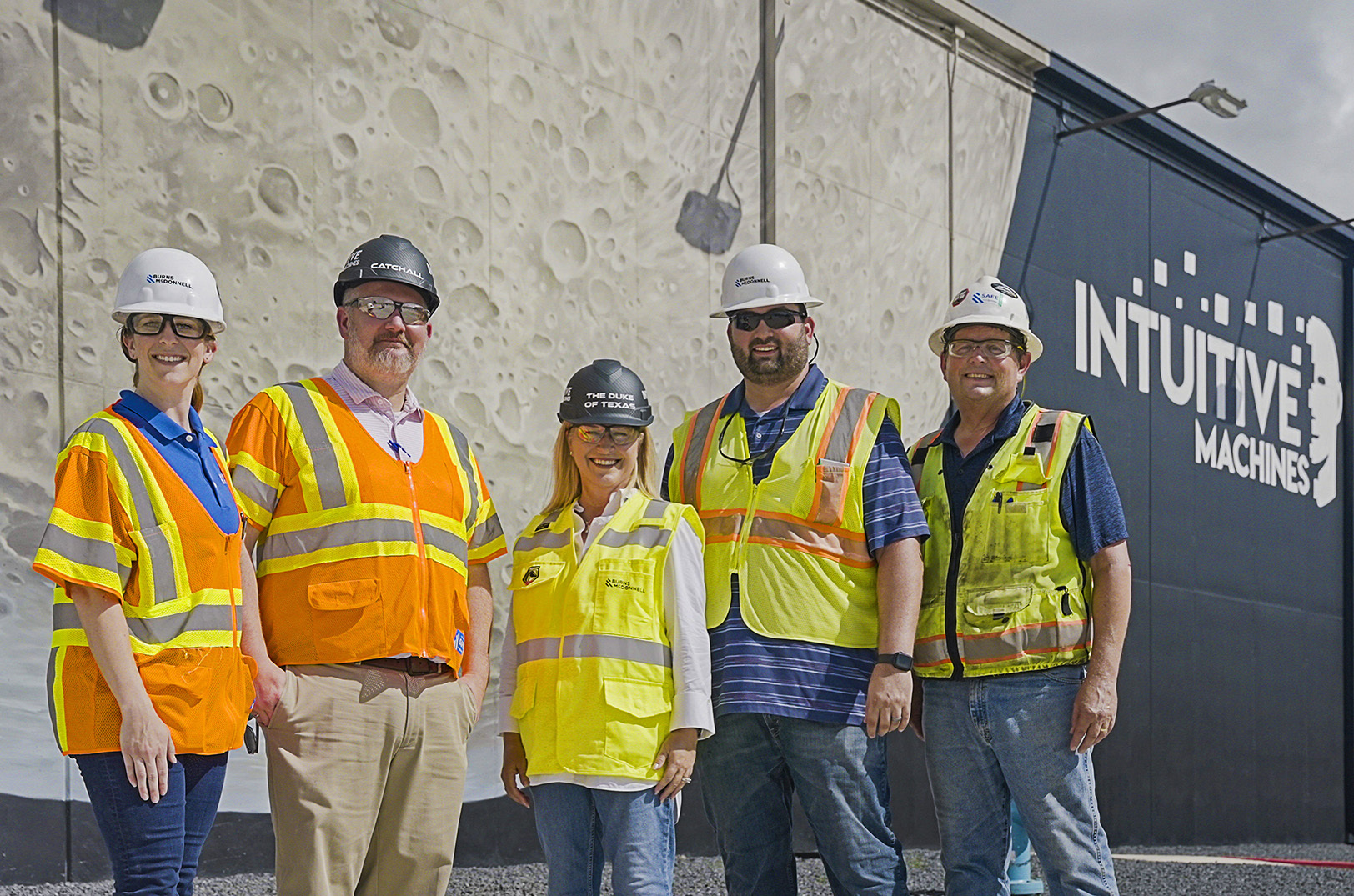
For the first time ever, a commercial spacecraft has touched down on the moon and Kansas City-based Burns & McDonnell provided innovation that helped to make it possible for Intuitive Machines and its Odysseus IM-1 lander, shared Brittney Swartz.
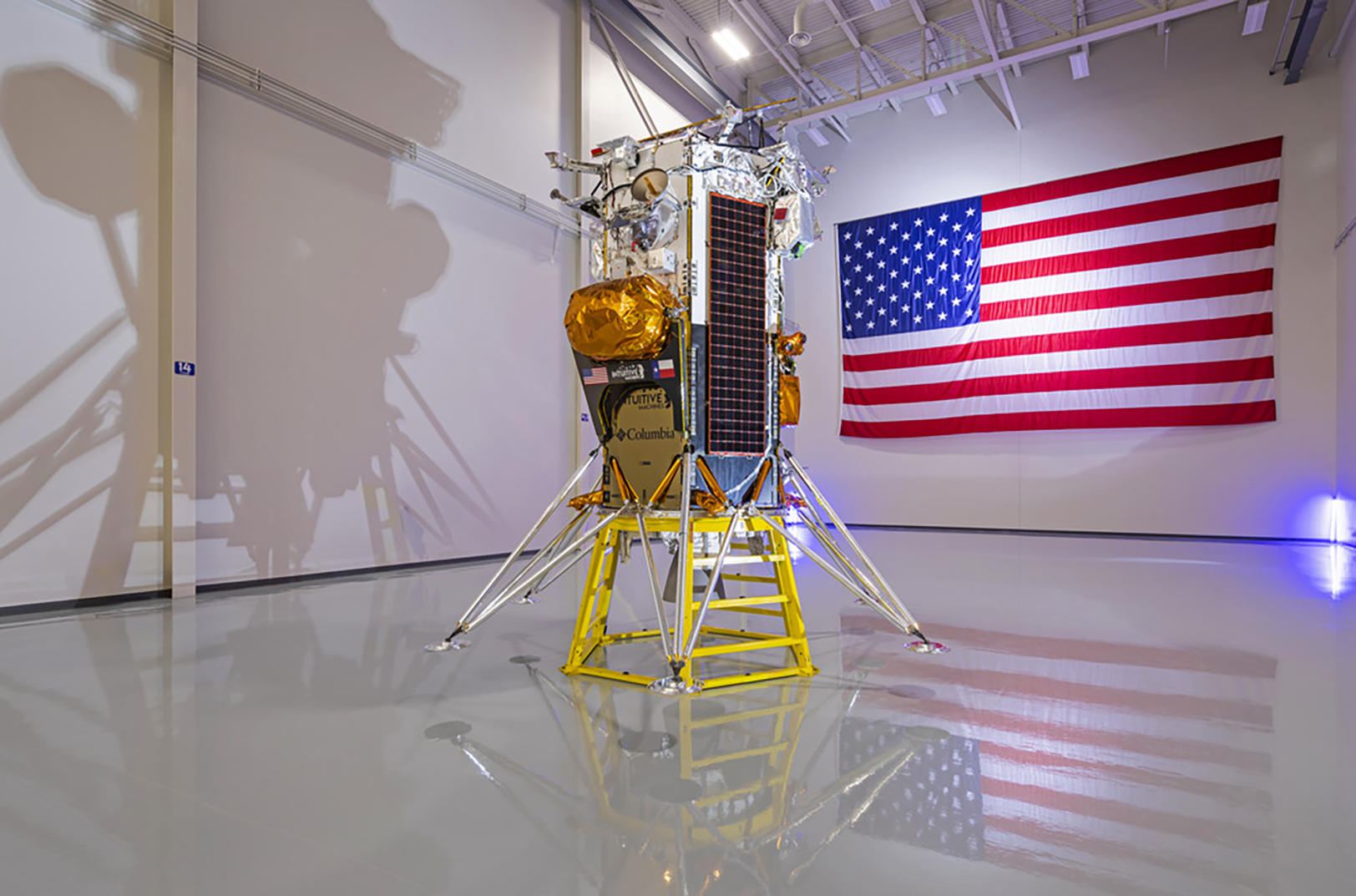
Intuitive Machines Nova C Lander
The local engineering, construction and architecture firm served as the designer and builder of Intuitive Machines’ new $40 million headquarters and flame range test facility, which opened in September 2023 in the Houston Spaceport.
Although Burns & McDonnell was not involved with the moon mission itself, the firm’s team members still feel a sense of pride about how they helped empower the space exploration company, noted Swartz, design manager for the project and Burns & McDonnell aerospace and industrial operations manager.
“Getting to work with all those people and knowing that they put their heart and soul into that lander and to see it launch the week before and then land (Thursday), you know their hearts were huge,” she continued. “Your own heart just swells up for that, as well. It was awesome.”

Josh Foerschler, Burns & McDonnell
“It was a fun project,” added Josh Foerschler, the Burns & McDonnell aerospace, defense, and space business development leader.
Burns & McDonnell team members held a watch party — complete with Moon Pies for snacks — Thursday evening at their Kansas City offices as the Intuitive Machines lander reached its destination; the first American spacecraft to reach the surface of the moon since the Apollo program in 1972.
“We were here quite late last night, just wanting to see those first images,” Swartz said. “It was great.”
Her team started working with Intuitive Machines on the building project in 2021, she said. At the time, the space company had its office and headquarters in a separate location than its manufacturing facility.
“Their key engineers had desks in two places, going back and forth,” Swartz explained. “And the opportunity came with Houston Spaceport to be able to build a facility there that actually was even right next door to their manufacturing space.”
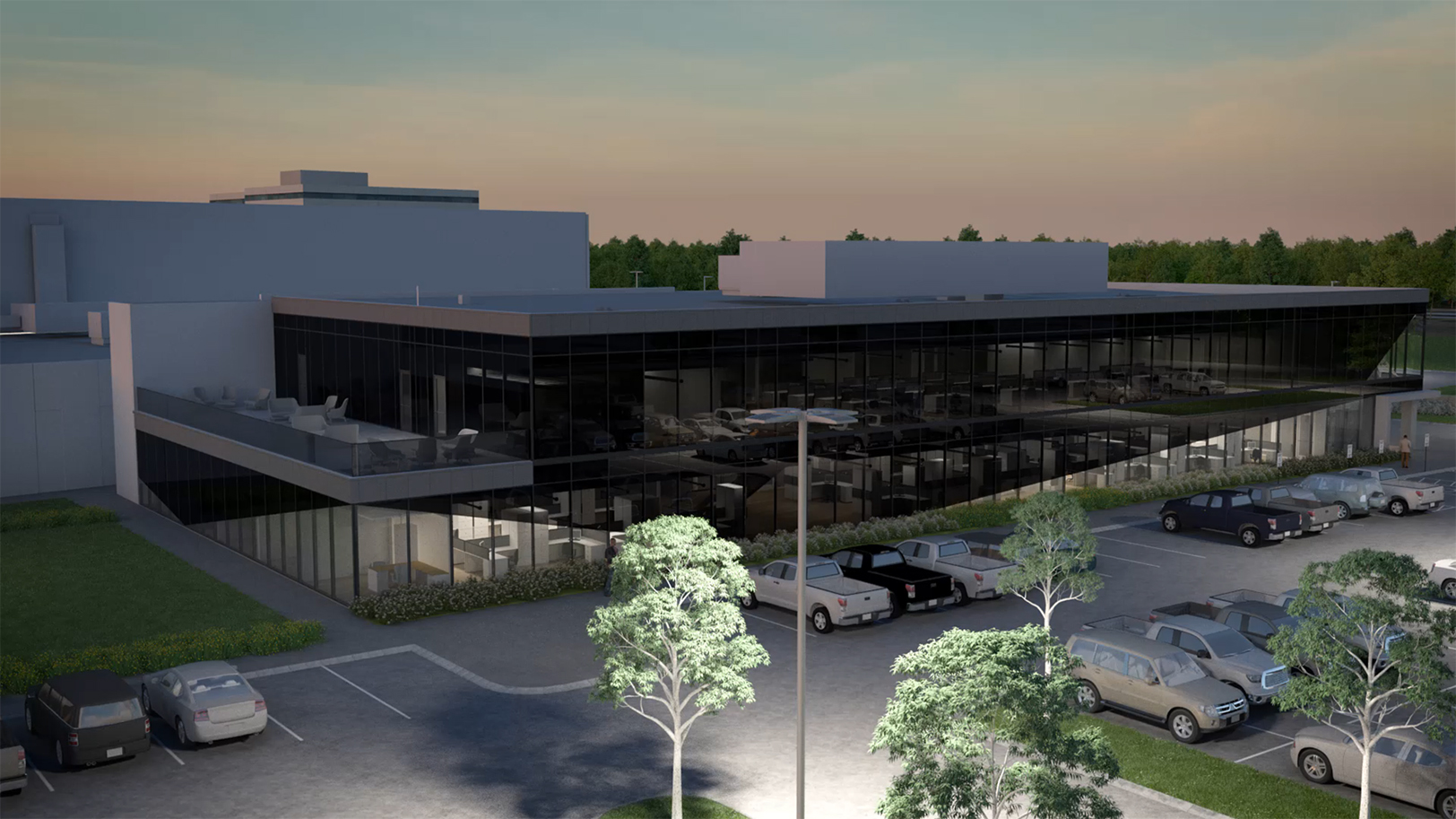
Intuitive Machines headquarters in the Houston Spaceport; rendering courtesy of Burns & McDonnell
As the two companies started the ideation process, Swartz noted, they realized they needed to help Intuitive Machines solve another problem: a testing facility for its lunar landing engines that wouldn’t require loading them up onto a mobile vehicular test stand, driving them to an abandoned runway, and setting them up and taking them down in the Houston heat: a process that could take around 12 hours just for one test.
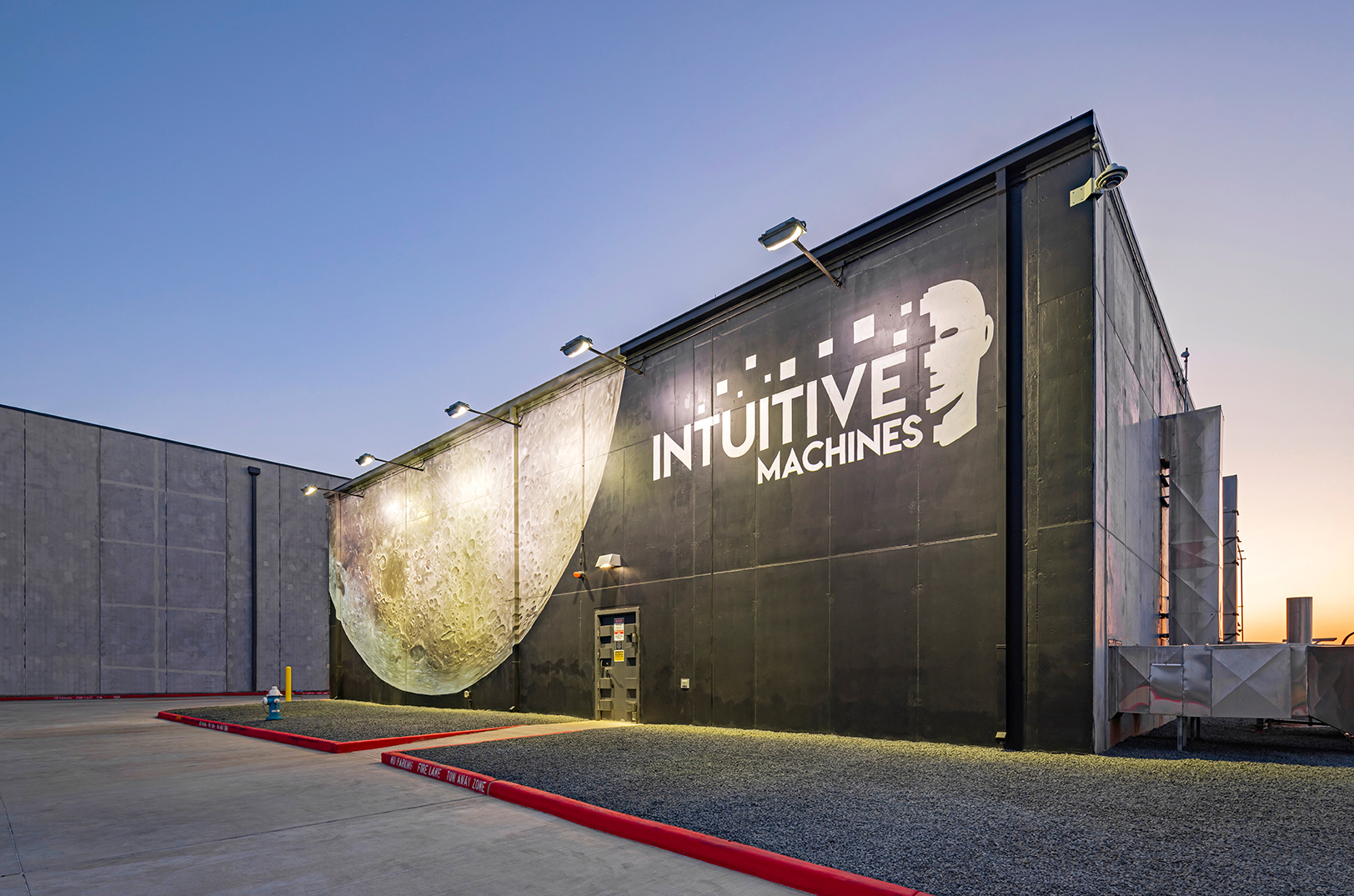
Intuitive Machines Flame Range Test Facility; image courtesy of Burns & McDonnell
So before even starting on the 105,572-square-foot headquarters, the engineering team worked with Intuitive Machines to design the flame range, consisting of a 3,800-square-foot reinforced concrete chamber surrounded by a 25-foot-high perimeter wall that encloses an additional 6,500-square-foot yard and delivers multiple advantages for Intuitive Machines testing protocols, according to Burns & McDonnell.
“This highly customized base for our aspirations goes far beyond office space,” said Jack Fischer, vice president of production and operations for Intuitive Machines at the ribbon cutting ceremony for the project in October 2023, according to a Burns & McDonnell news release. “It is an overarching complex with mission control, manufacturing and an advanced propulsion testing facility — the flame range — for the lunar lander engine. This was a facility and test area that didn’t exist before, and now, fueled by innovation, we can bring our vision to life.”
They broke ground on the flame range project in October 2021, Swartz shared, and it was up and running within nine months.
“That really launched their ability to go faster and deliver their contract with NASA even quicker,” she explained.

Brittney Swartz, Burns & McDonnell
Burns & McDonnell’s design-build delivery method allowed the engineering team to quickly respond and adapt to the challenges of a project of this scope, Swartz noted.
“That allowed us to be able to push the flame range building forward faster,” she continued. “Then we started back on the building and that allowed them to be testing their engine, as well as us figuring out what’s that workflow process for them in their manufacturing space. So the design-build method was really the only solution for them that would have allowed that amount of flexibility to respond to their changes.”
“Having this collaborative environment that we had with the design-build mentality with their team meant that we could respond quickly to their changes and react accordingly and not extend the construction even longer,” added Foerschler. “We were solving problems on the fly.”


2024 Startups to Watch
stats here
Related Posts on Startland News

Events Preview: Pipeline’s Innovator of the Year, Rise Fast Summit
There are a plethora of entrepreneurial events hosted in Kansas City on a weekly basis. Whether you’re an entrepreneur, investor, supporter, or curious community member — we recommend these upcoming events for you. Weekly Events Preview Innovation Exchange When: Jan. 24, 4:30 p.m. – 6:00 p.m. Where: Think Big Coworking *** This month, Startland editor…

With KC expansion set, EquipmentShare raises $28.4M
A firm that’s planning to open a Kansas City tech office snagged millions in equity financing for its platform touted as the “Airbnb for construction equipment.” Based in Columbia, Mo., EquipmentShare raised about $28.4 in a Series B round that will accelerate its expansion to major metros around the nation, according to a filing with…

New FCC chairman Ajit Pai is familiar with KC startup community
A native Kansan that recently visited with the area’s entrepreneurial community will now head the Federal Communications Commission. President Donald Trump selected Ajit Pai, the senior Republican on the FCC to lead the commission, which regulates interstate and international communications by radio, television, wire, satellite and cable. “I am deeply grateful to the President of…

Need for speed: Mozilla awards $101K to local gigabit projects
The Mozilla Gigabit Community Fund announced it will award a total of $101,000 to fund six local projects that use gigabit technology to impact learning. The Gigabit Community Fund is a national partnership between the National Science Foundation, US Ignite and Mozilla. Locally, the fund partners with KC Digital Drive, whose goal is to leverage…