

Cornstalks to cardboard: This KS company is turning farmers’ trash into sustainable fiber packaging
February 16, 2024 | Katie Bean
Startland News’ Startup Road Trip series explores innovative and uncommon ideas finding success in rural America and Midwestern startup hubs outside the Kansas City metro.
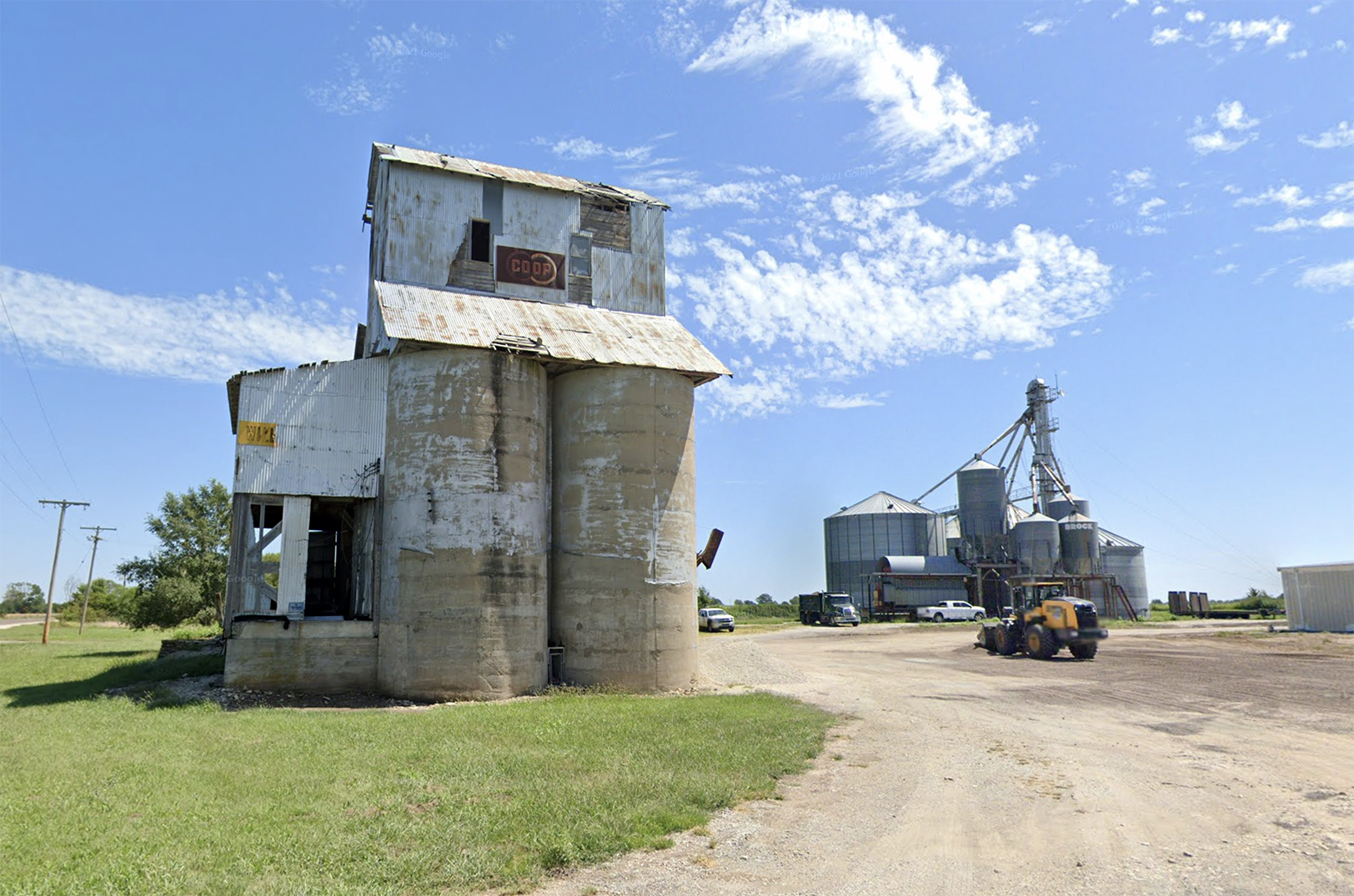
WILLIAMSBURG, Kansas — One small town just south of I-35 in Franklin County — population 390 — soon will become home to a new world headquarters, said Mark Majors.
Williamsburg’s idled grain elevator was purchased by Gaia Ag, which is renovating the site into a fiber pulp mill — the first of many planned in Kansas that will convert agricultural waste such as cornstalks and sunflower stalks into packaging material, according to Majors, CEO of Gaia.
The former grain silos will house executive offices when the new HQ opens this spring, he said.
Majors is on a mission to make sustainability part of all realms his company touches — from reducing natural resources used by the paper and packing industry to shoring up economies in small towns across Kansas.
Rethinking packaging materials
Now an executive with his own company, Majors has worked in packaging throughout his career. His knowledge of paper and the fibers that make it runs as deep as tree roots. He’s applied that at Gaia to create a new source of paper pulp fiber that can replace some of the virgin wood required for cardboard products.
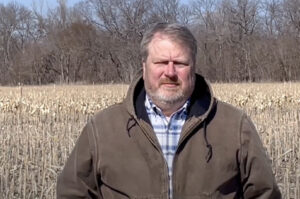
Mark Majors, Gaia Ag
“It’s not as flashy as some of the tech stuff that has the world all in a tizzy, but I love the practicality of it and the fact that it’s so universally adaptable and applicable,” Majors said. “Quite frankly, it’s just smart science.”
If you receive one or several deliveries in cardboard boxes each week, you’ve participated in the growing ecommerce trend — along with millions of others worldwide, he said. The need to ship all of those packages in strong cardboard boxes that won’t be crushed in transit has contributed to an increased need for virgin wood fiber, Majors said. The same fibers that help trees stand strong are used to imbue strength in cardboard, he said.
“Wood is hard and it’s dense and it’s irreplaceable in terms of its performance for just consistent rigidity and durability,” Majors said. “The fact that we can recycle the pulp that comes out of a tree five times before it’s gone is a testament to how good Mother Nature really is at making a strong fiber.”
On the flip side, processing virgin lumber to make paper pulp requires tens of thousands of trees, creates toxins and uses “ungodly amounts of water,” he said.
Majors embarked on the path toward using alternative fibers several years ago when his packaging materials company was tapped by a partner in South America to find a use for dairy manure solids.
“The goals of that project were to create rigid building products, like table tops and paneling and things of that nature,” Majors said. “While we didn’t create what they were after, we did create other products that were viable — stuffing tissue and molded pulp, like for egg crates.”
When the project wrapped up, Majors showed the results to a friend, an executive at a large paper company.
“He said, ‘Yeah, that’s nice. But there’s not much market. … If you really want to make an impact, make brown paper — make the stuff that’s strong, that moves everything we buy, and then you’ll make a difference.’ And so that became my mission in life — to figure out OK, what’s the right material? And I wanted to try to do it in Kansas.”
Putting overlooked materials to use
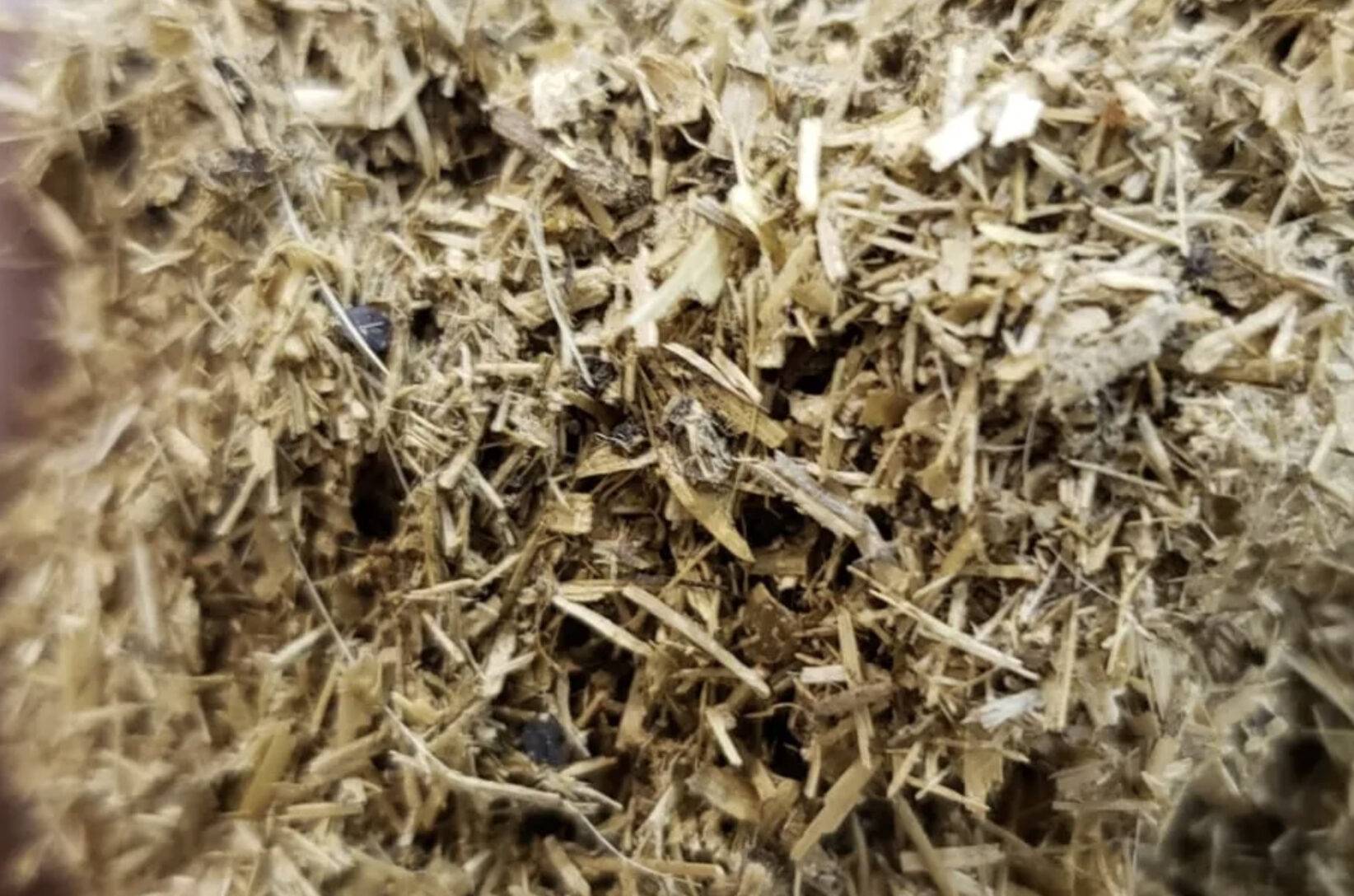
Majors literally stumbled upon a potential solution during a pheasant hunting trip in north central Kansas. He was walking through a field “wearing sneakers instead of boots, like an idiot,” and his unprotected shins were bleeding from passing through the tough stubble left after harvest, he recalled.
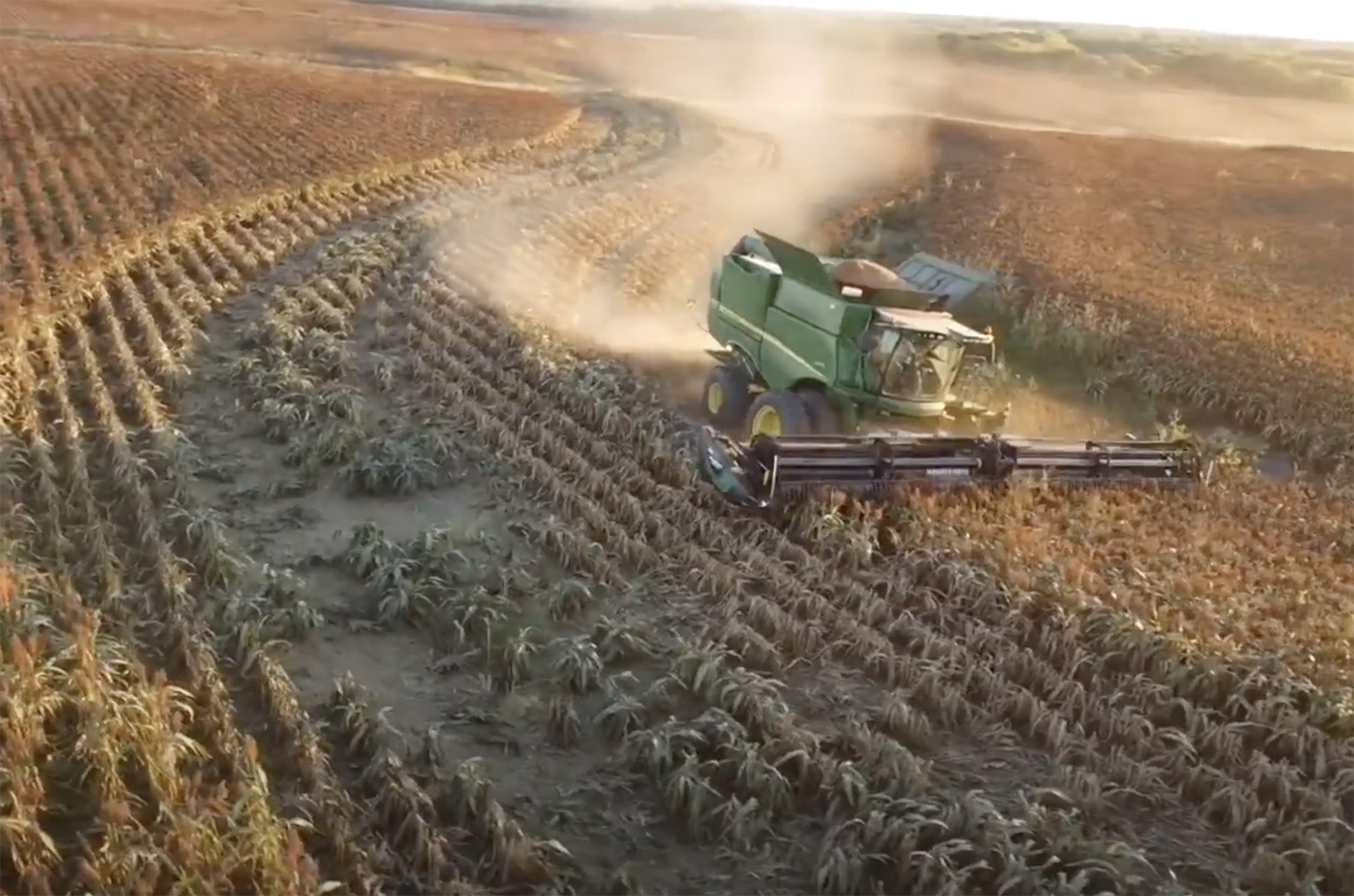
“I realized that we’ve got thousands of tons of material sitting in this field that this farmer can’t do anything with. He’s not feeding cattle with it. We’re not going to eat it. He’s going to have to go run a tractor on it a couple of times and disc it in and turn the soil and lose dirt,” Majors said. “And it’s like, why are we not thinking about this? So that kind of shifted my focus to how can we use the materials that our farmers have left in their fields here in Kansas?”
He began researching and learned that many plants other than trees had been used to make paper, but historically never on a large scale, and they weren’t intended for strength.
In testing the agricultural waste, he found it created a spiderweb-like effect that enmeshes the long, straight wood fibers. He compared it to the shaggy side of Velcro sticking to the rigid side.
That combination increases the cardboard’s stacking strength by 200 percent, he said, and tensile strength increased by 400 percent, and even up to 600 percent in some tests. Making the raw material stronger not only reduces the amount of virgin wood needed in the supply chain, he said, but it also means the paper processing plants can run machines faster.
“When it’s all said and done, I don’t think that we can replace virgin wood, but I think we can replace a lot of the virgin wood supply, in the recycled space especially,” Majors said. “I think we can provide recycled-level pricing with virgin-level quality.”
Those aren’t the only benefits.
Not only does the process create a market for farmers for their otherwise unusable materials, it reduces other inputs. Early testing indicates the process will use 98 percent less energy per ton than traditional paper mills and 95 percent less water, Majors said. Nonwood fibers also can be treated more gently with fewer chemical additives.
“When you look at a traditional virgin pulp mill, they produce about 1,900 to 2,000 gallons of wastewater per minute that they have to then treat,” he said. “We’ll produce 37 (gallons), and none of it’s toxic. We’re going to reuse all of our own water. We have taken our chemicals down to a singular treatment chemical, and then we never process our fiber in such a way that we create that toxic sludge.”
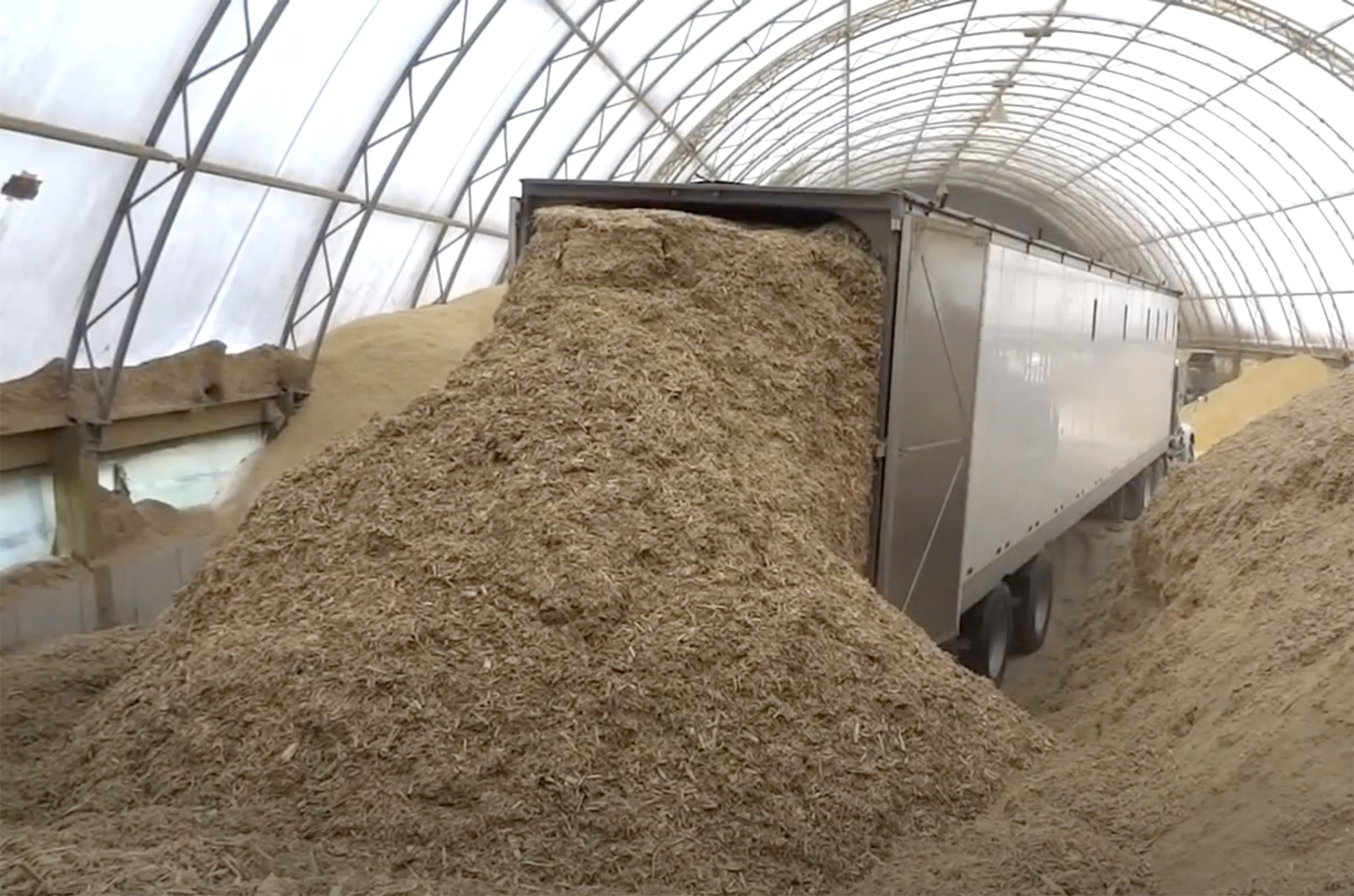
When its first fiber pulp mill opens this spring, Majors said, even byproducts of the raw materials that aren’t suitable for fiber pulp will be put to use — for example, the dust that comes off of a bale of corn stalks will be compressed for biomass energy production.
Investing in communities
While Gaia is still perfecting its process ahead of opening its first plant, it has already received positive attention from the entrepreneurship community.
Majors, who lives Meriden, Kansas, connected with Stephanie Moran, senior vice president of Innovation for Go Topeka and the Greater Topeka Partnership, who introduced him to Plug and Play Topeka, part of a national network of accelerators in a variety of industry verticals. In early December, Majors participated in Plug and Play’s Silicon Valley Summit, where he took home the Startup Award in the animal health category.
Growing up in Stilwell, Kansas, Majors said he’s seen the effects on rural communities throughout the state once they start losing economic opportunities for residents, which is why he aims to create as many as 20 mills throughout Kansas. He’s targeting Great Bend for Gaia’s second plant.
“If we’re really going to truly focus on being this sustainable company, creating new sustainable products out of fiber that we can get from our farms, why are we not focusing on that? Sustainability also extends to the communities in the state and the opportunity to do that without needing hundreds of millions of dollars in capital, without creating terrible drains on the fresh water supply or creating toxic environments for people to have a job,” Majors said. “Why wouldn’t I want to do it in Kansas? You know, I’m a Kansas kid. Why would I want to do that any place other than home first?”
Each plant would employ about 25 people, Majors said, and he hopes to open two to three plants per year starting in 2025. He’s also open to taking the operation overseas, listing potential sites from equatorial Africa to India to Brazil.
In any location that Gaia plants itself, Majors said, his aim for the company is “doing what we can to make people’s lives better.” Gaia Ag is a B Corp, or benefit corporation, which means it will generate money to donate to the communities where it operates.
Majors is eager to work with the Kansas Department of Commerce to discover what his company can do in addition to providing jobs in each community. In Great Bend, for example, he said he’s interested in creating housing for veterans. He also would consider adding 5G cell towers at mill locations to increase rural connectivity.
He plans to have employees determine the local needs for Gaia to support.
“You’re getting a team built that is truly linked to your mission, and that is probably the most rewarding thing I can think of that’s gonna come out of this,” Majors said.

This series is possible thanks to Go Topeka.
Go Topeka seeks economic success for all companies and citizens across Shawnee County through implementation of an aggressive economic development strategy that capitalizes on the unique strengths of the community.

Featured Business

2024 Startups to Watch
stats here
Related Posts on Startland News
Kenzen shortlisted for Webby Award; Here’s how you can help make this Startup to Watch a People’s Voice winner
A Kansas City startup that’s gained accolades and hefty investment for its wearable health monitoring device is nominated for Best App and Software in the 26th Annual Webby Awards — the highest profile awards recognition for excellence on the Internet. “Nominees like Kenzen are setting the standard for innovation and creativity on the Internet,” said…

Overland Park aviation software firm flies in $31M growth equity investment from Austin
Flight Schedule Pro — the maker of industry-leading cloud-based tech for flight schools, universities, and flying clubs — recently opened the hangar doors on $31 million in funding from an investor landing deals with fast-growing, bootstrapped software companies. Financial terms of the investment from Mainsail Partners, a growth equity firm that boasts offices in Austin…
Kansas legal tech startup’s exit unlocks opportunity to accelerate innovation, founder says
An Overland Park startup developing intuitive websites and marketing solutions for small law firms says its just-announced acquisition by a leading cloud-based legal operations platform is the verdict needed to push its services to mid-market clients and beyond. “Combining the best-in-class websites with practice management software unlocks a unique opportunity to deepen product integration and…

Real-world working: Relaunched initiative will put 500 paid teen interns into KC workplaces
A coalition of funders and employers are teaming up to provide 500 high school students across the Kansas City metro with paid summer professional experiences. “It’s really important that we come together as a community for these types of initiatives to make sure our young people are really connecting the dots and moving onto the…