

This Kansas gardener sued to sell fruit and honey; Now her town will allow urban farming
September 26, 2023 | Celia Llopis-Jepsen

Editor’s note: The following story was published by KCUR, Kansas City’s NPR member station, and a fellow member of the KC Media Collective. Click here to read the original story or here to sign up for KCUR’s email newsletter.
Ottawa city officials are trying to strike a balance between people who want to produce food and the interests of their neighbors
OTTAWA, Kansas — Ottawa will now allow small-scale urban agriculture — a move designed to accommodate residents who want to raise chickens and to resolve a homeowner’s lawsuit over the right to sell fruit and honey.
City lawyer Blaine Finch said the goal is to let residents produce food in their yards without impinging on the welfare of their neighbors.
“Frankly, agriculture is one of the original activities in this area,” Finch told city commissioners at a recent meeting. “The city hall is built on the site of Tauy Jones’ wild berry patch … It’s as old as the community, if not older.”
The rules allow small-scale farming in neighborhoods, as long as it doesn’t create nuisances like bad odors or lots of customers visiting residential streets.
The change is a victory for Ellen Finnerty, a fruit gardener and aspiring beekeeper who sued the city earlier this year.
RELATED: Kansas gardener sues for the right to sell honey and fruit from her Ottawa yard
She had been working on a backyard orchard for a few years and taking community college classes on beekeeping. Her goal is to sell fruit and honey at a local farmer’s market.
But Ottawa’s codes didn’t allow that. The rules banned people from running home businesses that involve animals. They also appeared to prohibit so much as selling a tomato grown in your backyard.
Not anymore.
The commission voted last week in favor of a suite of codes that acknowledge urban agriculture and set rules for it.
The new rules allow people to keep hens for egg-laying. They also set guidelines for beekeeping.
And the rules distinguish urban farming from other kinds of animal-related work. That means it will now be legal to take homegrown honey and eggs to the farmer’s market.
Some other kinds of animal businesses, such as at-home dog kennels, remain banned.
Finnerty was scared that the city’s previous rules put her at risk of fines or jail. She challenged the rules with representation from the Kansas Justice Institute — the legal arm of the Kansas Policy Institute, a small-government think tank.
Her lawyer argued the city’s rules violated the Kansas Constitution, which guarantees the rights to life, liberty and the pursuit of happiness.
Ottawa’s lawyer asked the judge in a filing to throw out Finnerty’s case. But the filing also signaled city officials were open to changing the codes. It said officials were already working to address public requests to allow chicken coops.
The city entered talks with the Kansas Justice Institute to resolve her lawsuit.
Now that the commission has approved urban farming codes, the institute put out a press release calling the change a victory.
“The city, to its great credit, understood there wasn’t a good reason to prevent Ellen from starting her home-based business,” said Sam MacRoberts, the group’s litigation director.
Advocates for buying and growing food locally say that urban farming can provide fresh food with fewer transportation costs and carbon dioxide emissions.
Some cities are tweaking their rules to accommodate that.
Lawrence changed its codes in 2016 to loosen rules for residential crops and allow beekeeping and sales of honey and other homegrown foods. Indiana, meanwhile, struck down all municipal beekeeping bans in 2019.
Celia Llopis-Jepsen is the environment reporter for the Kansas News Service. You can follow her on Twitter @celia_LJ or email her at celia@kcur.org
The Kansas News Service is a collaboration of KCUR, Kansas Public Radio, KMUW and High Plains Public Radio focused on health, the social determinants of health and their connection to public policy.


2023 Startups to Watch
stats here
Related Posts on Startland News
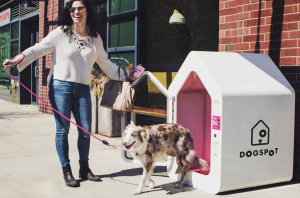
KCMO provides welcoming spot for NY-based high-tech kennel startup, DogSpot
Kansas City stands out among 30 different DogSpot partner cities for cutting through bureaucracy to help startups grow, said Chelsea Brownridge. DogSpot — a service that delivers internet-connected, air-conditioned, standalone dog kennels for pet owners to “park” their dogs while, for example, shopping or running errands — teamed with the City of Kansas City, Missouri,…

Three fathers bring Whizz Bang potty-training game to market through Make48, Handy Camel
The Whizz Bang gamifies potty training and saves the bathroom floors of all parents, said Amy Gray. The device, which hooks on the underside of a toilet seat lid, emits a LED light target at the bottom the bowl. Once hit, the device plays musical praise, said Gray, the head of sales for Handy Camel,…

Reconciliation Services hopes to heal trauma in the heart of stigmatized Troost corridor
Commanded by Scripture, David Altschul journeyed into parts unknown, said his successor, Father Justin Mathews. In the mid-1980s, a philanthropic pull tugged at the heart of Altschul — a white, insurance salesman from Johnson County — and eventually led him into the distressed, history-rich neighborhoods that lined Troost Avenue on the east side of…

Thelma’s Kitchen cooks up pay-what-you-can cafe concept to preserve community
Twenty people once filled the kitchen of Thelma Gardner’s apartment in search of their next meal. Their hunger for food fueled her hunger for humanity, recounted Father Justin Mathews as he sat sipping coffee in the newly opened Thelma’s Kitchen. The pay-what-you-can restaurant — located inside of the Reconciliation Services building at 3101 Troost Ave.…