

Proof is in the spending: CEO-to-CEO Challenge yields results in diversifying supply chains
September 19, 2023 | Katie Bean
Editor’s note: The following story was sponsored by KC Rising, a regional initiative to help Kansas City grow faster and more intentionally, as part of a campaign to promote its CEO-to-CEO Challenge on supplier diversity.
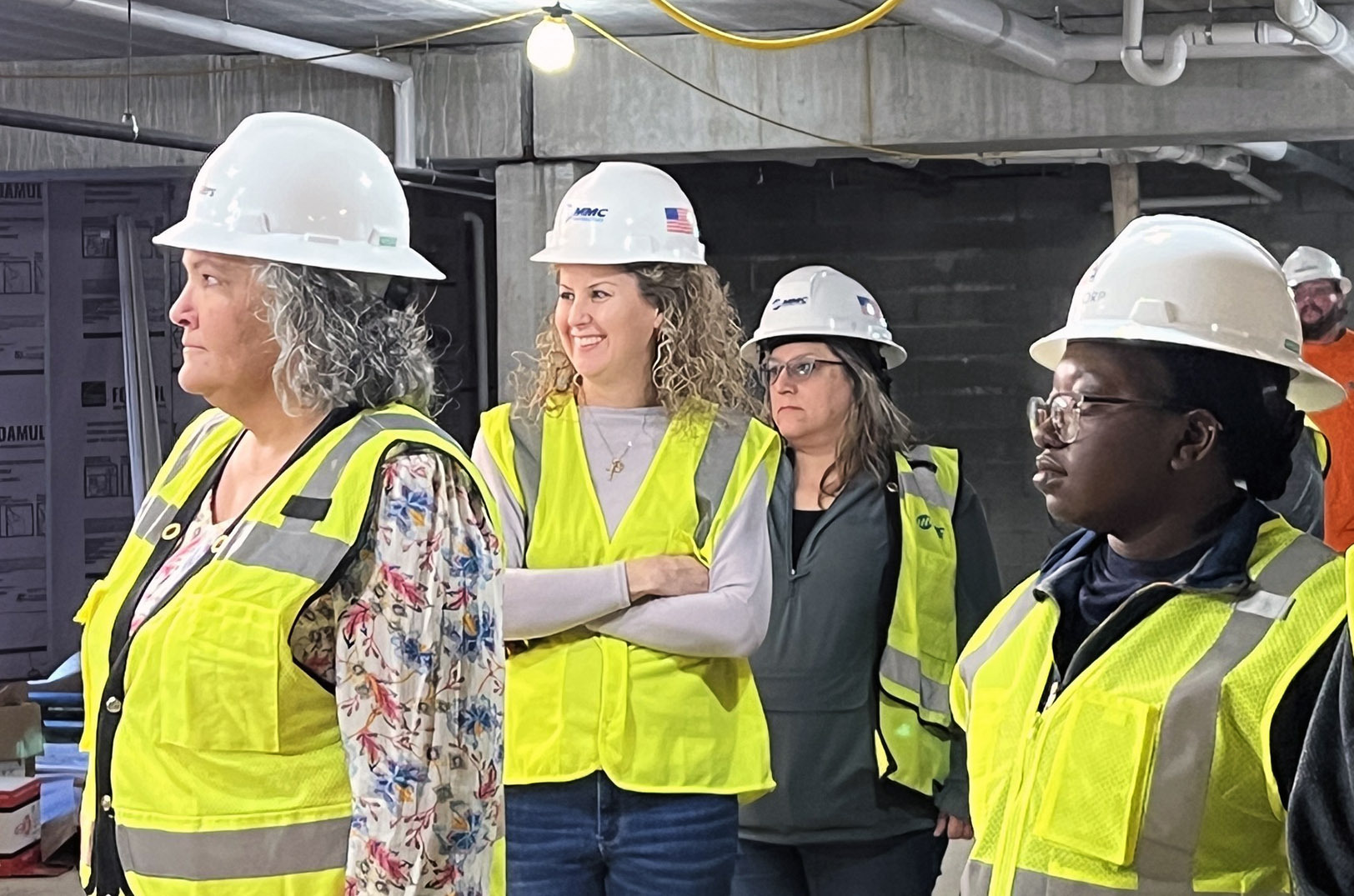
When she started researching the institutional knowledge at MMC Corp. about working with diverse suppliers, national purchasing director Kelli Fraas found the process was “a little bit of herding kittens,” she said.
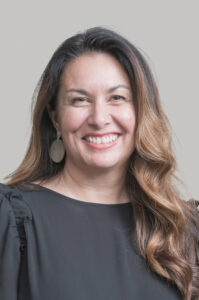
Kelli Fraas, MMC Corp.
“Sometimes it was like you’d struck a gold mine in talking to somebody and they would know all the information for the subsidiary,” she said. “Other times it was really challenging.”
MMC, a family of construction companies based in Overland Park, wanted to increase its commitment to working with diverse suppliers across the board. To help jumpstart the process, it joined the second cohort of the CEO-to-CEO Challenge.
A collaboration of KCRising, KCSourceLink and Connectus Worldwide, the Challenge aims to help companies in the metro build proactive, intentional programs to add local, minority-owned, women-owned, LGBT-owned, veteran-owned and historically underutilized businesses to their supply chain. Each cohort commits to one year of collaboration and education on how to increase spending with diverse suppliers.
MMC joined Blue Cross and Blue Shield of Kansas City, Hallmark Cards Inc., Spire Inc. and Turner Construction Co. in the program’s second cohort, which wrapped up in July.
Organizers are already recruiting new companies to pledge their support for the CEO-to-CEO Challenge in hopes of empowering business-to-business inclusive purchasing via company leaders making a public commitment to equity — and urging others to do the same.
The first cohort of 12 companies reported increased spending with small and diverse businesses ranging from 0.5 percent to 28 percent. The second group hasn’t quantified its results yet, but the impact was tangible throughout the program, Fraas said.
MMC is in the early stages of implementing a companywide supplier diversity initiative, she noted. Those at her company who have worked on federal government projects had more extensive knowledge on sourcing diverse suppliers, but the corporation aims to make that a priority on all projects, which range from data centers to hospitals to industrial projects and more.
Learning from speakers and other businesses participating in the Challenge helped to show Fraas and her colleagues different ways to achieve their goals. She endorsed the Challenge as “definitely worthwhile” for companies that have not yet taken part.
“It shows that it’s not this daunting task,” she said. “I think sometimes I had felt like I don’t even know where to get started, and it really helped to provide a road map to here’s how you can get started and here’s some quick, easy ways to do it.”
Gaining access to other businesses that were further along on supplier diversity initiatives allowed Fraas to get the ball rolling more easily than she could on her own, she said.
“Having some of the playbooks and getting to see what other companies were doing was huge — especially with a lean team, not having to recreate the wheel and start from scratch, and being able to leverage some of those things is really huge,” she said.
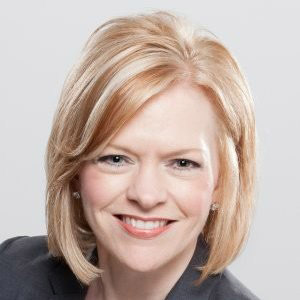
Gena Fitzgerald, Children’s Mercy

Me’Me Natural You products
Children’s Mercy participated in the first cohort of the Challenge and has started seeing positive results, said Gena Fitzgerald, vice president of supply chain. Spending with diverse suppliers has increased from 1 percent to 3 percent in the third fiscal year since implementing tracking, Fitzgerald said. In addition, she said the health care provider has worked with some of its top Tier 1 suppliers to diversify spending with Tier 2 providers.
For Fitzgerald, one of the biggest benefits of participation in the Challenge was the buy-in from CEO Paul Kempinski and launching the effort as part of the hospital’s overall diversity, equity and inclusion strategy. The top-down approach made it easier to get the hospital’s six divisions, each with their own budgets, rowing in the same direction on the initiative, she said. The construction and facilities division has been a leader in identifying and bringing diverse suppliers into the fold, Fitzgerald noted.
Children’s Mercy has seen several success stories since beginning its initiative, one of which is a partnership with a Kansas City, Kansas, small business, she added. The hospital discovered a need for hair products for Black and African-American patients with protective hairstyles, she said. Children’s Mercy worked with Me’Me Natural You LLC to supply the products as well as guidelines and video tutorials for nurses.
The products and tutorials are used throughout the hospital, Fitzgerald said, and she’s willing to help the owners scale as much as they desire by recommending them to other hospitals.
Mary Shannon, founder of Connectus Worldwide, helps lead the programming for the Challenge participants.
“No company is too large or too small” to join the Challenge, which is recruiting for its third cohort, she said. Shannon cited the networking and supplier database as two of the top benefits for participants, among many others.
“They’re not alone on this journey,” she said.
Organizations can sign up for the CEO-to-CEO Challenge through KCSourceLink.
Click here to learn more about joining the CEO-to-CEO Challenge.

Featured Business

2023 Startups to Watch
stats here
Related Posts on Startland News
Tech workforce program championed by former Chiefs star graduates its first KC class
An education initiative recently launched in Kansas City not only focuses on lifting up young people from low-income backgrounds and helping them succeed in the high-tech sector, said pro football hall of famer Will Shields: it upends a cycle of decline and replaces it with building blocks. i.c.stars, headquartered in Chicago, launched in Kansas City…
Build-A-Bear founder joins VFA’s board, lauding group as an ‘onramp’ to entrepreneurship for overlooked young professionals
ST. LOUIS — A hometown founder and entrepreneurial icon is joining the board of one of the region’s premiere work placement opportunities for early-career professionals. Maxine Clark, founder of Build-A-Bear Workshop — the teddy-bear-themed retailer she launched in 1997 in St. Lous — is the latest appointment to the national board of directors for Venture…
Leveraging KC’s resources: How the right people at the right time can unlock a startup’s potential
The level of collaboration seen in Kansas City’s entrepreneurial ecosystem is unmatched by peer communities, said Jill Meyer, noting it’s not a phenomenon that developed by accident. And it takes transparency and trust, she added. “There is a lot of work that resource partners do to make sure that our companies and our founders have…
Looking for investors? A startup’s first ask shouldn’t be for money, leading VCs say
Most startup founders think of funding as transactional, Darcy Howe shared, but it’s actually relational. “You’ve got to have relationships with people long before they’ll fund and that includes angels and all the others,” the KCRise Fund founding managing director told a crowd gathered at UMKC’s Bloch Executive Hall for Startland News’ Kansas City Startups…