

MLB commissioner: Royals need a new stadium to keep playing ball with young sports fans, evolving revenue demands
August 17, 2023 | Nikki Overfelt Chifalu
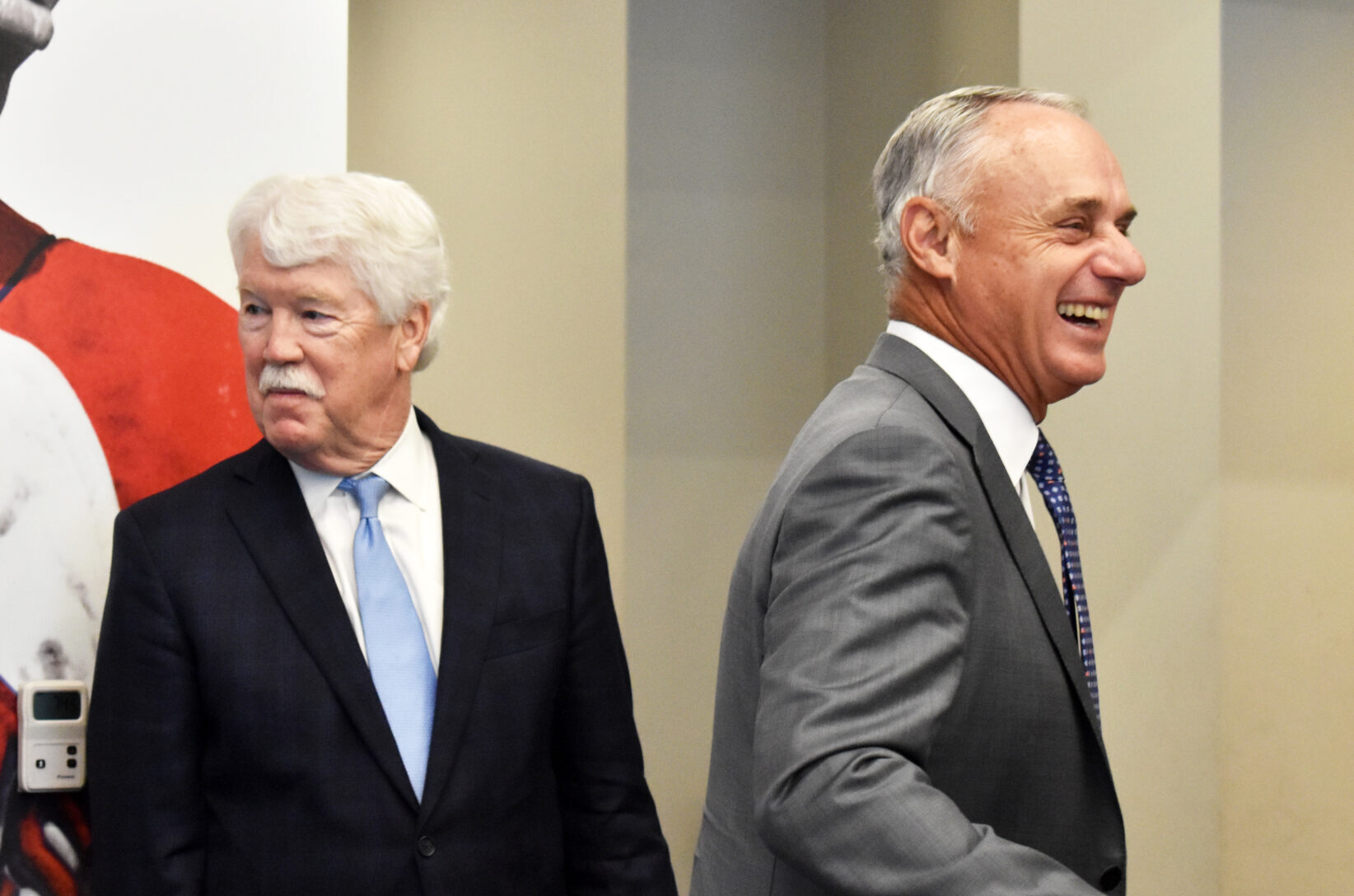
A modern ballpark district with the Kansas City Royals as its centerpiece — whether downtown or in North Kansas City — will mean a more competitive ball club, as well as economic development gains for the local community, said Rob Manfred.
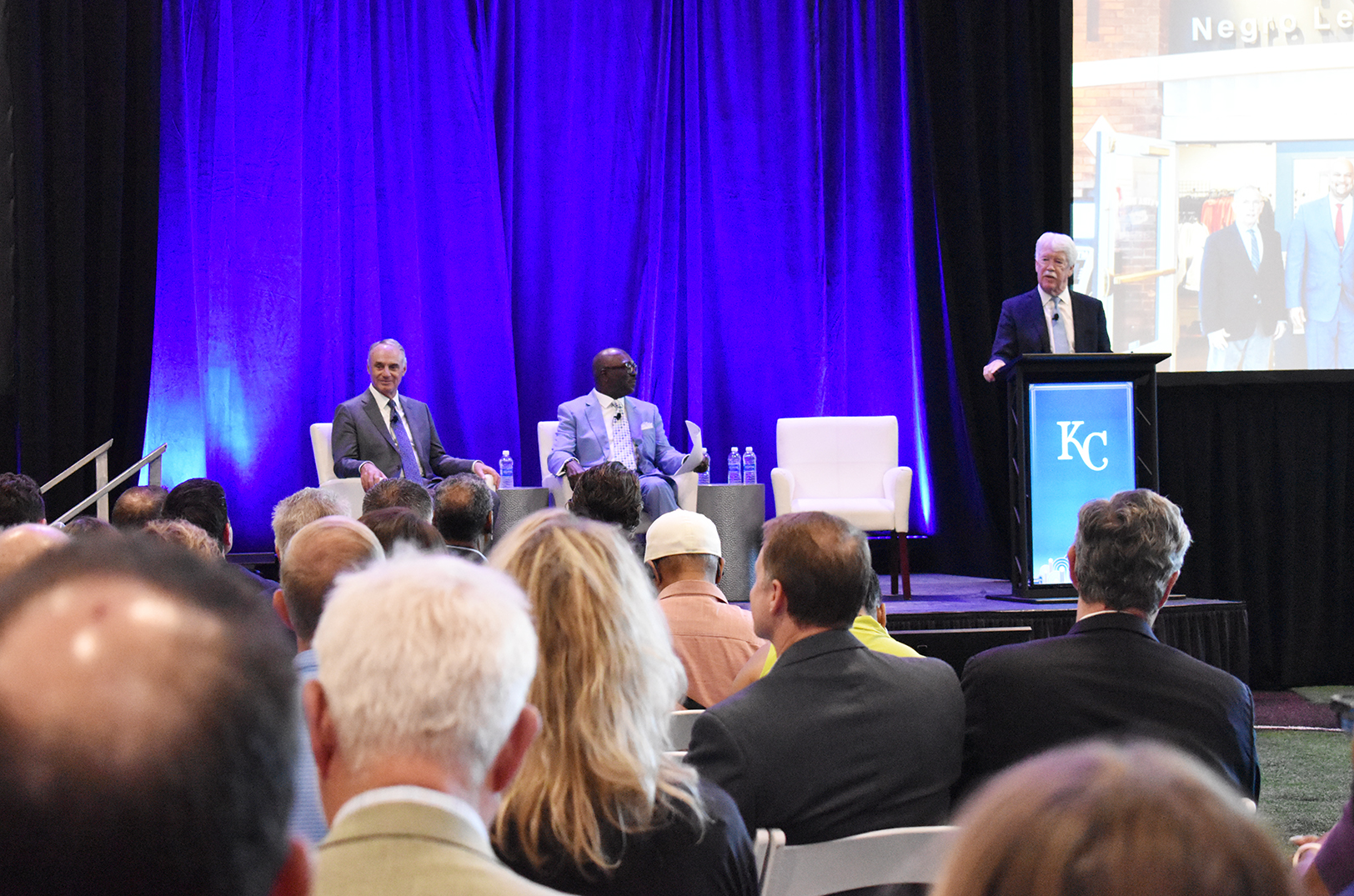
John Sherman, Kansas City Royals chairman and CEO, right, speaks during a State of the Game conversation at the Urban Youth Academy; photos by Channa Steinmetz, Startland News
Washington D.C. and Atlanta are home run examples, the visiting Major League Baseball commissioner told a Kansas City crowd Wednesday.
Before the development of a new district surrounding the Nationals stadium in the Navy Yard area of D.C., Manfred noted, no one ventured to the area. Now — with the mixed use development and new housing — it’s a prime location in the city for entertainment and business. The same goes for the Battery district in Atlanta, which has become one of the region’s most popular destinations.
“It’s the power of baseball,” Manfred said during a conversation with Royals Chairman and CEO John Sherman and Negro Leagues Baseball Museum President Bob Kendrick on Wednesday at the Urban Youth Academy. “Eighty-one games changed what that community looks like, all for the better, all for the better. Eighty-one home games have the capacity to drive traffic like no other entertainment.”
RELATED: New Atlanta ballpark considered model for Royals coming downtown
The conversation — attended by U.S. Rep. Emanuel Cleaver, North Kansas City Mayor Bryant DeLong, Royals manager Matt Quatraro, and players Vinnie Pasquantino and Brandy Singer, among others — also included Manfred’s take on the state of the game, including rule changes, attendance, relevancy, diversity, and the future of the sport.
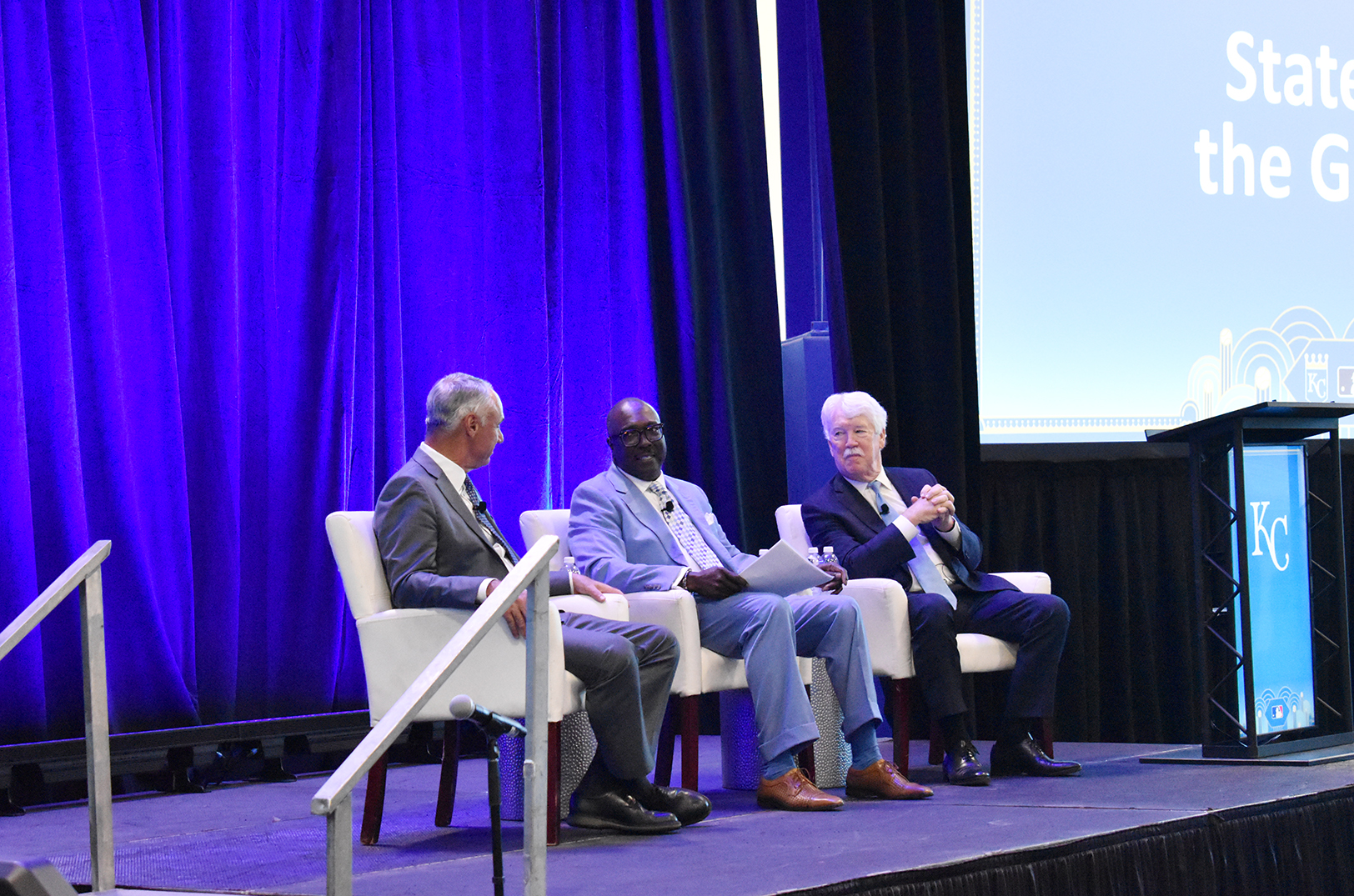
Rob Manfred, Major League Baseball commissioner, Bob Kendrick, Negro Leagues Baseball Museum president, and John Sherman, Kansas City Royals chairman and CEO, deliver a State of the Game conversation at the Urban Youth Academy; photos by Channa Steinmetz, Startland News
The Kansas City Royals organization is deciding between the East Village area of downtown KCMO and North Kansas City for its new $2 billion ballpark district project. A decision is expected by the end of the summer.
“This process that we’re in the middle of right now — evaluating — it’s imperative that we do this right now to find a new home, a new stadium, a new ballpark,” Sherman said, “but as importantly, a new location where we can bring vibrancy and energy around the ballpark and do great things for the city.”
“We need a modern ballpark. And I don’t think it’s in the right place anymore for where we are today,” he said, referencing the current Kauffman Stadium within the Truman Sports Complex, east of downtown, closest to Raytown.
RELATED: Royals say tailgating, plenty of parking planned for year-round downtown ballpark district
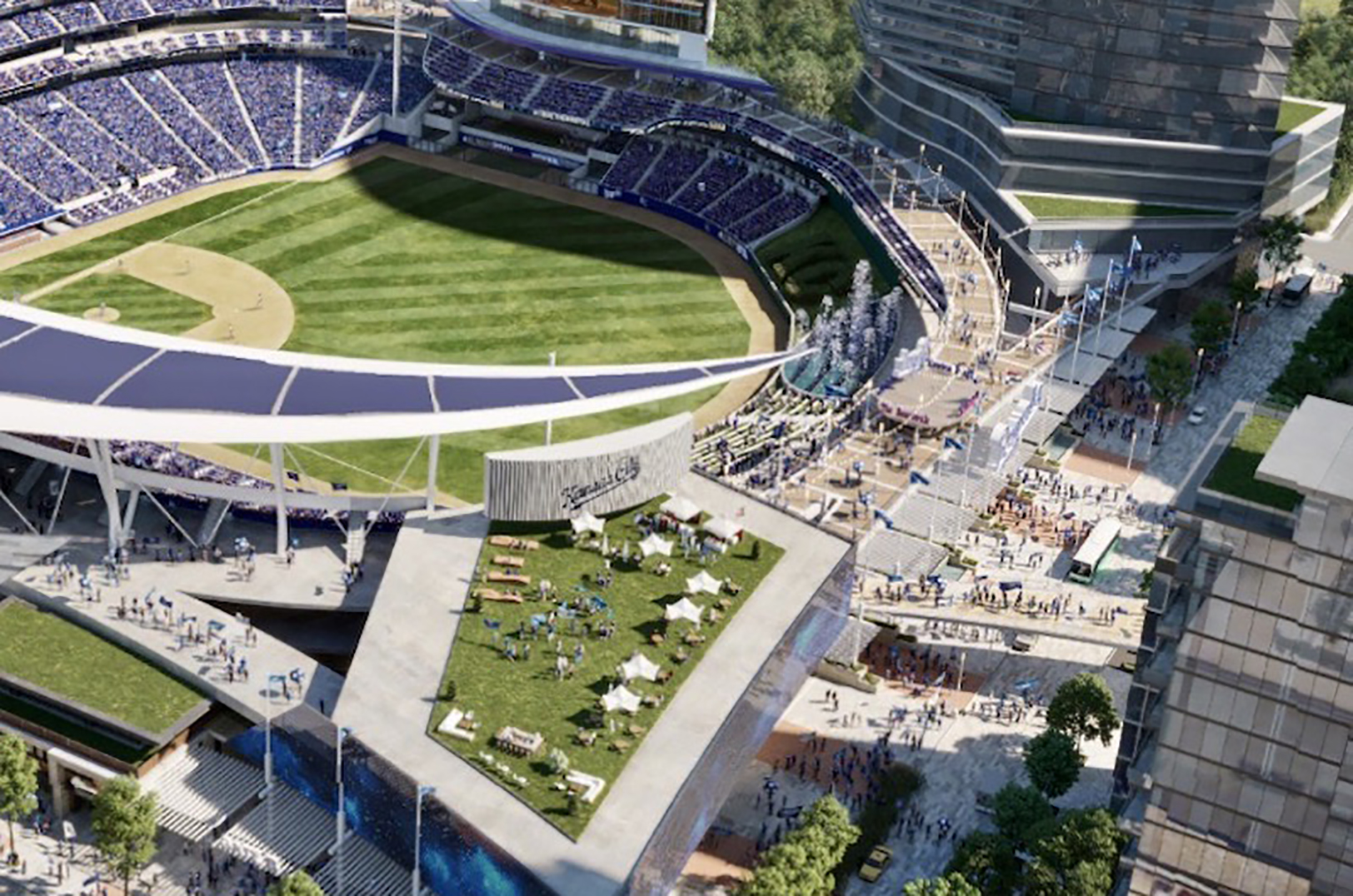
Rendering of a potential new downtown KCMO stadium for the Kansas City Royals, image courtesy of the Royals
Manfred toured the two sites while he was in town and mentioned that both are outstanding and present a tremendous opportunity for the community.
“I think in our economic system — because of some of the changes that I alluded to before — new facilities provide a ball club with revenue generation opportunities that simply don’t exist in older footprints,” he explained. “You have a great baseball park here. Having said that, it is an older ballpark that does not have the kind of premier, revenue-generating opportunities that you get in a new facility.”
“For a market of this size, those opportunities are crucial in today’s game in order to put the ball club in a position to be competitive over the long haul,” he continued. “If you’re in a really big media market and get big media dollars, it’s less crucial. In markets like this, you need that live-gate revenue opportunity to be competitive.”
The modern ballpark experience, Manfred noted, is also crucial to appealing to younger fans.
“That’s attractive to young families, young people that are vital to the future of our game,” he added.
No matter where the team lands, Sherman said, he thinks it’s important that the stadium continue to be a public-private partnership and not just funded by the current ownership group, which took over in 2019.
“We acquired this team knowing we had an old building, knowing this would be the most important decision that we would make while we have the privilege of stewarding this franchise,” he explained. And we want to partner on that. Whether we’re looking for a 25, 30, 40 year lease, at the end of that, that’s going to be somebody else’s problem, not mine. And I really want the Royals to be tied to this community in a long term way like it has been to this point.”
“We feel like it will deliver great public benefit and economic impact,” he added. “And we expect the community to measure that and hold us accountable for delivering that.”


2023 Startups to Watch
stats here
Related Posts on Startland News
Gatekeepers hate to see them coming: Why Back2KC leaders think these outsiders could be the next best Kansas Citians
A Kansas City homecoming movement with a track record of sparking real relocations and startup investment is gearing up for its annual gathering — welcoming expatriates and newcomers alike as it seeks to deepen ties between the city and its far-flung alumni. But the program’s high-octane leader insists the work of Back2KC isn’t just about…
Reservation for 650,000: KC’s hospitality industry braces for World Cup workforce scramble
Editor’s note: This story was originally published by The Beacon, a member of the KC Media Collective, which also includes Startland News, KCUR 89.3, American Public Square, Kansas City PBS/Flatland, and Missouri Business Alert. Click here to read the original story from The Beacon, an online news outlet focused on local, in-depth journalism in the public interest.…

Harvesting KCMO’s urban-to-rural development wins means taking down silos, EDCKC leader says
Editor’s note: The following is part of an ongoing feature series exploring impacts of initiatives within the Economic Development Corporation of Kansas City through a paid partnership with EDCKC. Kansas City’s growth isn’t just shaped by skyline-changing projects, said Heather Brown, describing a simple formula — and delicate balance — that keeps the region building upon its potential…

Roo-Up with pulled pork or bite into Big Salvy: Ding Dong Dogs debuts at KC Streetcar’s mouthwatering last stop
Matt McLain longed for the hot dogs he grew up eating as a young baseball fan in Chicago. His just-off-the-roller, quick-serve hot dog restaurant near UMKC and the extended KC Streetcar line squirts a dinger of nostalgia in an emerging destination known for elevated fare. It’s an opportunity McLain relishes, the Ding Dong Dogs owner…