

Beer isn’t paint by numbers, it’s science: Why the art of brewing gets its own showcase at Innovation Festival
July 28, 2023 | Matthew Gwin
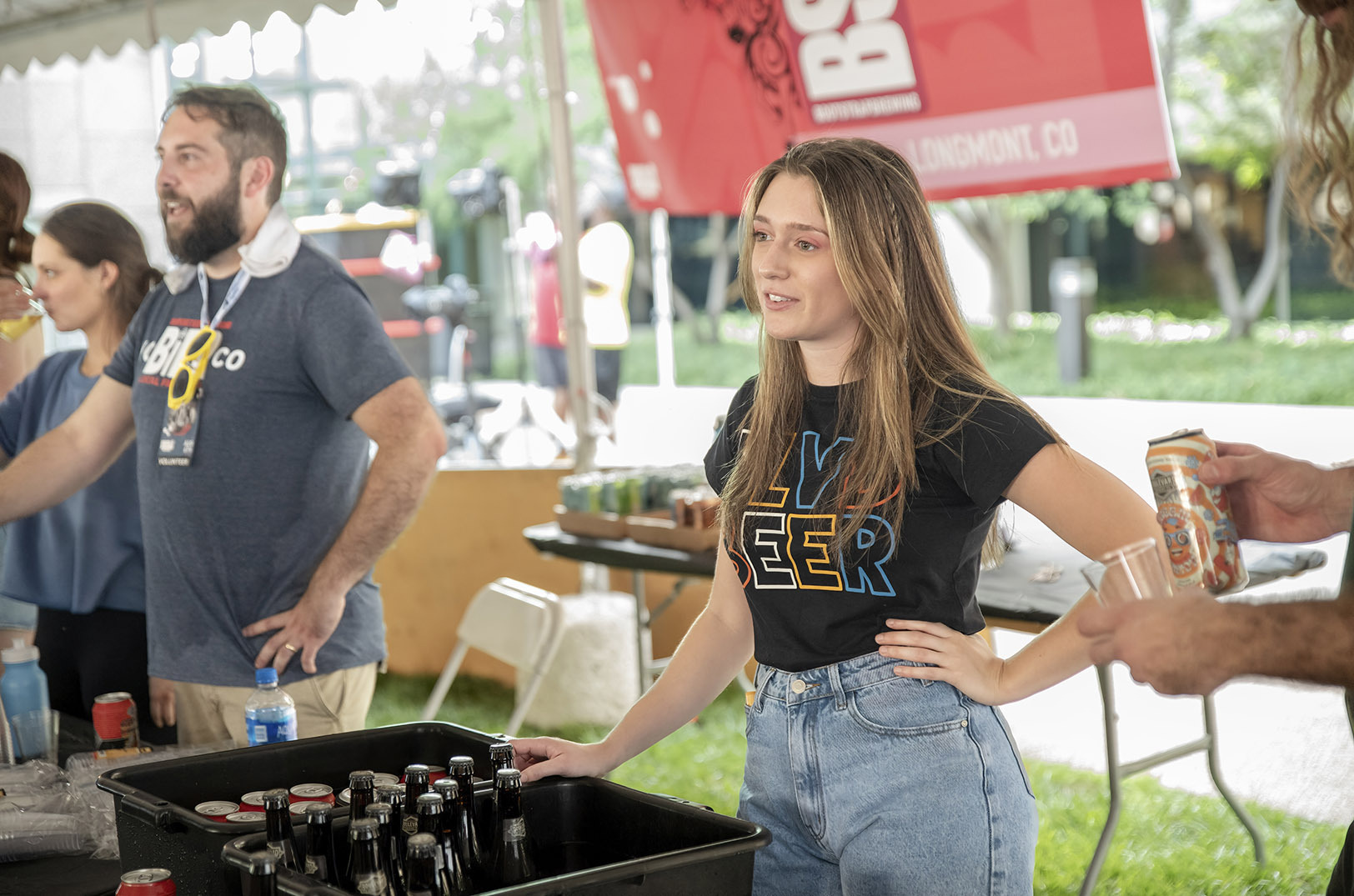
When Innovation Festival returns to Kansas City next week, the deep tech conference is set to highlight one popular group of makers who typically go unsung as scientists: brewers.
Innovation Festival — Thursday, Aug. 3 through Saturday, Aug. 5 at Crown Center — is expected to showcase breweries during the conference’s final day, said Sonia Hall.
“We think of brewers as the original biomanufacturers, initiating that technology,” said Hall, CEO of the Shawnee-based nonprofit BioKansas, which organizes the festival. “They’re basically using a piece of biology to help make a product, and in this case, it’s a product for consumption.”
Many people might not realize that beer and biologics go together, she added.
“It’s just a way to demonstrate to the broader community that they’re already involved with us; they’re already connected in some way,” Hall said. “There’s already this synergistic alignment of things that we enjoy and experience together, even though oftentimes we’re thought of as being very separate.”
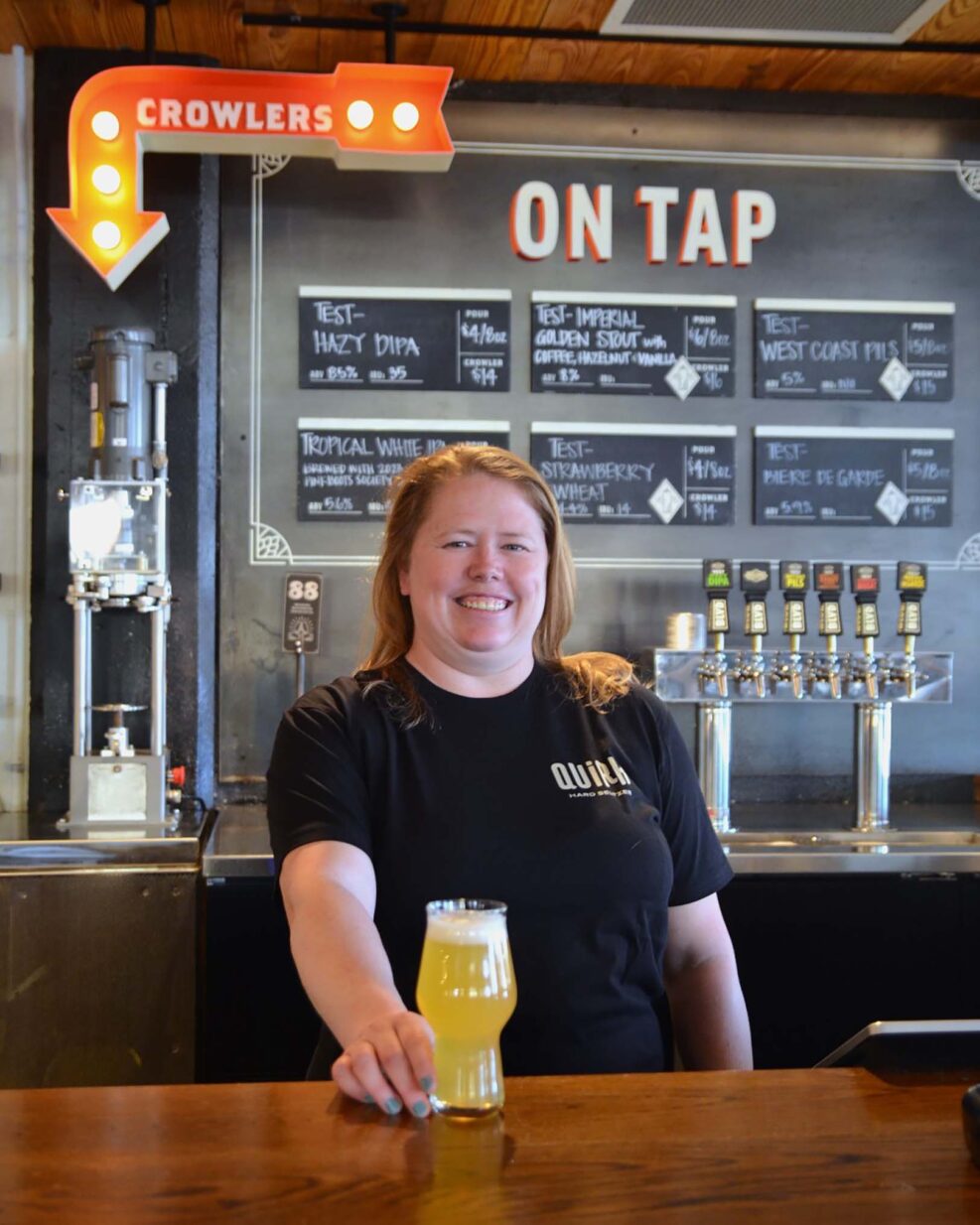
Jenna Muñoz, Boulevard Brewing
A cross-section of local breweries will be pouring drinks and answering questions at Innovation Festival, including Boulevard Brewing, Martin City Brewing Company, Crane Brewing, and Fields and Ivy Brewery.
Jenna Muñoz, brewer at Boulevard, attended last year in her role as co-chair of the Kansas City chapter of Pink Boots Society, an organization that encourages women and non-binary people to pursue careers in the alcoholic beverage industry.
Brewers in attendance were refreshed by the opportunity to receive completely different questions than they typically would in a festival environment, Muñoz recalled.
“Normally the questions we hear at festivals are, ‘What’s the ABV on this?’ or ‘How hoppy is it?’” Muñoz said. “This time, we were getting questions like, ‘How long have you been working on your yeast propagation for this?’”
That recognition of the scientific foundation of brewing has Muñoz — and other brewers — excited to return this year, she said.
“There are a lot of people who are really nerdy about brewing … and we get to talk like that with people at beer festivals now, which I think is crazy and awesome, because we don’t get to nerd out very often,” Muñoz said. “Now, we get a chance to show it off a little bit.”
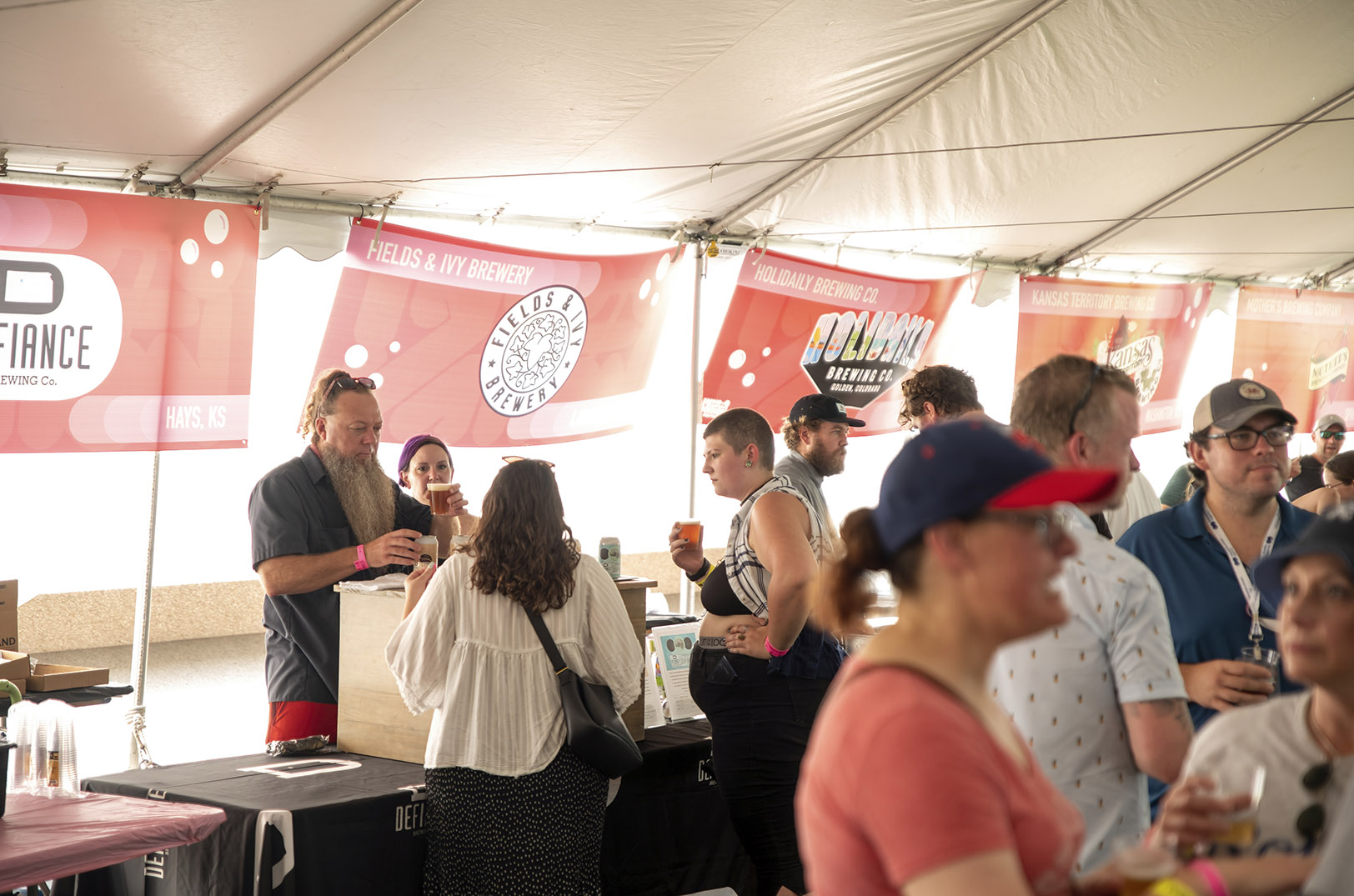
Event-goers explore the brewery showcase at the 2022 Innovation Festival; photo courtesy of Innovation Festival
‘Scientists in dirty cargo pants’
Beyond connecting with festival goers and fielding questions, brewers get the opportunity to put their scientific knowledge on display, Muñoz said.
“Brewers and breweries are not usually recognized as being part of the scientific industry, which is a major bummer, because we are a major part of it,” Muñoz said.
“A lot of the stuff we do on a daily basis involves biologics, microbiology, physics,” she continued. “Everybody thinks we just drink beer all day. Well, no, we don’t drink beer all day. We’re glorified scientists in dirty cargo pants.”
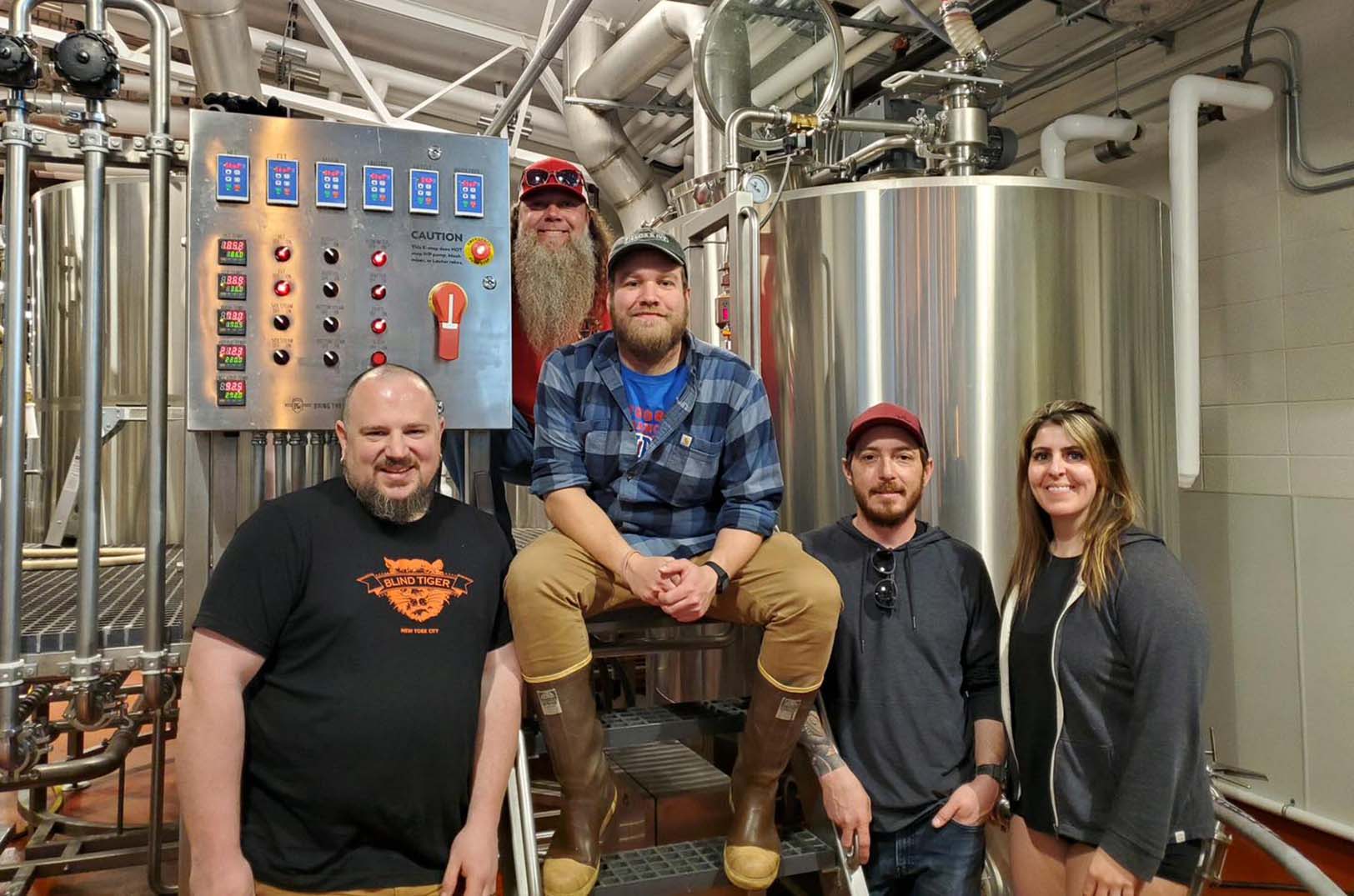
The Fields and Ivy Brewery team
Dan Chivetta, head brewer at Fields and Ivy Brewery in Lawrence, said people often don’t realize the depth of knowledge and understanding needed to brew.
“It takes a lot of experience to be able to know all the fine details, and all the nuances, and I don’t think a lot of people think about that,” Chivetta said.
Chivetta compared brewers’ knowledge and preparation to hitters in baseball, noting that neither can rely on raw talent alone.
“The best batters know every pitch from every pitcher, all their nuances, and most likely, what pitches they’re going to be thrown in a game,” he said. “Nobody really understands that; they just think it’s raw talent.”
Similarly, brewers have to expect the unexpected, said Muñoz, who previously worked with Chivetta at Fields and Ivy.
“There will always be something within that process that doesn’t react the way that you want it to,” Muñoz said. “Your job is not to control what the product does. Your job is to use your skill as an artist to take what the raw products have given you, and turn it into something more creative.”
“Innovation is really the representation of that intersection of technology and art,” Hall added. “That’s why we have brewers represented [at Innovation Festival]. That’s art and science together, and what we do is art and science together.”

Event-goers raise a glass at the 2022 Innovation Festival; photo courtesy of Innovation Festival
‘The most beautiful rainbow anybody has ever seen’
While his brewing techniques are rooted firmly in his scientific acumen, Chivetta does enjoy taking an artful approach to the craft, he shared, noting that the two can sometimes seem in conflict with one another.
“In some ways, art is the opposite of science, insofar as you go with gut instincts versus data,” Chivetta said. “The art is just kind of throwing caution to the wind, throwing peach and lemons together in a sour and coming out with peach lemonade sour.”
“The first person to make a big imperial double IPA just decided to throw a boatload of hops in the tank,” he continued. “Science would say, ‘Don’t do that,’ but art says, ‘Do it.’ Art says you can kind of do whatever you want, to a certain extent. That’s why I think of [brewing] as artistic.”
As a former attorney, Muñoz admitted that she prefers structure, crediting Chivetta and other brewers for encouraging her to add more creativity to the process.
“Basically, the difference was that [Chiveatta] was looking at beer as a coworker, and I was looking at beer as an employee,” Muñoz said.
That new perspective allowed Muñoz to reimagine brewing in her mind, she shared, allowing more wiggle room for exploration.
“I used to think beer was paint by numbers,” she said. “If you add the right amount of malt and the right amount of hops at the right time, and you ferment it at the right temperature with the right amount of heat, it will render this perfect product.”
“That’s not the way it is at all,” Muñoz added. “With beer, you get four colors, and you have to take those four colors and turn them into the most beautiful rainbow anybody has ever seen, to the point that they keep buying another glass.”
Even still, the art can only be created on a scientific foundation, according to Muñoz.
“I don’t think the art exists without the science behind it,” she said. “If you don’t have a thorough understanding — or at least a passable understanding — of the ingredients that you’re working with, and the physics and the biology of what you’re working with, I don’t know that you could create the same quality of product.”

Featured Business

2023 Startups to Watch
stats here
Related Posts on Startland News

Black Pantry expands nationally through online shop; founder works to set new standard for buying Black
Kansas City’s premier boutique for Black-owned essentials always had its sights set on building a national identity, said Brian Roberts, but he needed to prove himself and his business on the local level first. “A lot of people were pushing me in the beginning to go the website direction, but I didn’t want to do…

Federal funds will power Missouri investments for the next 8 years; here’s how your startup can apply
Applications are now open for a popular state-run co-investment program that can provide up to a $2 million equity-based investment in Missouri-based companies that have identified a lead investor for the round. The revived Venture Capital Program and specifically IDEA Fund Co-Investment Programs — coordinated by the Missouri Technology Corporation (MTC) — will be largely funded…

LaunchKC finalists: Meet 13 tech startups vying for six $50K grants in rebooted competition
A revived LaunchKC grants competition is set to return in mid-November with more than a dozen companies vying for $300,000 in non-dilutive funding. Finalists were announced Friday. The 13 Kansas City companies selected to compete Nov. 15 were narrowed from more than 90 applicants, said Becca Castro, strategic initiatives manager at the Economic Development Corporation…
Mushroom lover finds the perfect spot to hunt: Her own warehouse in North Kansas City
Robin Moore loves to cook with mushrooms, but she couldn’t always find the variety — like Lion’s Mane — she wanted at Kansas City stores. So she started growing them herself; ultimately turning the surplus into her own small business. “I’ve researched and kind of taught myself,” said the founder of MyCo Planet, who initially…