

Industrial coworking space eyes downtown KC; plans mixed office, warehouse amenities
May 5, 2023 | Nikki Overfelt Chifalu
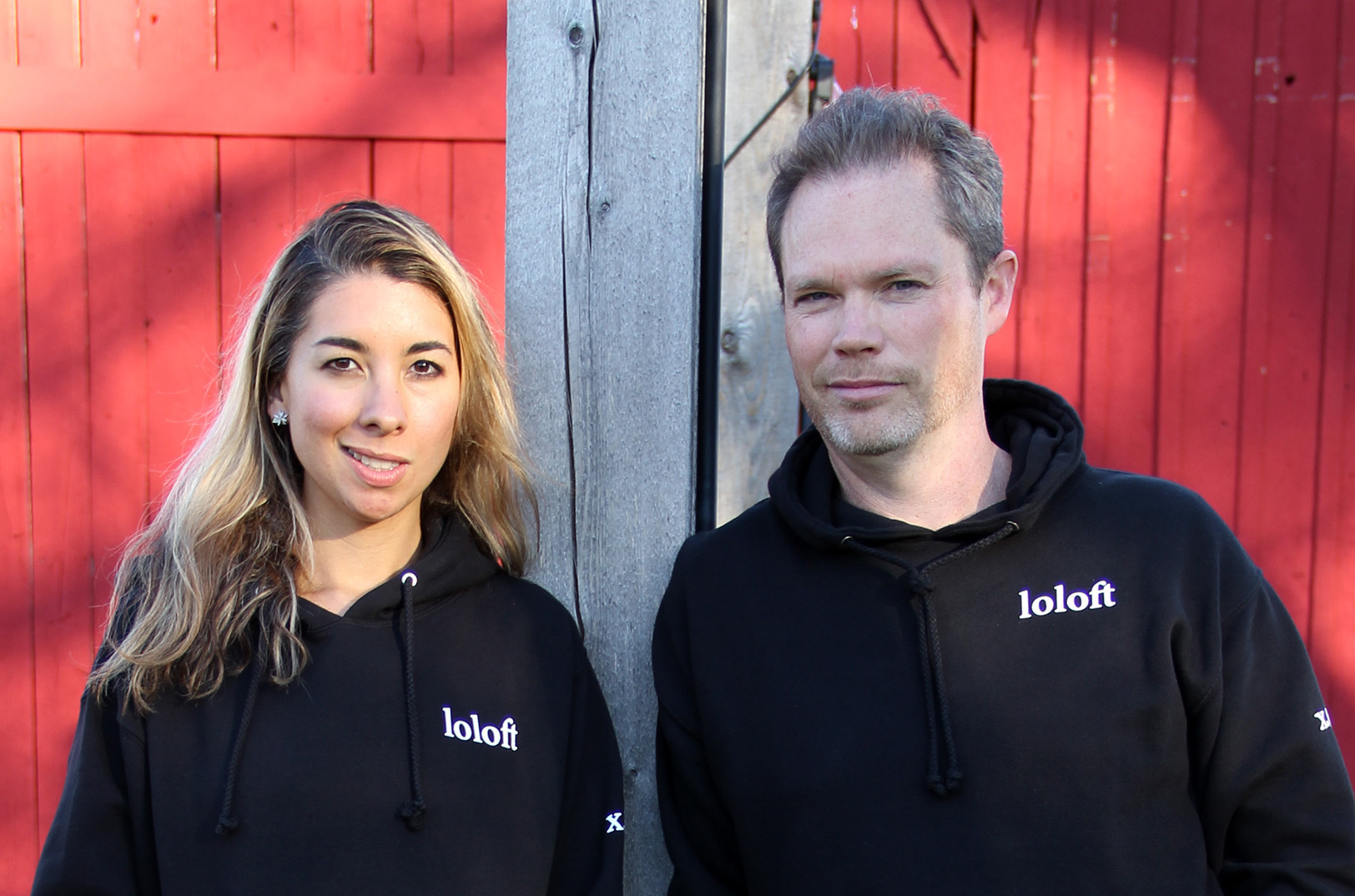
A Northwest Arkansas-based startup plans to bring a new coworking concept to Kansas City this year — one that combines flexible office and shared warehouse solutions, said CEO Brendan Howell.
“We call it industrial coworking,” explained Howell, co-founder and CEO of Loloft . “That’s a term that we’ve coined.”
The company is aiming for a mid-Q4 opening for its downtown Kansas City location, he continued. A pilot location in Rogers, Arkansas, is undergoing renovation and is scheduled to open in June.
Howell — a native of New Zealand — and co-founder Paola Ibarra — from Mexico — founded Loloft in 2020 and want to marry the traditional amenities of coworking spaces, such as conference rooms, a kitchen, meeting rooms, phone booths, and hot desk areas, with micro-warehouse spaces that range from 150 to 2,000 square feet.
“It doesn’t look anything like a warehouse really,” he said. “We tried to make it a much more welcoming environment and a place that people want to work.”
Click here to learn more about Loloft.
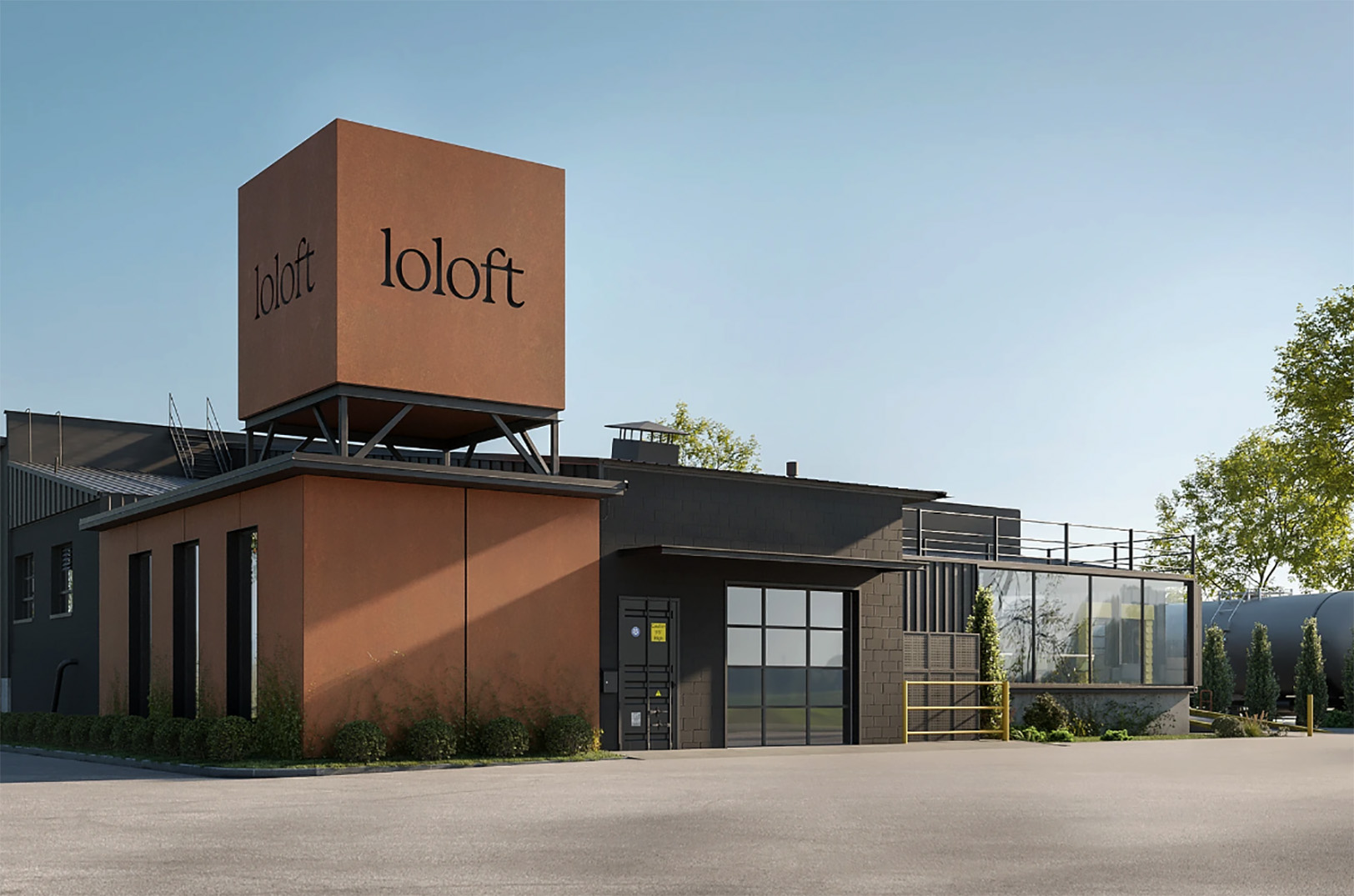
Loloft rendering for a previous concept in Arkansas
Like a traditional coworking space, Howell continued, the front desk will be fully staffed — as will the warehouse portion — providing their members with logistic support and eliminating the headache out of waiting for shipments.
“If you’re a company who has one of our units and you receive goods, even if you’re not there, we receive them for you and put them away,” he explained. “So we take the bottlenecks out of receiving goods.”
Loloft — backed by Revolution VC (Rise of the Rest Seed Fund) and RZC Investments (the Walton family) — also offers a minimum three-month lease option, Howell noted, and a fixed price that includes Wi-Fi and utilities, which is uncommon for a warehouse space.
“In my experience, it takes up to three months to negotiate a lease,” he said. “You’ve got to find a location, negotiate with the landlord, and commit for three to five years. And then there are often a lot of staffing requirements just to operate a location, especially if you’re receiving and shipping goods. You also need materials, handling equipment like forklifts and pallet jacks. We basically take all of those things out of the equation.”
Product of a pandemic pivot
When the pandemic hit in 2020, Howell took a partial exit from his first startup — Dropit, a sports fan engagement app, where fans could bid on items like upgraded seats during NBA games — and began importing face masks. After talking to a friend, who said he could set him up with a deal with Walmart, Howell decided to move from Miami and start manufacturing his own products in Northwest Arkansas. But the deal with Walmart fell through and he had a difficult time finding a manufacturing space.
“We needed about 5,000 square feet for a year, but the best we could find was about 20,000 for five years,” he added.
Howell ended up finding a 280,000-square-foot factory and built a 2,000 square foot micro-assembly plant in the middle of it, he said.
“It was a light bulb moment for me,” Howell explained. “I thought, ‘Hey, why don’t we combine the concept of office coworking with warehousing.”
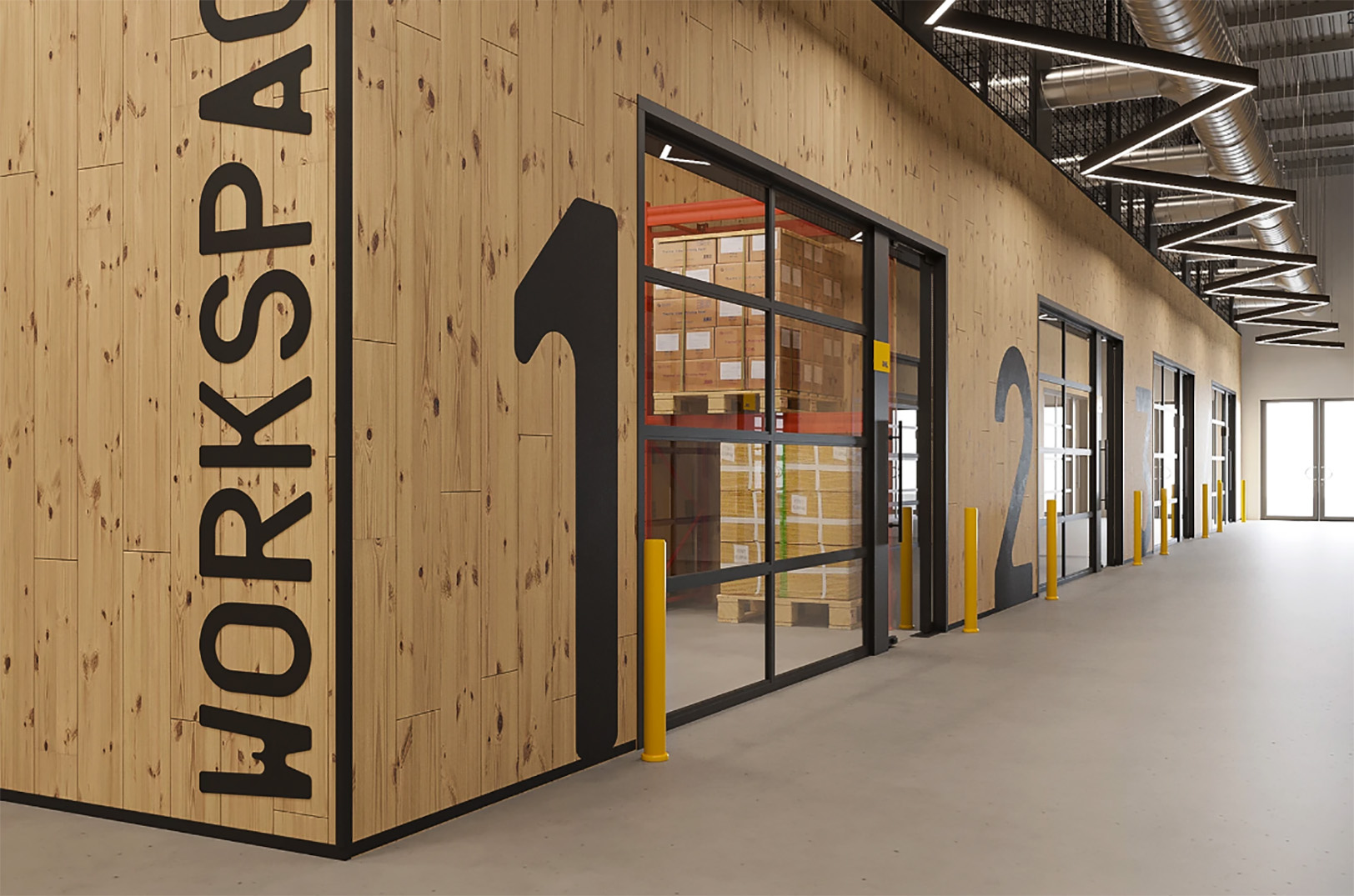
Loloft rendering for a previous concept in Arkansas
When developing the concept, he initially thought of the target market as small ecommerce companies, which typically progress from founders working from home to possibly a storage unit and then to signing a long-term lease. Current customers include ecommerce companies, Walmart vendors, and early-stage companies working on hardware prototypes.
“We basically sit in between the work from home and sign a lease piece,” he added.
But Howell noted he’s also had interest from larger companies who want a local footprint close to customers.
“We’re continually getting surprised with the companies that can use the service,” he said. “We’ve got a good product, and we’re rolling it out as fast as we can because there seems to be a real need for it.”
Loloft is currently working to secure locations in multiple US markets, Howell shared. Kansas City is a logical expansion city for them due to the proximity to their home base of NWA and the growth the region is experiencing.
“It’s a vibrant market,” he explained. “I liked the feel. I get the sense the city’s really starting to move, and we want to help support that growth by providing a home for companies that need flexible micro-warehouing and office coworking solutions.”


2023 Startups to Watch
stats here
Related Posts on Startland News

Smart city leader: Can technology predict deadly shooters before it’s too late?
A smart city is a safe city, Herb Sih said. And technology can help. “If you don’t have safety, you don’t have anything,” said Sih, managing partner at Think Big Partners, one of the key collaborators in Kansas City’s $15.7 million public-private Smart City initiative. Having grown up in St. Louis, Sih said he has…
T-shirt printer GOEX hopes to clad workers in dignity
A Kansas City T-shirt screen printer has a lofty mission: Turn local purchases into global impact. “Your dollar has value in how it’s treating others across the world,” said Ryan Hudnall, engagement director at the Global Orphan Project. Tucked away near Wyandotte and 31st streets, GOEX serves as an offshoot of the Global Orphan Project,…
Looping back? Missouri partners with Hyperloop to study 23-minute KC-St Louis route
Missouri’s prospects for landing a Hyperloop route apparently aren’t off the rails after all. Despite the company revealing four U.S. finalist routes in September — which did not include a proposed route through the Show Me State – Hyperloop One announced Tuesday it has entered into a public-private partnership with the State of Missouri to conduct…

Techstars Spotlight: GRIT Virtual builds 3-D tech into 2-D construction mindset
3-D should stay 3-D, said Chris Callen, CEO of GRIT Virtual. And with the rise of virtual reality and augmented reality technology, that philosophy can be applied to the construction of 3-D buildings, Callen said. Wichita-based GRIT Virtual is a software-as-a-service platform for large contractors. It uses VR software to streamline the workflow for construction…