

Tesseract earns $1.25M contract to help Space Force, military ‘predict the future’
April 19, 2023 | Startland News Staff
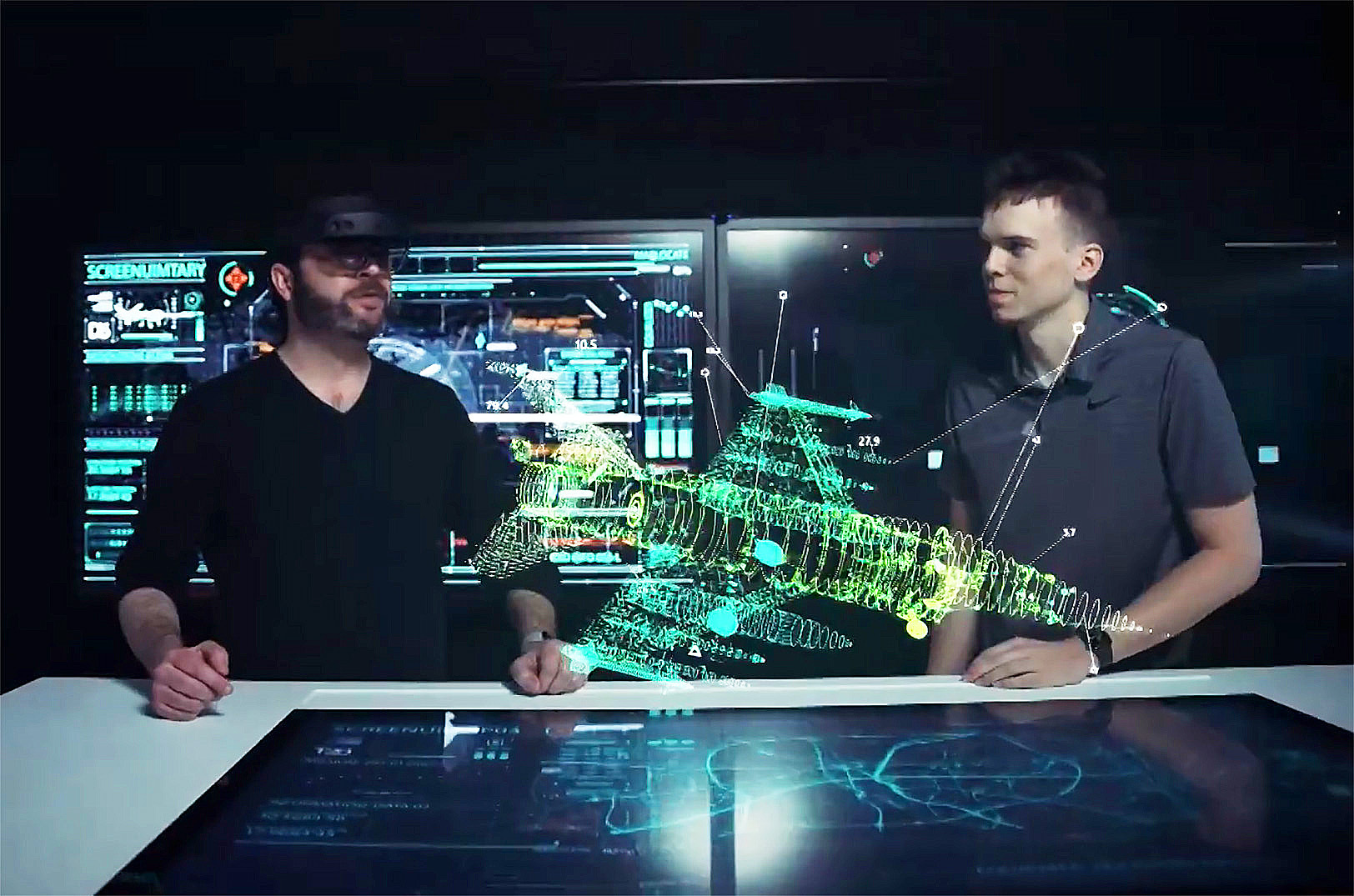
Industry-defining tools built by Kansas City’s Tesseract Ventures will help the U.S. Space Force accurately track machines, people and objects on base, and create a clearer understanding of launch conditions through next generation data visualization, said John Boucard.

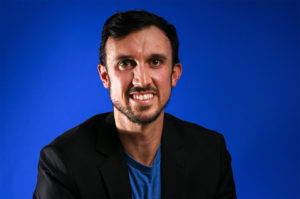
John Boucard, Tesseract Ventures
Tesseract announced Tuesday that the company has been awarded a direct-to-Phase II Small Business Innovation (SBIR) contract by the Space Force through AFWERX. The $1,250,000 contract is designated for research and development at Space Launch Delta 45 at Patrick Space Force Base, Florida, and at Cape Canaveral, Florida.
“At Tesseract Ventures, we are driven by a sense of duty and purpose to make a positive impact on the world through the development and deployment of cutting-edge technology — for exactly the right customer at exactly the right time,” said Boucard. “Our SBIR Phase 2 relationship with the United States Space Force is an incredible opportunity to leverage our innovation studio, For All Kind, to accelerate the development of advanced 21st century wearable robotics, data visualization in all dimensions, and digital twin technology. It is an honor to be part of this contract.”
RELATED: Tesseract deepens military ties with deal to develop smart space hub for US Air Force
Under the newly announced contract, Tesseract will further develop its Tesseract Smart Space, Prism hardware and Mosaic software to create a multi-dimensional common operating picture of the launch environment.
Click here to learn more about Tesseract Ventures’ technology and its portfolio of genre-smashing, industry-crossing studios.
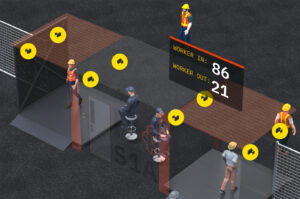
Tesseract Venture’s PRISM technology
Prism’s real time location tracking hardware works with Mosaic’s data analysis software to collect and parse data from across the spaceport, detailed Boucard. These work to track inventory, equipment status, staff locations, environmental conditions and much more. This information can then be used to visualize a digital twin of objects such as rockets, or the entire space port. Armed with a data-enhanced picture that can be viewed from multiple vantage points in the Tesseract Smart Space, teams will get up-to-the-minute insights into a vast array of conditions that can enhance safety, increase efficiency and produce better outcomes.
Tesseract was founded in 2018 by John Boucard, a veteran inventor, engineer and technologist. It was named one of Startland News’ Kansas City Startups to Watch in 2020 — later becoming a go-to tech powerhouse for military and national security applications.
The company — which now splits bases of operations between Overland Park, Kansas, and Tampa, Florida — enables businesses to defy the boundaries of space and time through next-generation technologies. Robots, smart spaces, wearables and radically connected platforms are just some of the tools created by Tesseract in its mission to make industries smarter, better connected and more efficient.


2023 Startups to Watch
stats here
Related Posts on Startland News
Big wins up the odds: KC’s standing among Midwest peer cities rises in new M25 ranking
Headline-grabbing success stories and newly boosted state funding for startup support are a powerful combination, said Victor Gutwein, detailing Kansas City’s higher 2022 spot on M25’s annual ranking of Midwest startup cities. Kansas City rose to No. 11 of 59 in the deep dive report — which explores how micro-environments in the Midwest are performing…

They told him to build it in California; this agtech founder came back to Kansas instead
When it came time to plant Trevor McKeeman’s agtech startup, he refused to farm the groundbreaking company’s future out to the coasts — specifically California where potential funders said he could find “money and talent.” “I was actually in Boston at the time,” explained McKeeman, founder and CEO of HitchPin, a digital marketplace for farmers…

Stream smarter, safer: Former Cisco engineer aims to replace Zoom as top video conferencing platform
Kenneth Yancy has been live streaming since the early 2000s — a time when not many were interested in the technology, he said. But 20 years later, a virtual-hybrid work model featuring video conferencing is the norm. “In 2001, I was working for Cisco as an engineer. My team and I built the first live…
‘Fan favorite’ among KC startups joining Wichita cohort; the prize: a playbook for reaching corporate customers
Startland News’ Startup Road Trip series explores innovative and uncommon ideas finding success in rural America and Midwestern startup hubs outside the Kansas City metro. This series is possible thanks to the Ewing Marion Kauffman Foundation, which leads a collaborative, nationwide effort to identify and remove large and small barriers to new business creation. WICHITA…