

Rock Chalk hustle: KU launches ‘Startup Jayhawk’ event series to demystify entrepreneurship
April 18, 2023 | Matthew Gwin

Editor’s note: The University of Kansas’ School of Business is a partner of Startland News.
LAWRENCE — A three-day startup event series at the University of Kansas is expected to help shine a spotlight on student entrepreneurship and innovation, said Brian Anderson, noting an intentional effort by KU’s School of Business to make startup life more accessible — especially for those who can’t yet see themselves as founders.
Startup Jayhawk is set for April 25-27, featuring two programming sessions each day — including a student-led fireside chat, a side hustle panel discussion, and a reverse pitch competition where students will compete for $5,000 in scholarships.
The debut event series is all about acknowledging accomplishments and elevating what’s possible, emphasized Anderson, professor of entrepreneurship and management and entrepreneurship area director for KU’s School of Business.

Brian Anderson, University of Kansas School of Business
“This notion of celebration was really important to us,” he said. “We wanted to create a space where students can engage with each other and engage with KU’s entrepreneurship ecosystem in a way that lowers barriers, that lowers friction, and — in a lot of ways — demystifies the entrepreneurship process.”
Click here to view a full schedule and description of each Startup Jayhawk event, including a keynote session with Jeni Britton, founder and chief creative officer of Jeni’s Splendid Ice Creams.
Among its goals, Startup Jayhawk aims to create opportunities for students to build meaningful connections with professionals from a diverse range of industries and backgrounds, Anderson said.
“Everything that we do is centered around student opportunity and creating value for students,” he said. “So for Startup Jayhawk, it’s a way for students to see what is available … and really be able to make connections.”
Those relationships can be valuable when students meet an entrepreneur or business founder whose personal background relates to their own, Anderson added.


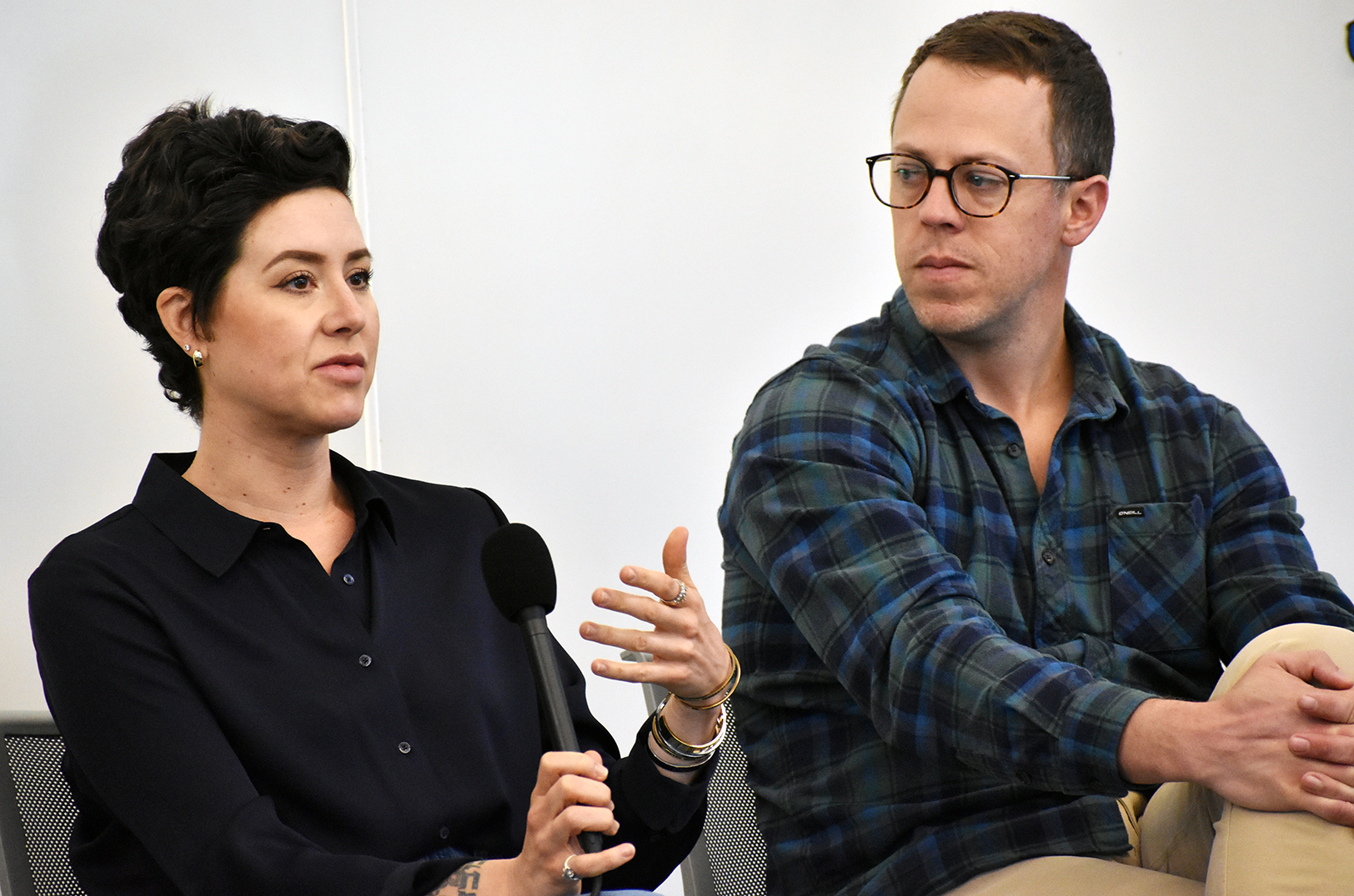
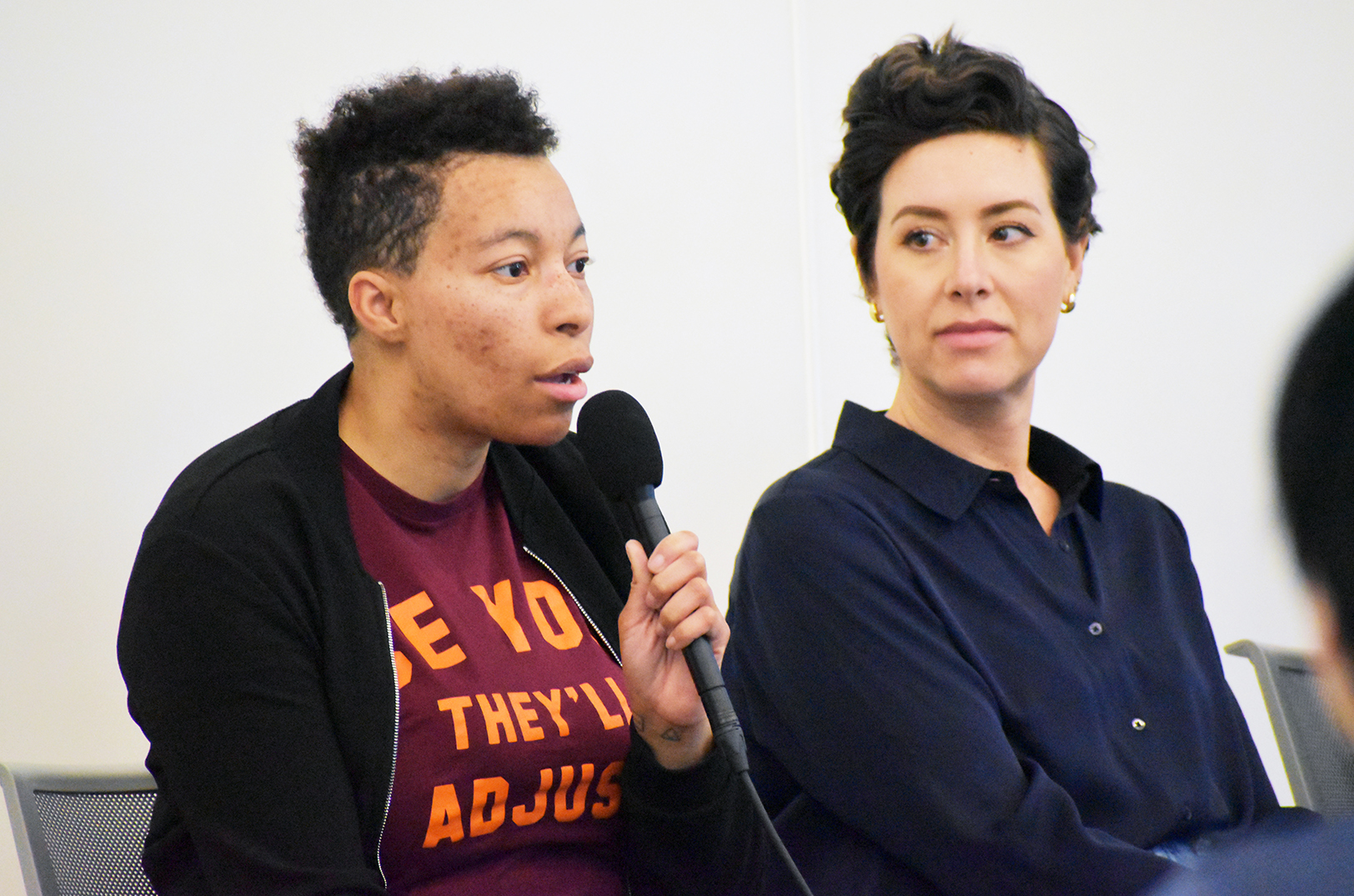
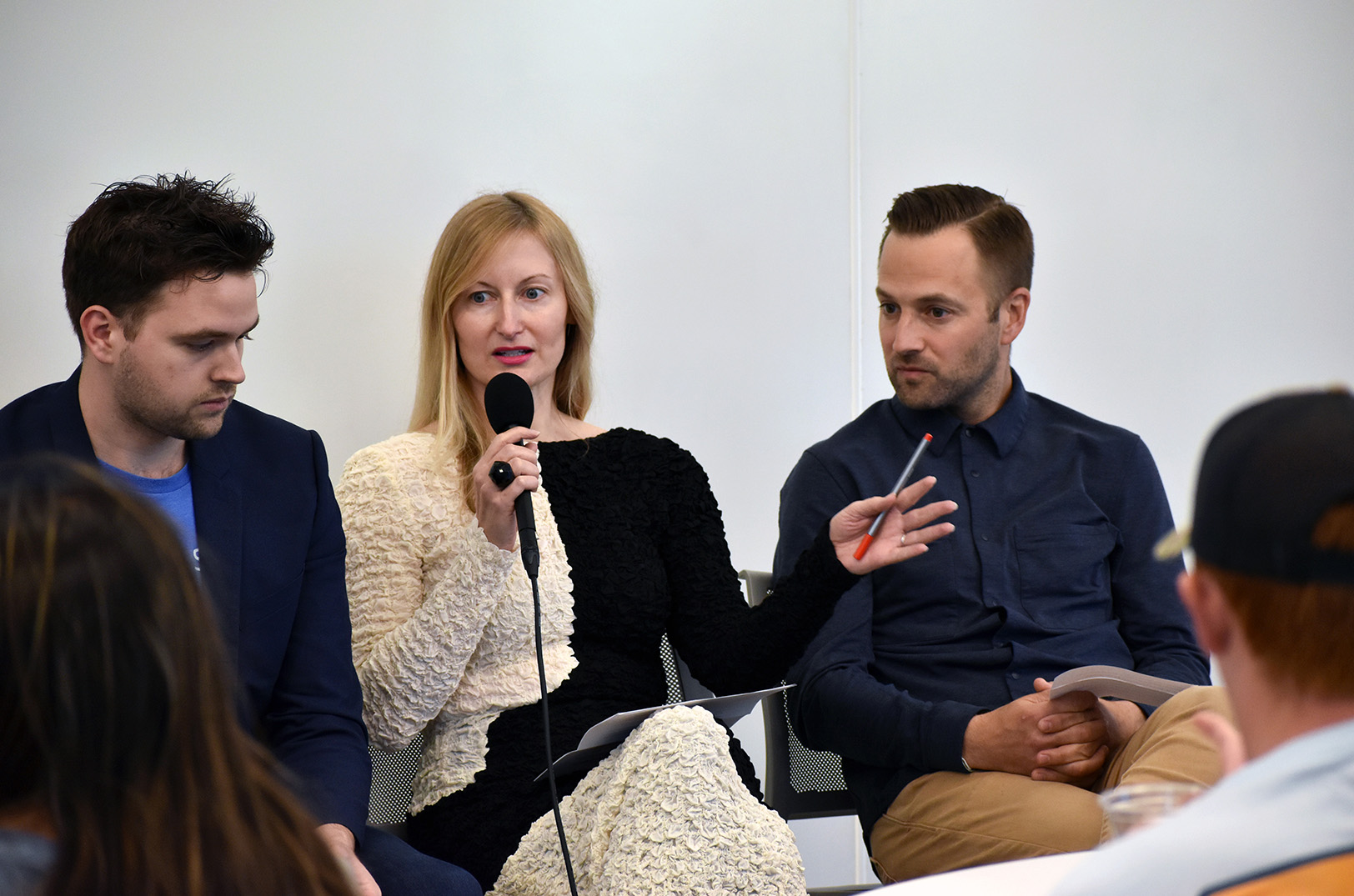
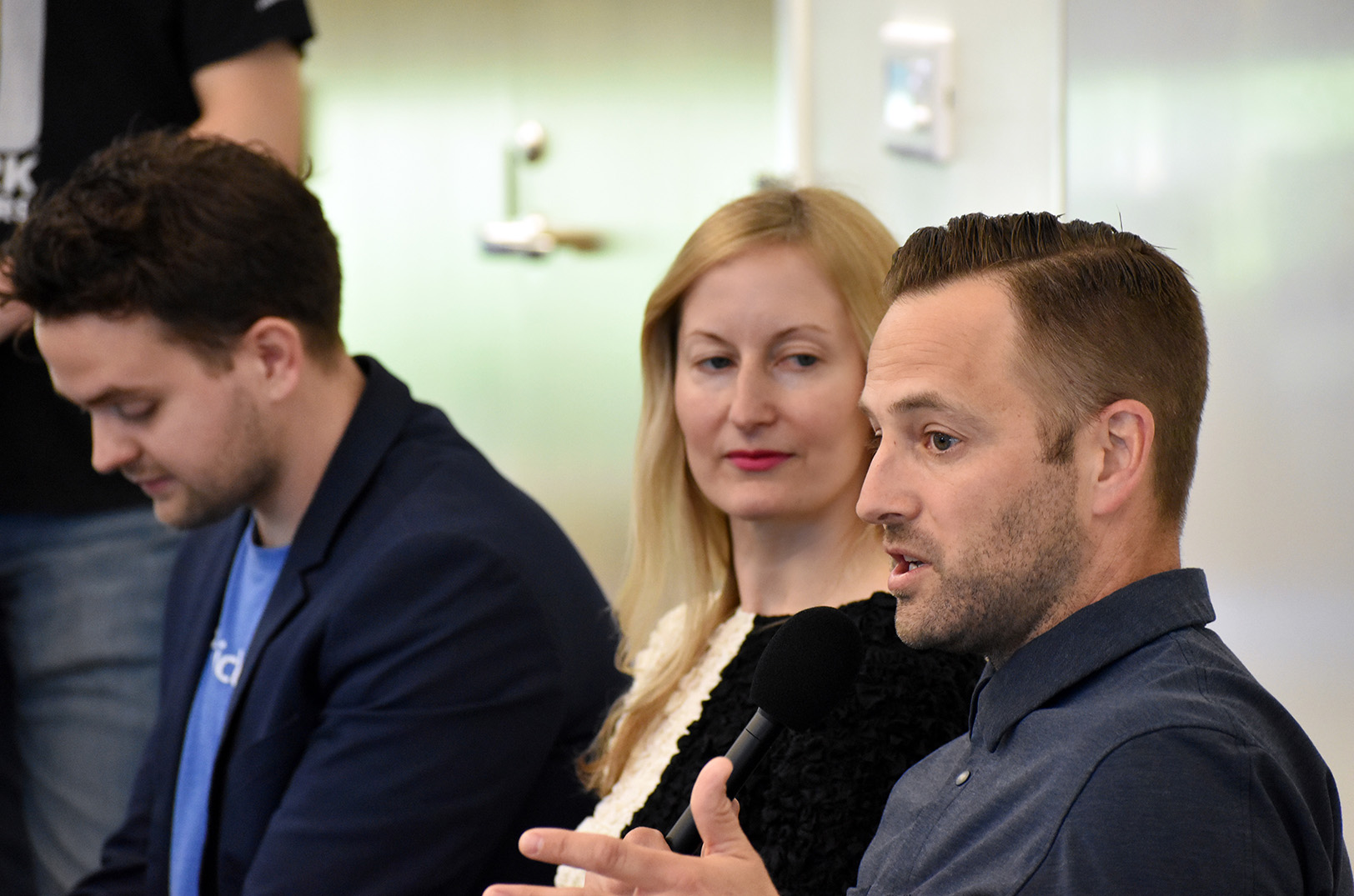

Kansas City founders Juaquan Herron, Venboo; India Wells-Carter, Fresh Factor; and Sam Kulikov, KC Pioneers; participate in a panel conversation during Startland News and the KU School of Business’ entrepreneurial lunch and learn series; photo by Austin Barnes, Startland News
“[That’s true] particularly for students who are coming from very different life perspectives, being able to make connections with entrepreneurs who they can identify with, who allow them to imagine new possibilities, [is valuable] because they made a connection with somebody who is coming from a similar life experience and can be a role model or a mentor,” he said.
KU’s School of Business also partnered with Startland News this spring for a separate “entrepreneurial lunch and learn” series that brought Kansas City startup founders to campus to provide students with real-world experiences and stories — from conversations on funding and market validation to entrepreneurs detailing how they went from working in someone else’s startup to founding their own.
The final session in the five-part event series wraps this week.
Embracing the challenge
The reverse pitch competition at Startup Jayhawk will provide students with a tangible opportunity to make an immediate impact on an existing business. At least eight teams of students are expected to propose a product idea to J Thomas Home, an Olathe business that makes custom handmade floating shelves.
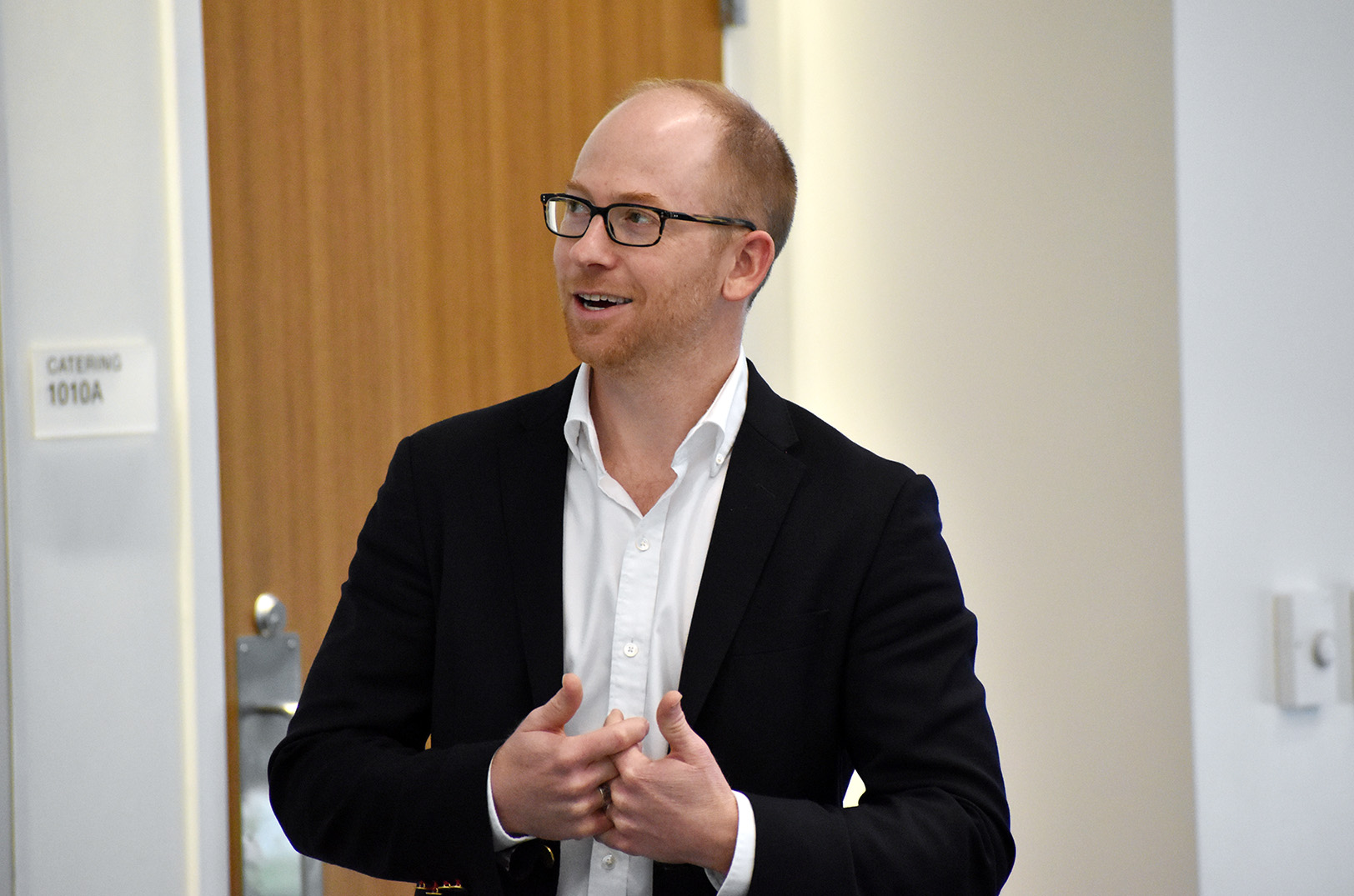
Ryan Rains, University of Kansas School of Business
The top four teams will collect a piece of $5,000 in scholarship money, and may even have their products adopted by J Thomas Home, according to Ryan Rains, director of entrepreneurship co-curricular programs for KU’s School of Business.
“Rather than students needing to come up with the problem as the entrepreneur and try to find a market, we’re bringing the market to them and saying, ‘Here’s the problem they’re facing. What ideas and recommendations do you have?’” Rains said.
The challenge targets easy student engagement, Anderson added, noting that students should be able to participate even without having a deep understanding of cabinetry.
“It’s a fun problem,” Anderson said. “It’s meant to be a way for students to engage in problem solving and ideation without having a lot of technical understanding of how to make a cabinet or how to make a shelf.”
The KU School of Business aims to cultivate an environment that encourages students to try new things and remove the fear of failure, Rains said.
“I think one of the huge benefits is that we’re actually creating a space, and then we’re setting up structure, not pressure,” he said. “We’re creating communities for students to try.”
That safe environment, when paired with steady support and mentorship from faculty at the business school as well as industry leaders, leads to accountability and — ultimately — learning, Rains added.
“It’s different than going online and finding a video and then trying by yourself,” Rains said. “That’s hard to do sometimes, but in these experiential learning spaces with others, by having weekly check-ins, there’s sort of a built-in accountability.”
“You don’t have to start a business,” he continued. “That’s not the ultimate goal. It’s about trying and learning. By being a part of something with other students, there’s more internal communal motivation to try something and learn.”

Capitol Federal Hall, University of Kansas School of Business; interior rendering courtesy of the University of Kansas
You can do this; you can do it now
Now in its first year, Startup Jayhawk is envisioned as an annual event, Anderson said, and serves as a culmination of the School of Business’ efforts to reimagine and reinvest in entrepreneurship.
“This past year, we’ve really taken a deep dive into our programs and specific courses, and really looked for ways to create more opportunities for students to engage, lower barriers to engagement, and open up our programs to students across campus,” Anderson said.
Part of that reimagining focuses on catering programming to students who may not yet envision themselves as entrepreneurs, or may not have interest in technology, Anderson said.

Capitol Federal Hall, University of Kansas School of Business; photo by Tommy Felts, Startland News
He categorized students into three groups: “now” entrepreneurs, who already have side hustles and entrepreneurial ideas; “later” entrepreneurs, who have interest down the road; and “serendipitous” entrepreneurs, who can’t yet imagine themselves as entrepreneurs.
“When you think about the University of Kansas, the later entrepreneurs and the serendipitous entrepreneurs are by far the largest group on campus,” Anderson said. “For most of them, their interests are going to extend well beyond technology. … We wanted to address this other population of students where technology may not be part of the equation and maybe that dream right now doesn’t exist more than a side hustle.”
All in all, KU’s School of Business hopes Startup Jayhawk and similar events will offer students a chance to begin imagining their own entrepreneurial journey — and realize they can make an impact sooner than later, Anderson said.
“We’re going to help you take the first step,” he said. “It might seem a little scary, but there’s never been a time in history where the barrier to being an entrepreneur has been lower. There’s still risk; there’s still uncertainty; but what we’re hoping to communicate to students is, ‘You can do this, and you have support.’”

Featured Business

2023 Startups to Watch
stats here
Related Posts on Startland News
MECA students to Goodwill: Everyone has a mission now — what else are you selling?
Editor’s note: MECA Challenge and Startland News are both programs of the Kansas City Startup Foundation, though the content below was produced independently by Startland. For more information on the relationship, click here. Goodwill must innovate and change with the times if it’s going to survive after 125 years in business, said Ed Lada. “The…

Prestio drives users to auto dealerships without traditional car buying pain points
Gone are the days of traditional car buying for Ben Anderson, the first customer of Kansas City-based startup Prestio. Anderson, an accounting professional at CBIZ, had grown deeply frustrated by auto dealerships, he said. In fall 2017, he turned to Prestio –– a first-of-its-kind software-as-a-service platform that allows customers to buy, trade, and finance vehicle purchases…

Crema co-founder details expansion experiment at Thinking Bigger breakfast
Crema’s work is all about proximity, said George Brooks, seeking to clarify potential misperceptions about the digital product agency’s foray into markets outside Kansas City. “We’ve been running an experiment,” the Crema co-founder told a crowd at Thinking Bigger Business Media’s recent Big Breakfast. “We’re from Kansas City, but probably 80 percent of our clients…

Techweek 100 list released: Dozens of KC’s top cultivators, ambassadors and innovators
Techweek Kansas City on Friday released its Techweek 100 list of the premier leaders pushing innovation in Kansas City. The collection of cultivators, ambassadors and innovators is a who’s who of familiar names across the startup, entrepreneurship and tech communities. Released in the runup to Techweek KC’s Oct. 8-12 festivities, the list isn’t a ranking,…