

City leader: Newly OK’d limits on Airbnbs will help keep Kansas Citians from being priced out of homes by unchecked rentals
April 12, 2023 | Matthew Gwin
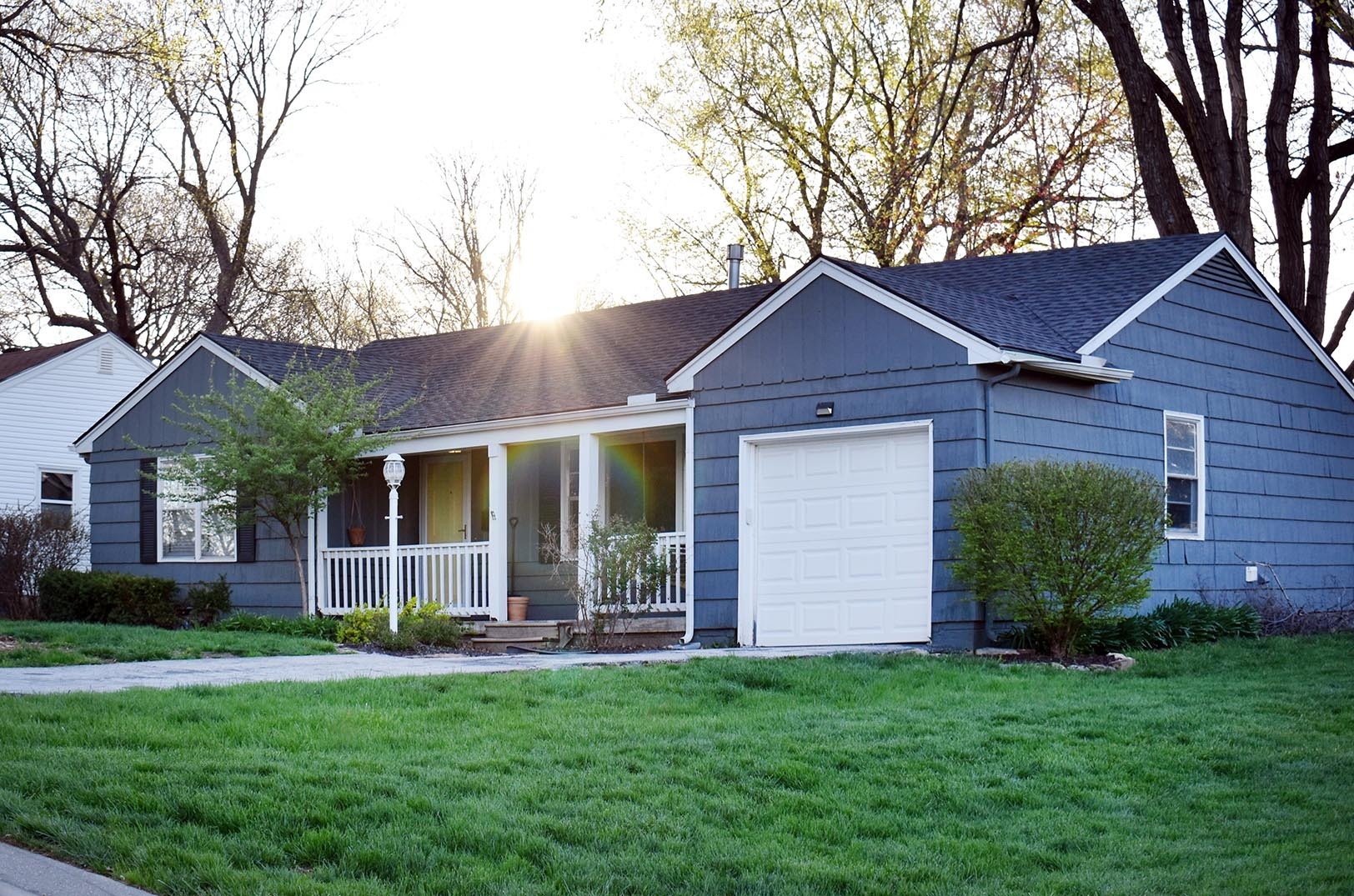
Voter approval of a pair of ballot measures that regulate and tax short-term rentals will boost the city budget and make neighborhoods more affordable as brands like Airbnb and Vrbo continue to operate in Kansas City, said Eric Bunch.
“The successful ballot questions are really about making this city whole on our financial expectations and putting short-term rentals on the same financial playing field as hotels,” said Bunch, councilmember for the fourth district who co-sponsored the ordinance to present the ballot initiatives for a public vote.
The passage of ballot Question 2 paves the way for the city to impose a 7.5 percent Transient Boarding and Accommodation Tax on all lodging properties — including short-term rental properties booked through popular platforms like AirBnb and Vrbo — that are not covered by the pre-existing 7.5 percent convention and tourism tax, which applies to hotels and motels.
RELATED: New taxes on recreational marijuana, Airbnbs win voter approval across Kansas City
Missouri state law does not allow Kansas City to apply the convention and tourism tax on short-term rentals as it defines hotels as establishments that have eight or more rooms for guests, something which Bunch said he would like to see addressed by the state legislature.
Ballot question 3 will allow the city to collect a $3 daily fee for each bedroom rented out, and applies to short-term rentals, hotels, and motels.
Bunch’s primary “big picture” concern about the unregulated short-term rental market is how Kansas City residents are being priced out of the housing and rental markets as out-of-town investors buy up properties with the intention of using them as short-term rentals.
“I think that contravenes what the whole program was all about, and it really contributes to the affordability challenges we’re seeing in our most desirable, amenity-filled neighborhoods,” Bunch said. “That is my larger concern personally, is that contribution to the lack of affordable housing options.”
Making the tax rolls whole
Bunch has also introduced two ordinances, scheduled to be heard next Wednesday by the neighborhood planning and development committee, to continue addressing short-term rental regulations, he said.

Eric Bunch, KCMO city council
If passed by the committee and the city council, the ordinances would prevent short-term rental listings in residential zones and make it a violation to post a short-term rental property on a third-party platform that is not registered with the city, according to Bunch.
“Quite honestly, we have a major gap in our municipal code that does not make it a violation of said code to post your property on one of those intermediary sites like Vrbo or Airbnb,” Bunch said.
“A very simple thing that other cities have done is just simply make it a violation of that section of the code to list your property, so if you just get caught listing it, you are subject to the fines and subject to expulsion from the program,” Bunch continued.
Kansas City government officials are working with intermediary platforms to codify an agreement that would see the sites de-list any unregistered rental properties, Bunch added.
Short-term rentals that have been licensed and registered with the city are expected to be grandfathered into the new program, Bunch said.
The vast majority of short-term rentals in Kansas City operate without a proper license — a city audit from last December revealed that only 11 percent of an estimated 1,900 short-term rental properties had proper permits.
A November 2022 audit concluded that the city lost out on roughly $2.28 million in tax revenue from short-term rentals between July 2021 and August 2022, revenue that will now be collected as part of the transient boarding and accommodation tax.
During that same time period, the city also missed out on about $350,000 in occupancy fees, which will now be resolved by the daily $3/bedroom fee.
“Those taxes and fees exist for a reason; they exist to support important city services, and so we just want to make sure that we’re getting that revenue,” Bunch said.
Re-establishing community
Although revenue, regulation, and fairness are key reasons Bunch supports changes to how the city deals with short-term rentals, he also champions the belief that the ordinances will benefit Kansas City residents, he said.
Bunch identified three major concerns constituents raised to him about how the unchecked short-term rental market impacts their lives: reduced sense of community, neighborhood disruption and safety concerns, and the lack of affordable housing.
In terms of the sense of community aspect, Bunch pointed to the Southmoreland neighborhood near the Plaza as an example of how outside investment groups have purchased a slew of properties never intended to be lived in permanently.
“At some point, the block becomes virtually nothing but short term rentals, and that, I think, has a negative impact on that sense of community,” Bunch said.
As far as safety concerns, Bunch noted residents have complained about over-occupied homes, illegally parked vehicles, and noise disruptions from parties at some rental properties.
“That kind of disruption is a common occurrence,” Bunch said. “There’s a feeling of like, ‘I don’t know my neighbors,’ especially in multi-family situations where you have new people coming in all the time. There’s a bit of a safety concern when your neighbor changes every week.”
Most importantly in Bunch’s mind, though, remains the way short-term rental properties contribute to the lack of affordable housing in Kansas City, he said.
“We want people to live permanently, either as a renter or as an owner-occupier,” Bunch said. “My goal as a policymaker at the local level is to ensure that we’re doing the best possible job for the people who live here and want to live here permanently.”
“While tourism is vital to this community, we can’t do it at the expense of people who do want to live here full-time and want to invest their time and their souls into this community,” Bunch continued. “We’re losing that when we allow a market like this to go completely unchecked.”


2023 Startups to Watch
stats here
Related Posts on Startland News

Rapid response, rapid scaling: Why the feds prescribed ModRN Health to meet nation’s indefinite demand for holistic virtual care
Kansas City-dispensed ModRN Health is scaling up and scrubbing in — working to help the U.S. government provide critical care on demand. The virtual primary care solutions startup has entered into a two-year indefinite demand and indefinite quantity (IDIQ) contract with the federal government — expanding its offerings beyond primary care and into critical care as…

Meal donation app comes to KC: How the phone-eats-first foodie photo trend can help fight hunger
People are already taking photos of their food — why not donate to food banks at the same time, Andrew Glantz proposed. “GiftAMeal is a free mobile app; each time someone takes a photo of their order from one of our partner restaurants, we make a donation to a local food bank to help give…

Calling all developers, designers and entrepreneurs: KC Digital Drive launching AR/VR challenge March 30
KC Digital Drive is giving all those interested in the field of augmented reality or virtual reality a new opportunity to solve real world problems through innovative solutions, explained Aaron Deacon. “[KC Digital Drive’s Augmented Reality and Virtual Reality (AR/VR) Heartland Developer Challenge] is a series that goes from the early ideation phase to project…

Checkmate: Inventors’ high-tech chess board unlocks worthy opponent for rookies to rooks
An Overland Park-built connected gaming startup is making moves that run the queen’s gambit — approaching nearly $1 million in crowdfunding and unveiling its mission to make STEM-focused games more approachable. “I think a lot of kids and adults lose interest right away in something like a Rubik’s cube or chess — because it’s difficult,” explained Jeff…