

Raven’s return-to-earth science is complete, founder says; a new space accelerator will help get the KCK-built tech off the ground
April 19, 2023 | Tommy Felts
A KCK startup that could revolutionize space transportation is among 14 companies selected this week for an accelerator program from Amazon Web Services that focus on “transforming the future of space for all of humanity.”
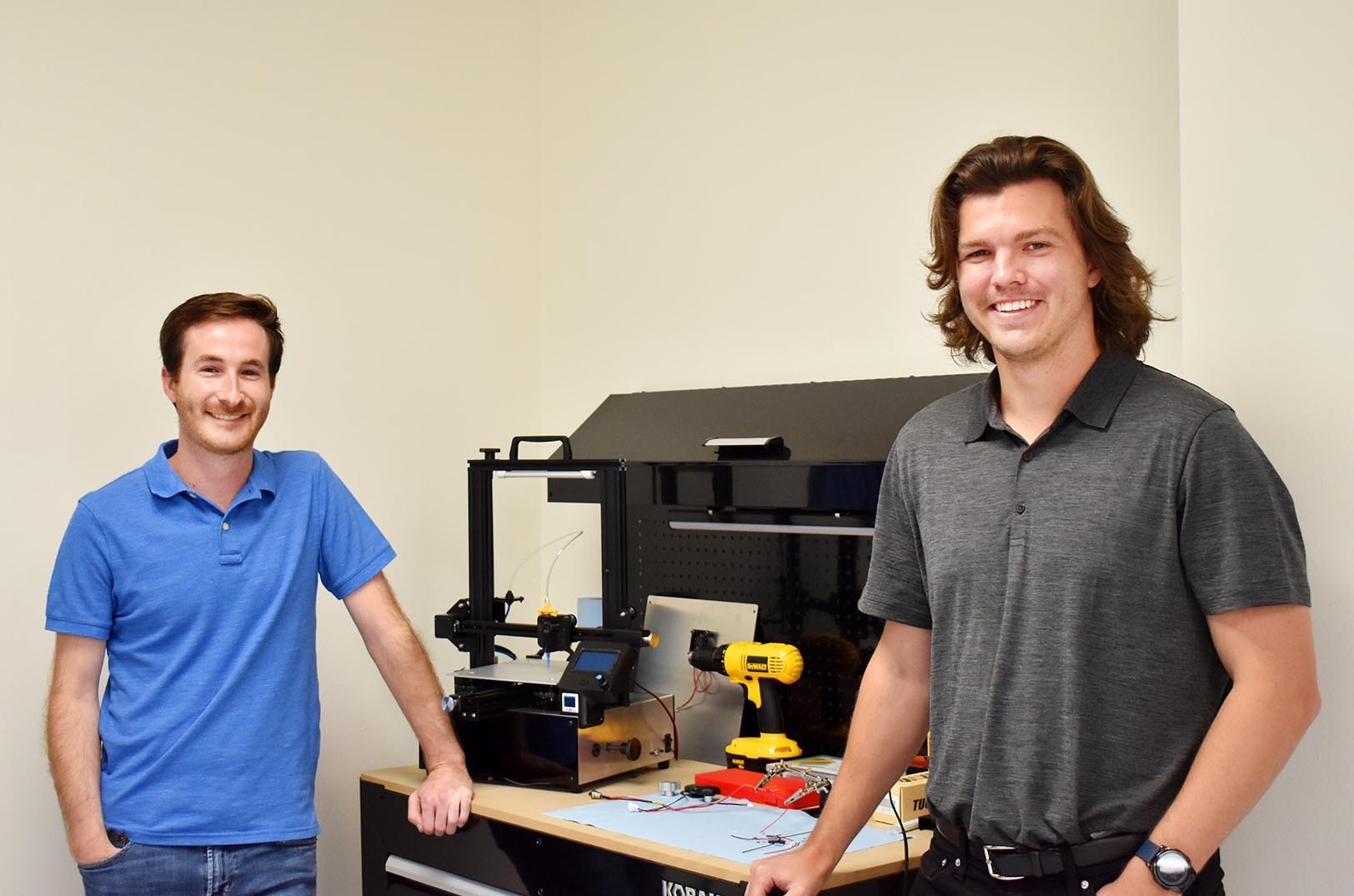
Kansas City-based Raven Space Systems — led by co-founders Ryan Cowdrey and Blake Herren — is building entirely 3D printed reentry capsules for on-demand cargo return from space. The company’s automated factory is expected to enable cheaper and faster capsule production with adaptability for any mission.

“While our innovation is a platform technology capable of 3D printing several composite materials for the first time, we recognize the value of focusing the development of this innovation to address a specific and high-impact problem,” Herren told Startland News. “Raven has de-risked the technology with our nondilutive funding and there is no science left to be done.”
“Engineering, scaling up our systems, and proving our 3D printed materials are our next steps,” he continued. “Therefore, Raven has started raising a seed round to fund the development of our industrial 3D printer and validate the performance of our 3D printed heat shield at scale with assistance from NASA.”
The 2023 AWS Space Accelerator — a technical, business, and mentorship program to help startups advance their space solutions and accelerate their growth using the cloud — is expected to help Raven on that journey.
AWS Space Accelerator participants receive business development and strategy support, specialized AWS training, mentoring from AWS space domain and technical subject matter experts, up to $100,000 in AWS Promotional Credit through AWS Activate, and support on building and scaling their solution worldwide. The curriculum also provides opportunities to work with AWS customers and AWS Partner Network (APN) Partners looking for innovative space solutions.
“From 3D-printed space vehicles to orbital robots, satellite solutions built on artificial intelligence (AI), and space-based initiatives that can help us better use Earth’s valuable resources, these emerging startups are leveraging AWS as they develop the next generation of exciting space technology,” AWS said of the 14 companies selected for the new cohort.
Click here to learn more about the other ventures selected for the 2023 program.
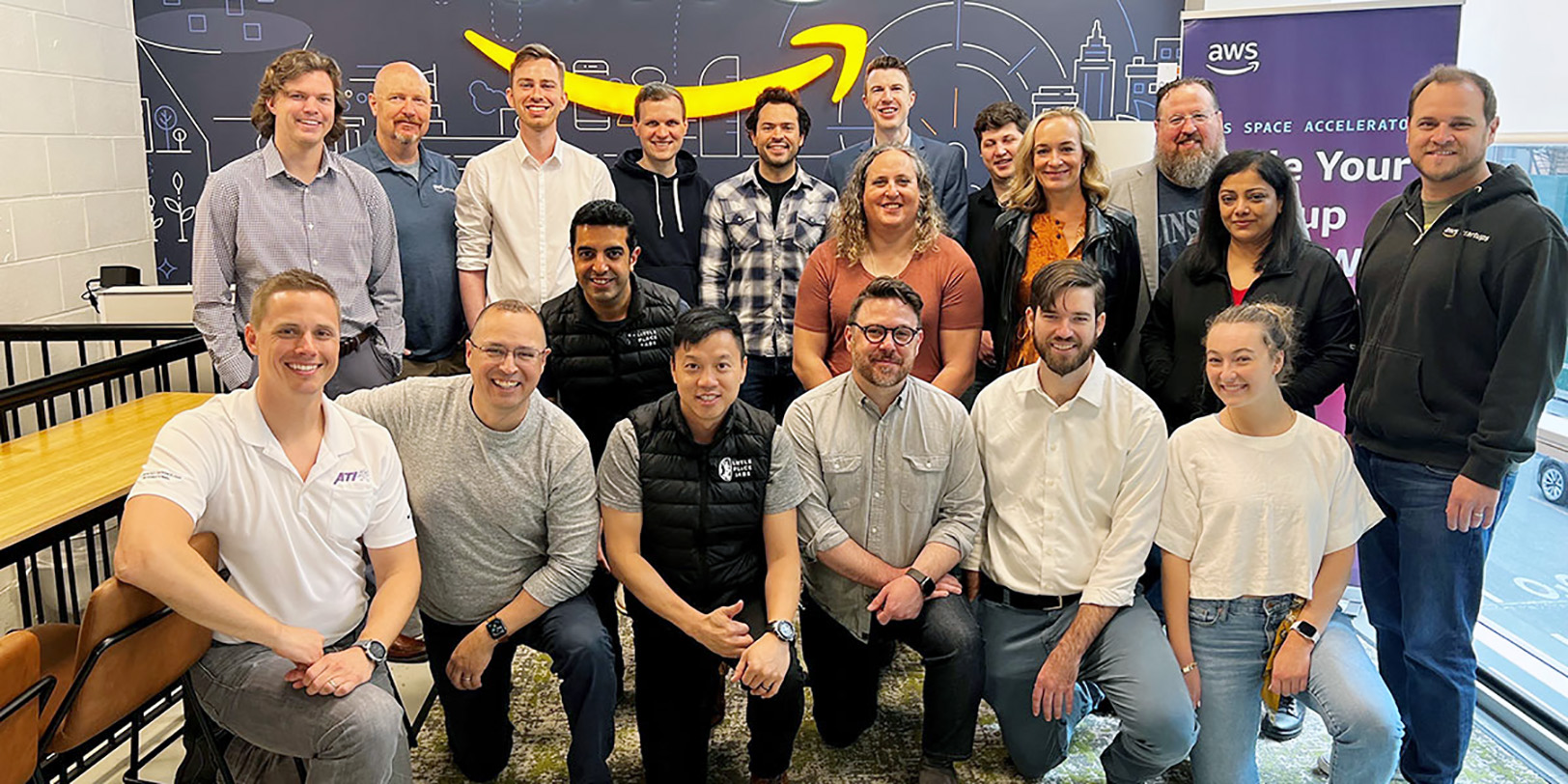
AWS Space Accelerator 2023 cohort members and the AWS Venture Capital (VC) and Startups teams; photo courtesy of AWS Space Accelerator
The AWS Space Accelerator is expected to help these startups leverage flexible, agile cloud tools that can help power their space missions and innovate faster — all to support a safe, prosperous, and sustainable future in space, according to AWS.
Raven Space Systems was originally founded as Raven 3D Printing in June 2020 with the mission of establishing a new era of manufacturing through 3D printing the highest quality polymers and composites. Cowdrey and Herren met while students at OU, later relocating to Kansas City during the pandemic.
Click here to read more about Raven’s origins and its co-founders’ arrival.
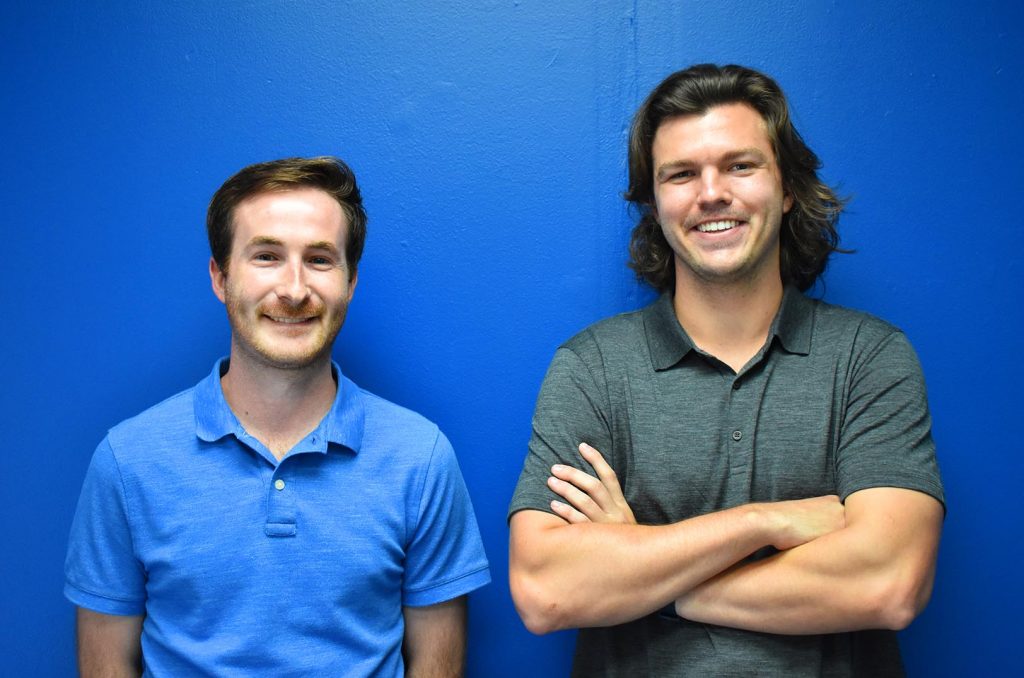
Ryan Cowdrey and Blake Herren, Raven Space Systems
“When we moved to KC, we had a very early-stage proof of concept 3D printing innovation,” Herren said. “We didn’t know what it was truly capable of. But we knew we were onto something when NASA and the Air Force awarded us $1 million in STTR contracts when our only 3D printed sample had been a small rubber cone.”
In the past year, Raven developed composite material formulations for our patent-pending manufacturing process to 3D print aerospace-grade thermoset composite materials at scale for the first time, he added.
“We are developing large-scale 3D printing of structures as strong as aluminum at half the weight and heat shields with higher performance than the state-of-the-art,” Raven said. “While developing this revolutionary innovation, we discovered a growing need in the space industry to increase the frequency and lower the cost of returning cargo from space.”
While competitors were starting to emerge in this field, Raven’s co-founders recognized no one was improving the production of reentry vehicles, he explained.
“We determined that 3D printing entire reentry capsules with our novel technology will enable us to build an automated factory to manufacture capsules 10-times faster at 95 percent lower cost with a software-driven approach enabling adaptability for any mission,” Herren said.
Click here to read more about Raven’s on-demand space capsule return technology.

Featured Business

2023 Startups to Watch
stats here
Related Posts on Startland News
Bo tell it on the mountain: Thou Mayest founder reveals spirit driving his brand of business
Your spirit makes you alive — don’t ignore its voice when it speaks to you, Bo Nelson advised a captive audience gathered to hear how his entrepreneurial experience at Thou Mayest Coffee Roasters has enabled Kansas Citians to reach their highest good. Nelson read Tuesday from a personal journal he kept during a significant time…

Former ECJC exec Melissa Roberts joins Kauffman Foundation grant making team
Everyone has potential if given the right resources, said Melissa Roberts. “Everybody has great ideas if given the right education. Everybody has the potential to be an economic contributor in our society if given the right motivation and support,” she continued. These aren’t her words and values alone, Roberts said. They’re the legacy of Ewing…

Health scare forced KC’s colorful wax guru to get serious: ‘This is Crumble growing up with me’
Brandon Love is keeping his iconic, brightly-colored hair, but melting away distractions that could be holding back his already wildly successful, but evolving lifestyle brand, Crumble Co., he said. The first to go: Some of the eye-catching candle and wax product names that first caught customers’ attention because of their tongue-in-cheek innuendos and four-letter words,…

Insecure phones, devices creating largest-ever sensor grid (for China) in US homes, says Pepper cyber security report
As an industry, the state of cyber security is a “hot mess,” Scott Ford said candidly. “Frankly, its at a point where it ought to be concerning to everybody,” Ford, CEO of Pepper IoT, said in response to a new report that examines the state of the IoT space and released as part of a…