

Raven’s return-to-earth science is complete, founder says; a new space accelerator will help get the KCK-built tech off the ground
April 19, 2023 | Tommy Felts
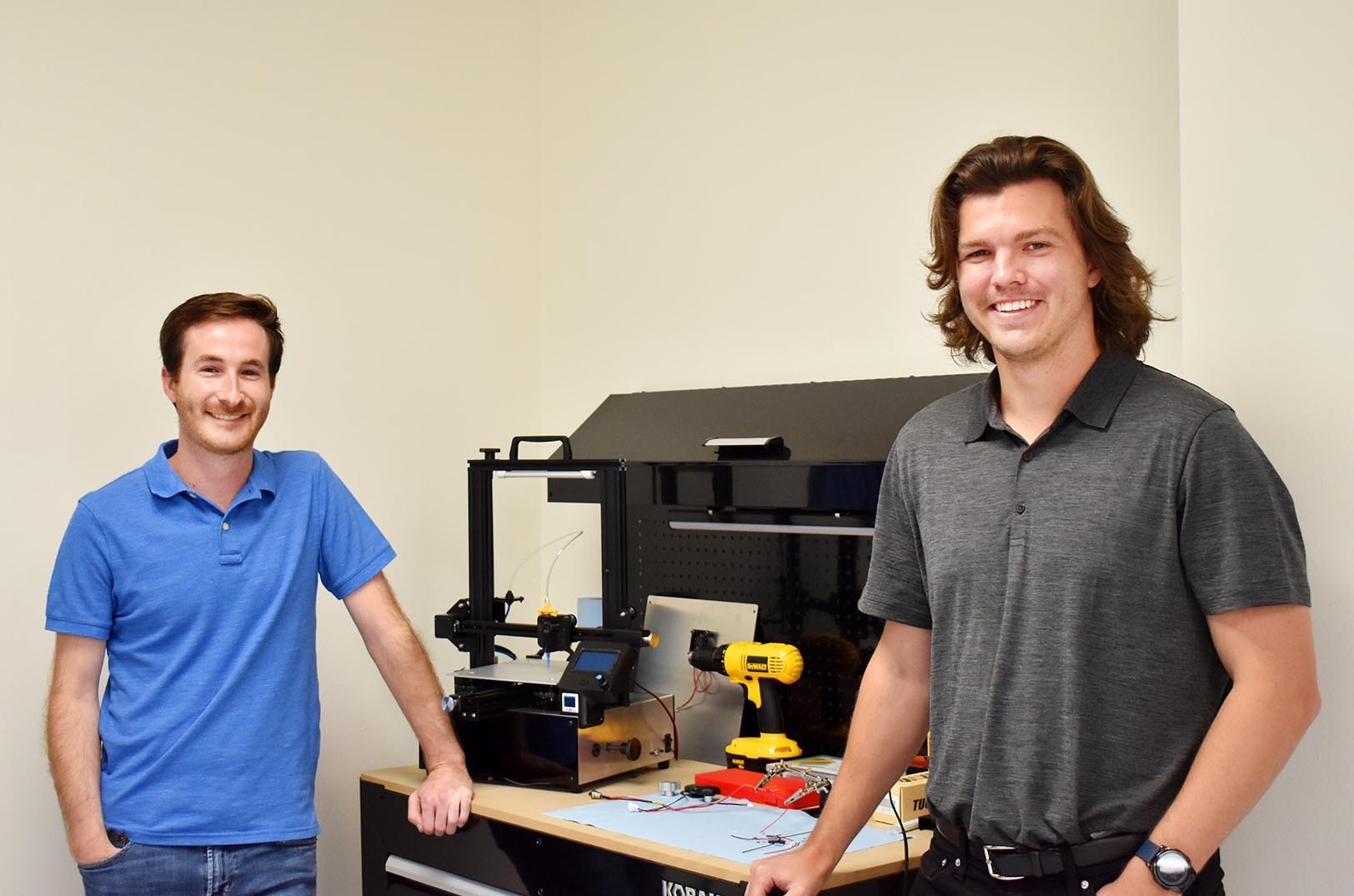
A KCK startup that could revolutionize space transportation is among 14 companies selected this week for an accelerator program from Amazon Web Services that focus on “transforming the future of space for all of humanity.”
Kansas City-based Raven Space Systems — led by co-founders Ryan Cowdrey and Blake Herren — is building entirely 3D printed reentry capsules for on-demand cargo return from space. The company’s automated factory is expected to enable cheaper and faster capsule production with adaptability for any mission.

“While our innovation is a platform technology capable of 3D printing several composite materials for the first time, we recognize the value of focusing the development of this innovation to address a specific and high-impact problem,” Herren told Startland News. “Raven has de-risked the technology with our nondilutive funding and there is no science left to be done.”
“Engineering, scaling up our systems, and proving our 3D printed materials are our next steps,” he continued. “Therefore, Raven has started raising a seed round to fund the development of our industrial 3D printer and validate the performance of our 3D printed heat shield at scale with assistance from NASA.”
The 2023 AWS Space Accelerator — a technical, business, and mentorship program to help startups advance their space solutions and accelerate their growth using the cloud — is expected to help Raven on that journey.
AWS Space Accelerator participants receive business development and strategy support, specialized AWS training, mentoring from AWS space domain and technical subject matter experts, up to $100,000 in AWS Promotional Credit through AWS Activate, and support on building and scaling their solution worldwide. The curriculum also provides opportunities to work with AWS customers and AWS Partner Network (APN) Partners looking for innovative space solutions.
“From 3D-printed space vehicles to orbital robots, satellite solutions built on artificial intelligence (AI), and space-based initiatives that can help us better use Earth’s valuable resources, these emerging startups are leveraging AWS as they develop the next generation of exciting space technology,” AWS said of the 14 companies selected for the new cohort.
Click here to learn more about the other ventures selected for the 2023 program.
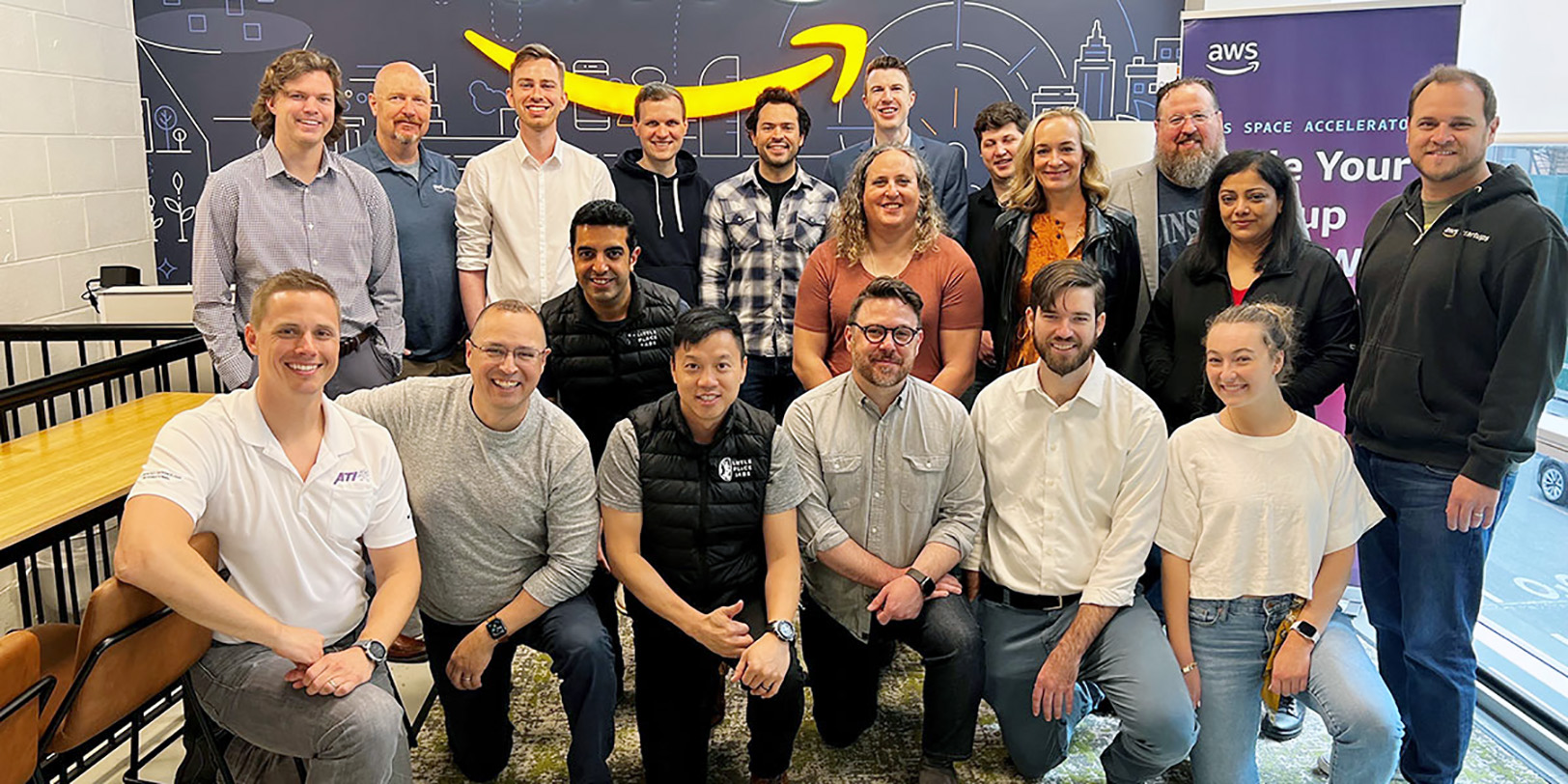
AWS Space Accelerator 2023 cohort members and the AWS Venture Capital (VC) and Startups teams; photo courtesy of AWS Space Accelerator
The AWS Space Accelerator is expected to help these startups leverage flexible, agile cloud tools that can help power their space missions and innovate faster — all to support a safe, prosperous, and sustainable future in space, according to AWS.
Raven Space Systems was originally founded as Raven 3D Printing in June 2020 with the mission of establishing a new era of manufacturing through 3D printing the highest quality polymers and composites. Cowdrey and Herren met while students at OU, later relocating to Kansas City during the pandemic.
Click here to read more about Raven’s origins and its co-founders’ arrival.
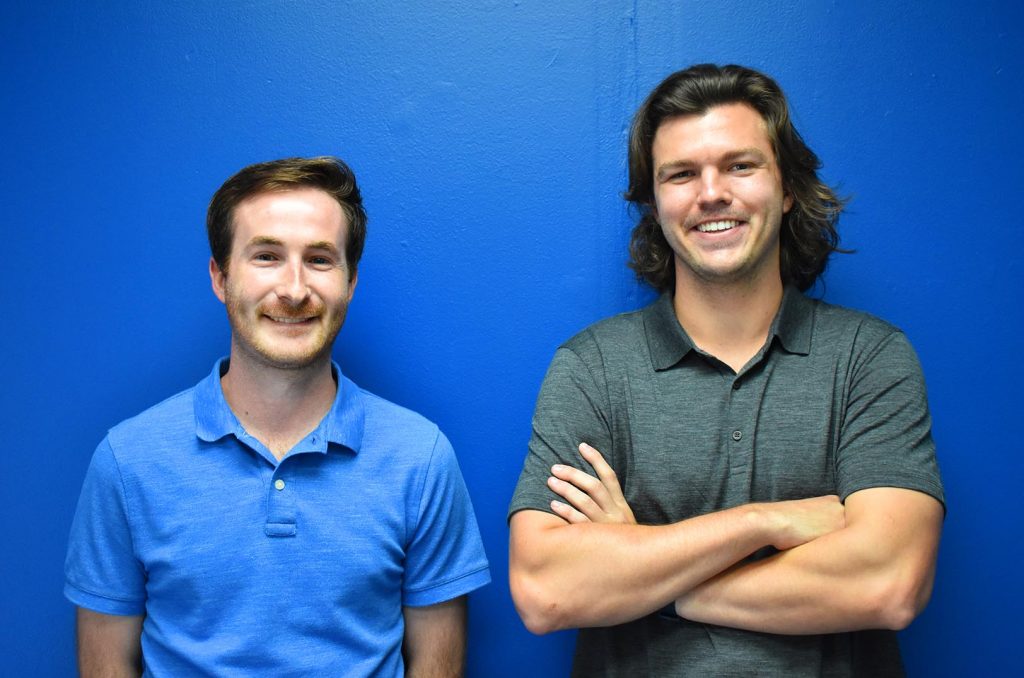
Ryan Cowdrey and Blake Herren, Raven Space Systems
“When we moved to KC, we had a very early-stage proof of concept 3D printing innovation,” Herren said. “We didn’t know what it was truly capable of. But we knew we were onto something when NASA and the Air Force awarded us $1 million in STTR contracts when our only 3D printed sample had been a small rubber cone.”
In the past year, Raven developed composite material formulations for our patent-pending manufacturing process to 3D print aerospace-grade thermoset composite materials at scale for the first time, he added.
“We are developing large-scale 3D printing of structures as strong as aluminum at half the weight and heat shields with higher performance than the state-of-the-art,” Raven said. “While developing this revolutionary innovation, we discovered a growing need in the space industry to increase the frequency and lower the cost of returning cargo from space.”
While competitors were starting to emerge in this field, Raven’s co-founders recognized no one was improving the production of reentry vehicles, he explained.
“We determined that 3D printing entire reentry capsules with our novel technology will enable us to build an automated factory to manufacture capsules 10-times faster at 95 percent lower cost with a software-driven approach enabling adaptability for any mission,” Herren said.
Click here to read more about Raven’s on-demand space capsule return technology.

Featured Business

2023 Startups to Watch
stats here
Related Posts on Startland News

How this Andre’s Valentine collaboration celebrates the friendship that sparked Kate Spade
The favorite hometown chocolate of one Kansas City’s best-known fashion designers and entrepreneurs serves as just one ingredient in a new Valentine’s Day collaboration from André’s Confiserie Suisse. The local chocolatier just rolled out a limited edition line alongside Frances Valentine to mark the holiday, as well as celebrate the friendship between Elyce Arons and…

Electric Americana: How singer Teri Quinn broke from the pack (and found her own in KC)
Members of the Kansas City-based band Teri Quinn & The Coyotes are carving a distinctive space within the local music scene. From Appalachian banjo riffs to punk-inspired beats, their sound reflects diverse influences — howling loudest from the woman in front. Attendees at Startland News’ Jan. 23 reception for the Kansas City Startups to Watch…
C2FO hits its first billion-dollar day; marks $400B in funding to customers as global finance shifts
A record-breaking year for C2FO serves as a proof point itself, said Sandy Kemper, revealing the Kansas City-built fintech surpassed $400 billion in lifetime funding to its customers in 2024 and achieved $1 billion of daily funding for the first time. “The success of the past year only demonstrates the tremendous need for more efficient…
KC Biohub leader bullish on Tech Hubs funding after region missing from latest grants list
Kansas City is still in the running for a chunk of the remaining $280 million in expected funding for federal Tech Hubs implementation grants, said Melissa Roberts Chapman, emphasizing the region remains primed and competitive in the process despite the KC BioHub not being among the latest awardees announced by the program. Six other projects…