

‘When puppets talk people listen’: It’s not just storytelling anymore for one of KC’s most beloved children’s theaters
March 14, 2023 | Nikki Overfelt Chifalu
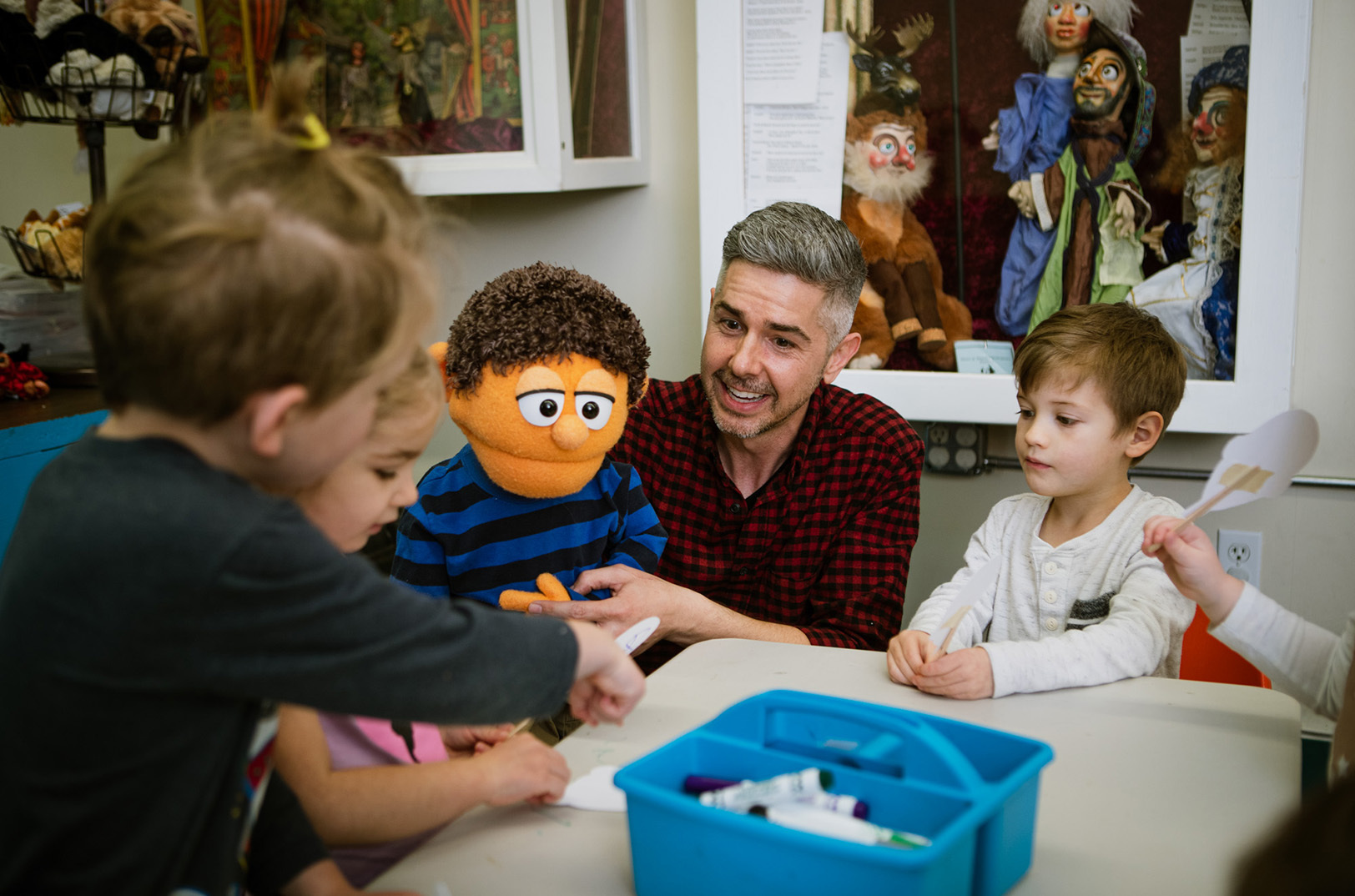
A Kansas City arts institution known for years as the Mesner Puppet Theater is animated with new life, said Meghann Henry, detailing a mission pivot for the freshly sewn and rebranded What If Puppets.
Evolution at the nonprofit has taken a turn toward early childhood education since the retirement of Paul Mesner in 2016 — 30 years after he founded the former Messner Puppets. While the original mission focused on inspiring children and communities through storytelling, What If Puppets’ new efforts go further, detailed Henry, executive director.
It’s all about using puppetry to spur creative development in children ages 0 to 8, she said.
“It’s still very similar,” Henry continued. “At the heart of it, we’re still honoring Paul’s dream of bringing puppetry to communities, really focusing on bringing people together through the arts. But where we wanted to dig a little bit deeper as we made this transition was, it’s not just storytelling for us anymore. It’s also education. It’s also these interactive experiences.”
The common thread on both the education and production sides of What If Puppets: play.
“We are really based in playfulness and getting kids and parents and teachers playing together because we know that that’s what builds those social-emotional connections,” Henry said.
Click here to learn more about What If Puppets.
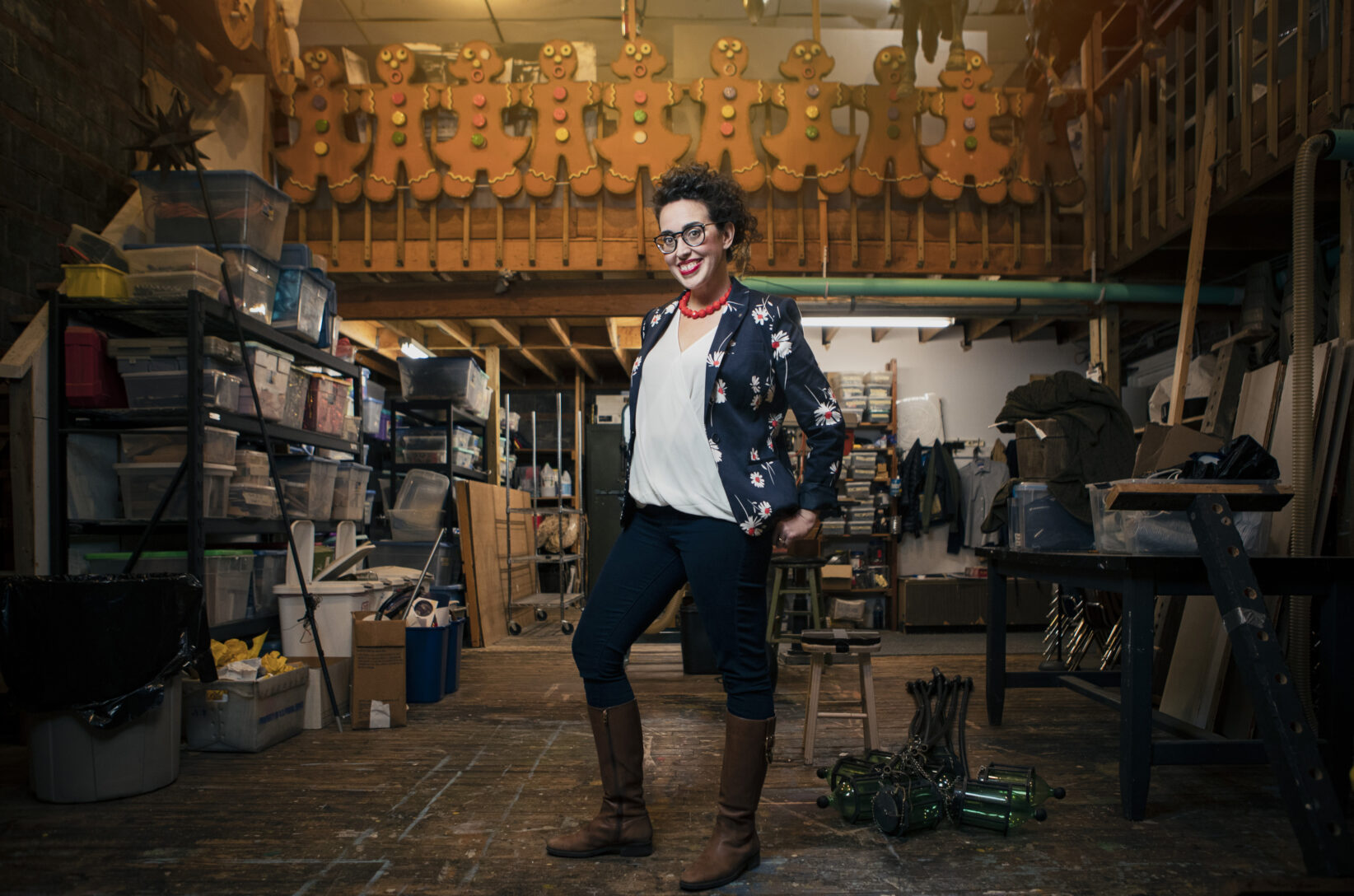
Meghann Henry; photo courtesy of What If Puppets
When Henry joined the organization in 2019, the nonprofit was experiencing high turnover and financial issues, she said, noting it needed a reset. Henry took a hard look at what was working, what no longer served the mission, and what was no longer financially viable, she said. She also explored the passions and skillsets of Mike Horner, director of puppetry arts, and Alex Espy, education director.
“We discovered that we were doing things in a really traditional way with two artists that didn’t necessarily want or need to do them that way,” Henry explained. “We looked at what Alex was doing, and he had a real passion for social-emotional learning inside of the school system, rather than doing camps and classes. So we said, ‘Then it’s OK to let go of camps and classes.”
Instead of doing a full six-show season and touring, Henry continued, What If Puppets drilled into partnerships with schools and libraries, bringing the production and education sides onto the same page.
“We can focus on building partnerships with the community,” she said. “It’s much harder to get people to enroll in a camp or class than it is to make a strong relationship with a school and be able to do things at a district level through one or two relationships.”
Prime time for puppets
Henry, Horner, and Espy — who all have backgrounds in theater for young audiences — led the push into early childhood development.
Before joining What If Puppets, Henry served as the program and partnerships director for Mirror Image Arts in Denver, a nonprofit focused on social-emotional learning through theater for schools, libraries, and the prison system. The What If Puppets team noticed a professional arts gap for the younger ages as most organizations are more focused on kindergarten and up, she said.
“What about those kids in preschool?” Henry continued. “They really deserve to have amazing arts experiences with their family. And we know that developmentally, that’s such a prime time for them to be developing their understanding of how we engage and interact with other human beings and how we view the aesthetics of the world. Those are all being cemented during those early stage periods.”
It’s also a prime age for kids to connect with puppets, Henry added. In the developmental stages, their brains are much more willing to participate in the suspension of disbelief.
“I think one major thing that we just love is getting to engage with these kids who feel like they’re so in it,” she said. “I think part of that is that the puppet is approachable. There’s a simplicity to puppetry, where their brains have to do some of the work in order to fill in the gaps and they’re so willing to do that. Puppetry is often about what’s not seen and so they’re really having to be a part of that creative process.”
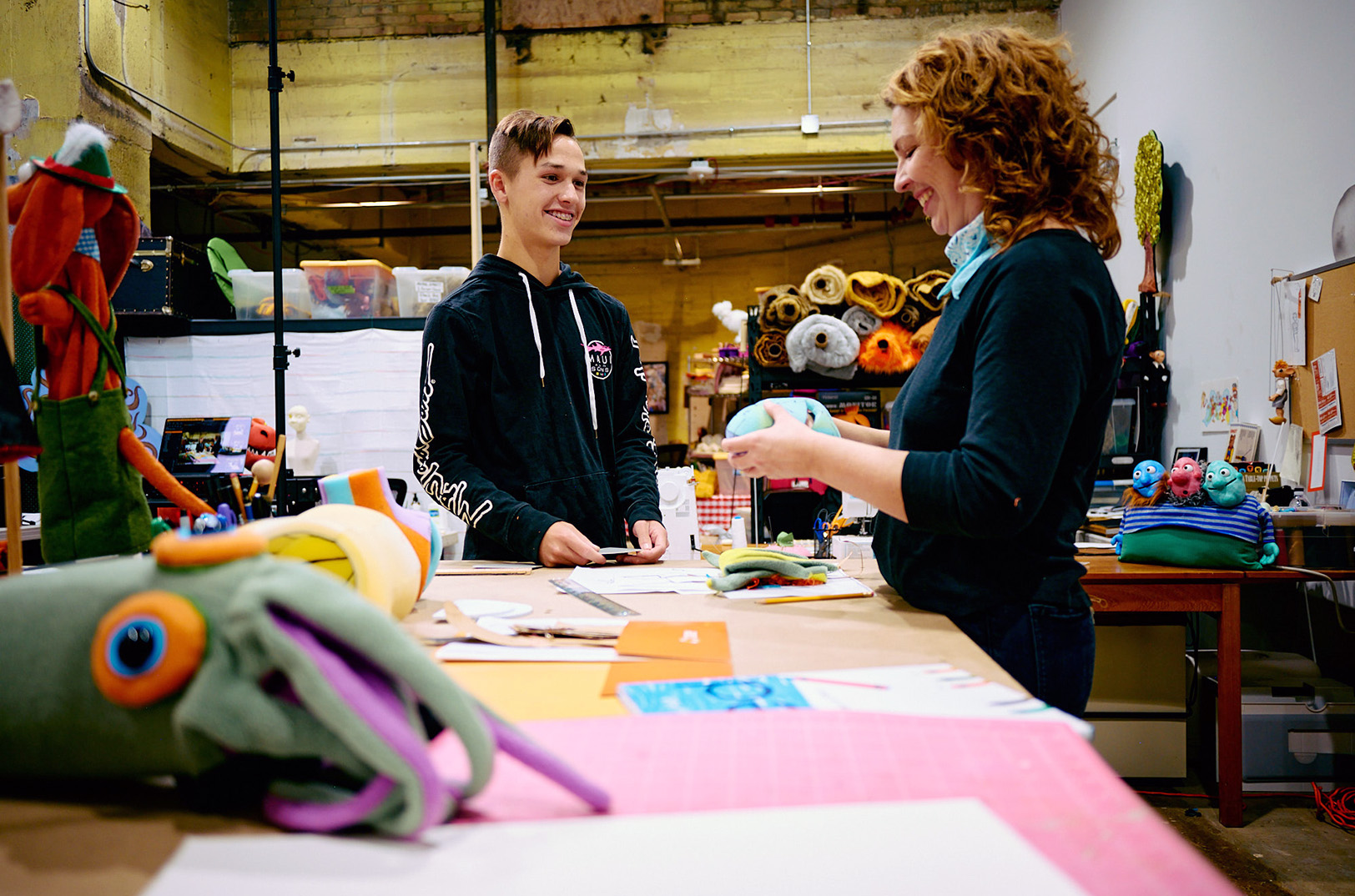
Building studio at What If Puppets; photo courtesy of What If Puppets
Although What If Puppets is back to live performances, like most arts organizations, it was forced to pivot during the height of the pandemic, Henry said. That led the team to produce an eight-part digital series called “In the Workshop” in partnership with Johnson County Community College’s Midwest Trust Center, which provided the space and equipment.
“We created essentially a children’s television series that focused on the social-emotional livelihood of the characters working in a maker studio,” she explained. “They all had different artistic practices, and with that, a lot of big feelings that they were trying to navigate in making their art and collaborating together.”
Click here to watch episodes of “In the Workshop.”
What If Puppets also provided resources to teachers to go along with each theme and provided interactive Zoom workshops.
“That sustained us through the pandemic,” Henry added. “It gave us ways for people to partner with us and something for funders to continue to fund us for. And since it’s no longer the driving force of our income, it’s out there free for everyone on the website, and we’ve now turned it into a live performance.”
Through funding from the Hallmark Corporation and the Johnson County Community College Foundation, the organization offers scholarships each year to 30 classrooms for a free performance of “In the Workshop.”
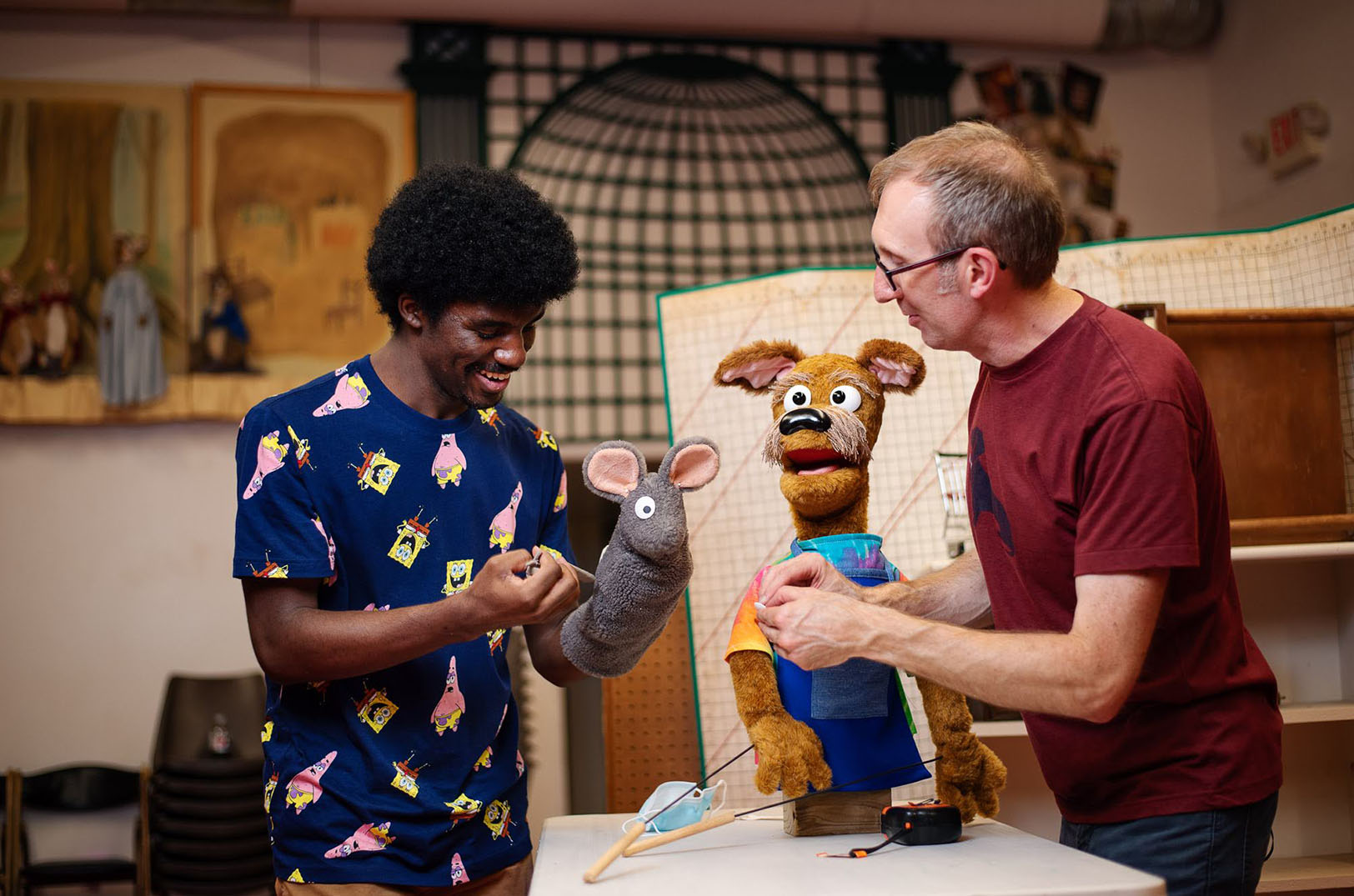
Photo courtesy of What If Puppets
Shouting ‘What if’ from the rooftops
Going digital during the pandemic was a creative challenge, Henry noted, but it has opened new doors for What If Puppets. The team is now working with businesses to create digital puppetry for clients. Now as part of its business model, the organization will design, build, and perform puppetry for marketing projects for businesses or for other theaters who are using puppets.
“When puppets talk people listen,” Henry added.
With its new mission and vision, What If Puppets underwent a rebranding in November. Now that the organization has established its new identity, Henry noted, it needed help telling its story.
That’s where the Crux for a Cause program comes in, she said. Each year, Crux KC — a rapidly growing marketing firm in Midtown — chooses one nonprofit organization that is making a difference in Kansas City to give a pro-bono marketing retainer.
“This came at just the right time to really be able to shout from the rooftops, ‘We are still here; we are still an awesome arts organization in Kansas City; But we have this new breath of life that’s happening right now,’” Henry said. “I think Crux will help us to figure out how we tell our story and how we honor the company’s history while moving our brand forward.”
Editor’s note: Crux KC is a financial supporter of Startland News, although his report was produced independently by Startland News’ nonprofit newsroom.
What if Puppets is the perfect match for the team, culture, and values at Crux, said Melea McRae, founder and CEO of the firm.
“Our team is excited to jump into the imaginative world of puppetry in our fourth year of Crux for a Cause,” said McRae in a news release. “We love doing our part to help the community of KC that has supported our growth. Elevating brands and amplifying the missions of nonprofits is a pillar of what makes us an ‘un-agency.’”

Featured Business

2023 Startups to Watch
stats here
Related Posts on Startland News

KC, Chattanooga tap into gigabit speeds for film contest
Ready your cameras, Kansas City. You’re serving as lead videographer in a community film contest that engages creative types and leverages the area’s high-speed, gigabit Internet. Kansas City has partnered with the City of Chattanooga, Tenn., for the “Capture: A Community Filmmaking Project,” a 48-hour project calling on citizens and film professionals to create short,…

Digital Sandbox welcomes six new startups
Digital Sandbox KC recently accepted six area companies into its incubator program that assists businesses with specific projects. The organization, whose mission is to develop businesses and help them secure additional funding, welcomed companies ranging from food service and technology to education and health. Digital Sandbox invests up to $25,000 in its program’s companies. “The…

Reboot U revives tech talent for KC startup
A growing event photography company in Kansas City is looking to the past to find the tech talent it needs to build its future. SportsPhotos.com founder Brandon Schatz is a small-business participant in the Full Employment Council’s “Reboot U” program, which provides technology training for the chronically unemployed. Schatz’s company manages photos for sporting events,…