

Thrive Homes builds ‘life-changing’ independence for those struggling with mobility, aging in place
March 21, 2023 | Nikki Overfelt Chifalu
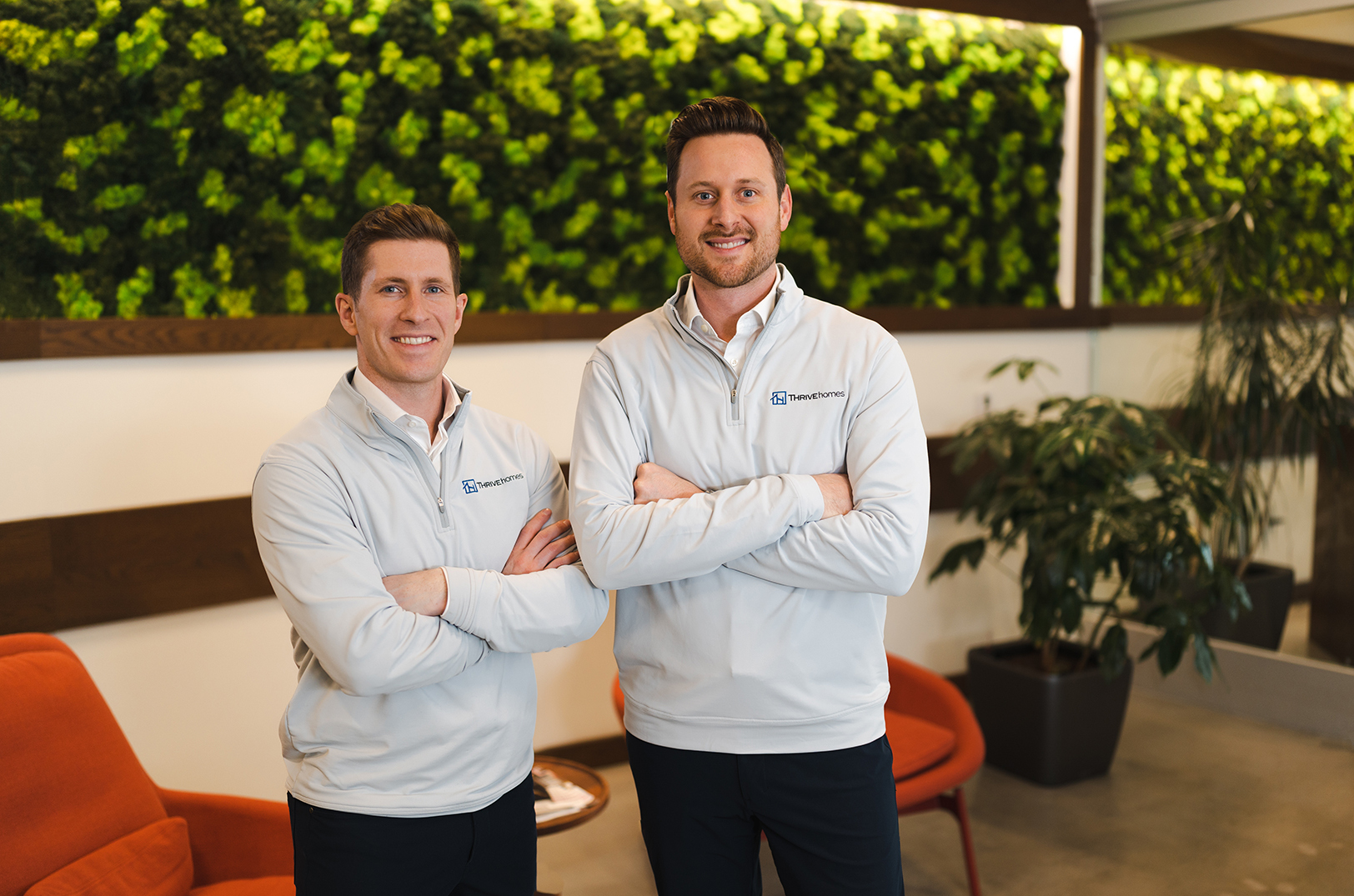
The impact of Thrive Homes is as simple as it is profound, said Christian Hill, whose startup taps into state and federal health funds to provide timely home modifications for residents with disabilities and accessibility issues.
The Overland Park-based company makes it possible for people with certain health conditions — and those who are experiencing challenges related to aging — to thrive independently in their homes through affordable, accessible modifications like doorway widening, stair lifts, and bathroom renovations.

“It’s been a labor of love,” said Hill, noting the fulfillment he found after leaving the nonprofit world to found Thrive Homes with business partner Logan Forbis in late 2021.
Thrive Homes completes the majority of its home modifications across Kansas and Missouri through a Medicaid waiver program, Hill and Forbis noted.
“We’ve learned that there’s a lack of education for people that know this program exists,” Forbis said. “In Missouri, only 30 percent of people who qualify for this program, even use it. So another part of our mission is to educate and get the word out that these programs exist and these funds are available.”
Click here to learn more about Thrive Homes.
What started as a side hustle with subcontractors and jobs just in Kansas, according to Hill and Forbis, has expanded to four full-time and two part-time employees — not counting the founders — and jobs across both sides of the state line. (The team still relies on subcontractors to fill in the gaps, especially for jobs that would require travel to Western Kansas.)
“We got to a point where the jobs were just coming in and we were helping a lot of people,” Hill said. “It got to a place where I was like, ‘Alright, we need to look at scaling this thing and growing it.’”
Cutting down turnaround times has been one of the biggest areas of impact for families helped by Thrive Homes, Hill shared. They were able to complete jobs in two to three weeks for families who previously had been waiting years.
“We get it at least once a week — if not multiple times a week — when we talk to a family, they’re in literal tears because they’re so excited that they get to bathe their family member again or that person gets to take a shower or they can get down a wheelchair ramp and go outside again where they haven’t been able to go outside for fear of falling,” he added. “So when you give people that independence again through what we do, everyone’s fired up.”
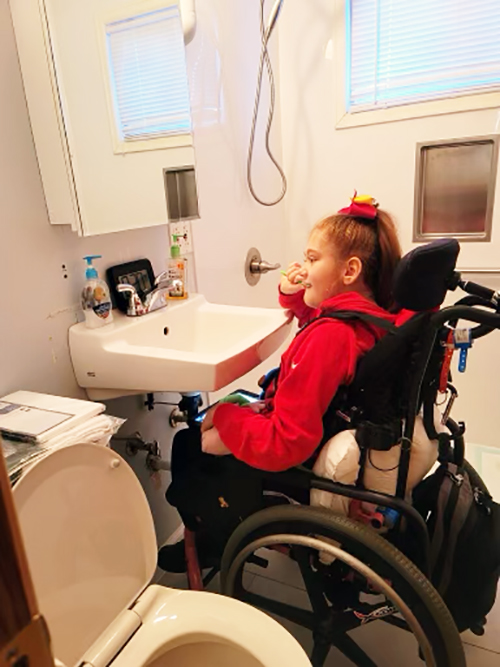
Thrive Homes modifications at the Fry home
Modifications for the body, heart
Kathy Fry knows firsthand about stalled home modifications. Until she connected with Thrive Homes, she noted, she’d been waiting for five years for her bathroom to be modified to fit the needs of her foster daughter, who is in a wheelchair and had to be carried into the bathroom.
“It’s definitely physically and emotionally a blessing,” she explained of having the modifications completed. “Because physically, I’m over 60 and I’m picking up a 100-pound child in and out of a tub, which is hard on my body. But it’s also hard on my heart, too — because there’s always a fear of an accident — knowing it wasn’t safe.”
Thrive Homes came in and widened the doorway and installed a roll-in shower and accessible sink. Fry shared that her foster daughter was so excited to tell her teacher and classmates about being able to wash her hands in the bathroom sink instead of a bowl.
“It’s just been life changing for us,” she added. “She looks forward to taking a bath now instead of not wanting to. I’m sure she had the fear of falling, as well.”
Demand will only increase with ‘gray wave’
Now that they’ve established credibility on both sides of the state line and have a grasp on the modification side, Hill said, they are hoping to tackle the housing crisis — a similar problem on a bigger scale — from the developer angle.
“On the Missouri side, Jackson, Platte, and Clay County — over the next five years — will have 2,304 units falling off of the low income housing tax credit program,” he explained. “Approximately 10 percent of these units are generally utilized by people with disabilities. So we see this as a housing problem, but specifically a problem that impacts the subset of individuals that we’re trying to help. If you expand out to Missouri as a whole, you’re talking about 10,544 units within five years that are falling off the program.”
This is combined with what Hill referred to as the gray wave that will hit in 2030.
“You will have a lot of people aging in place, more so than any time in our history, which is going to only increase the demand,” he added.
To shine a light on the problem, Hill and Forbis shared they spoke at the Missouri Governor’s Council on Disability in February and — after an executive order — have been selected to join a housing task force for the Missourian’s Aging With Dignity Initiative. They also plan to utilize their network to advocate for change and work towards a solution.
“It’s just continuing to bring awareness to the problem and talk with developers and investors to determine a model that makes sense,” Hill said. “Then it’s working with the city and the state to use incentives like property tax exemptions, land banks, and things of that nature to develop new homes that are accessible and affordable and offset the number of units coming off the market.”


2023 Startups to Watch
stats here
Related Posts on Startland News

Downtown innovation district: Developers envision 30-story Lightwell project as its own startup hub
It’s possible the Lightwell building’s exterior hasn’t been cleaned since 1977, joked Tim Schaffer as he walked a vine-wrapped rooftop terrace that overlooks downtown Kansas City. “It was totally unintentional, the way it came together,” Schaffer, president of AREA Real Estate Advisors, said of the multi-million-dollar office redevelopment project that’s quickly evolved into what Schaffer…

Lifting the burden: Social Afterlife oversees social media accounts of lost loved ones
Receiving a birthday notification on a social media platform is a common source of angst for Ben Hammes’ customers, the founder of Social Afterlife said. “We handle the memorialization or removal of social media for the deceased on behalf of the family,” Hammes said, explaining his startup. “This helps the family with dealing with the…
Hilly KU campus inspires ‘back sweat’ innovation for Startup Weekend KC team
If more entrepreneurs were willing to invest a little sweat alongside virtual strangers, they’d carry an even larger number of cutting-edge startups to success, Tyler Sherman said. “In two days, we have a product that I feel comfortable enough to say we’ll roll with,” Sherman, a participant in the recent Techstars Startup Weekend, said of…

Social Side Effect: Don’t call Kasim Hardaway an influencer (but do ask him about poké)
Editor’s note: Social Side Effect is an ongoing profile series that identifies the intersection between social influencing and entrepreneurship Instagram stories are more than temporary snapshots. They’re a growing vehicle for influencer marketing in Kansas City, Kasim Hardaway explained. “It was never something I set out to do. It kind of just happened,” Hardaway, a…