

Remote control cattle: Virtual fencing tech reduces herds’ carbon hoofprint, puts rancher pain points out to pasture
March 23, 2023 | Nikki Overfelt Chifalu
Startland News’ Startup Road Trip series explores innovative and uncommon ideas finding success in rural America and Midwestern startup hubs outside the Kansas City metro.
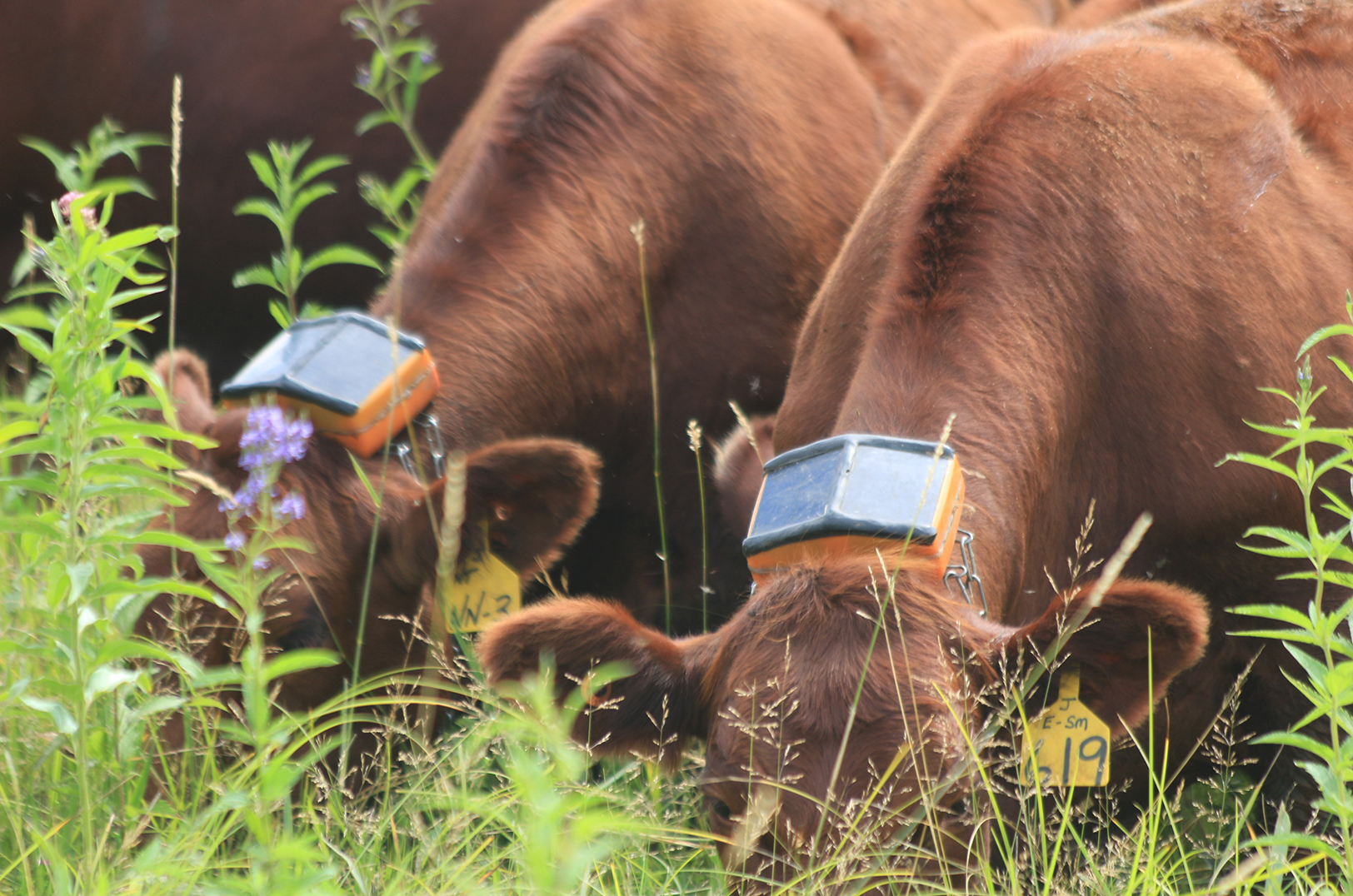
LINCOLN, Nebraska — Corral Technologies is taking cattle control virtual, founder Jack Keating shared. Using satellite maps and solar collars, the agtech startup offers a virtual fencing system to help save ranchers time and money while adopting regenerative farming practices.
Growing up on a cattle ranch, Keating said, he knows first-hand the time and work involved with digging holes and moving fence posts. So he turned an idea his dad planted in his head in high school — electric fences for dogs but for cows — into reality while he was still a mechanical engineering student at the University of Nebraska in 2019.

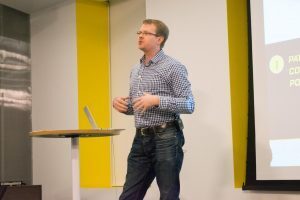
Jack Keating, Corral Technologies
“I was not excited about burying miles of underground fence,” Keating recalled of his initial feeling about his dad’s concept. “But I got into college and that idea was always in the back of my mind. I tried to do a few other things, then came back to this and realized, ‘I have a technical background now. We don’t have to bury wires. You just draw a fence on your phone and then be able to go from there.’”
Through the Lincoln, Nebraska-built Corral Technologies software program, Keating explained, ranchers are able to draw their fences on a satellite map instead of building temporary fences. And after putting collars on the cows, they are able to assign the cows to a herd and each herd to a pasture.
“It uses sound and shock to keep those cows contained within those pastures and move them from one pasture to the next,” he added.
The agtech startup — which raised more than $700,000 last summer and is starting to raise its next round — piloted its program with four ranches in 2022 and plans to roll out 1,700 devices to ranches in 16 states this year. After hearing from producers across the world, 4,500 units have been pre-ordered ahead of a 2024 rollout.
“We got containment down and we found out issues with potentially solar charging, adjustability, and everything like that that we built into our new version now,” Keating said of adjustments made after testing. “We went back to the drawing board, redid the circuit board, redid the enclosure, and now it’s fully adjustable. I’ve got custom solar panels on there that I’d say are much more robust. They can take a hit, for sure. It was a heck of a learning process.”
Click here to learn more about Corral Technologies.
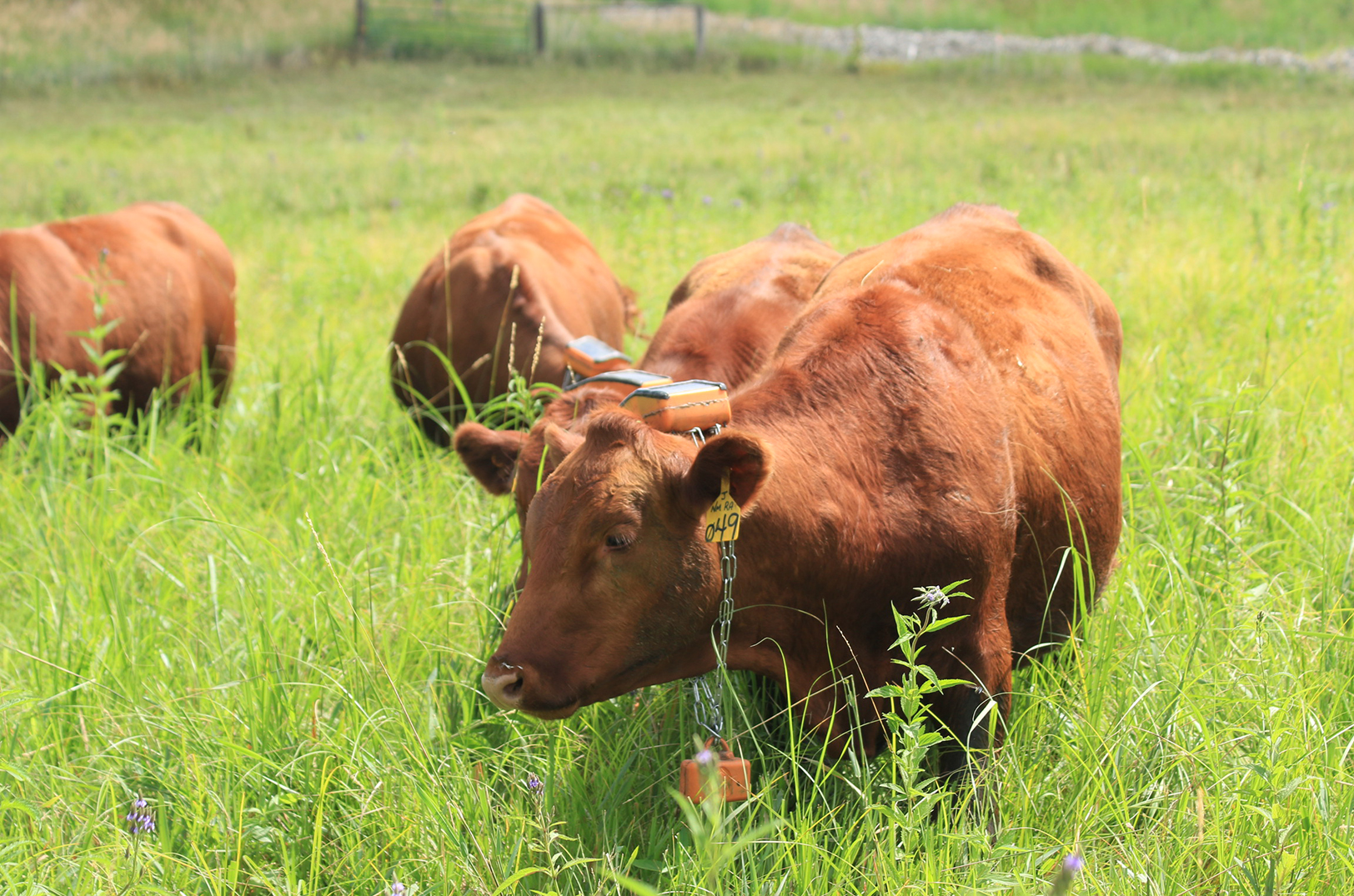
Cattle wear guidance tech from Corral Technologies
The biggest benefit of the system, Keating said, is allowing producers to increase the numbers of cows they carry per acre. For example, there might be a pasture that is 1,000 acres with one big fence, where the cattle aren’t moved throughout the year. This leads to less carrying capacity, plus poor cattle and soil health.
“In order to actually increase the number of cows that can carry per acre, they need to move those cows around more quickly,” he explained. “They need to move them around daily — multiple times a day potentially — and most producers can’t do that because most producers have another job right. It’s not their full time occupation. That’s really where we come in. They can now do it from their job or from states away.”

The virtual fencing system also has environmental benefits, Keating noted. The startup is working on carbon partnerships and potentially getting ranchers credit for changing their management practices.
“By moving the cows around more frequently, and breaking up that large pasture, more of the grass gets eaten, which actually helps the roots grow better, improves soil quality and soil health, and also allows those cows to get better manure distribution across the pasture,” he continued. “That whole ecosystem basically is healthier. Those pastures also get to rest longer instead of being grazed continuously throughout the year. So then animals can go in there — birds or whatever it is — and actually live their lives kind of undisturbed at the same time. So there’s carbon aspects to it.”
Keating — who has participated in the Nebraska Combine Incubator and NMotion Pre-Accelerator — also shared that this year Corral Technologies plans to work with the University of Nebraska and Texas A&M University to improve the platform’s data analytics. He’s hoping the fencing system will also provide producers with necessary cattle health data like which cows are sick or pregnant, as well as provide grazing analytics.
“This opens up the doors to a lot of possibilities, I think, for them to do the management practices that they may have wanted to do, but they couldn’t in the past,” he said.

Featured Business

2023 Startups to Watch
stats here
Related Posts on Startland News
Williams to critical Bloomberg piece: KC shouldn’t try to be Silicon Valley
Editor’s note: The following piece is in response to a Bloomberg article critical of the Kansas City Startup Village and Kansas City’s ability to use Google Fiber to become the “next Silicon Valley.” Opinions expressed in this commentary are the author’s alone. In 2012, Kansas City experienced what at the time must have felt like winning…
KC Outpost, local charm lures hundreds of SXSW attendees
Kansas City made a splash at the SXSW Conference thanks to a concerted effort to engage thousands mingling in downtown Austin. Led by the Economic Development Corporation of Kansas City, LaunchKC, the Ewing Marion Kauffman Foundation and Husch Blackwell, the KC Outpost welcomed hundreds of people curious to learn more about the area. Featuring speakers,…
Integrated Roadways founder featured on CNN as autonomous vehicle expert
A Kansas City startup founder recently was featured on CNN as an industry expert for his knowledge on autonomous vehicles and the infrastructure that can support them. After being discovered via a weekend panel discussion at the SXSW Conference, Integrated Roadways founder Tim Sylvester recently was hosted on CNN’s Quest Means Money show. Sylvester’s startup…
KU event to connect hundreds of students with KC startups
To boost Kansas City’s growing startup community, the University of Kansas is hosting an event hoping to connect students with future employer prospects. Set for 2:00 p.m. on April 11, the KU Startup Job and Internship Fair expects to host about 200 students and over 20 area startups to connect and learn from presentations. The…