

Royals say tailgating, plenty of parking planned for year-round downtown ballpark district
February 1, 2023 | Matthew Gwin
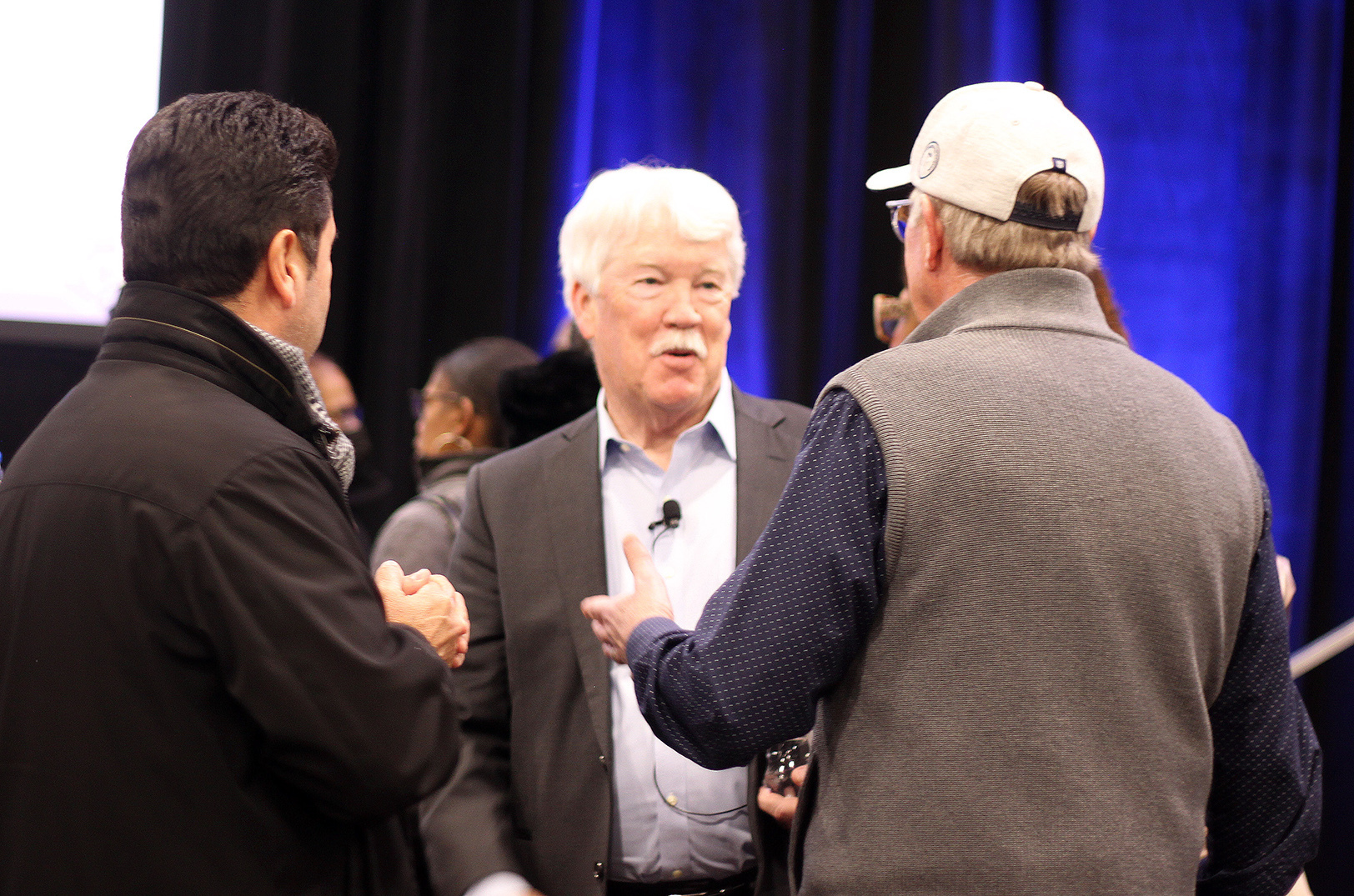
As the Kansas City Royals deepen their efforts to bring baseball to downtown, the club aims to call up features fans love most — along with attributes from other ballparks and entertainment districts they don’t yet know they’ve been missing, executives said Tuesday.
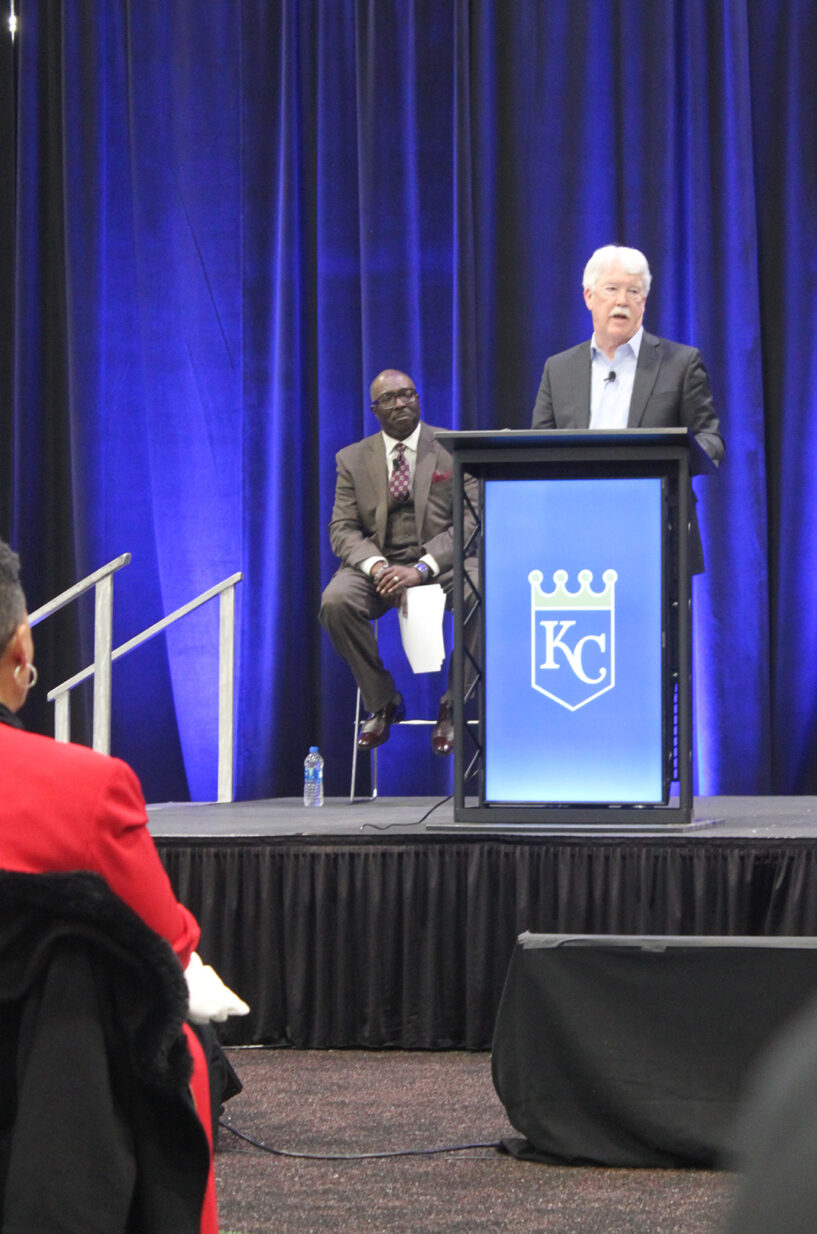
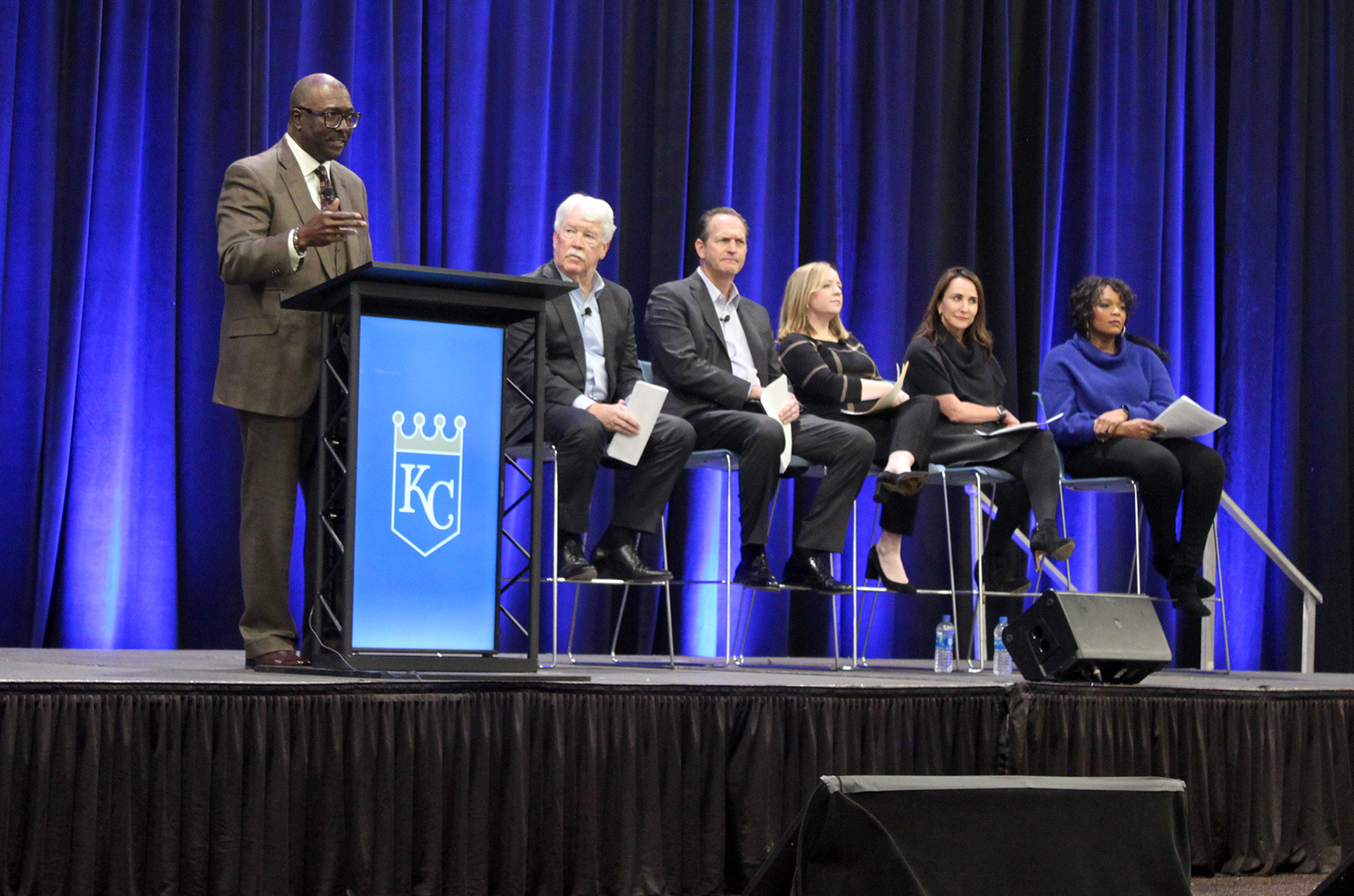
John Sherman, owner of the Royals, speaks Tuesday evening at the Urban Youth Academy during the second in a series of public community meetings
“We’re committed to creating a truly transformational, world-class ballpark district, one that keeps pace with our peers throughout the league,” said John Sherman, owner of the Royals, during the second in a series of public community meetings Tuesday evening at the Urban Youth Academy.
The Royals organization indicated previously it plans to develop a year-round ballpark district “in or near downtown.” And while Sherman has said the baseball club would be the largest investor in the $2 billion project — pledging more than $1 billion toward what would be the largest public-private development project in Kansas City history — community buy-in is key for the move from the longtime Truman Sports Complex to downtown.
Fans, taxpayers and consumers alike are set to benefit, Sherman added.
“If you look around the country, every single stadium built in the last 20 years has revitalized the communities in which they were built,” he said. “That sets how it has to work for Kansas City.”
Essential to the plan, Sherman said, is the creation of a district surrounding a new Royals stadium — similar to ones in Atlanta, Denver, and St. Louis — which would include retail, dining, and hotels.
RELATED: New Atlanta ballpark considered model for Royals coming downtown
Benching fans’ fears
While the future ballpark district’s exact location is still to be determined — the organization has narrowed its initial list of 14 options to four or five, officials said Tuesday — a stadium in close proximity to downtown is vital, said Brooks Sherman, senior vice president and COO of the Royals.
“Our current location just isn’t positioned to benefit the city and the region in the same way our proposed project, located in or near downtown, will benefit Kansas City,” Sherman said.
Both Sherman, who isn’t related to owner John Sherman, and Sarah Dempster, principal at Kansas City-based venue architecture firm Populous, addressed many fans’ concerns that parking would be insufficient if the stadium were to move downtown, with Dempster noting that there are 50,000 existing parking spaces in the downtown area.
“The walking distance is similar or even reduced when you consider that some of the parking downtown will be contained within existing parking garages,” Dempster said. “This would actually allow for a greater density of people to park closer to a downtown location.”
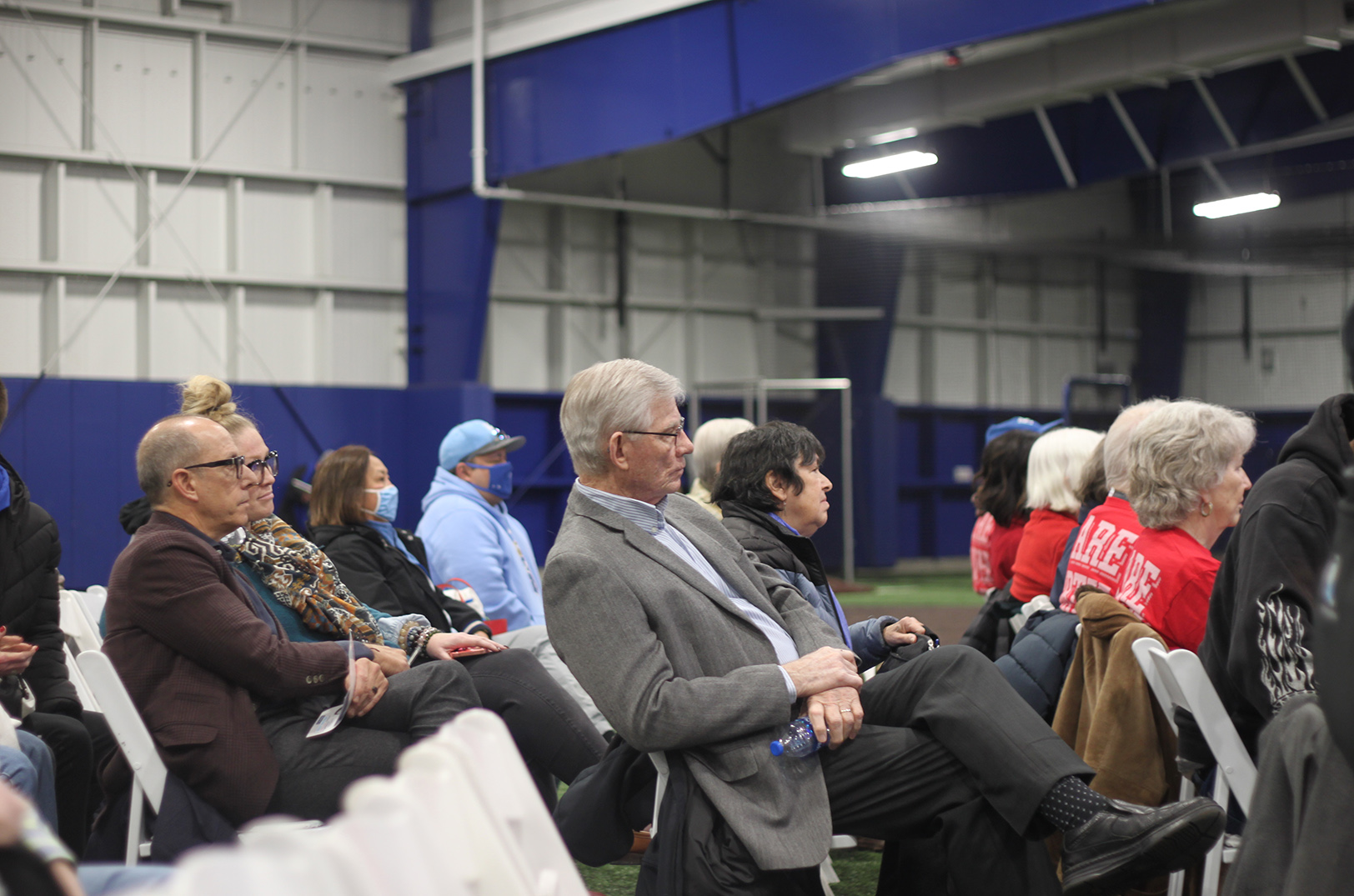
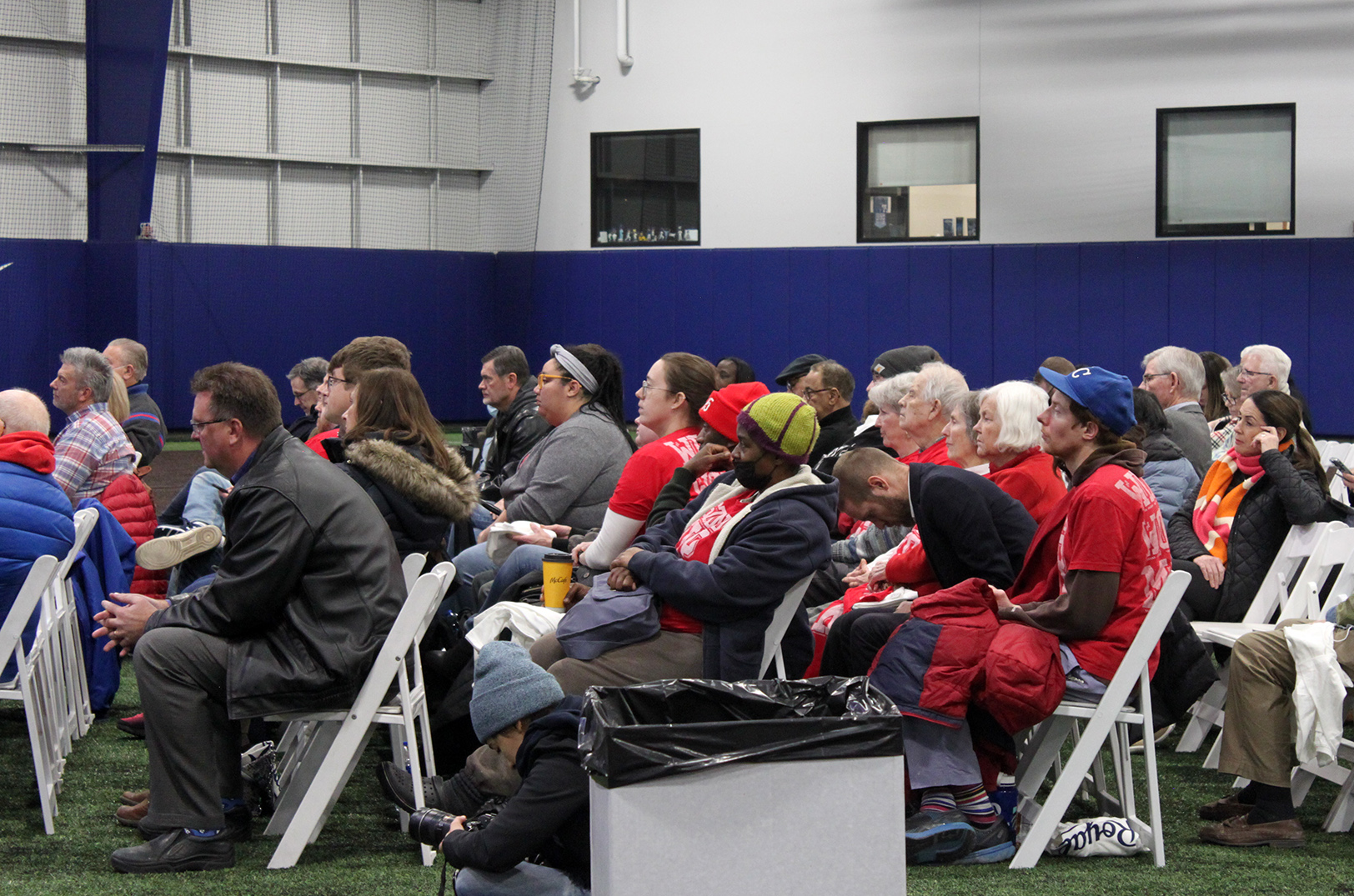
Community members listen to Royals executives speaking Tuesday evening at the Urban Youth Academy during the second in a series of public community meetings
The city could even accommodate “dual-event nights” — for example, a Royals home game and a concert at the T-Mobile Center — with existing parking, Dempster added.
The Royals also plan to build parking as part of the project, said Brooks Sherman, and would negotiate with private lots and garages to minimize price gouging. He also ensured fans that there would still be sufficient parking space available for tailgating.
Ultimately, Sherman said he expects the new ballpark district to be vibrant not just on home game days, but “365 days a year.”
“We’ve seen this approach by ball clubs succeed throughout the country, and we plan to do even better for Kansas City,” he added.
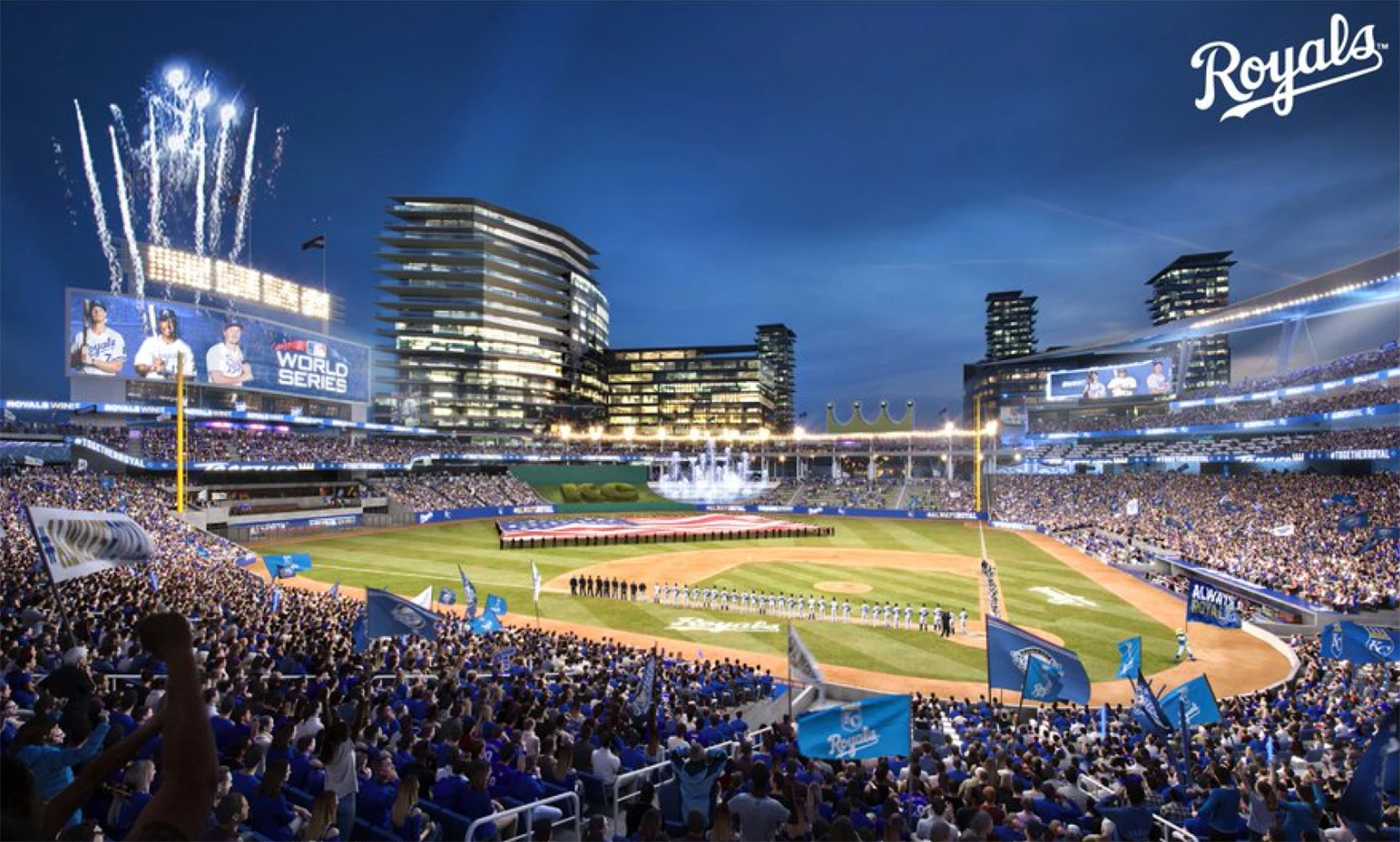
Rendering of a potential new downtown KCMO stadium for the Kansas City Royals, image courtesy of the Royals
Every path to a ‘W’ comes at a cost
John Sherman emphasized that the costs of renovating the existing, 50-year-old Kauffman Stadium, which currently plays host to the Royals, would be greater than building a new stadium at a new location.
“The costs of renovating ‘The K’ are real. . . but even if that were not the case, the long-term benefits of moving the stadium are overwhelming,” Sherman said.
According to figures provided by Populous, the estimated cost of a new stadium comes in at $1.005 billion, narrowly below the $1.072 projected cost of Kauffman renovations.
The local architecture firm listed nearly 400 items of concern at Kauffman in its full report to the club, most notably that the concrete shows evidence of alkali-silica reaction (ASR), commonly known as concrete cancer, said Dempster.
“Getting another 30 years or more of life out of the stadium structure is going to be very difficult,” she said. “Not to mention that on top of these ASR issues, the functionality of the existing seating bowl and structure of the building would require approximately 70 percent removal of the structure to meet the future needs of the team.”
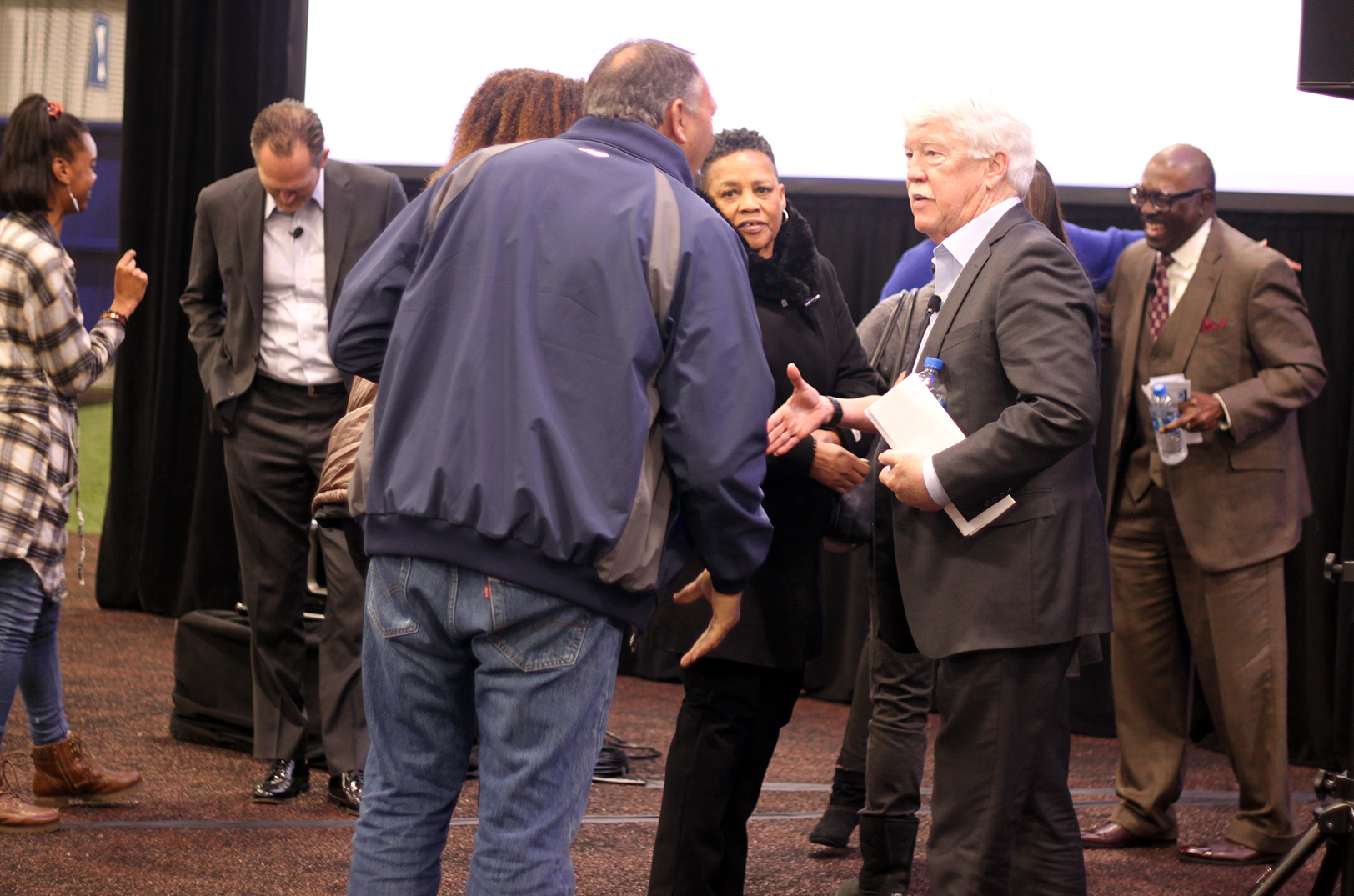
John Sherman, owner of the Royals, speaks with community members Tuesday evening at the Urban Youth Academy during the second in a series of public community meetings
Return on investment
After the new stadium’s buildout costs, the remainder of the $2 billion price tag would fund the ballpark district, said Brooks Sherman.
Private capital would cover the entire cost of the ballpark district, he added.
The stadium itself would be partially funded by Royals ownership, he added, with a portion covered by a continuation of the three-eighths cent sales tax in Jackson County, which would need approval from voters.
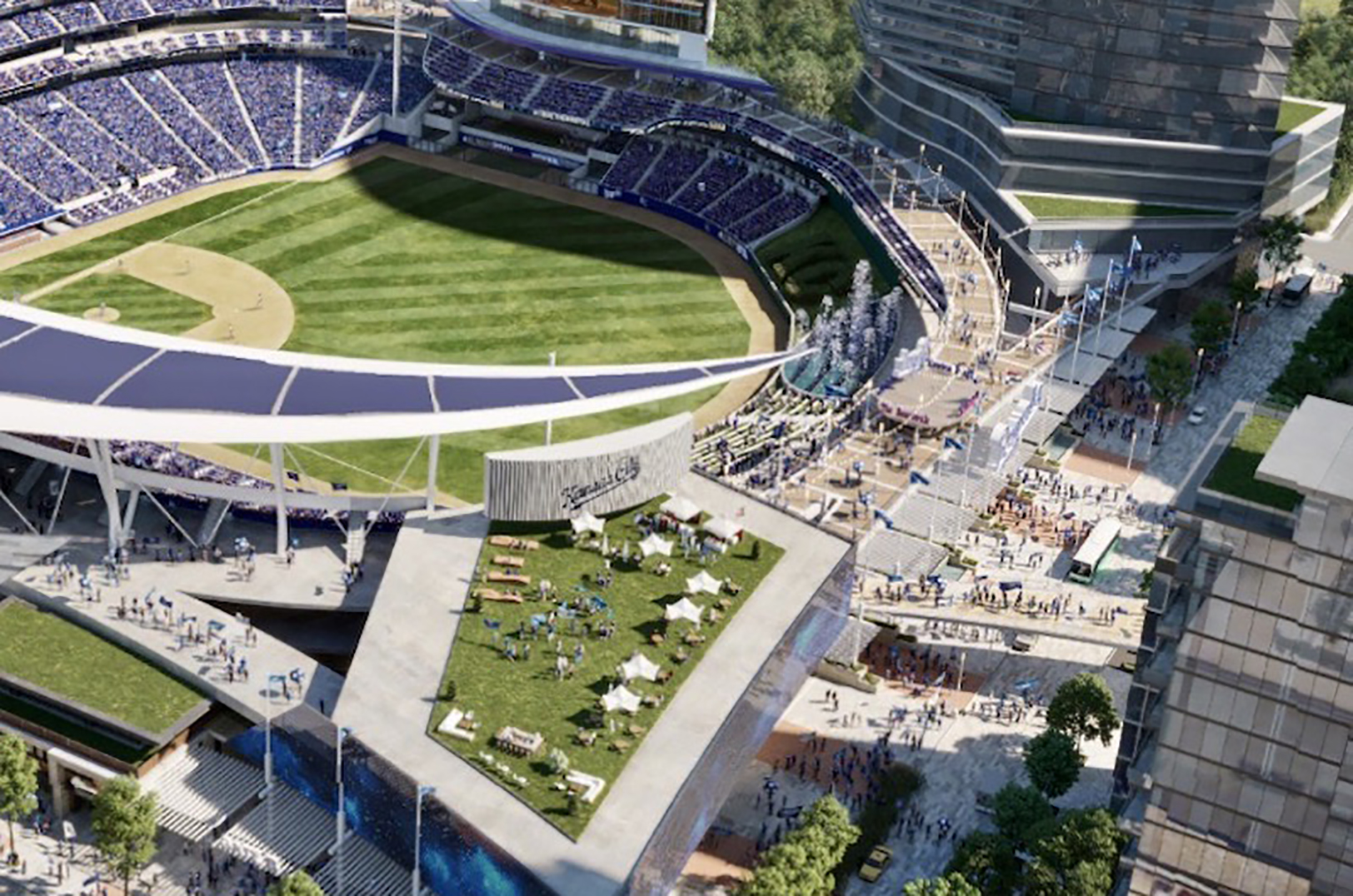
Rendering of a potential new downtown KCMO stadium for the Kansas City Royals, image courtesy of the Royals
“By moving to the ballpark district in or near downtown, we’ll be able to create a new social and economic hub for our city and continue to build on the momentum we’ve seen in recent years, especially from a sporting perspective,” Brooks Sherman said.
The Royals expect the ballpark district to be a “catalyst” for economic growth both during the construction process and once opened, said Sarah Tourville, senior vice president of business operations.
Construction is expected to create 20,000 jobs, $1.4 billion in labor income, and $2.8 billion in economic output, Tourville said, referencing an analysis conducted by real estate and economic development consulting firm HR&A.
“When you look around the country at projects such as these, the adjacent growth has occurred, and there is no reason to believe it won’t occur with this district,” Tourville said.
After its completion, the ballpark district is expected to increase tourism and drive more spending in the surrounding areas, she added, projecting $60 million in tax revenue during the first decade.
The annual regional economic output is projected to rise by $185 million more than if the stadium were to remain at the Truman Sports Complex, Tourville said, adding that 2,200 jobs would be created, generating a total of $200 million in annual labor income.


2023 Startups to Watch
stats here
Related Posts on Startland News
From cell phone emissions to wisdom teeth: KC STEM Alliance honors student innovators
When the KC STEM Alliance brought together 377 students from 41 schools to showcase their senior capstone projects in engineering and biomedical sciences last week at Union Station, visitors were amazed at their ingenuity and creativity. Special guests included Vince Bertram, president and CEO of Project Lead The Way, and Mike Oister, CEO of the…

Fund Me, KC: Vegan founder hopes to build Plant Powered Community from KCK
Editor’s note: Startland News is continuing its “Fund Me, KC” feature to highlight area entrepreneurial efforts to accelerate businesses or projects. If you or your startup is running a crowdfunding campaign, let us know by contacting news@startlandnews.com. Today’s featured campaign is from Kansas City, Kansas-based Plant Powered Community. Your name and title with the business?…
KC Digital Drive: Kansas City companies win 3 of 21 gigabit app awards so far
Two Kansas City startups each recently earned $10,000 awards through a program promoting gigabit app development in the metro. A third firm won previously. OnTimeSocial and PlanIT Impact were among 11 companies honored this spring by US Ignite, which seeks to leverage networking technologies to build stronger smart communities. In Kansas City, US Ignite and…
1 Million Cups credits its six-year run to the strength of its volunteers, entrepreneurs
After six years, the connectivity at 1 Million Cups remains as strong as the coffee, organizers said. The Kansas City-born event series is celebrating the anniversary of its first pour 9 a.m. May 2 with the program’s trademark brew — two startups delivering 10-minute pitches to an audience with the intent to educate, engage and…