

New technology preserves speed, convenience KC air travelers have come to expect (in unexpected ways)
February 21, 2023 | Martin Rosenberg
Editor’s note: This story was originally published by Kansas City PBS/Flatland, a member of the KC Media Collective, which also includes Startland News, KCUR 89.3, American Public Square, The Kansas City Beacon, and Missouri Business Alert.
Click here to read the original story.
You land at Kansas City International Airport a half hour early.
Until now that has been a mixed blessing.
You idle on the jetway twiddling thumbs and waiting for an open gate.
Next week, that is going to be history as KCI becomes one of few airports boasting leading-edge technology that transforms the final moments of plane movements on the ground with dazzling software technology that would make a gamer drool.
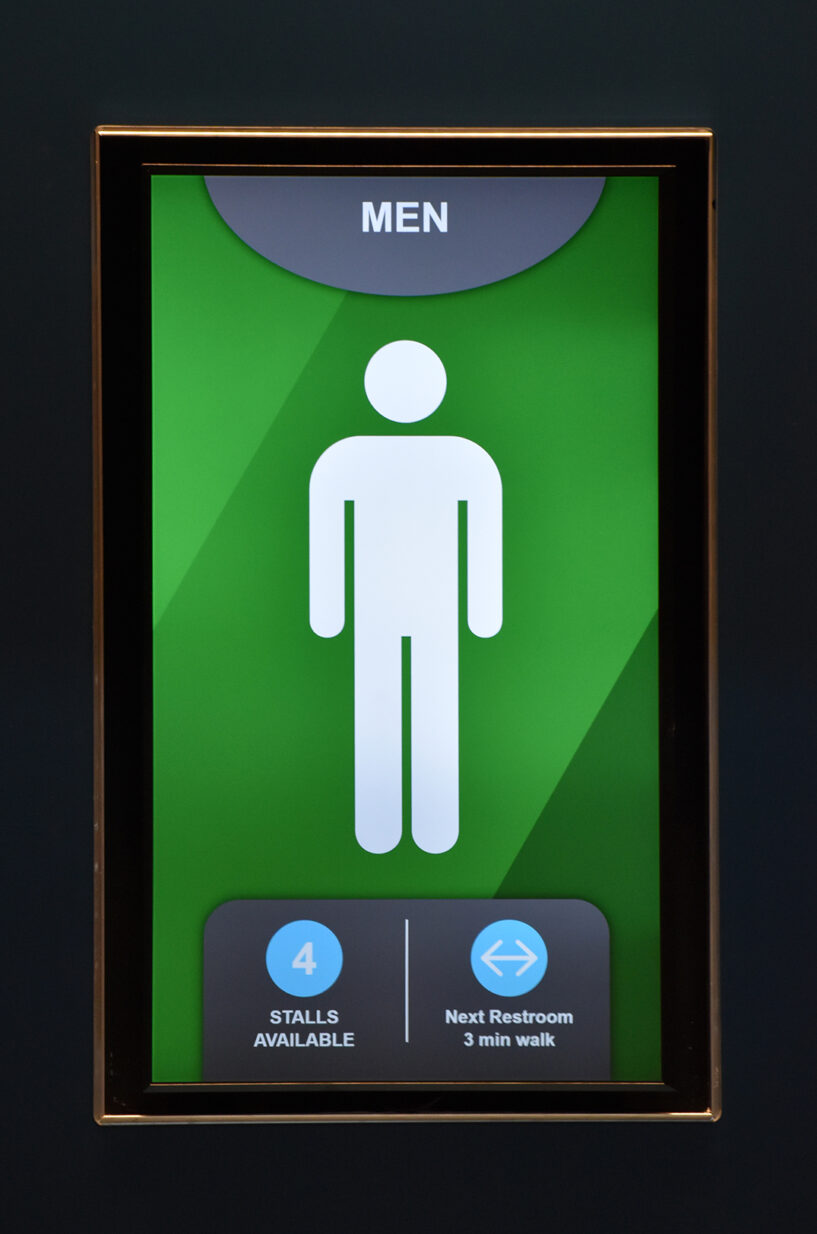
Digital, responsive restroom signage at the new KCI terminal; photo by Tommy Felts, Startland News
That’s not the only marvel awaiting Kansas City travelers when the new $1.5 billion KCI terminal throws open its doors on Feb. 28.
Hustling business travelers will be amazed when their last-minute hunt for a parking spot is eased by a nifty new “red light-green light” signal system directing them speedily to a vacant spot.
Those restroom visits to hell that left you clutching your bladder on a line wending back through Starbucks — even that will be fixed. Bathrooms will be more spacious. Stall occupancy will be identified by “red lights” and “green lights” just like the parking spots in the massive new parking garage.
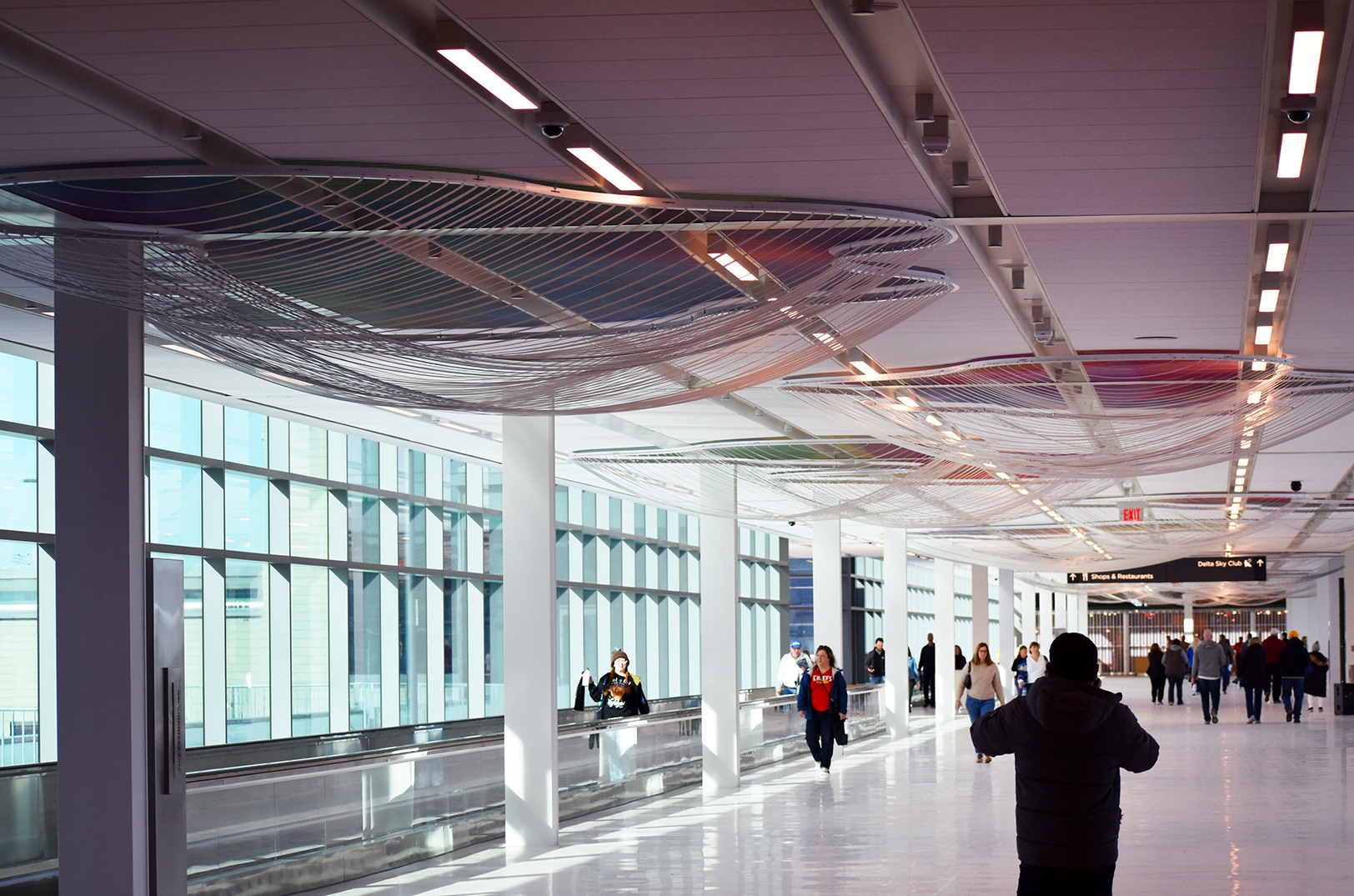
As the three-ring pretzel terminal that has been your gateway to Kansas City for 51 years goes away, Kansas City will be wowed by a new gateway that will boast novel technologies that will go along with the public art, fountains, shops and fresh paint and carpet.
Topping the list is a $7.6 million virtual aircraft ramp control system acquired from Saab, the Swedish automaker and industrial giant.
“Saab views its digital tower solution as ‘green solutions’ and generally believes that they cost less to build and maintain than traditional ‘brick and mortar’ towers,” according to spokesperson Kevin Borland.
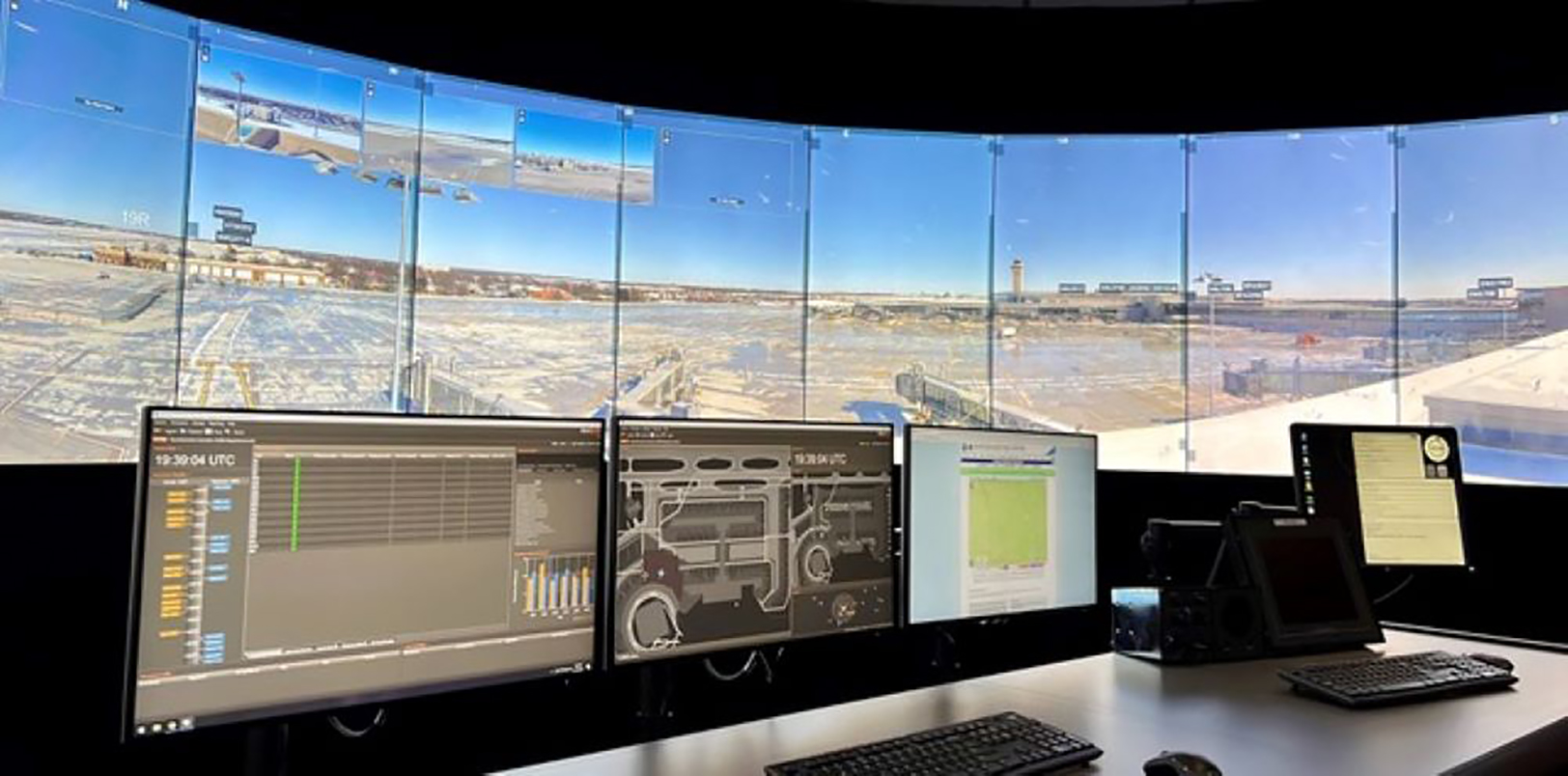
Saab’s digital ramp tower technology at the new Kansas City International Airport will increase the speed and safety of aircraft movement to and from the new $1.5 billion terminal; photo contributed by the Kansas City Aviation Department
Robert Brown, director of product management and strategy at Saab, in Syracuse, New York, said this Saab technology is deployed at Orlando airport and George Bush Intercontinental Airport in Houston. Rival firms have similar technology at maybe one or two additional airports out of the 5,217 public airports in the country, he said.
In other words, KCI will be a standout.
Here is how it will work. Two digital camera towers with 14 cameras will be erected at either end of the new terminal with a commanding 360-degree view of plane taxiing approaches, Brown said.
The system will feed information to ramp controllers who will have greater knowledge of what is happening around the aircraft.
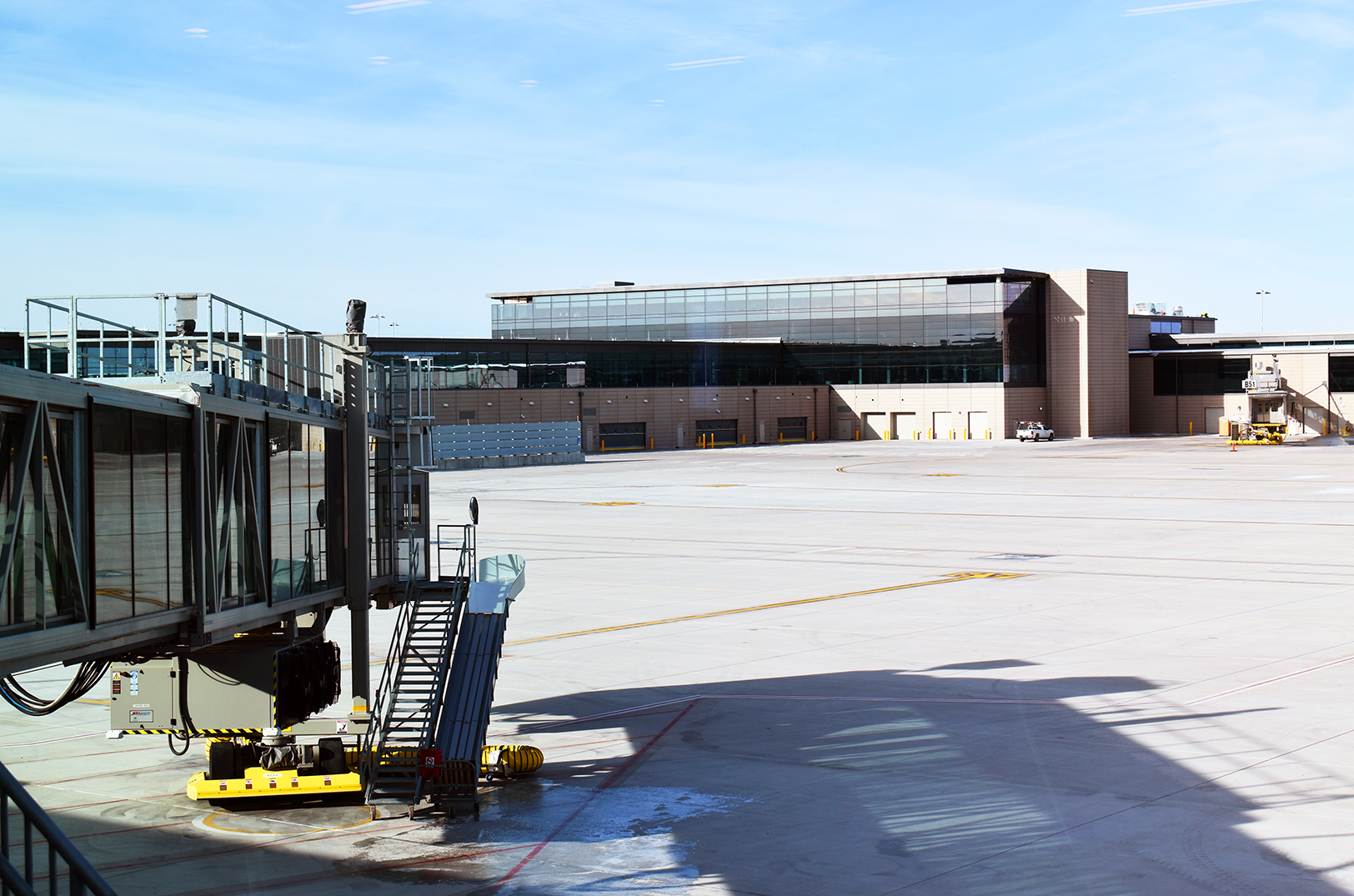
Tarmac at the new KCI terminal; photo by Tommy Felts, Startland News
“It will reduce radio calls, things move smoother, planes will move in and out faster,” Brown said. “There is a lot of choreography that happens when a plane pulls in.”
For instance, the vehicles that move planes in and out of gates will be more efficiently deployed.
Baggage may be off-loaded faster, Brown agreed, saying: “Possibly…Hopefully. Everything should run better.”
Planes that arrive early or late can be directed to more gates, which will provide operational flexibility, said Justin Meyer, Kansas City Aviation Department deputy director of aviation.
Old KCI had 35 gates and 31 of them were leased to airline companies, Meyer said. Four gates were available for use by any aircraft.
The new KCI terminal will have 40 gates, with 7 of them unleased and available to any airline, Meyer said.
Since all arriving planes will be at one terminal, this will provide more open gates when needed. Those gates are graced with electronic signs that can be used for multiple logos, airline names and other information.
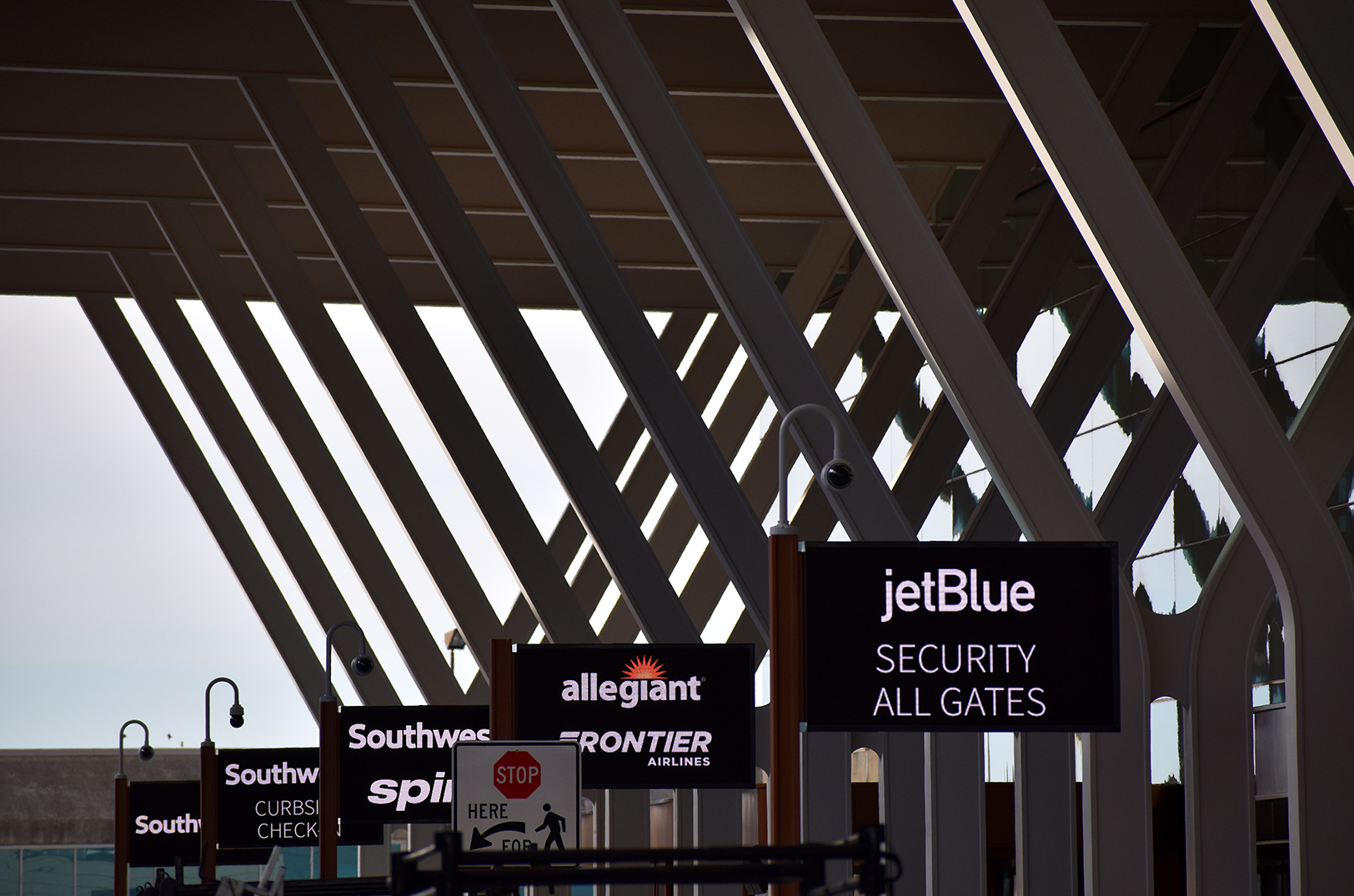
Digital signage at the new KCI terminal; photo by Tommy Felts, Startland News
Currently, a Delta flight that arrives early or late and is destined for Terminal B cannot be directed to an open gate at Terminal C. That inefficiency will go away, Meyer said.
Travelers — primarily business travelers — who wish to park in a garage close to the terminal also will find it much easier to do so. In recent years, that has been a nightmare.
Often Southwest Airlines flyers, for example, needed to fly out of Terminal B but had to park in the Terminal C garage and take a bus or a hike to and from Terminal B. That conundrum will end.
The public should not fret about any potential huge jumps in parking rates, even though they have not been raised in seven years. The rate may go up $1 or $2 a day at the garage, Meyer said.
There also will be more garage spaces at the new terminal. The garages at Terminal B and C currently offer 4,500 spaces. The new parking garage will have 6,219 spaces, Meyer said, “more than enough to meet demand.”
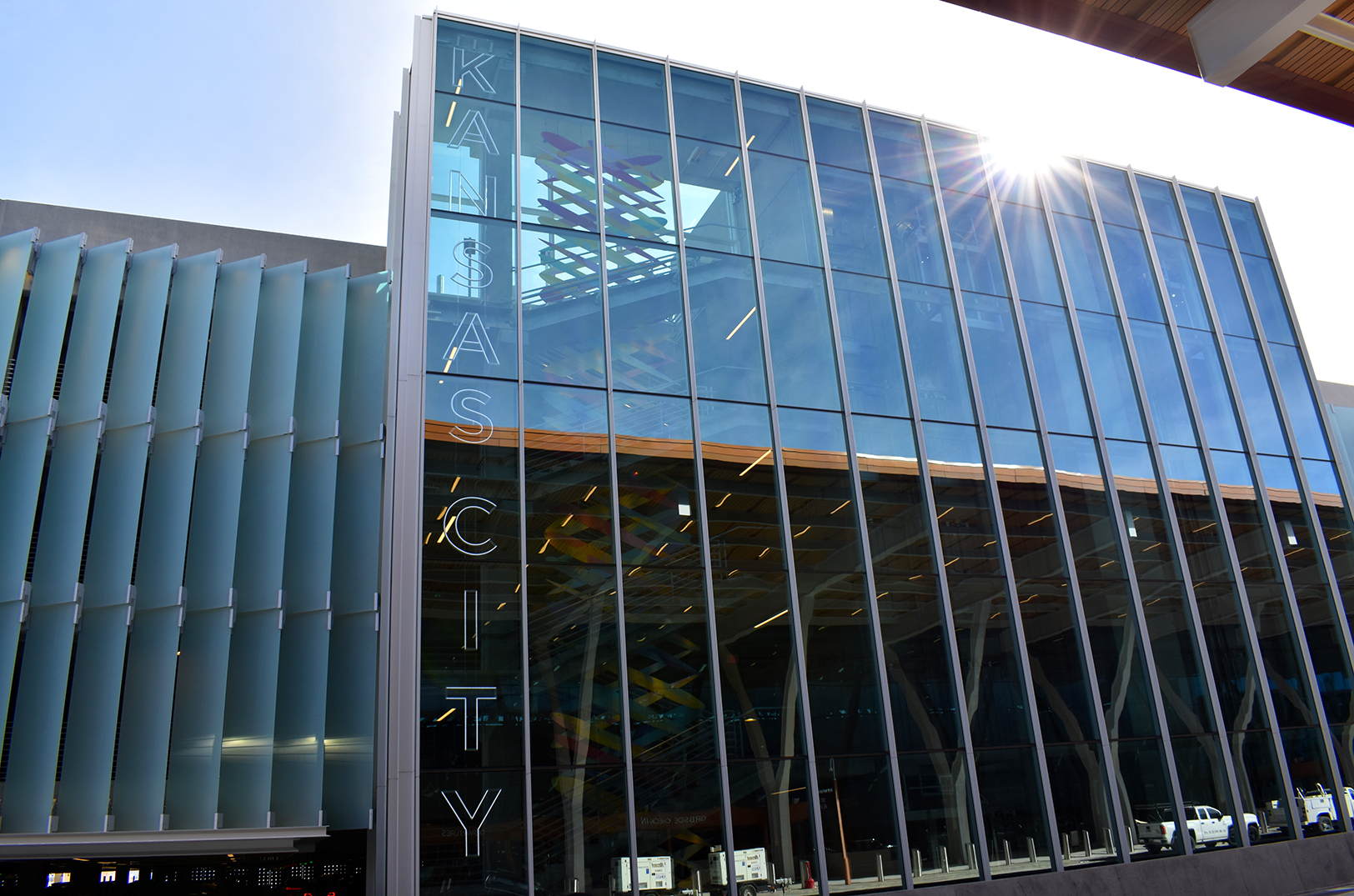
The parking garage at the new KCI terminal; photo by Tommy Felts, Startland News
Many customers will continue to want to use the less costly economy satellite parking. But they will be whisked to and from the terminal in electric buses and buses powered with compressed natural gas.
For starters, 14 EV (Electric Vehicle) buses will be equipped to be recharged on-the-fly as they take on and drop off passengers at the terminal, Meyer said.
Some dazzling strategizing has gone into the garage configuration and capabilities.
The red and green lights above each space will mean drivers do not have to circle endlessly up and down parking aisles to find a vacant spot.
To “future proof” the new terminal, Meyer said, airport planners have prepared for the day that may arrive sooner than many suspect, perhaps, when self-driving cars will allow us to arrive at the airport and then send our driverless cars home, Meyer said.
KCI could then offer up space in the parking garage to car rental companies eager to get closer to the terminal for their customers, he said.
As adoption and use of electric vehicles ramps up, the garage will increase the availability of EV charging spots. To start out, there will be fewer than 100, Meyer said.
Martin Rosenberg is a Kansas City journalist and host of the Grid Talk podcast on the future of energy.

Featured Business

2023 Startups to Watch
stats here
Related Posts on Startland News

Menswear in motion: Designer brings ‘specific’ eye, new runway show to KC fashion scene
A self-taught Kansas City fashion designer will bring his signature menswear line to a runway tailored just for men later this month, he shared, hosting an event that he characterized as a celebration of menswear. Mid-West Men’s Fashion Week (MWMFW) is set for March 24-26 at Audi Shawnee Mission in Merriam, according to Christian Shuster,…

HERImpact awards $50K: Prize money expected to help pop-up scale into its own space
Editor’s note: 1863 Ventures is an advertiser with Startland News, though this report was produced independently by the nonprofit newsroom. Tirza Design allows consumers to support cause-based brands and survivors of human trafficking, exploitation, and other forms of abuse, detailed Nikkie Affholter, noting her venture also meets the need of bringing dignified employment to women who’ve escaped…
City OKs plan to replace urban farm near Plexpod in Midtown with 100-unit Park 39 apartment project
Editor’s note: The following story was originally published by CityScene KC, an online news source focused on Greater Downtown Kansas City. Click here to read the original story or here to sign up for the weekly CityScene KC email review. The City Plan Commission narrowly endorsed a planned apartment project that would replace the Cultivate KC urban farm in…

Sisters open Lao-Thai kitchen in KC’s Crossroads, but to taste their laab beef, you’ll have to order from the cloud
A sister-led Lao and Thai food restaurant in the Crossroads hopes to deliver an authentic taste of southeast Asian culture to Kansas City. Among its first challenges: picking which family recipes win a spot on the menu. Nang Nang Lao-Thai opened in late February at the Crossroads Food Stop, a “cloud kitchen” with 10 local…