

Transforming a toxic startup can’t happen overnight, but don’t let intimidation kill your culture
January 17, 2023 | Jennifer Libby

Editor’s note: The opinions expressed in this commentary are the author’s alone. Jennifer Libby is a district manager with human resources provider Insperity’s Kansas City office. Click here to read more from this contributor.
Nobody likes a toxic workplace. But if everyone from workers to C-suite executives agrees, why does the toxicity continue to persist at so many companies, organizations, and even otherwise-cutting-edge startups?

Jennifer Libby, Insperity
To be clear, employees struggle to keep their heads above water in a negative or high-pressure environment, while savvy leaders understand toxic corporate culture undermines employee retention and undermines productivity.
Data from a McKinsey study in July 2022 showed toxic workplace behavior can predict employee burnout and intent to resign more than any other factor. The MIT Management Review found culture employees describe as “toxic” can play an even bigger role than compensation in employee satisfaction, increasing turnover by a factor of 10.
Additional data confirms toxic work cultures reduce productivity, retention and recruitment. In contrast, supportive cultures with high employee engagement boost productivity and achievement. As a result, businesses with supportive cultures obtain a competitive advantage, with Gallup finding a 23 percent increase in profitability in 2022 for companies prioritizing employee engagement.
HR cannot transform a toxic culture overnight, but change is very possible. To undertake a cultural transformation, businesses need to understand the factors behind a toxic workplace, take accountability, identify specific issues, formulate a plan and foster communication with employees.
Understand the environment
The definition of a toxic culture is a workplace environment of intimidating or uninterested leaders, little to no flexibility, frequent bullying and minimal investment in employees.
When culture reaches a toxic point, toxic behaviors have become common at every level of the organization and quickly impact the experience of new hires, who may soon learn these behaviors themselves. This cycle leads employees to become disengaged, pessimistic or angry with management and co-workers for toxic behaviors, and perhaps even themselves. Nonetheless, individual employees find themselves unable to shift the culture overall.
The author Leo Tolstoy once said, “Happy families are all alike; every unhappy family is unhappy in its own way.”
Toxic cultures differ from one another, and employees may not all agree with the description of their workplace as toxic. However, low employee retention and poor satisfaction will strongly suggest a culture of toxicity.
Make no mistake, no single employee or department can escape the impact of corporate culture. Because culture is so deeply ingrained in daily business practices, transformation is not easy. Fortunately, leaders who find themselves with a toxic culture have a clear path forward for long-term improvements. This path requires leadership to embrace accountability, elevate communication and more.
Accept accountability
First, leadership needs to accept and admit the culture has become toxic. That will require an internal acknowledgement of toxic elements of the culture, perhaps an apology if warranted and a request for feedback from workers. At first, management may encounter skepticism or even suspicion from some employees. Be prepared to regain trust with time and express the need for patience during the cultural rebuilding period.
Outline areas for improvement
Now, it is time to find out specific issues directly from employees. While toxic workplaces can arise from different factors, common problems can include heavy workloads, little recognition, leadership based in fear, minimal training or resources, and/or too much competition. Employees might feel reluctant to share their experience, so consider an anonymous survey so participants feel safe. HR plays a key role in soliciting this feedback through both surveys and one-on-one conversations.
Formulate a plan
Analyze the feedback and identify clear solutions. There is no one-size-fits-all approach for organizations to navigate the path ahead. In businesses where employees report excessive workloads, the introduction of new hires can quickly release some of that pressure. However, an organization where employees struggle with feeling under-utilized may benefit more from accepting new clients or restructuring existing teams.
Communicate with employees
Gain buy-in from employees. Workers need to feel invested in the solutions for cultural transformation to succeed. Keep in mind, employees may have additional feedback to share after the presentation of the plan, and management should listen to make final adjustments. To gain trust, leaders need to demonstrate their willingness to change policies to promote a better culture. Once HR begins to implement new policies, continue to check-in with employees and managers and track employee retention and satisfaction. Transparent, open communication is the foundation of a high-performance culture.
Toxicity is the enemy of productivity, while positivity promotes growth. Through these essential steps, organizations can undergo a total cultural transformation, leaving employees happier and more prepared for success.
Jennifer Libby is a district manager with Insperity, a leading provider of human resources offering the most comprehensive suite of scalable HR solutions available in the marketplace. For more information about Insperity, call (800) 465-3800 or visit www.insperity.com.


2023 Startups to Watch
stats here
Related Posts on Startland News

Q&A: Founder Jy Maze on the industry that runs the world (and delivers the toilet paper)
Everything has to ship, said Jy Maze. From the microphone in her hand to the stool where she sat to the shoes on the Maze Freight Solutions founder’s feet, it all comes with mileage and a cost, she said. Her woman-owned, Overland Park-based, third-party freight logistics startup itself was packed in 2017 when Maze decided…

Why are college students dropping out? EdSights targets higher ed retention rates
Only 56 percent of students who began college in 2012 actually graduated within the next six years, said startup founders Claudia Recchi and Carolina Recchi. The sisters’ own struggles as first-generation U.S. college students reinforced the challenge posed by such statistics, they said, prompting them to found EdSights, a startup using artificial intelligence to collect…
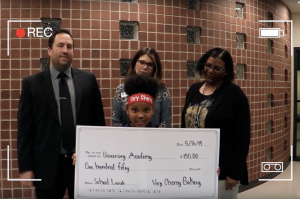
Cherry on top: 9-year-old baking entrepreneur cuts check to pay off KC students’ negative lunch balances
Baking is the perfect recipe for spreading joy — owning a small business should be too, said 9-year-old Ire Cherry, recalling the moment she stood before administrators at University Academy in Kansas City, holding a check wider than she is tall. “My mom and her sister were talking about people in Virginia who couldn’t pay their…

Kauffman Foundation’s Erin Jenkins bounces between contrasting cultures, startup life
Editor’s note: This content was sponsored by the Ewing Marion Kauffman Foundation but independently produced by Startland News. Curiosity took Erin Jenkins to Japan. Curiosity brought her home. In between, she embedded herself in the worlds of intercultural entrepreneurism and startup life — her journey aligning itself with an opportunity to serve as a program officer…